1949-2019: The Rise of Cities in China
 Linkedin
 Google +
Especially in recent years, China pays more attention to local realities, adapts to its own economic society, historical culture, and natural endowments, and actively explores the formation of urban construction and urbanization development experience with Chinese characteristics.
URBANIZATION is an important indicator for measuring the degree of development and modernization of a country or region. China’s urbanization is more like a miniature picture of the country’s development as a whole. It consists of both unremitting explorations in twists and turns, as well as institutional and model innovations combined with local realities. In the 70 years of vicissitudes, China’s urbanization has not only transformed a “rural China” into an “urban China”, it has also avoided serious social problems experienced in the urbanization of developed countries and many developing countries, and has found a new urbanization road with Chinese characteristics.
First 30 Years: Twists and Turns of Exploring
At the beginning of the founding of new China in 1949, China’s urbanization rate was only 10.6 percent. Chinese cities had experienced decades of warfare and there were a thousand things which needed to be done. The Chinese government has long recognized the importance of the city in the construction of the national economy and quickly shifted its focus to the city.
At the Second Plenary Session of the Seventh Central Committee of the Chinese Communist Party (CPC) held before the founding of the People’s Republic of China, Chairman Mao Zedong pointed out that the government must place priority on cities, and great efforts must be made to learn how to manage and build cities. His speech became the guiding principle for urban and urbanization in the early years of the new nation.
Most of the Chinese cities produced and developed during the feudal society were “consumer-type cities”. They had no production capacity, nor did they have the ability to drive vast rural areas. They were also relatively underdeveloped in terms of infrastructure, industrial form, and architectural styles. In the early days, two main aspects of work were carried out: first, strengthening urban construction, especially infrastructure such as urban roads, water supply, and housing; second, resuming production, and proposing to “change consumer cities into producer cities”, focusing on industrialization and combining major projects during the period of the first Five-Year Plan (1953-1957). A number of industrial cities were built as a result.
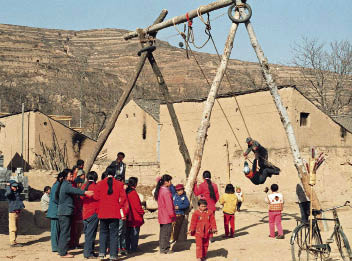
The large-scale industrialization in the early days resulted in the absorption of a large number of peasants into cities. In 1960, the urban population of China was 2.3 times that of 1949, with an average annual increase of more than 6.6 million. The rapid growth of urban population brought about a series of problems such as limited food supply. In order to alleviate the burden brought to cities, China implemented the policy of reducing urban population from 1960 to 1963, and it was not until 1965 that the urban population returned to the level of 1960. This policy is often referred to by scholars as the “reverse urbanization” and has triggered much discussion. However, the “adjustment” made through these unconventional measures, under the historical conditions at that time, provided an effective guarantee to stable urban development.
From 1966 to 1978, due to the influence of the Cultural Revolution, China’s urbanization basically came to a standstill, and the urbanization rate merely increased from 17.86 percent to 17.92 percent. During this period, due to the destruction of the national economic order and stagnation of industrial development, the urbanization process was blocked. The urban planning and construction management departments were abolished, and the lack of planning led to chaos in urban construction and management.
Recent 40 Years: Rapid Development of Urbanization and Reform
After the reform and opening-up of China, it has experienced the largest urbanization process in human history. The urbanization rate has increased from 17.92 percent in 1978 to 59.58 percent in 2018, increasing by more than 1 percentage point annually.
In the initial stages of reform and opening-up, rural reforms such as “fix farm output quotas for each household” greatly improved farmers’ labor productivity, and a large number of laborers were able to be freed from agriculture and transferred to non-agricultural industries. The increasing supply of food, the rapid growth of demand for labor in urban industrial development, and the shifting of labor from the agricultural sector jointly promoted the loosening of the household registration system in the mid-1980s in China. In 1984, farmers were allowed to bring their own food provisions from home to work in cities.
In the spring of 1992, Deng Xiaoping published an important South China Tour Speech, which further strengthened the direction of China’s reform and opening-up and accelerated the pace of transformation from a planned economic system to a market economic system. By the mid-1990s, the institutional barriers that had restricted population movement were all broken, and China realized the free migration of urban and rural population.
In the late 1990s, China implemented several key reforms such as housing, education, medical care, and fiscal and taxation, which further promoted urbanization and urban development.
Among the reforms, paid land use was an important one. In the early stages of reform and opening-up, China’s implementation of urban land was a free and indefinite allocation system. A urban state-owned land-use right transfer system was tentatively established by 1990, which was further improved in 1992, 1995, 1998, and 2004. The basic urban land system with Chinese characteristics including land classification, supply mode, supply price, supply period, and land acquisition was put in place.
The housing system reform has also become an important driving force behind China’s urbanization. The real estate market is booming, and housing consumption and investment occupy a considerable proportion in the national economy. It not only supports the rapid growth of China’s economy, but also has gradually formed a system design centered on value realization of land assets. “Financing by land” has become an important financial channel for promoting urban construction, improving infrastructure, and providing public services, and has greatly supported the development and construction funds needed for rapid urban expansion.
To understand China’s urbanization you cannot ignore the factors of economic globalization. Since the 1990s, economic globalization has become an increasingly important driving force for China’s urbanization. Due to the transnational transfer of capital, technology, and industry, many multinational companies began competing to invest in the construction of modern factories in Chinese mainland. By the beginning of the 21st century, China had rapidly developed into an important manufacturing base in the world and won the reputation of “world factory”. While promoting China’s industrialization, globalization has also accelerated China’s urbanization process. In particular, the level of internationalization of China’s coastal cities such as Shanghai, Guangzhou, and Shenzhen has been greatly enhanced. Relying on China’s vast market, these cities have easy access to countries around the world and have developed aviation, shipping, finance, and information hub functions. As a result, this has continued to attract multinational headquarters or regional headquarters of industries to settle in, making Chinese cities an important part of the global urban network.
The impact of economic globalization on China’s urbanization was even more pronounced after China joined the World Trade Organization in 2001. From 2001 to 2011, China’s urbanization rate increased by an average of 1.9 percentage points per year, making it the fastest decade of urbanization. Many cities have experienced explosive growth, doubling their urban area and population. Cities such as Suzhou, Dongguan, Wuxi, and Foshan have become the star cities of this period due their rapid development in the manufacturing sector.
China’s urbanization has a very important late-mover advantage. China’s rapid urbanization and urban development are superimposed on the application of new technologies such as high-speed rail and the Internet, showing different characteristics from other countries’ urban development.
In 2018, the mileage of China’s high-speed rail reached 24,000 kilometers, ranking it first in the world. The high-speed rail not only changed the pattern of China’s cities and towns, but also changed the relationship between them. The high-speed rails made the traveling between cities more rapid, convenient, and short, and the urban agglomeration became the main form of urbanization. Urban mass transit has also been developing. Nearly 40 cities have completed rail transit by the end of 2018, and plans are made for rail transit in urban areas with populations of more than 2 million.In the big cities and surrounding areas, new technologies are more likely to be born, and the economic factors in the marginal areas tend to gather in large cities. Spatial forms for a variety of economic forms, such as industrial parks, high-tech zones, science cities, double-creative spaces, incubators and other carriers appear simultaneously in Chinese cities, and profoundly change the urban spatial structure.
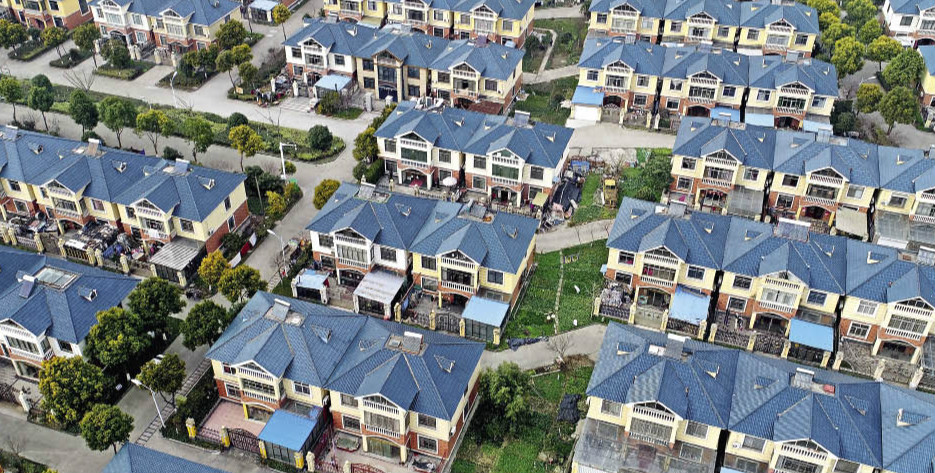
Urbanization Tailored to Chinese Needs
China’s urbanization process is different from that of Europe, North America, Latin America, and East Asia. The Chinese government has grasped the relationship between the government and the market, as well as the central government and the local government. It has gradually formed urbanization policies that are tailored to Chinese needs in terms of top-level design, household registration system, land reform, and space management.
Importance of top-level Designs and Planning
Two Central City Work Conferences were held in 1953 and 1963. Then, after the 18th CPC National Congress, the Central Urbanization Work Conference and the Central City Work Conference were held successively to formulate clear policies and guidelines of urbanization and urban development at a relatively high level. The conferences put forward relevant requirements and objectives to coordinate and promote relevant supporting reforms, encourage localities to adapt to local conditions, highlight characteristics, and make bold innovations.
The Five-year Plan is considered to be an important experience for China in formulating its development path and regulating the national economy. And urbanization is also regarded as one of the important contents. The Tenth Five-year Plan in 2001 proposed to implement the urbanization strategy. In 2006, the Eleventh Five-Year Plan proposed to take the urban agglomeration as the main form. In 2014, the National New Urbanization Plan was unveiled, and an inter-ministerial joint conference system for promoting new urbanization was established. Under the leadership of the State Council, it aims to implement the national new urbanization plan and policy formulation, coordinate and solve major problems in the new urbanization work, and propose annual key work arrangements and task division.
Progressive Household Registration and Population Management Policies Help China Avoid Slums
Unlocking household registration and population movement restrictions and realizing free population migration have been important experiences in the process of urbanization in China. If there is no population migration from rural to urban areas, there will be no subsequent innovations in the city regarding household registration or land and housing, and there will be no increase in productivity or growth in the urban economy.
However, the pathway that China has chosen for loosing household registration has been a gradual one, which makes the population mobility very orderly. Unlike countries like Brazil, Mexico, and India, there has been no large number of rural population flooding into the cities in China over a short period of time. A large number of people are crowded in slums and have become a difficulty for urban management and social governance. The Chinese government has not let the migrant workers and their children who work in cities enjoy the same medical, social security, and pension benefits as the urban residents. Instead, they use the residence permit system to gradually provide certain rights and conveniences. It has alleviated the burden of public services. In addition, local governments have also established a management network consisting of employing units and residential communities, which has achieved full coverage and refined management of migrant workers.
A Unique Land System Arrangement
China’s urbanization process has been accompanied by the continuous establishment and improvement of the urban land system. The construction and adjustment of the Chinese land system has a very prominent “l(fā)earning-by-doing” feature, as well as a continuous institutional innovation from bottom-up and top-down interaction. The structural arrangement of land-based wealth, land-based financing, industrial land and residential land has formed an important source of power for urbanization in China. Local governments improve the infrastructure conditions through investment, increase the value of urban land, and accumulate funds for the next urban development through land transfer. China’s land system arrangement also ensures the efficiency of land acquisition in urban construction and infrastructure construction, and is also an important guarantee for maintaining the speed of China’s urbanization.
Paying Attention to the Spatial Regulation of Urban Development
Influenced by traditional Chinese ideology, China’s urban construction pays much attention to the regulations of city scape and space development. In the mid-to-late 1990s, China’s urbanization entered a period of rapid development. The country had already formed relatively complete compiling methods of urban master plans and urban regulatory plans. Meanwhile, systematic national standards had been formulated in urban transportation facilities, public facilities, and park green spaces, which did much to ensure the orderly development of urban construction.
The mechanism of rapid urban growth in China has its own characteristics. The space unit has played a very important role. China has “space units” that match the historical condition of the time they were in, such as independent industrial and mining areas during early years of the new nation, township industrial complexes in the late 1980s and early 1990s, development zones in the early new century, new towns and districts after 2007, and characteristic towns after 2016. In the event of overdevelopment, the government promptly regulates and maintains the bottom line of the healthy development of urbanization in China.
On the macroscopic scale, China has established the urban agglomeration as the main form and understands the evolvement rule of the urbanization space development, which is conducive to the role of the urban agglomeration in the convergence and allocation of high-end elements. Besides, it also supports the improvement of production organization efficiency and promotion of transformation and upgrading. Last year, the Chinese government introduced relevant policies to cultivate modern metropolitan areas, and further focused on the development of metropolitan areas within the urban agglomeration with super-mega cities as the core and one-hour commuting.
Urbanization is a very comprehensive economic and social process. It is the inevitable course to achieve modernization. Looking back over China’s extraordinary path to urbanization, it has learned from the relevant experiences of the former Soviet Union, Hong Kong, Singapore, Japan, the US, and the UK in different historical periods, but it does not emphasize one thing at the expense of another. Especially in recent years, China pays more attention to local realities, adapts to its own economic society, historical culture, and natural endowments, and actively explores the formation of urban construction and urbanization development experience with Chinese characteristics.
LIU BAOKUI is an associate research fellow at the Institute of Territorial Development and Regional Economy of National Development and Reform Commission