Understanding China’s Motive
 Linkedin
 Google +
Although the efforts to curb terrorism and violence in Xinjiang Uygur Autonomous Region in northwest China have achieved positive results, they are repeatedly criticized by the Western governments and media. Why do they always hold two different sets of standards, one for China and another for other countries like those in the Middle East?
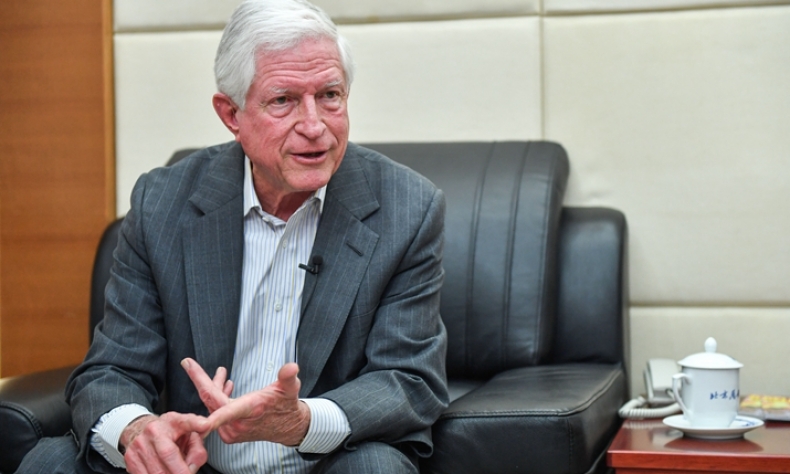
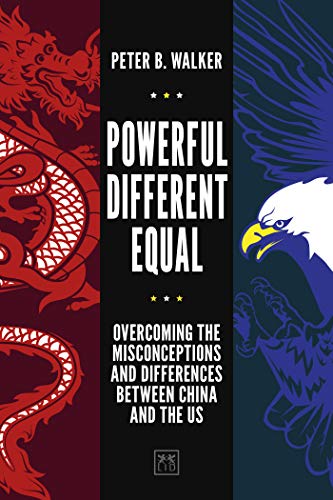
Peter Walker, a senior partner emeritus at U.S. management consultancy McKinsey & Company and author of Powerful, Different, Equal: Overcoming the Misconceptions and Differences Between China and the US, sees the differences between China and the U.S. as stemming from a fundamental difference in philosophy. He recently shared his observations on some hot issues in China-U.S. relations with Beijing Review. This is an edited version of his interview:
Beijing Review: The U.S. Congress has passed Hong Kong- and Xinjiang-related bills, attempting to interfere in China’s internal affairs. How will the moves affect China-U.S. relations?
Peter Walker: I don’t think these would change anything. Before talking about this issue, it’s very important that everyone is on the same page in terms of what the real fundamental differences are between the U.S. and China. American value is dualistic and that of Chinese is harmony. This difference is fundamental. If people start out with the premise that if somebody else is winning, then you must be losing, while others look at the world through the lens of harmony and win-win philosophy, this difference will trigger totally different behaviors.
U.S. President Donald Trump is very polarizing and represents the extreme logic of winners and losers. He has created an environment where China is the bad guy and the U.S. is the good guy. But the reality is that the Congress people know almost nothing about Xinjiang and Hong Kong. They believe Hong Kong people should be able to return to the British model of democracy they grew up with. But few of them would be aware that the British stole Hong Kong from China when the British prevailed militarily in the immoral Opium Wars of the 19th century. In 1997 when the British returned Hong Kong to China, they agreed that Hong Kong would be managed under a “one country, two systems” model—not with a return to British democracy.
In other words, if you paint Hong Kong in the way I described it, from the sweep of history and the movement toward another model done very gradually over time, it’s a very reasonable story. It’s not about yanking democracy. What’s happening with Xinjiang is very similar.
If people are in a civilization like China that has lived through wars and social unrests, they put a real priority on stability, which enables people to focus on improving prosperity and their wellbeing over time. So it’s totally understandable when you look at what the Chinese Government did to stop violence created by extremists.
But most people in the U.S. have no idea that there’s any link between the vocational education and training program “internments” for Uygurs and the Chinese value of stability, and they try to neutralize terrorism. Understanding China’s motive is different from condoning the internment. The U.S. today does not agree with its internment of Japanese during World War II.
Although the efforts to curb terrorism and violence in Xinjiang Uygur Autonomous Region in northwest China have achieved positive results, they are repeatedly criticized by the Western governments and media. Why do they always hold two different sets of standards, one for China and another for other countries like those in the Middle East?
It is true that China has acquired positive results. Some people may disagree with them. The Western press basically positions China’s efforts as the Chinese Government wanting everyone to look and behave like the Han Chinese. According to them, this is an attempt to convert all Uygurs through brainwashing. So if you tell them how you are dealing with terrorism in Xinjiang, some people would say most countries are dealing with it by infiltrating the terrorists and taking precautions at stadiums or railroad stations or any gathering points where violence could happen. So why are you going the path of trying to convert a million people?
China could tell them that the “internment” is vocational education and training are part of attempts to try to pacify people with terrorism records and we think they have had some success, but that’s open for debate. What we’re really trying to do is to prevent terrorism from happening in China. Maybe most people in the West would say, “I never thought about it in that way!”
Everybody has responded to terrorism and China is responding in its own way and has its own reasons. And the reality is serious terrorist incidents occurred in Xinjiang but now China hasn’t had any for quite a while. According to World Bank and UN statistics, longevity and literacy have increased dramatically in both Xinjiang and Tibet. Chinese are practical and have given the people the most fundamental things that they could ask for in such regions.
It is clear that some people are uncomfortable with China’s means but if you look at what happened to the American Indians, they’re gone instead of being in internment. If you look at black people who were brought to the U.S. against their will, you will find that they continue to lag significantly in terms of education, economic and other opportunities. But the U.S. has done little to improve that situation.
After the eruption of protests and unrest in Hong Kong, some people in the region have asked the U.S. and UK for intervention and sanctions. What do you think about the Hong Kong issues?
In my opinion, the root cause for the Hong Kong riots is human nature. The Chinese mainland people have been through many political and social twists and turns but what did the Hong Kong people go through? They have had a very wealthy small territory with enormous economic benefits, opportunities, freedoms. It is difficult for people who have always had privilege to accept something different going forward. So I think the fact that there will always be some resistance in Hong Kong should be recognized.
The way to respond to that should be by give and take. You should sit down and talk to a broad cross-section, the people involved in the peaceful protests rather than the violent segments, and tell them you are going to alter the model over time to something that resembles the “one country, two systems” model, which has worked effectively in Macao-—but obviously tailored to the Hong Kong situation. Ask them what things they would most like to protect, then you could have a voice in shaping what happens in Hong Kong.
When they say one of the real problems is there’s no affordable housing, the government can take actions to meet such needs. There are a lot of billionaire real estate developers who have made a lot of money in Hong Kong and kept it over time. The government can say, we think that group should start giving back some but we’re not going to take all their money away, just make a percent of their land available for affordable housing. This is a give-and-take approach where the Hong Kong people and the government both have a chance to shape their future.
Even so, some people in Hong Kong are going to say that’s still less than what I used to have. For such people, tell them you should probably find another country and maybe the UK or the U.S. would be more than happy to have you, but you’re now part of China. China has done some pretty amazing things for its own people with its model. But you’re free if you decide you don’t want to live in that environment but instead want to live somewhere else.
The extradition proposal was a step too far and aggressive before the people were really ready for it. The Hong Kong Special Administrative Region Government basically admitted that and that’s why they withdrew it.
The fact is that most Chinese people are very happy with the China model and are very supportive of what the government’s doing. Hong Kong students should learn and understand the differences of various models. After that, if you would prefer to live somewhere else, you’re totally free to go somewhere else.
Beijing Review: After the eruption of protests and unrest in Hong Kong, some people in the region have asked the U.S. and UK for intervention and sanctions. What do you think about the Hong Kong issues?
Peter Walker: In my opinion, the root cause for the Hong Kong riots is human nature. The Chinese mainland people have been through many political and social twists and turns but what did the Hong Kong people go through? They have had a very wealthy small territory with enormous economic benefits, opportunities, freedoms. It is difficult for people who have always had privilege to accept something different going forward. So I think the fact that there will always be some resistance in Hong Kong should be recognized.
The way to respond to that should be by give and take. You should sit down and talk to a broad cross-section, the people involved in the peaceful protests rather than the violent segments, and tell them you are going to alter the model over time to something that resembles the “one country, two systems” model, which has worked effectively in Macao-—but obviously tailored to the Hong Kong situation. Ask them what things they would most like to protect, then you could have a voice in shaping what happens in Hong Kong.
When they say one of the real problems is there’s no affordable housing, the government can take actions to meet such needs. There are a lot of billionaire real estate developers who have made a lot of money in Hong Kong and kept it over time. The government can say, we think that group should start giving back some but we’re not going to take all their money away, just make a percent of their land available for affordable housing. This is a give-and-take approach where the Hong Kong people and the government both have a chance to shape their future.
Even so, some people in Hong Kong are going to say that’s still less than what I used to have. For such people, tell them you should probably find another country and maybe the UK or the U.S. would be more than happy to have you, but you’re now part of China. China has done some pretty amazing things for its own people with its model. But you’re free if you decide you don’t want to live in that environment but instead want to live somewhere else.
The extradition proposal was a step too far and aggressive before the people were really ready for it. The Hong Kong Special Administrative Region Government basically admitted that and that’s why they withdrew it.
The fact is that most Chinese people are very happy with the China model and are very supportive of what the government’s doing. Hong Kong students should learn and understand the differences of various models. After that, if you would prefer to live somewhere else, you’re totally free to go somewhere else.
Beijing Review: How do you see the ongoing trade friction between China and the U.S.?
Peter Walker: The U.S. Government has always been very strongly in favor of free trade. What Trump or one person does doesn’t change the underlying philosophy of free trade. The vast majority of chief executives in the U.S. do not support the tariffs or the trade war at all and believe it’s a stupid idea. It’s going to be lose-lose for China and the U.S. Trump’s saying trade frictions are easy to win just shows how naive he is about the way economics works.
Now we’re seeing a slowing economy in the U.S. and China, and the manufacturing jobs going to Viet Nam, the Philippines, Thailand and countries with cheaper cost, instead of going back to the U.S., as Trump claimed. The economists have said from the very beginning that trade friction is a losing proposition.
China’s position of firmly fighting back is totally the right answer for everybody. Trump is running in an election. China could think in a longer term about what’s the right answer, while Trump is thinking solely about how to get back in office. His bet is that if he increased tariffs enough, China would surrender. Anyone who knows anything about China knows that will never happen.
If I were the Chinese, I would not settle for any deal other than something that’s in China’s best interest. If that means there’s no deal, China should be perfectly happy to live with that. Ten years ago, export manufacturing accounted for a very big share of China’s GDP. The situation is quite different now. China’s GDP is now driven by consumption by the middle-class consumers and services industries.
Therefore, China should be proud enough to say, if you offer us a deal that’s genuinely in our best interest, we will agree. If it isn’t in our best interest, we’re not going to do a deal. China doesn’t have the pressure of an election. So I think China is totally going to prevail.
Source: Beijing Review