COVID-19, Challenges for South Asia
 Facebook
 Twitter
 Linkedin
 Google +
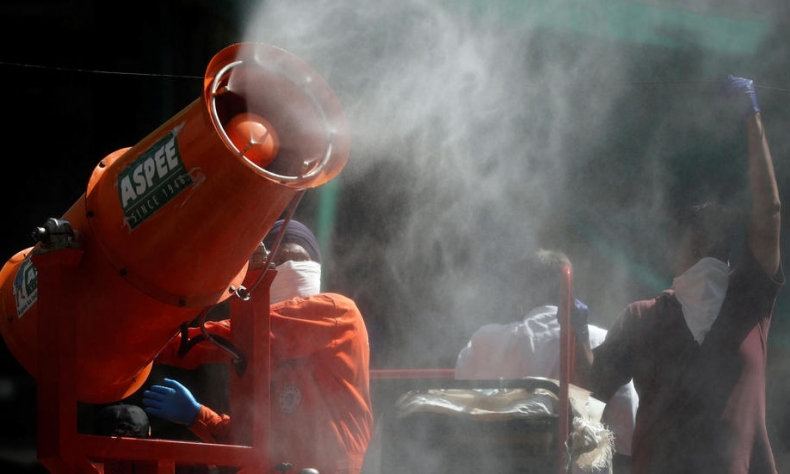
Analysts forecast India will be the next hotspot of COVID-19 infections.
Amid the COVID-19 global crisis, South Asia, home to about one fourth of the world’s population, is likely to become a new hotspot of coronavirus infections on top of the already present amount of daunting challenges due to social problems, backwardness, thinking mired in dogmatic paradigms, poverty, poor health facilities, illiteracy, joblessness, fragile economies, and limited digital infrastructure.
However, millions of people in South Asia including Pakistan, India, Bangladesh, Sri Lanka, Afghanistan, Nepal, Bhutan, and Maldives, have to stand up to this crisis in such daunting conditions. Health emergencies like COVID-19 threaten to cost many lives and pose formidable risks to South Asian economies, social dynamics, human rights, and overall security and stability.
Challenges to Traditional Social Life
Given the culture of living in close proximity in regions like South Asia, health safety SOPs are difficult to implement. Because communal living arrangements are common, self-quarantine and social distancing is a pipe dream. Throughout South Asian countries, most people live in large families. They cannot afford separate houses due to financial constraints. Confined to living in small homes, one family often consists of seven to 12 members, with many sharing a single room. Within the aforementioned living dynamics, all family members use one bathroom. Their soaps, towels, shoes, toilet papers, and combs are in common use for everyone at one place.
Compelled by congestion, they have to share one place for breakfast, lunch, and dinner. Even those people that wish to observe Safety SOPs to stay away from infections have little choice but to live in crammed living conditions. They cannot afford to stay in self-isolation, billed as the best precautionary measure at this critical juncture.
During the COVID-19 scenario, in case of death, congregations for funerals per customary tenets are being held with impunity. Although governments have ordered to let health or other departments to carry out last rituals but being overwhelmed with emotions and religious doctrines, people have been defying COVID 19 precautions.

In slums, where hygiene is usually an issue, living conditions are conducive for the easy spread of infectious diseases. People are highly prone to contracting infectious diseases and often die due to complications. It is a dilemma that in shanty areas where millions of people live, especially in India, Bangladesh, Pakistan, and others, local governments are not vigilant at the level they should be. Local government teams and even NGOs, sometime due to traditional callousness, infrastructure constraints, and shortage of resources, do not reach out at the grassroots level. Hence, the destitute remain off their radars. As the number of COVID-19 infections escalate in South Asia, one of the world’s poorest region with more than 600 million mired in poverty, international organizations including the United Nations and Amnesty International have urged governments to step up efforts to protect marginalized and vulnerable groups at higher risk, including daily wage earners, people displaced by conflict, health workers, and prisoners.
Challenges of Low Literacy
Fighting against COVID-19, among others, the chink in the armor is rampant backwardness and illiteracy. Pakistan’s literacy rate stands at 55 percent, India at 74 percent, Nepal 67 percent, Bhutan 65 percent, and Bangladesh at 73 percent. The majority of people have disproportionately low access to basic education. With slim conformity with sources of information and communication, it is incredibly challenging to mobilize the people for globally aligned action.
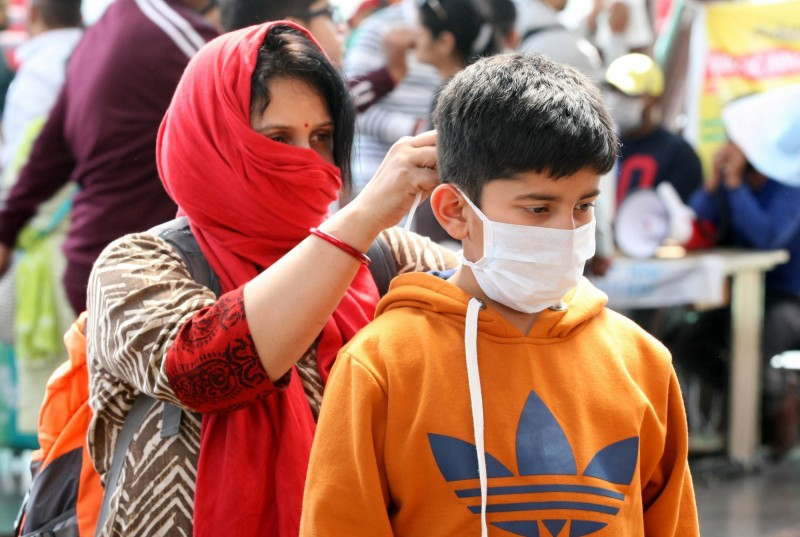
Since backwardness is deep rooted, the average person feels free to defy COVID-19 regulations regarding staying at home. In Pakistan and India, it has been witnessed that gathering at shopping malls, local shops, and retail outlets are proceeding as usual. Rules of social distancing are seldom observed. The Pakistan government imposed a law referred to as Section 144 to discourage public gatherings. India enforced a 21-day curfew. Similar situations are arising in Nepal, Sri Lanka, and Bhutan. However, people believe that life and death are the domain of divine beings, so if death is destined through coronavirus, it is bound to happen whether or not COVID-19 SOPs are strictly followed.
In a Pakistani village near Lahore, the capital city of Punjab province, at least 300 people gathered for a funeral. Shahzad Ali, one of mourners, termed coronavirus a conspiracy. “Even it is reality, good people are exempted,” he insisted. According to reports, the villagers suffered ailments later but nobody tried to find out whether the sickness had any link with COVID-19 or not.
Challenges to Religious Obligations
Performing pilgrimage, offering prayers in congregation five times in mosques, seasonal religious congregations, embedded trends within social interactions, and funeral rites are proving to be drag on efficacy of precautionary measures designed to contain COVID-19.
South Asia is a fertile land for religion. Large religion themed conventions and gatherings are held one or two times a year. People belonging to different spheres of life tend to assemble for sharing and disseminating their message to each other. In fact, the believers were not prepared for COVID-19. They let the notion go viral that spiritualism and mysticism are the best cure. They have banded coronavirus as a curse of God. They reckon that collective prayers will stamp out reign of doom. Given the scenario, a number of large religions gatherings held in Pakistan, India, and Bangladesh gave no regard to COVID-19 SOPs. Resultantly, thousands finally tested positive. And nobody knows how many others they may have infected further.
Since April 3, the Pakistani government has been tracking down some 41,000 people who attended a large religious congregation in Lahore last month and then scattered across the country.
The annual congregation was held March 10-15 as planned despite warnings of a global pandemic. Attendees flocked at the designated venue, with foreign attendees coming from China, Indonesia, Tunis, Nigeria, Afghanistan, Turkey, and other countries. Now a number of them are being quarantined in mosques in Sukkur and Hyderabad, cities of Sindh province.
Religiously, Muslims have very distinct manner of greeting with one another. They love to shake hands followed by hugging friends and acquaintances, especially in mosques and Muslim organizations. With the COVID-19 outbreak, they are in a quandary regarding how to continue this greeting tradition. Visiting the sick is considered a good deed in Islam. However, in the case of COVID-19, such visits are not possible.
Congregational prayers in mosques are important for Muslims in instilling a sense of being in the presence of the sacred, and a sense of being with other believers. Accordingly, they line up in rows with shoulders touching. This arrangement is extremely risky during a pandemic. Under the situation some mosques are closed while some are opened allowing only few prayers.
Challenges to Informal Jobs
South Asia is incredibly reliant on an informal economy with millions of daily wagers, of both genders. After the lockdown came into effect, informal small and medium industries, street vendors, and daily wagers are out of jobs. According to the International Labor Organization, the informal sector “accounts for 80 percent of total employment” in South Asia. They include street vendors, sanitation workers, drivers, construction workers, cleaners, tea plantation workers, fishermen, porters, cooks, and domestic workers, many of whom are internal migrant workers and live far away from their families.
In Pakistan, the Ministry of Planning has estimated that 12.3 million to 18.5 million people in the country will lose their jobs and the economy will sustain Rs 2 trillion to Rs 2.5 trillion losses in just three months due to “moderate to severe shocks from the coronavirus outbreak.” In case of a complete shutdown, the government has assessed that 18.53 million people or 30 percent of the labor force will be unemployed. These people will sustain Rs 783 billion in losses. Of the laid-off workforces, two-thirds are daily wagers, 30 percent is working on the minimal wages and the rest are street vendors, according to the ministry.
With more than 80 percent of India’s workforce employed in the informal sector, and one-third working as casual laborers, it is crucial that the authorities make use of maximum available resources to ensure the delivery of services. On March 26, the Indian central government announced a relief package of 1.7 trillion rupees (US $22.5 billion) to provide free food and cash transfers to the poor and vulnerable populations. But bureaucratic red tape is the stumbling block so far.
At least one-quarter of garment workers in Bangladesh — the world’s second-largest clothing manufacturer after China — are suffering layoffs because of decreasing global orders due to the coronavirus crisis, according to the Penn State Center for Global Workers’ Rights. The independent labor rights group claims that more than a million Bangladeshi apparel workers were laid off in recent weeks because of the coronavirus disease. Most were given no severance pay.
“As the number of COVID-19 cases in South Asia soars, the region’s leaders must pay special attention to the most vulnerable and marginalized in this crisis. They need to protect the workers for whom staying at home means losing their livelihoods, people who lost their homes in conflicts and now languish in overcrowded camps, prisoners squeezed into cells with several others, and, not least, the valiant doctors and nurses who have never had the resources they need and are now putting their own health at risk to save others,” said Biraj Patnaik, South Asia Director at Amnesty International.
Challenges for the Poverty-Afflicted, Refugees, and Migrants
The COVID-19 crisis in South Asia has worsened as authorities in South Asian countries are failing to provide accessible, accurate, and evidence-based information in a timely manner about the virus to those suffering from poverty, seeking refuge, or migrants about how they can protect themselves, and what the government is doing to help them.
People living in informal settlements, where public awareness of such situations is lower and access to health care severely limited, are particularly affected by a lack of reliable information about COVID-19. In Afghanistan, information has been slow to reach areas that are remote or affected by the ongoing conflict. There is generally poor access to health care across the country, with low levels of testing taking place, and women and girls in remote areas are at risk of being left out in the aid process — particularly where harmful local traditions prohibit women’s access to health treatment.
In Bangladesh’s Cox’s Bazar District, where the first case of COVID-19 was reported, the failure to provide Rohingya refugees with accurate information about the virus has stoked alarming rumors in the camps that anyone who gets infected will be put to death by the authorities. The camps have been subject to an ongoing telecommunications blackout.
South Asia has one of the highest populations of refugees in the world, including three million registered and unregistered Afghan refugees in Pakistan and more than a million Rohingya refugees in Bangladesh.
Challenges for Health Workers
South Asia’s eight countries all have low numbers of physicians per capita, according to the World Bank. It varies from 0.3 physicians per 1,000 people (Afghanistan) to just one physician per 1,000 people (Maldives, Pakistan, and Sri Lanka). Health workers in Afghanistan, Bangladesh, India, Nepal, and Pakistan are already voicing pleas to address the shortage of personal protective equipment available to them as they treat patients infected with COVID-19. In Bangladesh, ten physicians are already exhibiting symptoms and have been isolated. In Pakistan, a doctor from Gilgit-Baltistan died last month. “It is like suicide to treat patients without protection,” Dr. Asfandyar Khan, President of the Pakistan Institute of Medical Sciences told a news conference in Islamabad.
Yasir Habib Khan is a special correspondent of China Today. He is also founder and president of Institute of International Relations and Media Research (IIRMR).