Thrive Not Survive: Why China’s Stimulus Package is Different This Time
 Facebook
 Twitter
 Linkedin
 Google +

Despite the nature of the package agreed, there is real confidence from government officials and economists that it can help China’s economy rebound in Q2 and even end the year with overall GDP growth of between three to five percent.
The coronavirus pandemic has emerged as the greatest challenge to the global economy since the Great Depression. According to the International Monetary Fund (IMF), global growth will contract by 3 percent in 2020, with most countries certain to enter recessions and some unlikely to see a return to real-growth until the turn of 2025.
When the last such financial crisis struck in 2008, it was China who injected the largest stimulus package in its history worth 4 trillion yuan (US$565.6 billion) to help reinvigorate the global economy and generate almost a quarter of global GDP net growth for the following ten years.
Since the economic reality of coronavirus has been laid bare, countries have scrambled to inject similarly enormous stimulus packages to offset the loss of jobs and economic output. The United States recently announced a further US$310 billion in loans to help small businesses retain staff after a historic US$2 trillion bailout was secured last month, while governments in Europe and Asia have acted to introduce similarly eyewatering amounts to help navigate their economies through these uncertain times.
Many economists expected China to follow with equally sizable numbers, especially after the country recorded negative 6.8 percent Q1 GDP growth results and in light of its record-breaking stimulus package in 2008. But as of yet the central government in Beijing has resisted implementing such measures.
Instead, it has applied a considerable yet conservative economic stimulus package focused on the selling of government bonds, lowering market loan rates, cutting bank reserve ratios and some new internal infrastructure investment.
So why has the world’s second largest economy forborne initiating sizeable stimulus measures that are characterising other countries responses and its own to the world’s last economic disaster?
Suitable stimulus package that reflects its COVID timeline
When compared to the economic package it applied in 2008, the current 1.3 trillion yuan (US$183 billion) in stimulus and rescue programs is smaller than before however it is not an inconsiderable amount. There is also every chance it could still end up usurping 2008’s total if another 5.2 trillion yuan (US$735 billion) is added, as speculated by professor Liu Yuanchun from Renmin University.
Even so, the investment already initiated is a reflection of China’s unique economic characteristics and where it currently finds itself along it’s coronavirus timeline.
Most countries right now are in the middle of lockdowns and as such are having to deal with the initial fallout of jobs losses and businesses closing. Therefore, the enormously large sums of money being spent by these governments is helping to plug those losses but whether they are actually “stimulating” these economies is up for debate. Sun Mingchun, from Haitong International Securities, believes what is actually being implemented should be described as “relief-measures”, which are devised to get people through the coming weeks but not get their respective countries’ economies moving.
“All the fiscal and monetary measures introduced so far by governments and central banks are there to maintain the basic functioning of the economy, society and financial markets, rather than to boost economic growth-which seems impossible to me at this early stage.”
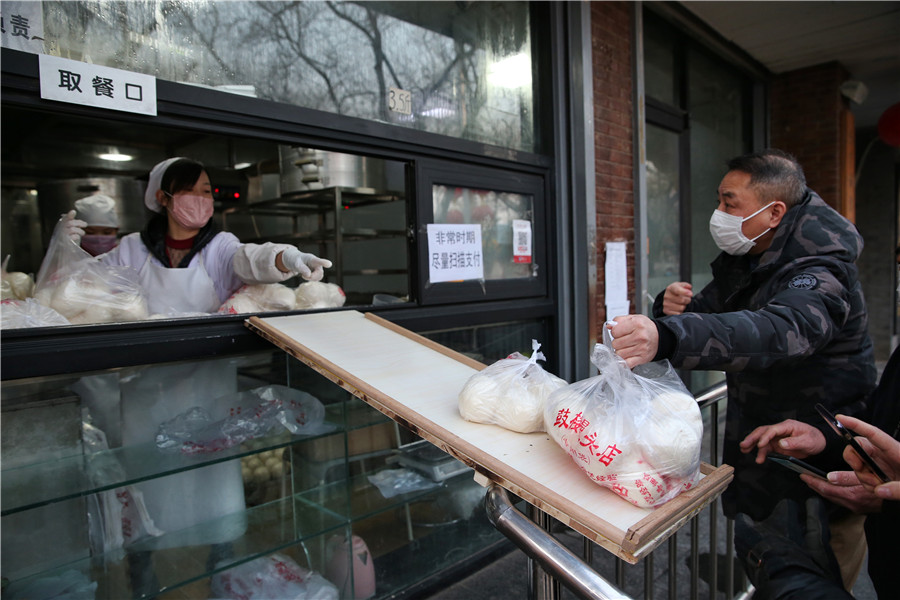
China on the other hand, has already reduced most lockdown measures and therefore does not need to give people such massive amounts of money to help them just survive. Rather, the fiscal policies it has devised are intended to ensure people thrive, and not just in the short term.
New Infrastructure spending, which will increase in light of the virus, was already earmarked to play an important role as part of the countries long-term shift from an export-heavy, manufacturing based economy to a more an innovative high-tech driven one. The development of new infrastructure related to areas including 5G, internet of things, industrial internet, cloud computing, blockchain, data centres, smart computing centres and smart transportation, will give a boost to technology companies in the medium-term by getting them up and running again, but it also does not compromise the governments continuing vision of providing a new sustainable and tech driven future.
There is also evidence that the economic fallout may rebound quicker than expected thanks to promising initial figures since the lifting of lockdown measures began. According to government data, all major industrial enterprises and 80 percent of smaller businesses are now open, with electricity consumption—one of the key indicators analysts use to gage Chinese output—recording an increase in usage of 1.2 percent in the first 15 days of April compared to a reduction of 4.8 percent in all of March.
These positive numbers coupled with higher than expected Purchasing Managers’ Index figures for April, which saw it grow to 52 and up from 35.7 in March, have highlighted that Chinese consumers, characterised with high ratios of savings and disposable income, are already out buying despite the uncertainty of the last few months. Voucher programs, which local governments are rolling out to entice people to spend rather than one-off cash payments which can be saved and not put back into the economy, have been introduced across the country to aid consumption. In Nanjing, located east in Jiangsu province, 300-million-yuan (US$42.36 million) worth of vouchers have been released to get people spending again, and similar polices have been rolled out in Tianjin, Beijing, Shanghai, Hangzhou and other larger cities.
“Abundant tools and ample policy space”?
The flexible framework that characterises its economy also means it has more instruments to deal with the economic fallout from coronavirus as and when it needs to, and therefore it is not essential to implement them all in one go.
In the US or UK, where government debt to GDP is extremely high and interest rates are already at historic lows, they are unable to adopt further measures to influence them and are therefore constrained. In contrast, China has “abundant tools and ample policy space” to deal with problems as they arise, according to Liu Guoqiang, vice-governor of the People’s Bank of China, the nation’s central bank, as can be seen by recent decisions reacting to the need of small and medium-sized businesses.
On April 21, the Ministry of Finance announced it would be increasing front-loaded quota of local government special bonds by another 1 trillion yuan (US$141.3 billion), and the People’s Bank of China cut the benchmark lending rate—the loan prime rate—by 0.2 percentage point to help accelerate business resumption.
On the same day Premier Li Keqiang announced that the government “must scale up financial support for the real economy, especially the micro, small and medium-sized companies, to help them overcome the difficulties.” It was announced that regulatory requirement for the provision coverage ratio of small and medium-sized banks will be lowered by 20 percentage points, helping free up more credit resources and boost the capacity for serving micro and small companies.
A three-month rent exemption in the first half of this year for micro, small and self-employed businesses in the services sector renting state-owned properties was also announced. As well as rent exemptions, state-owned banks are being encouraged to extend pledge loans at concessional rates to such lessors according to their needs, and highlights the hands-on-approach the state can have to the smallest economic affairs.
While these policies may not be as flashy or headline grabbing as other countries measures, there is real confidence from government officials and economists that these policies can help China’s economy rebound in Q2 and even end the year with overall GDP growth of between 3 to five percent. Given the rest of the world is unlikely to record any growth in that time at all, achieving such a feat after coronavirus would be even more remarkable.