The National Security Law Will Strengthen Business Confidence in Hong Kong
 Facebook
 Twitter
 Linkedin
 Google +
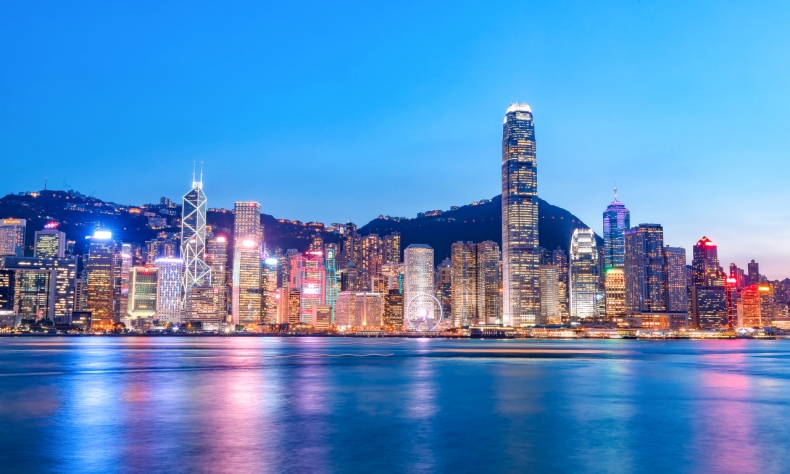
Hong Kong will remain a free market economy with very strong business orientated policies and rule of the law in the dynamics of business confidence and business security.
Editor’s Note: Tom Fowdy, a well-respected journalist and political commentator with expertise in China studies, spoke with China Focus editor Jamie Wright on the proposed Hong Kong national security legislation and what it means for the city.
The political analyst discussed his thoughts on the reasons why the proposal was introduced at the national level, what it means for rights and freedoms of Hongkongers and international business interests, and what impact it could have on China-US relations.
China Focus: Why did China’s NPC Standing Committee introduce the national security legislation for Hong Kong through the National People’s Congress, rather than rely on the Hong Kong Legislative Council?
Tom Fowdy: There has been a constant state of turbulence, violence and unrest in the Hong Kong Special Administrative Region (HKSAR) and its politics has essentially been reduced to gridlock by this behavior. The former director of public prosecutions Grenville Cross recently said that the National People’s Congress (NPC) not only have a right to implement these laws into the Annex of the Hong Kong Basic Law via Article 18, but also that due to the constant unrest, implementing them at the local level, is simply untenable.
The situation in Hong Kong is increasingly unstable and increasingly volatile, it looks like it’s going to be a never-ending cycle. The Basic Law mandates the implementation of Article 23 by Hong Kong so that offences of secessionism, independence activism, and treason are dealt with accordingly. The fact that it has not been implemented represents a major loophole in Hong Kong’s legal system.
China Focus: Critics claim the national security law will infringe upon the freedoms and rights enjoyed by the people in Hong Kong. Some say it represents a threat to the “One Country Two Systems” principle. What do you think of these opinions?
Tom Fowdy: Western countries appear to be reserving for themselves the exclusive right to interpret the “One Country Two Systems” principle and they seem to believe that One Country is one country in name only, and that Beijing has no right to have a say in the governance in Hong Kong whatsoever.
I believe the mainstream media in the West are exaggerating and cherry-picking facts when they claim that this law undermines the “One Country Two Systems”. And there seems to be a belief by the West that they have this guardianship over Hong Kong, that they have more of a right to say how the Sino-British treaty is interpreted than China itself.
The NPC’s draft aims at safeguarding China’s national security in Hong Kong, which involves One Country but not Two Systems. The free market and civil rights in Hong Kong will not be influenced by the law.
China Focus: But why are some western media outlets particularly assertive about this, including the BBC who ran the headline “this is the end of Hong Kong”?
Tom Fowdy: The western line is in fact not offering a full portrayal of the facts nor an honest comprehension of China’s constitutional structure, with such a move being procedural and in accordance with China’s sovereign rights. Motivated by ideology, western supremacy and the belief that they have a bigger stake in Hong Kong’s future than the country who it belongs to, western nations at large are deliberately ignoring these details and in turn refusing to treat China as an equal partner in this matter, rendering any say or perspective as illegitimate or in bad faith. Thus, rather than fall for one sided commentary, those observing this situation must understand the following:
First of all, HKSAR is a legal and constitutional component of the People’s Republic of China. Although it is as stated a special administrative region whereby given autonomies are promised to the city, it is not an independent territory and it does not, contrary to western belief, exist exclusive or contrary to China’s legal and constitutional structure. Instead, what is known as the “Basic Law” that is Hong Kong’s mini constitution and legal arrangement, is in fact willed and under the jurisdiction of the NPC, and has a constitutional position in willing and overseeing the laws of the country as a whole.
Hong Kong’s Basic Law is a component of this. Although the document mandates that Hong Kong has autonomous right of policymaking in areas which it specifies which the Central Government do not need to account for, the Standing Committee of the National People’s Congress holds a right of interpretation over it as specified in Article 104. Next, the Basic Law also sets out in Article 18 that the NPCSC holds the right to impose laws on the HKSAR related to “defence and foreign affairs as well as other matters outside the limits of the autonomy of the Region as specified by this Law”. It is able to do by placing them in Annex III. These aspects, which include the provision of national security, are not autonomous.
Next, Article 23 of the Basic Law mandates that “The HKSAR shall enact laws on its own to prohibit any act of treason, secession, sedition, subversion against the Central People’s Government, or theft of state secrets, to prohibit foreign political organizations or bodies from conducting political activities in the region”. Although this is supposed to be done by the Hong Kong administration, it has not materialized due to local opposition. However, Article 18 further stipulates that: if there is an event of “turmoil within the HKSAR which endangers national unity or security and is beyond the control of the government of the Region” the NPC Standing Committee also has the power to implement laws in the region.
And what is happening now? The city is in a constant state of unrest. Although the west point to local grievances, nevertheless the state of sporadic violence, collaboration with US politicians by some and severe disorder have led the NPC to utilize their legitimate constitutional role over Hong Kong, via Article 18, to implement a national security law on the region’s behalf. In doing so, the “One Country, Two Systems” principle is not being violated because the field of national security does not come in the jurisdiction of the local government, or even contrary to the principles of the Basic Law itself. Instead, the West makes a flawed argument which argue these constitutional provisions and push the logic that Beijing is not a legitimate, or for that matter equal, partner in Hong Kong and does not have a say over its future.
Therefore, what should be understood from this is that Hong Kong is legally and constitutionally a part of China’s sovereign territory. Whilst it has given autonomies mandated and pledged in the Sino-British declaration, China has exclusive rights over foreign policy, national security and defence matters of which given parties and individuals have sought to undermine. Those who are disagreeing place ideological assumptions over the legal specifications and fail to acknowledge Beijing’s position and rights over its own city. One Country is not something that exists in name only, but on a constitutional and sovereign scale.
China Focus: When Hong Kong was gripped by social unrest last year, some activist leaders were in regular contact with officials in Washington and some protest groups were known to have received funds from US NGO’s. As a result, the Chinese Government accused “dark hands” of fueling the unrest. What impact do you think the new legislation will have on relations between Hong Kong activists and politicians in Washington?
Tom Fowdy: I believe the legislation will move quickly to close down the given ties between Hong Kong activists and US politicians and organizations. Activists such as Joshua Wong, who have travelled to the US congress to urge US politicians to take actions against Hong Kong — this is obviously a considerable problem.
Whilst I do not believe that the legislation will immediately stop all the unrest, it will address some of the roots and move quickly to put a stop to this activity. Of course, the protest activity in Hong Kong will continue, but hopefully, the legislation can put it within new parameters which means they only pursue such aims on the condition that they are not collaborating with US politicians and foreign organizations — and are not doing it to completely undermine the country.
We can also expect that US politicians such as Marco Rubio and other US NGOs, and very adversarial journalists, we can expect that they will be banned from entering Hong Kong, which is already the case with the Macao Special Administrative Region.
China Focus: As an international hub for global capital and commerce, how will the national security law impact on Hong Kong’s business environment? Do you think Washington will follow through on its threats to remove the city’s free port status?
Tom Fowdy: Whilst it brings likely risks in terms of retaliation from the US — such as ending its preferential trading status — the situation should also be viewed in terms of the bigger picture. Hong Kong is in a perpetual state of chaos. Even before the coronavirus pandemic began, Hong Kong was in recession, its economy was shrinking, its business confidence was shaking, and it was suffering from outgoing capital flights.
If in the short term, the implementation of national security law by the NPC brings repercussions on the city by the US, it will hopefully create a stable environment which will renew business confidence again. Sanctions or not, Hong Kong will remain a free market economy with very strong business orientated policies and rule of the law in the dynamics of business confidence and business security. Law makers in Beijing therefore have a good judgement that implementing this law will be in the long-term interests of Hong Kong as a business and financial hub.
It should also be noted that if Washington does remove Hong Kong’s free port status, it will have repercussions on the US as well — it’s a big move. The US has a considerable level of investment in Hong Kong, including all of its biggest financial institutions, so to make a move like that, would send markets into a frenzy. I’m therefore not entirely certain whether in fact Hong Kong’s free port status will be removed.