Racism and White Supremacy are Woven into America’s Fabric
 Facebook
 Twitter
 Linkedin
 Google +
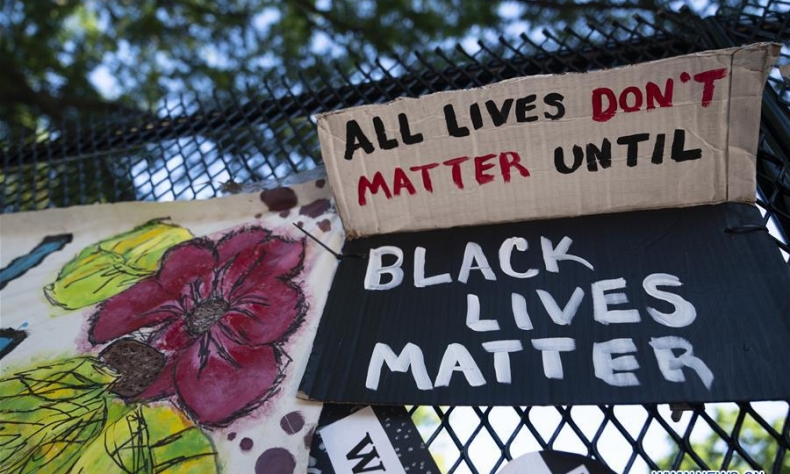
Racial discrimination and its evil twin, white supremacy, have been woven into the woof and warp of the very fabric of American life starting from even before the United States’ founding and continuing to this very day.
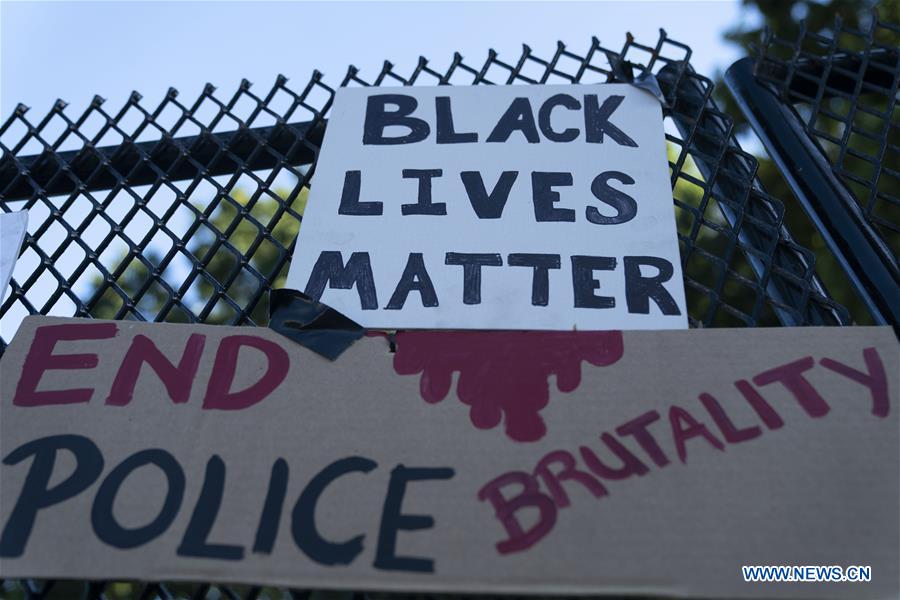
In what seems like an eternity ago, on May 25th, white policeman Derek Chauvin murdered African-American George Floyd In Minneapolis, Minnesota with a crowd of shocked and angry witnesses looking on. The resulting civil unrest, including protesting, burning, rioting and looting in over 400 American cities and towns should not really come as any surprise in the age of Trump and the era of COVID-19, however. What is so surprising is that it took so long given the toxic mix of factors that brought it on. Sadly, the main cause is that racial discrimination and its evil twin, white supremacy, have been woven into the woof and warp of the very fabric of American life starting from even before the United States’ founding and continuing to this very day.
Racial discrimination is unfair treatment or bias against someone or a group of people on the basis of their race. White supremacy is a system of structural advantage that favors white people in social, political and economic areas.
While today, agriculture is only about 5 percent of the American economy and is mostly mechanized, in the American colonial economy of the mid-18th century it was 87 percent and labor intensive. Either directly or indirectly, the 13 British colonies that became the original U.S. states depended on slaves, mostly Africans, and to a lesser extent Native Americans, especially for tobacco and cotton grown in the South. While national in scope, this explains why racism has always been more prevalent in the American South.
It’s little wonder that the drafters of the U.S. Constitution spent an inordinate amount of time, and heated discussion on the knotty dilemma of the legal status of slaves for purposes of being counted for the apportionment of the House of Representatives. Most people in the South considered slaves to be subhuman property but in the North, they were considered more human. While the earlier Declaration of Independence of 1776 written by slave-owning Thomas Jefferson said that “all men are created equal and endowed by their Creator with life, liberty and the pursuit of happiness”, the great compromise of the Constitutional Convention was to count slaves as 3/5ths of a person. Until today some Americans still don’t consider African-Americans as fully human, and even more don’t treat them as their equals.
The slavery issue festered until 1861. At that time slaves made up about 13 percent of the total U.S. population. It took a four-year civil war between the secessionist slave-holding South and the anti-slavery North with the assassination of President Abraham Lincoln and three-quarters of a million deaths to legally end slavery but, alas by no means ending either racial discrimination or white supremacy.
The period after the war was called “Reconstruction” but it was more of a reconfiguration of racism and white supremacy morphing into other forms. The Constitution was amended but at that time the changes were paper tigers, mere words on paper. The 13th Amendment supposedly abolished slavery; the 14th Amendment supposedly mandated equal legal protection for all; and the 15th Amendment claims to prohibit discrimination in voting rights for all citizens based on “race, color or previous condition of servitude”. To this day after more than 150 years, the struggle goes on to fully implement them.
Instead of welcoming them, many states passed laws that discriminated against African-Americans such as laws in Northern midwestern states to regulate or block their migration. In the South, laws to control or reimpose the old social structure were enacted to restrict the civil rights of former slaves. In fact, from the 1880s into the 1960s, a majority of American states enforced segregation through so-called “Jim Crow” laws (named after an African-American character in minstrel shows that stereotyped African-Americans as inferior). From the Atlantic to the Pacific, many jurisdictions imposed legal punishments on people for consorting with members of another race such as prohibiting intermarriage and ordering business owners and public institutions to keep their African-American and white visitors separate. I myself can remember travelling through the South in the 1960s and seeing separate bathrooms for African-Americans and whites. You don’t need to be a rocket scientist to guess who always got the best? In a famous 1896 U.S. Supreme Court case, Plessy vs. Ferguson, the Court upheld the “separate but equal doctrine” even when in fact some people’s facilities were much more equal than others.
But the most fearsome weapons to perpetuate racism and white supremacy were not governmental. People took matters into their own hands with vigilante “justice”. For example, if an African-American man or boy “offended” a white woman by looking the wrong way at her, they could be lynched: executed by hanging, dragged along a road or event burned alive. From 1877 to 1950 there were at least 4,400 documented lynchings. One of the last lynchings was that of 14-year-old Emmett Till, a 14-year-old African American lynched in Mississippi in 1955, after being accused of “offending” a white woman. As was and is typical in the South, his two killers were acquitted by an all-white jury; although they later confessed to the crime, they were never punished.
Then there were organizations like the Ku Klux Klan founded in 1865, who at its peak in the 1920s, had more than four million members. While African-Americans were their main target so were Catholics, Communists, Jews, foreigners and organized labor. Known for their robes and pointed hats, they were until recently an underground terrorist organization that killed and intimidated many. Like President Trump today, they opposed immigration.
Overt segregation, discrimination and white supremacy continued in the 20th century. African-Americans fought in the major wars but in segregated all-African-American units. The irony was that they were second class citizens fighting for America’s freedom.
The civil rights movement grew in the 1950s still pursuing their unachieved goal of being full members of American society. An important victory came in 1954 in the U.S. Supreme Court case Brown vs. Board of Education. It overturned Plessy vs. Ferguson. In the words of Chief Justice Earl Warren “in the field of public education the doctrine of ‘separate but equal’ has no place,” as segregated schools are “inherently unequal.” As a result, the Court ruled that the plaintiffs were being “deprived of the equal protection of the laws guaranteed by the 14th Amendment.”
Then came the 1960s. It was a turbulent era of assassinations and anti-Vietnam War protests. ?It witnessed progress in the civil rights movement, led by the National Association for the Advancement of Colored People and associated leaders like the Reverend Martin Luther King who aggressively pushed nonviolent demonstrations, sit-ins at lunch counters to protest denial of service, and marches and demonstrations.
President Kennedy initiated, and his successor Lyndon Johnson completed, passage of landmark civil rights legislation, the Civil Rights Act of 1964. Johnson was the longtime Senate Majority Leader who knew how to hold hands and twist arms. The law outlawed discrimination in public accommodations and in the workplace. It largely, but not completely, put an arrow through the heart of Jim Crow and of segregation itself.
Johnson knew the situation in 1965 when he spoke at Howard University saying “Freedom is the right to share, share fully and equally, in American society–to vote, to hold a job, to enter a public place, to go to school. It is the right to be treated in every part of our national life as a person equal in dignity and promise to all others.”
With the assassinations of President John F. Kennedy in 1963, and of his brother, Robert and Dr. King in 1968, Johnson must have been pained that during his time as President, there were serious race riots, usually started on hot, steamy summer nights, invariably by some police action, often murder, against African-Americans. In reaction to race riots in my home town of Detroit and Newark in 1967, Johnson created the National Advisory?Commission?on Civil Disorders to get to the bottom of the problem. Historians note that he had hoped the Commission would find subversives and agitators to have caused the violence but he was shocked by their conclusion that it was caused by white racial discrimination of African-Americans, and by white supremacy. As the report famously concluded: “our nation is moving toward two societies, one black, one white – separate and unequal” and called for “programs on a scale equal to the dimension of the problems” in response.
And the problem is that while the 1964 Civil Rights Act made progress, it was not enough then and it’s not enough now more than a half-century later. COVID-19 has disproportionally affected African-Americans 2.4 times more than whites and has robbed them of their jobs and what dignity they possessed. America has failed them in that they had a poverty rate of 20.8 percent, with the percentage among whites being only 8.1 percent in 2018, and their rate of imprisonment per 100,000 people in 2018 was 592, compared to 157 for whites. And tellingly in 2019 data of all police killings, African-Americans were nearly three times more likely to die at the hands of police than white Americans.
Am I optimistic? In 1968, I felt that there was hope but President Johnson rejected his own Commission’s recommendations and pivoted to public preference for law and order.
Today, I’m less pessimistic. There were whites and Asians, together with African-Americans among the recent protesters, the vast majority of whom were peaceful. The latest public opinion polls suggest a possible defeat of the incompetent and mentally-challenged Donald Trump who hates minorities (except fellow-billionaires), owns these disturbances and has made it “America First”, alright: first globally in deaths and cases of COVID-19. In the most recent ABC News/IPSOS poll of American adults, 74 percent saw George Floyd’s death as an underlying racial injustice problem, a 30 percent increase from December, 2014 when similar police murders against African-Americans riveted the nation’s attention. And in the same poll six in ten Americans disapprove of the president’s handling of the virus.
There is at least some hope that this time will result in systemic change.
The views expressed here are those of the author and do not necessarily reflect those of China Focus.