China’s approach to poverty alleviation offers lessons for the global fight against poverty
 Linkedin
 Google +
China’s development experiences provide substantive lessons to other developing countries, and although they all have different national contexts, China’s experiences can be effectively adapted to address local challenges through the South-South Cooperation platform.
Editor’s Note: For China, 2020 marks the decisive year to complete the building of a moderately prosperous society in all respects and eradicate poverty nationwide. As a renowned global organization dedicated to helping development and fighting against poverty, United Nations Development Programme (UNDP) has witnessed China’s poverty alleviation efforts and made contribution to it. In an interview with China Focus, Beate Trankmann, UNDP Resident Representative in China, shares her insights on China’s fight against poverty and its significance to the world.
China Focus: How does the United Nations think of China’s target to eradicate poverty by 2020?
Beate Trankmann:China’s target to eradicate rural extreme poverty by 2020 is an ambitious and unprecedented poverty alleviation goal. To date, roughly 750 million Chinese people have been lifted out of poverty – this accounted for about four-fifths of the number of people lifted from extreme poverty globally in the past four decades. Based on the current national poverty line China is on pace to eradicate rural extreme poverty by 2020.
Yet we cannot overlook the effects of COVID-19 on this progress. While China is gradually recovering from the pandemic, this crisis has indeed transcended health and affected the vulnerable and disadvantaged the most. 5.5 million people are still below the poverty line of 2800 RMB in China. Most of these are in vulnerable groups: 40 percent have illness, 15 percent are with disabilities, and 16 percent are among the aging population.
Many who are not below the poverty line are also vulnerable. According to the latest statistics, nearly 2 million people who have been lifted out of poverty still face the risk of sliding back, and 3 million people above the poverty line are still considered vulnerable. Since the outbreak of COVID-19, the Leading Group Office of Poverty Alleviation and Development (LGOP) of the State Council, in collaboration with relevant ministries, has announced a series of actions to ensure continued efforts in poverty eradication. These include prioritizing the allocation of funds designated for poverty alleviation to heavily affected areas and industries, improving employment services and helping migrant workers return to work. In addition, the National Development and Reform Commission (NDRC) has also allocated 5.6 billion yuan ($790 million) to help create job opportunities in local communities for the poor population.
If China is to achieve its 2020 target, which it can, vulnerable segments of the population will require special attention, as most of the current measures target industry and employers. Expanding the reach of existing social protection systems can assist people working in the informal sector who are disproportionally vulnerable; many of them rely on low- and uncertain-income streams and may not be included in existing schemes. Targeted assistance, such as providing concessional loans to poor households with small family businesses or extending unemployment benefits to informal workers, could provide a much-needed buffer to ensure their livelihoods.
China Focus: According to the World Bank, China has managed to lift 850 million people out of poverty since reform and opening up in the late-1970s, more than ever before in so short a period of time in human history. In your opinion, is China’s experience in poverty alleviation worth learning by others?
Beate Trankmann:Other countries can learn from China’s targeted poverty alleviation approach – from the ground up, at the household level, and with strong, continual political commitment.
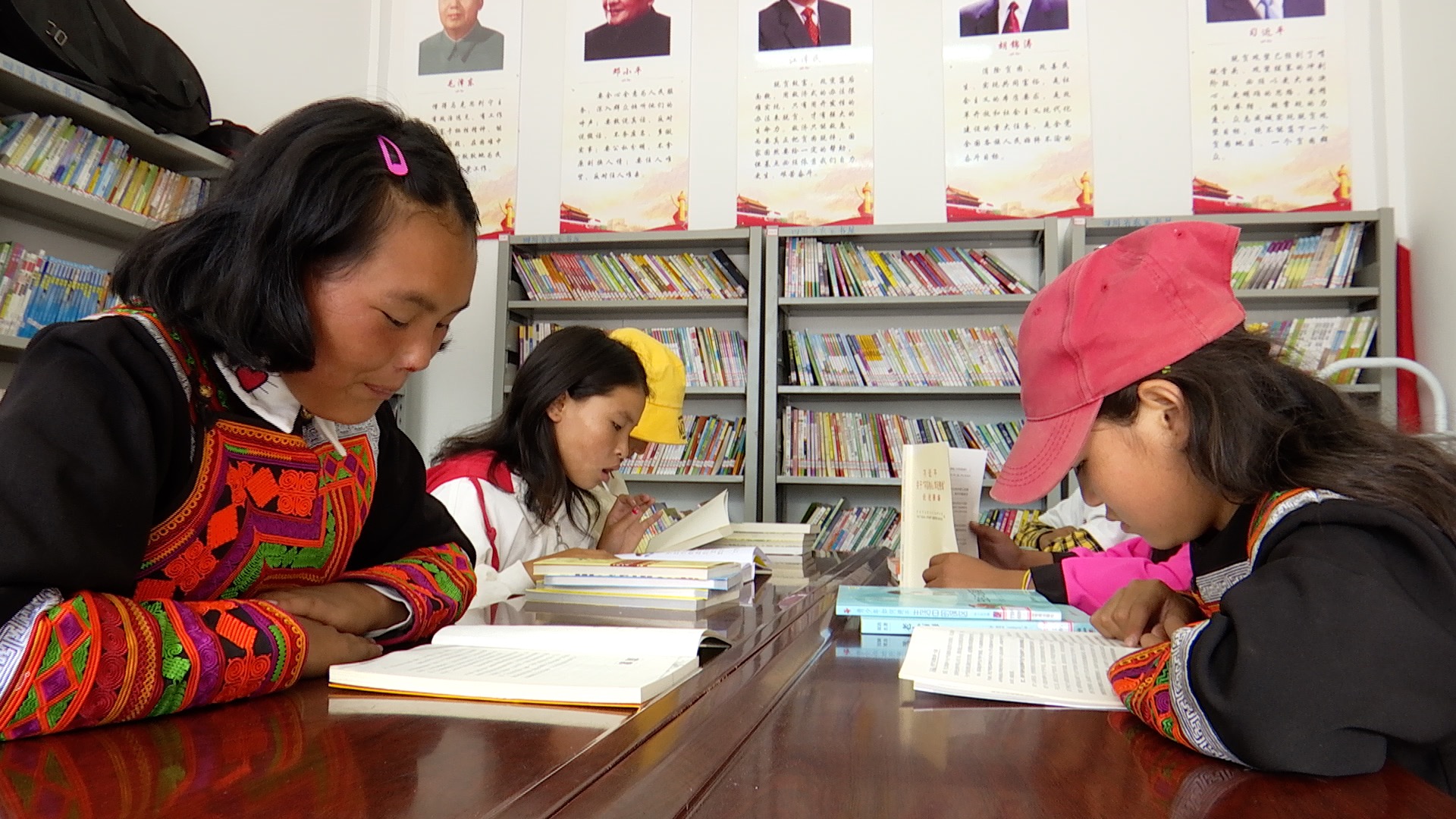
While it’s important to remember that every country context is different, China’s targeted, bottom-up approach to poverty alleviation does offer valuable lessons for the global fight against poverty: First, through a thorough assessment of local resources, environmental conditions, and culture, China identifies down to the household level where the poor are, what they lack, and what they need – region by region, village by village. Second, tailor-made interventions are designed and implemented which are specific to each county and village. For example, each village decides what to plant, raise or sell according to their comparative advantages in natural, financial, physical and human endowment. Third, the progress of every village and household is monitored and tracked to verify that poverty alleviation measures are having the desired effect”.
China’s government has taken pragmatic and systematic actions to implement this campaign and invested greatly both in terms of human resources and funding. Human resources: Since 2017, about 775,000 civil servants have been sent to all registered poor villages to support local authorities in carrying out measures to reduce poverty at the individual household level and monitor progress. Funding: China has continually invested massively in poverty alleviation throughout the years. Last year, the Central Government allotted 126 billion yuan for targeted alleviation efforts.
Over the last two decades, one of UNDP’s main priorities has been to assist China with its increasing role in global development cooperation and help to share China’s development lessons with countries around the world: IPRCC – In 2005, UNDP initiated and supported the establishment of the International Poverty Reduction Center in China (IPRCC) aimed at creating a global knowledge hub on poverty reduction. The IPRCC has since provided government officials and experts from developing countries all over the world with training on poverty reduction and sustainable development; South-South Cooperation (SSC) has provided a global platform through which other countries can learn and benefit from China’s development experience and expertise by way of knowledge-sharing and technology transfer.
In particular, trilateral cooperation offers a unique opportunity for maximizing development impact by combining the strengths of China, partner countries, and UNDP.
China Focus: What significance and lessons can China bring to the world by wiping out the country’s poverty?
Beate Trankmann:China’s size and scale means everything that it achieves also has global impact. This applies to the progress made domestically on sustainable development. China’s success in eradicating poverty over the last 40 years has been historic. These feats have contributed significantly towards the achievement of SDG1, no poverty.
China’s development experiences provide substantive lessons to other developing countries, and although they all have different national contexts, China’s experiences can be effectively adapted to address local challenges through the South-South Cooperation (SSC) platform. This can provide countries with the opportunity to accelerate growth, while also being conscious of environmental health.
The Belt and Road Initiative, as a source of infrastructure investment for developing countries, has become an important driver of connectivity-related investments and lending. It is critical that it moves in a way that safeguards global public goods, is well aligned with the SDGs and context fit for the needs of developing countries. One particular aspect in this regard is to apply harmonized standards compatible with SDGs along the entire Belt and Road. This then can assist in bringing investments that are environmentally sustainable while also being inclusive by for example increasing decent work opportunities in the partnering countries.
China Focus: China has proposed to build a “moderately prosperous society” (Xiaokang society), what do you think of the significance of this proposal?
Beate Trankmann:Definition of Xiaokang has expanded over the years, mirrors global development vision and evolution of MDGs to SDGs. The “Xiaokang society”, or “moderately prosperous/well-off society”, has been used by the Chinese government throughout the over 40 years of the Reform and Opening Up to capture China’s development goals which is rooted in China’s traditional culture. One of the most important aspects of the Xiaokang vision has been its adaptability and evolution throughout the years in response to new development challenges encountered by China at different development stages. Indeed, while the term “Xiaokang society” was initially linked explicitly to targeted income growth, it has been extended to a broader concept over time. In 2002, then Party General Secretary Jiang Zemin expanded the term to, “a Xiaokang society in all respects”, which refers to a more comprehensive set of goals for modernization and development beyond just the elimination of absolute rural poverty. These goals cover five aspects, including politics, economics, culture, society and environment.
Similarly, the global development vision also evolved, from the 8 Millennium Development Goals (MDGs), which focused only on developing countries and were narrower in scope, to the current 17 Sustainable Development Goals (SDGs), which are more ambitious and comprehensive. By expanding its Xiaokang vision to cover the three dimensions of development, namely economic, social, and environmental, China’s 21st century development agenda aligns strongly with today’s SDGs. Xiaokang and the SDGs also both emphasize the importance of eliminating and ending poverty rather than just reducing it as the MDGs did. In this regard, the significance of Xiaokang has been enormous. As previously mentioned, since the vision was set forth, over 750 million people in China have been lifted out of poverty.
And it is on track to achieve its goal of eliminating extreme poverty this year despite the additional challenges brought on by the pandemic.
China Focus: From the perspectives of UNDP, what’s the biggest challenge humans face today?
Beate Trankmann:Humanity faces many challenges. One of the greatest challenges, is climate change. Our future – including our ability to fight pandemics like COVID-19, among other risks – depends heavily on our efforts to protect our environment and combat climate change. And on this front, frankly, we have not been doing great. The world is currently not on track to keep global warming below 1.5 degrees, which was set forth as a goal by world leaders in 2015. The frequency of global catastrophes such as COVID-19 and large-scale natural disasters will only increase if climate change isn’t slowed down.
In addition, those that will suffer the most from these consequences will be the vulnerable and disadvantaged. Rising inequality around the world will leave many people without the means to buffer against future shocks. This is why UNDP looks at multidimensional indicators to identify vulnerable groups as part of its mandate to leave no one behind – those who have been lifted out of poverty as far as income is concerned (2,995 yuan in China) are still vulnerable to falling back due to crises like the current pandemic.
We must all consider the kind of future we want for ourselves, our families and for our communities. Achieving this future is reliant upon a sustainable future for all of humanity and for our planet. And so, we should ask ourselves how each of us can contribute to making this collective future a reality. This is in fact what the 2030 Agenda for Sustainable Development is all about that world leaders agreed to at the UN in 2015. It is about changing the way we live, behave, consume and invest and it is therefore an agenda for everyone, everywhere.
China Focus: Moving forward post-2020, what will China’s development mean for the rest of the world and the planet?
Beate Trankmann:China’s economic importance in global value chains; has made great progress in focusing on renewable, clean energy domestically – must take that approach to overseas development projects. Today, as a global manufacturing leader (28 percent share of global manufacturing) as well as a massive consumer market, China is an integral part of the world economy, accounting for roughly 16 percent of global GDP. As the outbreak of COVID-19 proved, China’s deep integration into global value chains and transportation networks, means that shocks and disruptions to China’s development will impact the world. 7 out of 10 of the busiest container ports in the world are in China. At the height of COVID-19 in China, the total value of imports and exports during the first two months of 2020 decreased by 9.6 percent (y-o-y).
As such, China’s economic recovery matters immensely to the rest of the world, and it is precisely this level of importance in the global economy, that makes China’s commitment to achieving the 2030 Agenda and the 17 Sustainable Development Goals all the more crucial. The country is in a position play a critical role in defining the “new normal” of the post-COVID-19 world as one that is low-carbon, and environmentally friendly.
Indeed, China already has the means to take on this role: It is at the forefront of solar technology and low-carbon transportation, including high-speed rail, bike-sharing, and electric vehicles. It has one-third of the world’s wind power, a quarter of its solar capacity, six of the top ten solar panel manufacturers and four of the top ten wind turbine makers. As China’s involvement in global development cooperation continues to increase, it is vital that China brings the same environmental awareness to international development programs and investments in other countries. Ghana-Zambia Technology Transfer – In 2014, with funding from the Danish government, UNDP worked with China’s Ministry of Science and Technology to launch two projects facilitating the transfer of renewable energy technology between China, Ghana, and Zambia.
Moving forward, China’s commitment to making green investments will impact whether we can put the world on a low-carbon trajectory, which could have massive benefits for people as well as planet. Making energy systems greener could boost global GDP by $98 trillion by 2050, delivering 2.4 percent more GDP growth than current plans. Boosting investments in renewable energy alone would add 42 million jobs globally, with health care savings eight times the cost of the investment and helping to prevent future ecological and economic crises.