The Adverse Consequences of “Asian NATO” on International Relations
 Facebook
 Twitter
 Linkedin
 Google +

The attack and interception that the Trump Administration launched against China is a loss and obstruction of cooperation to the global society.
The governments of the United States, Japan, Australia and India held a strategic foreign ministerial dialogue in Tokyo in early October. The four countries agreed to work together to maintain security and stability in the Indo-Pacific region. Some analysts said Washington attempts to found another “NATO” in Asia which could be used to contain China’s rise.
As the US presidential election is approaching, the renewed promotion of the Indo-Pacific foreign ministerial dialogue under the US Indo-Pacific strategy is a continuation of the Trump Administration’s foreign policy to increase domestic support by targeting China. In the past few years, the Trump Administration has repeatedly accused China of issues such as trade, technology, the epidemic, Hong Kong affairs, Taiwan question, and human rights, and provoked a Cold War. But the Indo-Pacific strategy was the first step in Trump’s Anti-China diplomatic strategy.
The concept of “Indo-Pacific region” was first proposed by Indian Navy Colonel Gurpreet S Khurana in 2007. Subsequently, Japanese Prime Minister Shinzo Abe mentioned a similar concept during his visit to India. Since 2011, government officials, military personnel and think tanks from Australia, the United States, Japan and other countries have begun to use the concept of “Indo-Pacific region” extensively. In 2013, the “Indo-Pacific region” was included in the “2013 Defense White Paper” in Austria.
In November 2017, US President Trump proposed the “Free and Open Indo-Pacific Strategy” (FOIPS) when attending the APEC summit in Da Nang, Vietnam, which officially replaced President Barack Obama’s “Asia-Pacific Rebalancing Strategy”. In order to promote the implementation of the Indo-Pacific strategy, in May 2018, the United States Pacific Command was renamed the United States Indo-Pacific Command.
In December 2018, the US Congress passed the “Asia Reassurance Initiative Act of 2018”, which objectives are to formulate a long-term strategic vision for the United States in the Indo-Pacific region, strengthen US leadership in the region, show the determination of the United States to regional partners and allies, and help the US economy develop through trade expansion. The “Asia Reassurance Initiative Act” also contains provisions that require the US reassurance to its commitments to its allies such as Japan, the Republic of Korea, Australia in the region.
It also recommends that the US Government allocate a budget of $1.5 billion for five consecutive years to develop relations with the Indo-Pacific region to establish a long-term strategic vision and a comprehensive, multi-faceted and principled policy in the region.
Following the Indo-Pacific Strategy, the Trump Administration led a series of unilateral diplomatic actions against China, including launching a trade war and a series of unfounded allegations on China while withdrawing from international organizations and international agreements.
In addition to the above proactive planning steps against China, the Trump Administration has also put forward targeted countermeasures against China’s specific international initiatives. In response to China’s Belt and Road Initiative, President Trump’s investment strategy in the Indo-Pacific region was also supported by Congressmen of both parties. The “Better Utilization of Investments Leading to Development Act of 2018” consolidates the Development Credit Authority (DCA) of the US Agency for International Development (USAID) and the Overseas Private Investment Corporation (OPIC) into a reformed US International Development Finance Corporation, providing $60 billion in funds to help poor regions around the world build energy, seaports and water services, and other infrastructure and economic development.
In fact, indications are that the Trump trade war with China has been enormously costly and has yielded limited, if any, positive result. Robert Zoellick, former World Bank President, recently wrote that, as a result of the trade war, Trump has been forced to spend $28 billion to compensate U.S. farmers, incurred an annual bill for American taxpayers on $350 billion of purchases from China, and a loss of 300,000 jobs in the US.
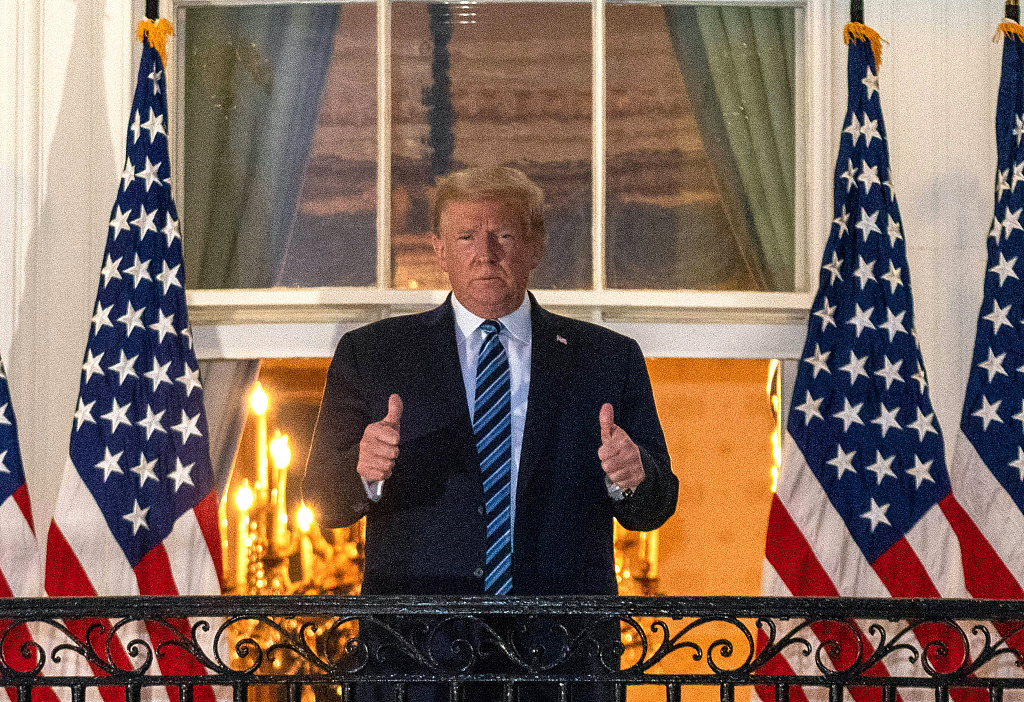
The attack and interception that the Trump Administration launched against China is a loss and obstruction of cooperation to the global society. As a developing country with a relatively fast growth rate, China has never exported war or poverty to the international community. The ever-expanding opening of the Chinese market has brought more and more growth opportunities to other countries, including the United States and countries in the Indo-Pacific region. The “Belt and Road Initiative” guided by the principles of a community with a shared future for mankind provides a global channel for a more effective and low-cost circulation of commodities, capital and talents in many developing countries.
Human society is essentially a collective group. The development of history has reached a point where different civilizations and markets cannot be separated from each other.
For the domestic governance of the United States, the unilateral foreign policy pursued by the Trump Administration is an act of using taxpayers’ money and the country’s diplomatic and military resources to manipulate citizens’ emotions and harm the long-term interests of Americans. As to international relations, the Indo-Pacific alliance and some other the trans-regional organizations, led by the Trump Administration, are only a short-term combination of different interests, rather than a long-term, stabilized development plan for the involved countries.
For Australia, India, and Japan, despite the recent tensions in Sino-Australian relations, the Sino-Indian border conflict and the dispute over the Diaoyu Islands between China and Japan, the US Indo-Pacific strategy seems to give them some certain support in terms of dealing with China; but in fact, the three countries might have just acted as pawns for the Trump Administration in its domestic elections.
Perhaps in the last century, international relations could be formulated by a combination of short-term interests. But today, human society has developed to be closely related to each other where the dominant subjects of social development are more diverse and the future challenges are globalized and consistent. The principle of unilateralism, and the actions of taking other countries as bullets or targets, is not only lacking in foresight, but also is not pragmatic.
No matter how complicated international relations could become, the essential logic is always that foreign relations serve domestic politics and internal governance. In bilateral relations, confrontation certainly entails up and down. When to spritz and when to lay back depends on how to advantageously use pressure as a way to resolve conflicts, which is a common tool for large and powerful countries to employ. While in multilateral relations, interests must be balanced, either through division or through grouping, and knowing when and how to avoid being targeted.
The current international structure is no longer a system dominated by any single country. Some countries’ worries about China’s rise and attempts to develop international initiatives and international standards on its own, as well as its worries about Washington’s unilateral policies and opposition to the international organization system established after World War I and World War II, are essentially the same.
However, some countries’ anxiety about China’s rise stems from its ignorance of Chinese culture and society, and the inability to use Chinese concepts to explain China’s development. Therefore, dialogues are significantly needed for better understanding.
An open and normalized dialogue mechanism is an undoubtedly effective action to maintain international relations and build international trust. This point is the same for both China and the United States.
The author is the founder and President of the Foundation for Law and International Affairs.