An Analysis of Joe Biden’s Promised Foreign Policy to Understand Future China-U.S. Relations and Beyond
 Facebook
 Twitter
 Linkedin
 Google +
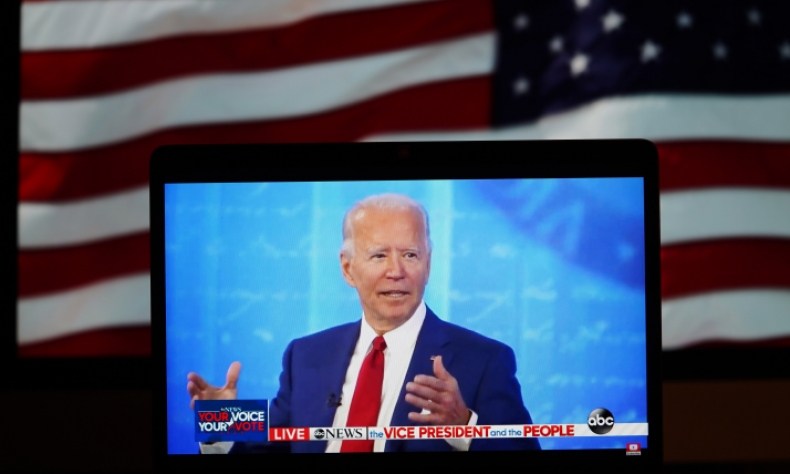
The future competition between China and the United States may be decided by the country that can continue to grow its middle class and expand the market.
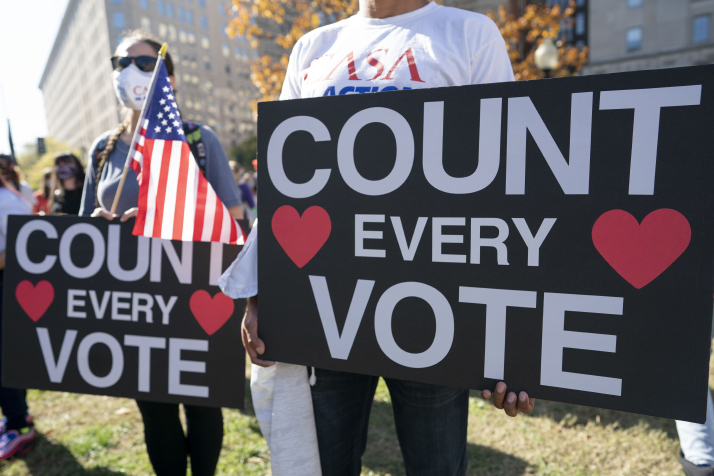
On November 8, the U.S. mainstream media announced that Joe Biden, the Democratic Party presidential candidate, had won the 270 electoral votes needed to win and would become the 46th president of the United States.
During Donald Trump’s presidential term, analysts always describe the policies of the U.S. Government as “highly uncertain.” If Biden wins the White House, will U.S. foreign policy be more predictable? Also, will Biden continue the new cold war approach of Trump toward China or will he choose a policy of detente instead?
Middle-class factor
The March/April issue of Foreign Affairs magazine carried a campaign article by Biden, titled Why America Must Lead Again: Rescuing U.S. Foreign Policy After Trump, which projected the policies he would adopt if he won.
They included renewing “democracy” at home and implementing a foreign policy for the middle class. His priority would be “strengthening our greatest asset—our middle class,” which meant ensuring that “everyone can share in the success of the country, no matter one’s race, gender, zip code, religion, sexual orientation, or disability.”
Some articles in Foreign Affairs have presaged basic policies of the ruling team. For example, in 1947, George Kennan, a U.S. diplomat, made an anonymous contribution to the magazine. The article, The Sources of Soviet Conduct, published under the pseudonym Mr. X, formulated the policy of containment, the basic U.S. strategy for fighting the Cold War with the Soviet Union. Kennan’s idea became the basis of President Harry Truman’s foreign policy.
In 1967, Richard Nixon, two years before he became president, wrote an article for Foreign Affairs, Asia After Vietnam. “Taking the long view, we simply cannot afford to leave China forever outside the family of nations,” he wrote. This was regarded as his declaration that he intended to change the U.S. policy toward China.
The subsequent progress in China-U.S. relations seemed to follow the tone. In 1971, two years before he became Nixon’s secretary of state, Henry Kissinger went to China, followed by Nixon’s visit in 1972, and the two countries established diplomatic relations in 1979.
The recent U.S. presidential election has seen a polarized society, which probably explains why Biden wants to revive the middle class and create a new society where the American Dream is easier to achieve. However, this is no easy task.
When Biden became vice president in December 2008 with Barack Obama’s election as president, they spoke of rebuilding the middle class. But while they recognized the cause of the deep-rooted illness in U.S. society, the widening gap between the rich and the poor, the two struggled to come up with a cure by investing more to help the most vulnerable.
Eight years later, the middle- and low-income groups, who didn’t see globalization as being beneficial to all, voted Trump into office.
This time, instead of Trump’s “America First” strategy, Biden remains committed to promoting a middle-class economy.
Will his ambition work or not depends on the status of the U.S. and the rest of the West in the global economy. According to Biden, the United States accounts for about a quarter of the global GDP and together with other Western countries, the strength more than doubles.
But the strength of developing economies and emerging markets are growing rapidly. The falling of its share in the world economy, if continues, will make it impossible for the U.S. to lead the world or revive its middle class.
Since the West accounted for more than 70 percent of the global economy after World War II, they became buyers of products from most countries. Other economies can grow only by selling products to Western markets, with the U.S. being the most important one, and the status and value of the American dollars are hence prominent and the core of world leadership lies in the size of the market.
With a population of 1.4 billion and a middle-income population of over 400 million, China is now the world’s most promising market. Cumulative imports of goods over the next 10 years are expected to exceed $22 trillion.
Thus, the future competition between China and the United States may be decided by the country that can continue to grow its middle class and expand the market. According to the World Bank’s report on purchasing power parity (PPP) in May 2020, China’s economic aggregate, measured by PPP, surpassed that of the U.S. in 2017.
Limited cooperation
According to Biden, he will build a united front of U.S. allies and partners to shape the rule of the road on everything, from the environment to labor, trade, technology and transparency. While U.S. needs to be tough with China over dominating the technologies and industries of the future, at the same time, it will seek to cooperate with China on issues where interests converge, like climate change, nonproliferation of nuclear arms, and global health security.
These policies differ from the Trump administration’s, and most Western countries are likely to welcome Biden’s idea of uniting to restore Western dominance and working with China on key issues. It suggests that the new administration will resume multilateralism, but with a degree of antagonism toward China. In the meantime, the converging interests of the two countries may expand.
The Biden policy toward China may be more moderate than that of the Trump administration, but it should be noted that Biden pays more attention to the status and role of U.S. allies and will lead them to reshape international economic and trade rules. And the U.S. strategy of preventing China’s rise as a technological and industrial leader will remain unchanged.
Biden also stressed that the U.S. must strengthen its innovative edge if it is to succeed in future competition with China or any other country. Throughout U.S. history, innovation comes from two sources: sustained government investment, especially in security; and market competition, which has been the primary one since the 1980s.
Yet the liberal market is also the major cause of inequality in the U.S. today. Biden’s desire for innovation and to reduce inequality are very much at odds with the existing system.
When the new administration is in place, the first thing to do is to deal with the legacy of chaos bequeathed by the Trump administration. Therefore, it will be hard for it to formulate perfect new policies in the short term. And if it can truly implement the middle-class policy remains to be seen.
In any case, it is clear that Biden’s foreign policy toward China will at least softening the new cold war strategy that had been gaining momentum in recent years under Trump.
This is an edited version of the article first published in The Beijing News.
The author is a research fellow with the National Institute of International Strategy, Chinese Academy of Social Sciences.