The Road to Low-Carbon Transformation
 Facebook
 Twitter
 Linkedin
 Google +
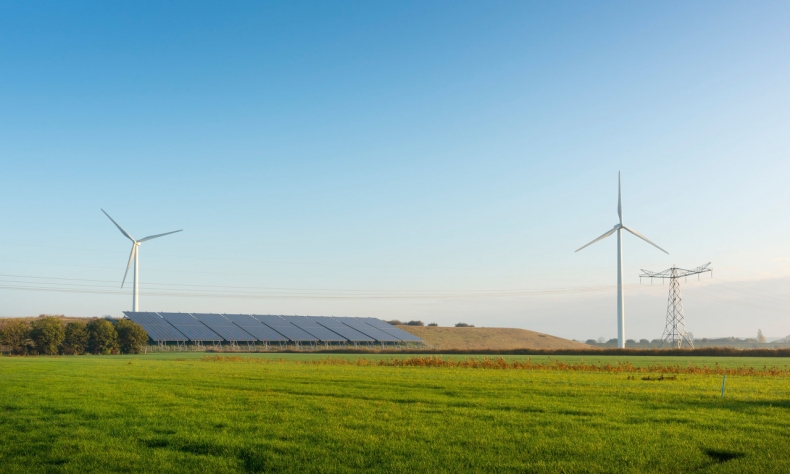
China’s practices in this field will serve as valuable experience for other countries. The country will play a leading role in global economic transformation, riding the trend of low-carbon development.
China made the commitment to reduce its CO2 emissions per unit of GDP by 40-45 percent by 2020 as compared with 2005 at the UN Climate Change Conference 2009 in Copenhagen; and simultaneously increase the proportion of non-fossil energy consumption to 15 percent of its total energy mix. That commitment was honored ahead of schedule. By 2019, China’s CO2 emissions per unit of GDP had dropped by 48 percent, and its non-fossil energy consumption ratio had risen to 15.3 percent.
On September 22, Chinese President Xi Jinping, at the General Debate of the 75th Session of the United Nations (UN) General Assembly, declared that China would endeavor to reach CO2 emissions peak before 2030 and achieve carbon neutrality before 2060. What will this mean for the world’s second largest economy?
Complicated Challenges Ahead
China’s low-carbon development transition faces three major tough challenges: economic structural adjustment and industrial upgrading, optimization of the energy structure, and establishment of a green low-carbon economic system.
In addition, the still raging COVID-19 pandemic makes the low-carbon economic transformation even more challenging. As energy-intensive industries like manufacturing and construction often lead economic recovery, and the services sector with low energy consumption, including catering, tourism, and entertainment industries, often see a slow bounce back, carbon emissions may rise during the process.
Moreover, the attainment of CO2 emissions peak will not necessarily entail its reaching the energy consumption peak. To maintain economic growth, the energy demand grows. Therefore, all the newly increased needs for energy should be met by non-fossil fuel sourced energy. Under these circumstances, carbon intensity should be lowered to offset the new carbon emissions due to GDP growth, namely the decrease rate of carbon intensity per unit of GDP should be higher than the growth rate of GDP.
To slash carbon intensity, energy consumption transformation plays a crucial role. According to a 2020 report on China’s energy development, the country’s coal consumption accounts for 57.7 percent of its total energy consumption, and the proportion of non-fossil fuel consumption to the total primary energy consumption is 15.3 percent. In order to achieve carbon neutrality prior to 2060, China has to build a nearly carbon-zero energy structure with new energy and renewable energy as the mainstay by the middle of the century, and increase its non-fossil energy proportion in the energy system to between 70-80 percent. In addition, the proportion of non-fossil fuels used in power generation should also be raised to more than 90 percent in 2050 from the current 32 percent. To realize the transformation, China needs to invest more than RMB 100 trillion in the coming 30 years.
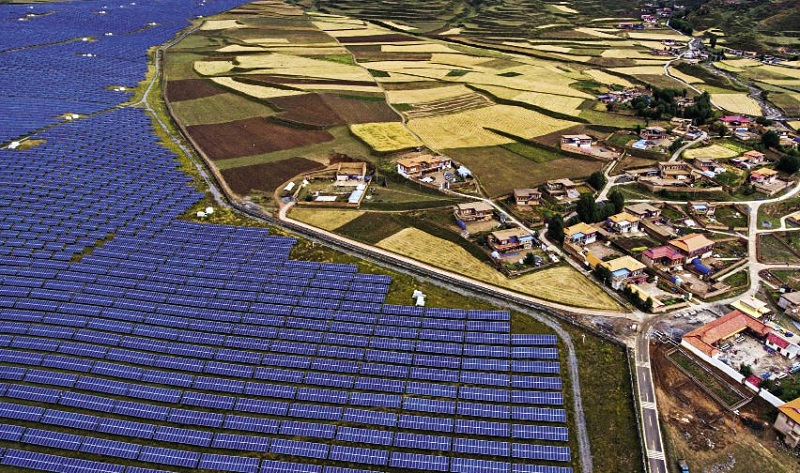
To achieve carbon neutrality amidst the current global scenario demands huge efforts of all countries, and developing countries will face more challenges. In order for China to meet its carbon-zero target by 2060, it will make more strenuous efforts than its developed counterparts to attain their carbon neutrality goal by 2050. From carbon emissions peaking to carbon neutrality, the developed world has a transition period of 50-70 years; however, China will only require 30 years. After 2030, China will need to have an average annual emission reduction rate of 8-10 percent, far higher than that of the developed world.
Nowadays, developed countries have entered their post-industrialization stage with their energy demands having reached their peaks. Since the economic crisis in 1998, most of developed countries have seen their overall energy demands gradually decline. On the premise of no energy demand increase, to realize the transformation of an energy system, it only needs adjustment of the energy structure, and that new energy and renewable energy be used to replace coal. On the contrary, China is now in a stage of quite rapid economic and social development with its energy demands rising. It faces the dual challenge of meeting the increased energy demands and adjusting the existing ones. Despite its great efforts in developing renewable energy, China still can’t meet its newly added energy demands with renewable energy, which make it inevitable that for a certain period the country’s coal consumption will still see some increment. The comparison makes it evident that China’s task is more onerous than that faced by developed countries. However, it also provides an excellent opportunity for China to realize leapfrog development, which surely demands painstaking efforts by the nation.
Electric vehicles and charging piles on display at the 2020 Shanghai Pudong International Automotive Exhibition held last October.
Essential Measures
Cooperative actions to cope with climate change are in the common interest of the whole humanity as the climatic problems endanger the Earth’s ecological safety and the very existence and development of human society. Many countries have shown a strong willingness for cooperation as broad consensus has been reached in the international community. Against the backdrop of the global green development transition, advanced technologies for low-carbon development and the capability to effect low-carbon transformation will give a country a competitive edge and vault it to global leadership status for sustainable development.
It is a challenging task for China to realize carbon neutrality before 2060. For this reasom, the following aspects should become priorities in the country’s efforts to meet the target.

The first priority is to greatly advance economic transformation and make innovation the driving force for green development. China should further develop the digital economy and hi-tech industries, and push forward low-carbon development through digitalization. Meanwhile, China should also slash greenhouse gas emissions by restricting the development of energy-intensive heavy and chemical industries and adjust product and industrial structures while maintaining sustained economic development.
Secondly, China needs to conserve natural resources, develop the circular economy, and support sustained economic and social development with as optimized energy and resource consumption as possible. To this end, China needs to widely adopt advanced technologies and speed up energy substitution. By 2050, China must complete the building of a nearly carbon-zero energy system with new energy and renewable energy as the principal part.
During the next 10 years, China should also accelerate the development of wind and solar power and realize an average annual growth of 100 million kilowatts. Such industries featuring high energy consumption as steel, cement, petrochemical, chemical, and building materials should take the lead in attaining CO2 emissions peak during the 14th Five-Year Plan period. In addition, China should further improve the carbon trading market, advance emissions reduction and technical innovation by taking advantage of the market mechanism, and encourage non-governmental investment in low-carbon green industries.
Moreover, China needs to seek nature-based solutions by relying on forests, grasslands, and wetlands as carbon sinks and improve the ecological system’s capacity for carbon absorption by strengthening protection, management, and restoration of the eco-environment.
Dynagreen Environmental Protection Group, located in the industrial park of circular economy in Tongzhou District of Beijing, owns the world-leading waste-to-energy power plant.
China’s Policy Orientation
In the efforts to realize economic recovery while coping with the COVID-19 pandemic, countries should stick to green, high-quality, and sustainable development, which will help the world confront global ecological crises and promote global sustainable development. On this, a consensus has been widely reached in the international community that is now working on how to realize low-carbon economic transition during the economic recovery.
China must formulate a long-term development strategy for the low-carbon transition. While ensuring that it meets its centennial goal of building the country into a modern socialist country by the middle of the century, China should also blaze its way to realize green development and meet the net-zero target oriented toward the global goal of keeping global temperature increase below two degrees Celsius, thus making its contribution to global ecological safety, which will be commensurate with its rising composite strength and international influence. China’s practices in this field will serve as valuable experience for other countries. The country will play a leading role in global economic transformation, riding the trend of low-carbon development.
The author is vice chairman of China’s National Experts Panel on Climate Change and head of the academic committee of the Institute of Climate Change and Sustainable Development of Tsinghua University.










