China, the UN, and the Global Opportunity for Partnerships & Progress
 Facebook
 Twitter
 Linkedin
 Google +

China is a country of great promise and global leadership for the acceleration of the SDGs.
READY TO GET TO WORK
The United Nations (UN) Secretary-General, Mr António Guterres, has selected me as the UN Resident Coordinator in China. I am privileged to be the Secretary-General’s representative to China, and I am honoured that the Government of China has accepted my credentials to serve in this post.
I am excited at the prospect of working with the Government of China and other stakeholders including academia, private sector, non-gvoernmental organizations, and the people of China to advance sustainable development within the country and to support China’s leadership in global health, peace, development and the 2030 Agenda.

China’s leadership is longstanding. It has been a champion for multilateralism at least as far back as 1953 when Premier Zhou Enlai set out the Five Principles: mutual respect, mutual non-aggression, non-interference in each other’s internal affairs, equality and mutual benefit. These principles are at the cornerstone for world peace.
China’s leadership is an example for the world. With over 40 years of astounding progress in human development, China is on track to eradicating poverty and has the world’s second-largest economy. All nations have much to learn from China about delivering on commitments made in the UN’s Sustainable Development Goals (SDGs).
China’s leadership crosses national boundaries. China understands that its success is bound up with the success of the world, and vice versa. That, I believe, is why China is an outstanding partner in South-South Cooperation, not least in Africa; shows solidarity in the fight against climate change and global pandemics; and pursues international projects, most notably the Belt and Road Initiative.
China’s leadership is all the more remarkable now, considering the stresses that the COVID-19 pandemic has placed on global partnerships. Rather than shirk from international cooperation, China proposes to expand its role. This point was raised in a January 2021 white paper by the China International Development Cooperation Agency (CIDCA). The paper points to the value of investments in multilateralism and humanitarian support.
China’s dedication to multilateralism and development resonates with so much of my career and life. I have 25 years of experience in precisely these areas, much of it with the United Nations. Most recently, I served as the United Nations Resident Coordinator in Kenya, after holding other leadership positions across the organization, including with UNDP (Kenya), UNFPA (Kenya), UNOPS (Middle East and Europe), UNICEF (Indonesia, South Sudan and Sudan), the UN Assistance Mission for Iraq (UNAMI), and the UN Mission in Bosnia and Herzegovina (UNMIBH).
The SDGs are not just a pleasant idea. Their fulfilment is essential to the flourishing—and, ultimately, the survival—of all humanity. We have ten years left before the 2030 deadline. ?What we do in what has been dubbed the “Decade of Action” will have lasting ramifications for people and the planet.
China has the will, the resources, and the experience to contribute mightily to the 2030 Agenda. The United Nations is keen to have China as a leading partner in this world-historical endeavour. I too bring my personal experiences, spanning continents and causes to this fight.
As I take my post in China, I see several potential areas of fruitful cooperation areas between China and the United Nations.
- COVID-19 recovery and a lasting global health system;
- Infrastructure and education in China and around the world;
- Multilateralism and the SDGs;
- South-South Cooperation, especially with Africa;
- Gender equality and women’s rights.
Together, we have much to accomplish. I can’t wait to get started.
HEALTH FOR ALL: COVID-19 AND BEYOND
China’s response to the COVID-19 pandemic, a once-in-a-century worldwide health crisis, has been commendable. It has gone beyond domestic solutions to help others with the global shortage of health supplies. Kenya, where I’ve concluded my service as the UN Resident Coordinator, was one of 53 African countries to receive critical medical supplies. In Ethiopia, China is also supporting the construction of the headquarters for the Africa Centers for Disease Control and Prevention, which will help respond to future challenges, including novel pathogens.
In Kenya, I led the UN country team in developing a socio-economic response to COVID-19. By working with regional bodies such as the UN Economic and Social Commission for Asia and the Pacific (ESCAP), I will similarly unite the UN country team in China in supporting the Government. Together we will ensure that China’s post-pandemic recovery is inclusive, sustainable and leaves no one behind, through the newly launched United Nations Sustainable Development Cooperation Framework for 2021-2025.
Beyond the pandemic, the UN urges countries to adopt universal health coverage by 2030 to ensure health and wellbeing for people of all ages. To also respond to the national priority on eliminating health disparities, and the 2030 Agenda principle of leaving no one behind, I will work with partners to protect the most vulnerable groups, prioritizing women and young people, and support their access to health services. China can be at the forefront of this effort, enshrined by the Sustainable Development Goal 3. Speaking at the World Health Assembly in May 2020, President Xi Jinping called for more consolidated international response in ensuring global health. He also pledged that any vaccines developed and deployed by China would be offered as a global public good. In an expression of global solidarity, he called for supporting the WHO, helping Africa, and strengthening international cooperation.
With my UN colleagues in China, I will work with partners to assess the broader socio-economic impact of COVID-19, to apply lessons learned to the Government’s future programming and recovery efforts. These lessons will assist other countries during the recovery phase to build back stronger. Other countries are already emulating China’s work on community-based disease surveillance systems, effective triage through primary health care, deployment of health workers to meet frontline needs with ensuring their safety, and discovering and deploying COVID-19 vaccines.
With its disproportionate and deadly impact on older persons, the pandemic has shown that we must fundamentally rethink how we see and treat older people in our rapidly ageing societies. As countries adjust to changing demographic realities, they need to make sure that their populations stay active and healthy, starting from a young age. China has valuable lessons to share from its integrated, life-cycle approach to population ageing.
BIG SOLUTIONS FOR BIG CHALLENGES: INFRASTRUCTURE AND EDUCATION
To achieve the SDGs in any one country, let alone in all countries, we need to work on a large scale. Working on a big scale requires at least two things: infrastructure and systemic change in education. China is a global leader in both areas and offers lessons—and concrete support—to the entire world.
In infrastructure—and the jobs that come with it—China’s leadership is without parallel. The Belt and Road Initiative (BRI) furthers China’s importance as a model for developing countries. The BRI builds on one of the most extraordinary successes in humankind’s history, the raising of over 850 million Chinese out of extreme poverty. BRI now helps other countries take advantage of China’s depth of experience, in addition to financing. Indeed, Secretary-General Guterres said that the BRI “could contribute to a more equitable, prosperous world, and to reversing the negative impact of climate change.”
I have seen first-hand how partnerships around infrastructure have transformed remote parts of Northern Kenya. A spectacular highway built in record time, connecting Isiolo town in Kenya to Ethiopia, constructed by a Chinese state company. Funded by the African Development Bank, the European Union and the Kenyan Government, this road is part of the Lamu Port-South Sudan-Ethiopia Transport Corridor (Lapsset). It is proving central to regional integration and unlocking economic potential in the entire East African region. Most importantly, the road has reduced the travelling distance between Nairobi and Moyale (a town on the Kenya-Ethiopia border) to 7 hours.?Previously, travel on this route was torturous, with days spent on unforgiving bumpy terrain.
These partnerships between the public and private sector will be key to unlocking Africa’s real economic potential. Such economic growth will help not only Africans but people the world over. China has shown itself to be a shining example and a generous partner in pursuit of international development.
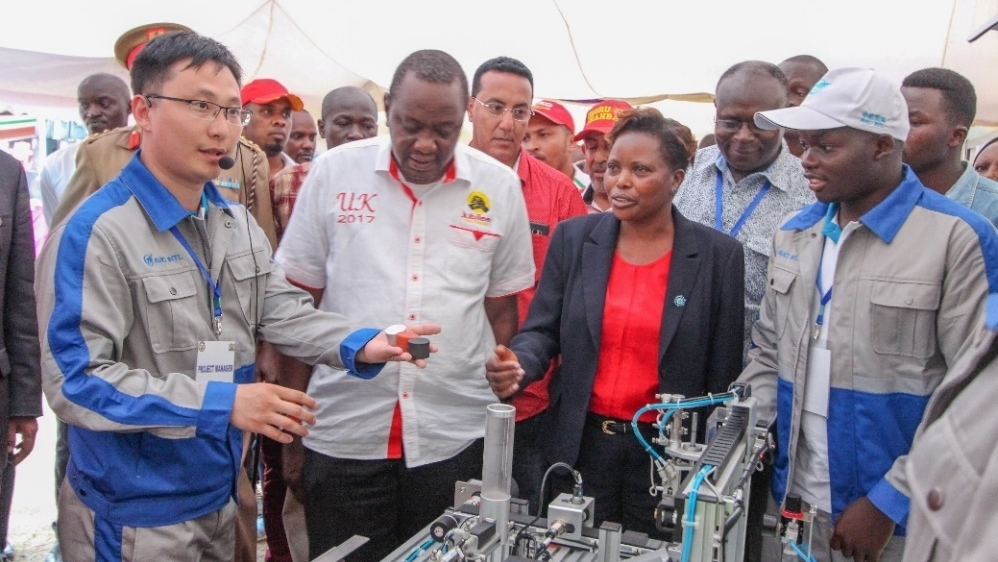
In education, too, China’s work is exemplary. This work is no mere piecemeal effort, but rather a systematic expansion of education nationwide, offering the world great food for thought. Education and training was part and parcel with the country’s reform and provided much needed human capital to propel sustained social and economic development. Over the last four decades, China has universalized 9-year compulsory education and eradicated adult illiteracy. Gross enrolment rates at the senior secondary level have increased from 29% to 78%, with higher education levels going from 4% to about 40% during the past three decades.
China’s education system has evolved by blending its cultural heritage with Western style teaching. China provides skilled labour and researchers for the world, yet avoids brain-drain due to favourable production and local employment policies. Professional development of teachers in China is well integrated with curriculum and assessment, providing a school-based, structured career ladder. The focus on developing teachers as professionals underpins China’s success in every subsector from early-childhood education to higher education. Key to this progress has been advancing girls’ education, with increased equality of access and retention rates from primary to higher education being a remarkable development in past years.
Educational progress over this period reflects this rapid expansion, not only in terms of enrolments and graduates, but also in quality, relevance, systemic and institutional development, and local and international employability of graduates.? China now strengthens universities’ capacities in Africa, one example of success being the Bamako University in Mali.
China’s work on education is all the more remarkable given our current global crisis. Earlier last year, with COVID-19 still a challenge, the country demonstrated how to continue providing quality education, efficiently switching to online teaching. The Government also implemented several policies to support business productivity in a safe and coordinated manner. It stimulated the economy to ensure job security, especially for vulnerable groups.
China’s experience in infrastructure and education demonstrates the value of going big.
TOGETHER, NOW: MULTILATERALISM AND AGENDA 2030
2020 already marked the 75th Anniversary of the UN. The time to recommit to coming together in global solidarity is now. Not next month or next year, but now. And again. And again. Indeed, multilateralism is the lodestar to which we must constantly return. It is not achieved once and for all. Our ongoing efforts are required to refresh it.
We need to make sure this crisis doesn’t stop us from reviving multilateralism or achieving the 2030 Agenda.? China, as a UN Member State, a leader of the G77, and a permanent member of the UN Security Council, has a vital role in this renewal. This need rings especially true in Africa, where the challenges and the opportunities are immense.
With over 75 million displaced people around the world, fleeing conflict, instability, climate change and poverty, Secretary-General António Guterres said, “The world is in pieces, we need world peace.” China, a peacekeeping powerhouse, is responding. It is in the top-ten of troop-contributing countries and is the second-largest donor to the UN peacekeeping. A recent white paper on 30 years of Chinese peacekeeping makes the essential point that development must accompany peacekeeping. Without these two actions happening in lockstep, often only the pieces remain.
Ever since reopening to the world economy, China’s significance in global governance has grown exponentially. The country is now leading a renaissance in multilateralism. Its recent foreign policy discourse emphasizes the need for a Chinese voice in global leadership with its representation in international institutions now transcending economic, security, and legal realms. The country has lived up to the Chinese expression “Jia You” (“come on”/“keep going”).
China is actively engaging in regional fora and global institutions such as the UN, G20, ASEAN, SCO and BRICS. Its role in founding the Asian Infrastructure Investment Bank and the New Development Bank (BRICS Development Bank) also epitomizes the administration’s determination to place China at the heart of reform in global economic governance.
The Chinese approach to development—based on infrastructure development, universal health coverage, educational exchanges and intellectual connectivity, in conjunction with the private sector—is advancing prosperity and sustainability, compatible with the UN’s best practices.
China is a country of great promise and global leadership for the acceleration of the SDGs. As the UN Resident Coordinator, I will work with China to help it attain the SDGs, and ensure its crucial role in South-South Cooperation to advance the SDGs elsewhere.? Making China’s bilateral and multilateral aid work better for developing countries is one of my central aspirations.
The UN Kenya SDG Public-Private Partnership platform was established in 2017 in partnership with the Government of Kenya. Under my leadership, we promoted collaboration with American, UK, Chinese, Kenyan and European companies, to harness big data and other emerging technologies. Likewise, the Kenyan UN Development Assistance Framework 2018-2022 received praise as an exemplary framework that aligns with national development priorities, conceived through a highly consultative process led by Government. I look forward to lead similar engagements in China to advance the SDGs.
ACROSS CONTINENTS: SOUTH-SOUTH COOPERATION AND THE OPPORTUNITIES IN CHINA-AFRICA COOPERATION
As McKinsey & Company recently noted, China has become a significant force in Africa’s development, substantially increasing commitments and engagements in past years. Pragmatism argues for moving the discussion ahead, to how China’s involvement can reap benefits for Africa and China.
China has expressed readiness to engage with African Continental Free Trade Area efforts to boost trade and cooperation in the digital economy, including 5G technologies. Sino-African trade has grown steadily with trade volume in the first half of 2020 exceeding $80 billion.? Chinese investment in Africa has increased by 1.7 per cent year-on-year despite the global economic downturn, demonstrating China-Africa cooperation’s vitality.
China’s agricultural experience is particularly relevant to the realities of many African countries. Africa has the highest proportion of populations living in rural areas. China has achieved laudable successes in raising agricultural output, gaining market access, and improving lives through new technologies. Its experience in dealing with agricultural development challenges and increasing income and food production—while minimizing environmental damage—provides a fount of knowledge for the developing world.
While in Kenya, I observed a striking alignment in China’s development priorities and those of the African nation. The two countries have forged a strong partnership to advance their aspirations. By adopting disruptive technologies, Kenya is now working with companies in Silicon Valley and elsewhere to re-tool current public health, agriculture, affordable housing and manufacturing approaches. I hope to build similar partnerships between Kenya and China’s tech sector.
I will work with UN Agencies, Funds and Programmes in China to support the Government in achieving sustainable development and assisting other developing countries, particularly in Africa, to grow economies and improve livelihoods. During the High-Level Roundtable on South-South Cooperation, held in 2015 at UN Headquarters in New York, China announced a “Six One-Hundreds” plan to support developing countries. This intiative provided 100 new programs in poverty, agriculture, international trade, climate protection, construction of 100 hospitals and clinics, and 100 schools and vocational training centres. Future efforts like these are welcome opportunities for the UN Country Team in China to work with counterparts in programme countries to advance these objectives.
Though many parts of Africa are affected by the egregious effects of climate change, poverty and instability, the continent’s are not just victims or a burden for other countries to bear. Africans have talent, expertise, skills, and drive. They have rich cultural, historical, economic, and natural and human resources. They are equal partners in development and have much to teach other nations. The relationship is two-way.
By 2050, Africa’s population will grow to 2.3 billion, with over 850 million young people. But realizing Africa’s demographic dividend requires we invest in Africa’s human development and economic growth today. It is prudent to accept China’s role in Africa. It is also time for China to enhance that role.
NO PROGRESS WITHOUT WOMEN: GENDER EQUALITY AND WOMEN’S RIGHTS
Gender equality is not a discrete issue that is separate from other policy areas. It is an essential dimension of peace and development. Our progress on gender equality shapes everything else we do. There is no peace and prosperity if we exclude women and girls from the solutions and decision-making processes. We must give equal weight to their needs and ideas in our work, and women must be in seats of power. We have to understand the history and structure of gender inequality and toil away to uproot it. And we cannot advance peace and prosperity in the world without stability in the home. It is high time to end the global pandemic of violence against women and girls.
2020 was the 25th anniversary of the Beijing Declaration and Platform for Action. This milestone enabled us to note progress on gender equality and women’s rights, evaluate where we lag, and seek how we avoid regression to achieve lasting, transformative change.
Within the UN in Kenya, and the country itself, I advanced structural change for gender equality and women’s empowerment, with zero tolerance for sexual exploitation, abuse and harassment.
Also in Kenya, from 2014 to 2016, the UN family along with Huawei (China), Merck (USA), Philips (Netherlands), GlaxoSmithKlein (UK), Safaricom (Kenya) and Kenya Health Care Federation forged a public-private partnership. This partnership supported the Government’s efforts in reducing maternal deaths in some of the highest-burden counties. There was close to a one-third reduction in maternal mortality in these counties. This partnership was hailed as a best practice when invited to the World Economic Forum in Davos, Switzerland in 2017. In September 2017, the former Foreign Minister of Kenya, Ms Amina Mohamed, launched the Kenya UN SDGs, Public-Private Partnership platform at the UN General Assembly.
As a staunch believer in gender equality, I look forward to continuing my advocacy on this critical agenda. China’s push to prioritize gender equality and women’s empowerment in its global cooperation priorities, as indicated by the recent CIDCA white paper, is most welcome. Progress here in China will be an engine for economic growth in Africa and the world.
ONWARD: THE ROAD AHEAD
The economic upheaval caused by the COVID-19 pandemic rivals the Great Depression of the 1930s, upending lives and livelihoods.
As President Xi reminded us in his special address at the World Economic Forum on 25 January 2021, “The pandemic is far from over. The recent resurgence in COVID cases reminds us that we must carry on the fight. Yet we remain convinced that winter cannot stop the arrival of spring and darkness can never shroud the light of dawn. There is no doubt humanity will prevail over the virus and emerge even stronger from this disaster.”
The UN and other international organisations have an important (and challenging) role in responding to the pandemic. Amidst the terrible impact of COVID-19, there is also an opportunity.
There is a reason countries around the world came together for the SDGs: to create a plan of action for people, planet, and prosperity. The challenges facing the world now are as complex and intertwined, requiring complex solutions.
As I start my new role as the UN Resident Coordinator in China in 2021, there are ten years left for the world to keep its promise of meeting the SDG targets. 2021 must be the harbinger of hope and for global collaboration to regain momentum in achieving the SDGs. Now is the time to unite and align our efforts as we move swiftly into the decade of action.
I look forward to leading the UN Country Team in China and continuing to champion the UN values and the 2030 Agenda for Sustainable Development, in partnership with the Government of China.
Let us begin.
The author?is the United Nations Resident Coordinator to China.