Regional Coordination Creates a Win-Win Situation for Those at Home and Abroad
 Facebook
 Twitter
 Linkedin
 Google +
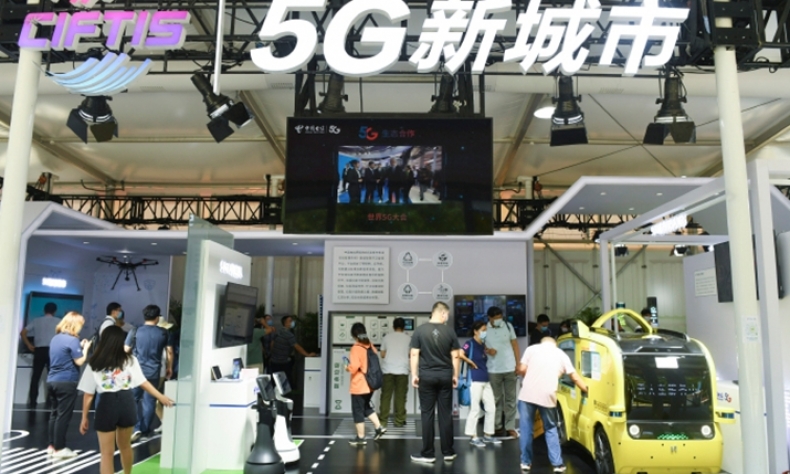
China’s coordinated regional development has become a forward-looking economic strategy presenting the world with access to a huge market while offering numerous incentives for Chinese companies to step onto the global platform.
One notable feature of China’s growth since the late 1970s is that certain regional pinpoints often take the lead in carving out a new path for development before creating a lane for others to catch up; the end goal being that of synchronized growth. Throughout the last four decades, the country has passed through three stages.
From 1978 to 1998, regional disparities remained rife. From 1999 to 2016, initiatives were made to fortify underdeveloped regions. Since 2017, the notion of coordinated development has been the norm. Guangdong Province, which spearheaded reform in the 1980s, as well as Pudong, Shanghai, the progressive trailblazer in the 1990s, serve as prime examples of this model.
Rearranging patterns
To date, China has made steady headway in the implementation of its strategy for coordinated regional development. For instance, the Beijing-Tianjin-Hebei region is formulating a world-class city cluster with the capital of Beijing at its core. The Yangtze River Delta is eyeing the broader Asia-Pacific market. The Yangtze River Economic Belt is strengthening sustainability with an emphasis on environmental protection. The Guangdong-Hong Kong-Macao Greater Bay Area looks poised to bring into play the role of Hong Kong and Macao as key hubs of the Belt and Road Initiative.
China’s new development pattern of dual circulation, which takes the domestic market as its mainstay and allows for domestic and foreign markets to reinforce each other, involves several implications for this strategy. The new paradigm calls for the creation of new growth poles, as well as the integration of industrial and supply chains.
In the past, priority was usually given to the coastal areas due to the nation’s pursuit of an export-oriented economy. Yet the global economic downturn amid the throes of the COVID-19 pandemic paired with escalating protectionist pressures on the international trade stage have caused the holy trinity of economic growth, namely investment export, and consumption, to run out of steam.
China has the option to weather the storm through coordinated regional development, a policy which could potentially give free rein to new opportunities for growth.
Breaking new ground
To fire up domestic demand, different regions should strengthen mutual collaboration, develop the digital economy, and clear the new road of all obstacles that block the flow of personnel, capital and information. Resorting to its advanced financial and hi-tech sectors, the Guangdong-Hong Kong-Macao Greater Bay Area has now grown into the Chinese version of Silicon Valley. And it should further transform itself into a front-runner in the global digital economy.
For example, the Greater Bay Area could develop digitalized factories where industrial robots are put into operation to realize full-fledged automation. A second option would be the extended introduction of emerging industries, such as integrated circuits,
new-energy vehicles, health and new materials. Once all options enter the equation, their combined forces could see the establishment of an industrial cluster for intelligent manufacturing, potentially piquing technological innovation in other areas.
The formation of urban agglomerations or metropolitan areas can improve one metropolis’ ability of empowering its surrounding cities and rural areas. Beijing, as an illustration, should take the lead in upgrading transportation by accelerating railway construction to create a wider network and strengthen its position as a leading transportation hub.
Over the last few years, Beijing has been committed to relieving itself of all functions non-essential to its vital role as China’s capital. Sections of its industry have been relocated from downtown to its suburban areas and surrounding cities. The newly launched intercity railway that runs between Beijing and Xiongan New Area in Hebei Province, as well as the plan to link Xiongan with Beijing Daxing International Airport by a subway line, are speeding up that necessary integration in the region.
The dual circulation strategy aims to re-configurate various resources set against the backdrop of a digital economy. Unrelenting efforts must be poured into pulling the regional industrial chain all the way up to the highest end of the spectrum. And the key to success lies in the optimization of the industrial structure as well as the promotion of the integration of modern services, manufacturing and agriculture.
The Yangtze River Delta is a region with a thriving private sector. This zone in particular should concentrate on developing design, high-end manufacturing and sales industries, as well as supporting
agriculture, tourism and other service industries covering the rural areas of Jiangsu, Zhejiang and Anhui provinces.
As the northern areas of Anhui and Jiangsu are the country’s main grain producers, the delta could accomplish a digital transformation to promote modern agriculture.

Opening up
Trade protectionism and anti-globalization are on the international rise. Still, the tendencies of opening up and cooperation have managed to remain largely unaffected by these political sentiments. In China’s new pattern for development, different regions need to open up across the board, from coastal to inland areas, from east to west.
Local governments are expected to provide a well-rounded legal and operational environment for business in a bid to attract foreign investment. Moreover, they should forge partnerships with neighboring countries and regions to promote trade facilitation. These measures serve the purpose of achieving collaborative interaction between resources and markets—both at home and abroad.
China’s efficiency in controlling the COVID-19 epidemic resulted in a swift economic recovery last year, paving the way for the sustained recovery of both the nation itself and the world at large. Furthermore, China’s coordinated regional development has become a forward-looking economic strategy presenting the world with access to a huge market while offering numerous incentives for Chinese companies to step onto the global platform.
Lu Yue is a professor with the School of International Trade and Economics, the University of International Business and Economics (UIBE). Tian Jilin is a PhD candidate with the UIBE’s China Institute for WTO Studies.