Getting Ready to Invest Abroad
 Facebook
 Twitter
 Linkedin
 Google +
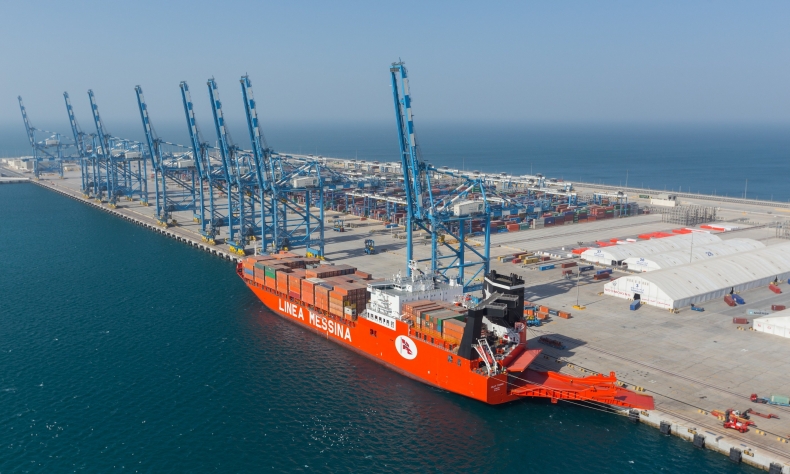
Once the pandemic ends, all nations will focus on economic recovery, boosting market and project demand. Chinese enterprises need to be ready for these opportunities.
Editor’s note: China’s engagement in outward foreign direct investment (OFDI) started later than in many other countries. In 2002, when the National Bureau of Statistics began measuring the OFDI, the net amount was $2.7 billion. However, in 2016 it soared to $196.15 billion, occupying 13.6 percent of the global total. In recent years, China’s OFDI has stayed between $140 billion and $160 billion. He Zhenwei, Secretary General of the China Overseas Development Association, spoke to Beijing Review reporter Tao Xing, sharing his observations on the development of China’s OFDI. This is an edited excerpt of the interview:

Rapid development
Between 1978 and 2000, China mainly focused on absorbing foreign investment in order to develop its economy and accumulate capital. The Go Global strategy emerged in 2000, after Chinese enterprises began to attain the resources and competence to invest abroad.
Large state-owned companies played a leading role at the very beginning, as they had greater economic and human resource strength than small and medium-sized ones. As energy plays a crucial role in supporting domestic productivity, projects in this field were a focus for Chinese investment in other countries.
Nevertheless, in recent years, OFDI by the thriving private sector has surpassed that of state-owned companies and their investment has entered a wider range of industries, such as services, manufacturing and light industries.
The Go Global strategy has helped Chinese enterprises enhance their development and branding. For example, Haier Group, one of the country’s largest home appliance and electronics makers, began its overseas expansion in 1989 by exporting niche products. In 2006, Haier launched a new strategy to bolster its global brand awareness, and has since established factories and research bases abroad. It is now a household name in overseas markets for its hi-tech products, and runs ahead of most of its Western peers in product research and development.
In 2010, Zhejiang Geely Holding Group, a leading private carmaker in China, signed a deal to buy ailing Swedish luxury car brand Volvo from U.S. giant Ford for $1.8 billion. The acquisition offered Geely access to a high-end brand and the technologies it needs to compete with much bigger rivals. It also provided a channel for China-made cars to gain a share in the world market.
As economic globalization gains momentum, nations worldwide have become ever more closely linked, and it is impossible for any country to develop its own economy in isolation. The new Chinese development paradigm of dual circulation underlines the importance of the domestic and overseas markets reinforcing one another, with the domestic market as the mainstay. However, taking the domestic market as the mainstay should not be regarded simply as a return to an inward-looking economy.
China will continue to fulfill its commitment to opening up, and will strive to promote the coordinated development of internal and external demand, import and export, as well as inbound and outbound investment.
Promising industries
China has pledged to peak its carbon dioxide emissions before 2030 and achieve carbon neutrality before 2060. These are ambitious goals that require sound overall environmental governance, breakthroughs in new-energy technology and adjustments to the energy structure. Meanwhile, protecting the environment and mitigating climate change are issues of global concern, both for developed and developing countries. There are ample opportunities for Chinese enterprises to invest in new energy, such as photovoltaic and wind power industries, abroad, as well as to deliver Chinese technologies internationally.
Moreover, the COVID-19 pandemic has unleashed potential in some new industries, including cross-border e-commerce.
Reliable logistics is a basic requirement for trade. Impacts of the recent Suez Canal blockage are another reminder of the importance of supply chain management. For this reason, we firstly need to establish a sea-rail multimodal freight transportation chain, capable of providing efficient means of delivering goods to Chinese and foreign customers. Chinese e-commerce enterprises also need to invest in establishing a presence overseas, including distribution hubs.
Win-Win results
China’s investment in African countries and other countries participating in the Belt and Road Initiative could become an efficient channel for the sharing of technologies.
More importantly, when Chinese enterprises invest in foreign countries, it is not merely finding a new home for their existing technologies but advancing entirely new technologies in the process. For example, a China-Kazakhstan cement plant with a designed daily production of 2,500 tons of clinker cement was officially put into operation in Shieli County, Kyzylorda Region in southwest Kazakhstan, in 2019.
The joint venture is one of 55 industrial capacity cooperation projects between the two countries. It uses advanced technologies and produces nine types of cement. After it went into operation, Kazakhstan was able to shake off dependence on imported oil well cement. The plant is Kyzylorda’s first cement factory and brought 260 new jobs to the region.
An additional emerging trend is the deepening of cooperation in industrial capacity in third-party markets, inspired by the Belt and Road Initiative. Third-party market cooperation refers to the economic cooperation between Chinese enterprises and enterprises of other countries in the market of a third country.
In 2014, in order to solve the water shortage in the capital city of Beirut, the Lebanese Government launched the Greater Beirut Water Supply Project, which would involve the construction of tunnels and pipelines. Cooperativa Muratori & Cementisti, an Italian civil engineering contractor, won the tunneling contract and purchased two hard-rock tunnel boring machines from China Railway Group Ltd. This cooperation hastened the progress of the project and resolved the water problem in Beirut.
Third-party market cooperation can help Chinese enterprises and enterprises of other countries complement each other, and promote the improvement of industries, infrastructure and people’s livelihood in third countries. China has signed this kind of cooperation agreements with 14 countries including France, Japan, Italy and the United Kingdom.
Platforms and enterprises
For Chinese enterprises to go global, it is essential to understand how to get accurate information about the target markets and how to raise risk awareness. When individual companies intend to invest abroad, it is difficult to gain the necessary information and understanding to do so. Platforms and organizations for effective communication are needed.
Every year, the China Overseas Development Association organizes the China Overseas Investment Fair to create an information-sharing platform for Chinese enterprises and foreign governments. In 2020, the ambassadors of 31 countries attended the fair where Chinese business people could directly consult with them. Multilateral events such as the World Economic Forum in Davos, Switzerland, and the Boao Forum for Asia in the Chinese island province of Hainan play a similar role. Investors and parties seeking investment meet at these gatherings to discuss issues of common concern, which can help solve global challenges and influence the world.
On such platforms, enterprises can also share information and experience, such as areas that require caution when investing in a specific country, or why a particular investment failed.
Braving the challenges
As COVID-19 spreads across the world and international protectionism rises, OFDI by Chinese enterprises face many challenges, including restrictions on the global movement of people.
However, China and other countries are working on these problems.
When addressing economic protectionism in general or specific trade disputes, new methods of cooperation must be devised. For example, the China-U.S. trade war has impacted heavily on cooperation between enterprises of the two countries. While the U.S. has raised import duties on many goods imported from China, it has not done so for products from many other countries, creating the possibility for factories of Chinese enterprises in these countries to export their products to the U.S.
In the end, the virus will be defeated. Once the pandemic ends, all nations will focus on economic recovery, boosting market and project demand. Chinese enterprises need to be ready for these opportunities.