Engaging with China Under President Biden
 Facebook
 Twitter
 Linkedin
 Google +
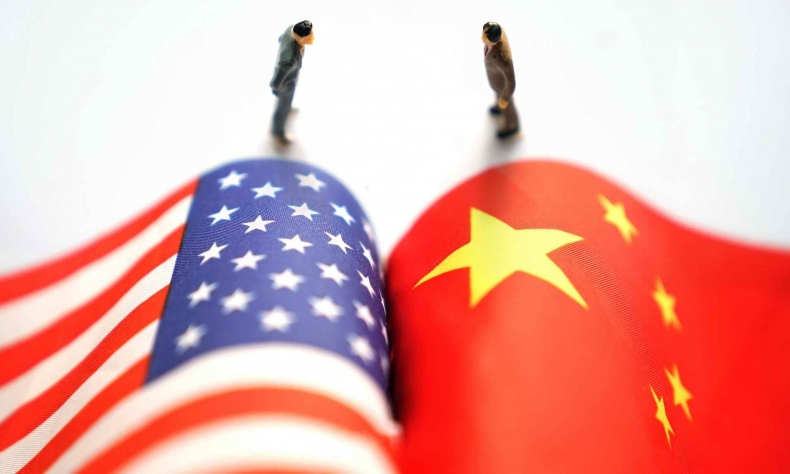
Hopefully, as the months wear on and President Biden’s domestic crises abate, he will return to the position he has expressed in the past, allowing that “China is not our enemy.” Or he may feel compelled by political pressure to continue to challenge China.
Soon after taking office, questions began to swirl around President Joe Biden and his team of advisors, about how they might lower the temperature and resume a cordial, constructive relationship with China after the incendiary rhetoric of the Trump-era. Now, several months in, the heat might be lower but little else has happened beyond a few pledges from the two superpowers to work together to improve the environment. Some of this immobilism is surely explained by President Biden’s focus on the American economy and COVID recovery. Some of it might also by written off as a wish not to be perceived as soft on China. Still, such a slow shift toward constructive engagement may well reflect deeper problems having to do with some fundamentally flawed assumptions about China, perpetuated by American policy makers and reinforced by the media.
Among the most persistent of these assumptions is that China is looking to replace the U.S. as the number one global power when the plain facts seem to prove otherwise. Over the last 1,000 years, China has engaged militarily on foreign soil only three times: twice with Viet Nam and once on the Korean Peninsula.
Its attitude toward foreign engagement explains in part the difference in its military budget with the U.S.—China’s is about half that of the U.S., for a population at least three times larger. The U.S. has over 70 military bases outside its borders, whereas China has one. China has been aggressive in the South China Sea, but that is right off its own borders. These aren’t the actions of a country looking to become the dominant global military power.
Further, despite all the criticism directed to China’s Belt and Road Initiative, China has always maintained its purely economic nature, which is fundamentally about trade and securing access to energy and raw materials. Which leads us to another persistent falsehood: that the Chinese economy is vulnerable, and its growth not sustainable. The weaknesses most often cited are excessive debt, a growing and unproductive state-owned enterprise (SOE) sector, an aging population, the lack of innovation, capital flight, and a property value bubble. But, again, a simple look at some facts on the ground refutes many of these assertions. Take, for starters, the 10-percent average GDP growth over 40 years. Sure, much of this past growth was driven by low-cost manufacturing, and aided by Western technologies, but massive government investments and top-down coordination among SOEs, private enterprises and universities give China a major advantage over the U.S.’s reliance on a purely competitive private sector model. Simultaneously, the Chinese education system graduates over four times the number of students in science, technology, engineering, and mathematics than the U.S. system. Finally, while the U.S. has led in breakthrough technologies such as search engines, social media, nanochips, the Internet, and the iPhone, China is leading in renewable energies, quantum computing, payment systems and high-speed rail, and is at least at parity with the U.S. in AI—the technology expected to be the most economically powerful development of the future.
A third flawed assumption was a hallmark of the Trump years, and sought to slow China’s growth through tariffs, which didn’t merely fail but backfired by accelerating China’s efforts to become independent of the U.S., while hobbling the U.S. economy. But this idea persists, implying the U.S. can simply limit China’s growth economically through its ongoing policy to curb China’s access to technologies—namely advanced nanochips—and convincing developing and developed countries to side with the U.S. against China. But countries simply do not want to be forced into this choice, as various leaders have stated again and again.
Finally, among the more persistent and pernicious assumptions about China within the U.S. is that the people of China are oppressed, have little freedoms, and do not support the government. Two well-known global research firms—Pew Research and Edelman—conduct surveys at the country level asking people to rate their government performance, their trust in government, and whether they expect their quality of life to improve in the future. China’s ratings are amongst the highest of major countries. My personal experience suggests the same thing. In the over 80 trips I have made to China, my contacts with Chinese people confirmed their pride in their country, their hard-work ethic, their high level of education and their love of family. When asked about personal freedoms, and the right to protest against the government, they dismissed its importance relative to the reforms introduced in the areas of work, travel, right to choose where to live, and anti-corruption actions.
Why, then, are these flawed assumptions so readily embraced by policy-makers, media, and U.S. citizens alike? The underlying reasons are many, but among the most powerful is the fact that the U.S. is a dualist society where the world is divided in good/evil, winners/losers—a zero sum game. Therefore, if China is winning, we in the U.S. must be losing. The political gridlock of our system makes it tempting to blame China for our challenges instead of tackling the domestic need to invest in education, infrastructure, and science, as well as addressing income inequality and racial inequities, and reduce the drain of military expenses promoted by the military industrial complex.
We in the U.S. might also do well to invest in some understanding of China, and the core differences between our two countries, grounded in our unique histories and cultures. The Western and Japanese invasions of China, the immoral opium wars, the pain suffered by the Chinese people during the warlord period and the civil war are taught in the Chinese school and referred to in part as the “century of humiliation.” The historic context is fundamental to China’s worldview, as opposed to a very present and future focused, ahistorical view favored within the U.S. Our lack of understanding of China within the U.S> stands in sharp contrast with China’s understanding of the U.S. within China. Millions of highly educated Chinese have attended U.S. universities, including numerous political and industry leaders. In contrast, the number of Americans educated in China or who can speak Mandarin is but a small fraction.
Hopefully, as the months wear on and President Biden’s domestic crises abate, he will return to the position he has expressed in the past, allowing that “China is not our enemy.” Or he may feel compelled by political pressure to continue to challenge China. If it’s the latter, as China continues to progress, we should expect its motivation to pursue a “constructive engagement” with the U.S. to wane. We should not wish for that day to arrive.
Peter Walker?is a frequent writer and speaker on China-U.S. relations since retired from senior partner at McKinsey & Co.