China 2035: Achieving Socialist Modernization Basically
 Facebook
 Twitter
 Linkedin
 Google +
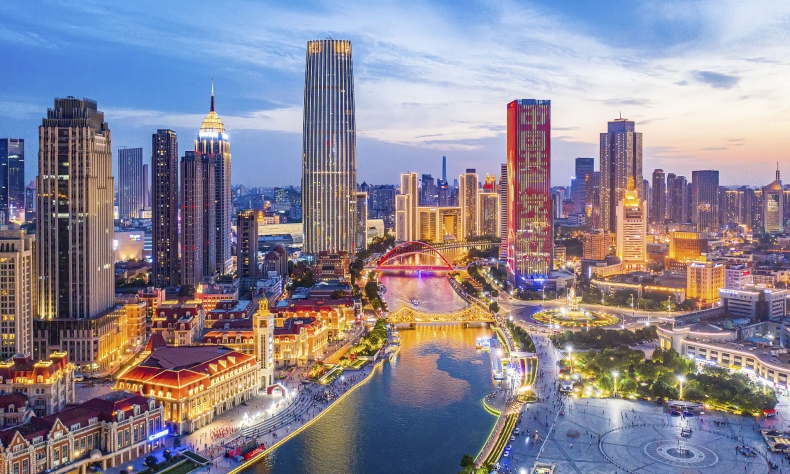
Understanding what China and the CPC have experienced during the past 100 years is crucial to comprehending both China and the world’s future on everything from the world economy to the climate crisis to international relations.
During the Communist Party of China’s 19th National Congress in 2017, General Secretary Xi Jinping proposed that after further reform and opening-up, China should embark on a two-stage strategic plan to achieve socialist modernization.?He proposed two goals within this strategic plan.
These goals involved solving the problem of extreme poverty and creating a moderately prosperous society in all respects by the time that the Communist Party of China (CPC) marks its 100th anniversary in July of 2021. Over a decade ago, the CPC set two centenary goals to be achieved by 2021 and 2049. The achievement of these two centenary goals, written into the CPC’s Constitution in 2012, has shaped China’s short-term and long-term economic masterplans and impacts both its domestic and foreign policy.?The enduring legacy of the CPC as China’s governing party.
After extensive hard work, the first goal has been achieved.?Extreme poverty was essentially eradicated.?The second goal to “build a modern socialist country that is prosperous, strong, democratic, culturally advanced and harmonious” will be achieved in 2049 – the centennial year of the founding of the People’s Republic of China – via a midpoint objective set for 2035.
During the Fifth Plenary Session of the 19th Central Committee of the Communist Party of China held in Beijing last October, the CPC proposed a set of long-range objectives for the country to basically achieve socialist modernization by 2035. The Fifth Plenum deliberated and adopted the Central Committee’s Proposals for the Formulation of the 14th Five-Year Plan (2021-2025) for National Economic and Social Development and the Long-Range Objectives Through the Year 2035 (Vision 2035). Both the 14th Five-Year Plan and Vision 2035 were approved by the Fourth Plenary Session of the 13th National People’s Congress.
From development plans to actions
Of significance was the fact that the last time that the CPC considered a parallel document discussing long-term goals along with a Five-Year Plan was in association with proposals for the Ninth Five-Year Plan in 1995, a plan which ushered in reforms that played a significant role in the development of China’s modern socialist market economy, rapid economic growth, state-owned enterprise reform, and a massive expansion of domestic infrastructure spending.
The Fifth Plenum of the 19th CPC Central Committee’s communiqué reaffirmed previous Party documents that China would basically achieve socialist modernization by 2035. The CPC has provided clear plans for comprehensive economic restructuring, producing major technological breakthroughs to place China among the world’s leading countries, achieving an advanced standard of living, creating a green economy and an improved environment, and boosting per capita GDP while reducing the gap between urban and rural society.?Under the tutelage of the Party, China aims to promote a combination of efficient markets and effective government.
The 14th Five-Year Plan is likely to be one of the most transformational plans since the founding of the People’s Republic of China because it shifts from an emphasis on economic growth and restructuring to a focus on the sustainability of growth and the quality of life. It also foresees that domestic demand will be the main driver of China’s future economic growth under the dual circulation development strategy.?Specifically, the 14th Five-Year Plan outlines renewed efforts to close the rural-urban income gap, promote global leadership in technological innovation, and increase the pace toward low-carbon development. These objectives are reinforced by the longer-term perspective found within China’s Vision 2035, which lays down the path for China to basically achieve socialist modernization by 2035.
Under the leadership of Xi Jinping, the CPC has been able to accelerate Deng Xiaoping’s goal of modernization by 2050 by 15 years. Simply stated, China’s economic performance has provided a solid foundation for the basic realization of the CPC’s long-term goal of socialist modernization, when China’s national, economic, and technological strength will have increased significantly. By 2035, China’s GDP per capita will reach the level of moderately developed countries.
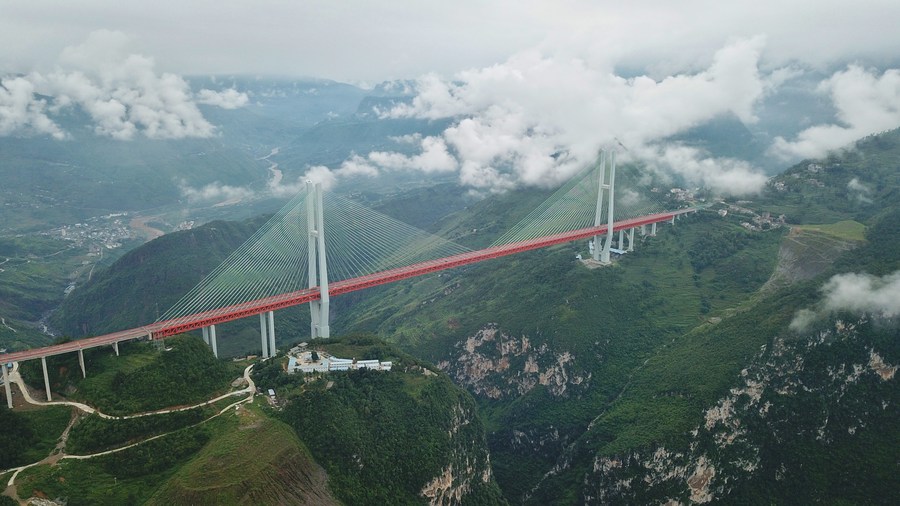
Adhering to the revitalization goal
Why 2035? The reason is actually quite simple: it’s halfway between the centenary of the founding of the Communist Party of China (CPC) and 2049’s 100th anniversary of the founding of New China.
The implication of basically achieving socialist modernization will require an almost seismic shift in China’s relations with the world. That has already begun. Well in advance of what the CPC foresees as a new global economic paradigm, China has begun to align its domestic development with its international relations. A host of China-led or China-driven transnational infrastructure and financial initiatives such as the Belt and Road and the Asian Infrastructure Investment Bank as well as multilateral trading arrangements such as the Regional Comprehensive Economic Partnership or the China-Pakistan Economic Corridor demonstrate China’s pursuit of this new economic paradigm.
China has also initiated a series of domestic economic and social reforms designed to enable sustainable and inclusive development. Such reforms are aimed at benefiting Chinese consumers, small and medium-sized businesses, and China’s global network of suppliers.
In order to understand where China is now on the path to socialist modernization, it helps to understand where China has been. The path began with the Four Modernizations (1964-2000), which was followed by the Three-Step Strategy of a Modern Socialist Country under Deng Xiaoping (1980-2050).
Medium and long-term planning to achieve socialist modernization has been a feature of Xi Jinping’s leadership of the CPC. Plans such as China Vision 2035 and China Standards 2035 as well as the broader goals of a moderately prosperous society by 2021 and then a fully developed, rich, and powerful nation by the centennial of the founding of the People’s Republic of China in 2049 are hallmarks of both Xi and the Party’s determination to enhance China’s self-sufficiency in key technologies and reduce its dependence on foreign technology while simultaneously enhancing domestic demand via dual circulation.
Even in the midst of the COVID-19 pandemic, the CPC is right to be proud of its success in reaching the goal of achieving eradicating extreme poverty and creating a moderately prosperous society in all respects by 2021. However, in order to reach the goal of socialist modernization, the country will need to double its economic output by 2035.
A key theme that runs through both the 14th Five-Year Plan and China Vision 2035 is to do just that through a focus on improving both the volume and quality of domestic consumption. Rather than relying on net exports or fixed capital investments, improving, and expanding domestic consumption is critical to China’s future growth. Not only will this advance the average Chinese citizen’s spending and purchasing power, but it will also have the added benefit of serving as an increasingly important engine of growth within the global economy.
Coping with challenges from the US
Within the next fifteen years, China’s economy is projected to overtake that of the US before 2035 and might be twice its size by 2049. Thanks to the CPC’s consumer-driven long-range economic targets, China’s rise to the world’s largest economy will also see prospective GDP per capita increase to $30,000 by 2035, thereby laying a solid foundation for fully achieving the second centenary goal of a prosperous, strong, democratic, culturally advanced, and harmonious country. Some may scoff at this. However, China is already on its way. According to World Bank data, GDP per capita in China is currently at $10,200. During the next fifteen years, China is likely to see the middle class become the largest segment of the population.
While this is an incredibly significant achievement, the CPC will continue to prioritize economic development as a central task for the country by addressing China’s uneven economic development and inequalities – issues that the Party recognizes are the new principal contradiction in Chinese society in the New Era; hence the inspiration for policy endeavors such as Rural Revitalization, Dual Circulation, National New-Type Urbanization, and other measures aimed at eliminating extreme poverty.
By 2035, the CPC envisions a strong and technologically advanced country that is a global leader in both innovation and new forms of industrialization. As should be expected of any great world power, China intends to both modernize and strengthen its military capabilities. However, the CPC is also committed to significantly strengthening multilateralism and global governance. An example of this was Xi Jinping’s historic announcement at the UN General Assembly last September of China’s commitment to an eco-friendly way of life in “Beautiful China” with peaking emissions in 2030 and steady declines thereafter and carbon neutrality by 2060. The Party will continue to press for the deepening of reforms in the country’s rule of law and governance systems.
The CPC governs a country that is already an economic superpower and is poised to become a military and geopolitical one in the early-to-mid 21st Century. The Party’s 100th birthday is a time to remember both its struggles and humble beginnings. From its early days and its existential battles with the Nationalists?(also known as Kuomintang) and the Japanese invasion to its transformation of the country into a global economic superpower with a growing middle class, the Party has shown a remarkable ability to survive, adapt, and effectively govern a country of more than a?billion people.?The CPC has produced tremendous economic results. They’ve created a burgeoning middle-class and have massively invested in measures designed to provide social support. With successful performance comes citizen satisfaction. Western opinion surveys show consistently high levels of satisfaction and support for the CPC’s governance of the country.
Since Reform and Opening-up in late 1978, the Party has faced the challenge of how best to complete China’s road of transformation to a modern socialist country. The road has often been quite arduous and posed tremendous difficulties on the path to socialist modernization.? But the Party has persisted. Understanding what China and the CPC have experienced during the past 100 years is crucial to comprehending both China and the world’s future on everything from the world economy to the climate crisis to international relations. Basically achieving socialist modernization by 2035 will be a watershed moment in China’s history.
The article reflects the author’s opinions, and not necessarily the views of China Focus.