Robert Lawrence Kuhn: What Has Brought About China’s Development Miracle?
 Facebook
 Twitter
 Linkedin
 Google +

Those who recognize China’s unprecedented success in both pandemic control and poverty alleviation must also recognize its causal relationship to China’s overall Party leadership, and a strong, command-down, Party-led government.
Editor’s Note: This year marks the 100th anniversary of the founding of the Communist Party of China (CPC). As China is moving increasingly closer to the center of the world stage, the world is more curious about the secrets of the CPC’s success in leading the most populous country. In an interview with China Report, Robert Lawrence Kuhn, an international corporate strategist, investment banker and renowned China expert, shares his insights about the CPC and China. Authorized by China Report, the excerpts of the interview are published by China Focus.
When it comes to China, the CPC is inevitably mentioned. How do you evaluate the CPC’s development, governance capacity and responsibility in the past 100 years? What qualities does the CPC possess?
Robert Lawrence Kuhn: It has been a privilege and a pleasure to have spent more than 30 years not only observing China but also participating with China as the largest population on earth undergoes the greatest transformation in history.
China’s development, primarily since the beginning of reform and opening-up, is perhaps the most sustained developmental success story of any country on Earth. If one looks at almost every aspect of real life, Chinese people have higher standards of living and more personal freedom than at any other time in their long history. Moreover, China’s vast population is finally free from widespread famine, pestilence, homelessness, illiteracy, political mass movements and other social scourges.
I have given deep thought over the years as to what has brought about China’s development miracle? Consider these principles.
- A people who work long and hard to improve the lives of their families and the destiny of their country.
- The prioritizing of economic and social development over ideological rigidity.
- A one-party-leadership system (what is called “the multiparty cooperation and political consultation under the leadership of the CPC”) that enforces political stability and media control and encourages economic development and social enhancement.
- A one-party-leadership system that is structured in hierarchical administrative levels – central government and five levels of local government: provincial, municipal, county, township, village.
- A one-party-leadership system that prioritizes selection, education, training, monitoring and inspection of key personnel, inculcating a high degree of administrative and managerial professionalism.
- A one-party-leadership system that solicits, and pays attention to, expert opinion, whether in the Party or not, as exemplified by the increasing influence power and social pressure of the Chinese People’s Political Consultative Conference.
- A one-party-leadership system that solicits, and pays attention to, public opinion.
- The setting of long-term goals, mid-term objectives, and short-term policies that are monitored and modified continuously; policies that need long-term commitment have long-term commitment.
- A way of thinking that experiments and tests before implementing and rolling out.
- A one-party-leadership system that provides checks and balances via anti-corruption institutions.
Although socioeconomic progress is never consistently linear, and there are always setbacks, China’s long-term sustained development reflects the long-term consistency of policy that characterizes the Party-led system of governance. Because the Party’s leadership is in perpetuity, built into the Constitution, the system is very different from the Western model. All political systems have trade-offs, of course, but one benefit of China’s Party-led system is that those kinds of programs that require long-term commitment can have long-term commitment. Party leadership can commit to policies of multiple years and even of multiple decades. For example, President Xi’s ‘targeted poverty alleviation’ campaign, which required about eight years to eradicate all extreme poverty-would go well beyond election cycles in other countries.
Other massive programs that demand this long-term continuity include Rural Revitalization; the South-to-North water diversion project; healthcare system reform; and most recently a multi-decade plan for scientific and technological self-sufficiency and leadership.
One process that China’s Party-led system has used repeatedly is prototyping “test case” — for example, the original special economic zones like Shenzhen and Xiamen. These areas were experiments, allowing foreign capital and expertise, differential wages, and other concessions.

But China didn’t say: ‘Oh, such a great idea – let’s open up the whole country.’ No, that would have been dangerous. It took until around 1984 before leadership could concur that this reform and opening-up policy of the special economic zones was really working, so that then it could be implemented broadly. This principle of prototyping, monitoring and modifying is an expression of Party leadership.
In recent years, free trade zones, beginning with the pilot in Shanghai and then, after three years in testing, dozens of others, including the entirety of Hainan province, shows how the principle is being applied. Essential are long-term policy commitment and a commitment to make changes, fine or broad, based on real-world feedback.
You said in your articles that “if the world wants to understand China, it must understand the long-term ruling of the CPC is the most suitable choice for China’s development”, and that “the leadership of the CPC is crucial to China’s development.” Why did you say so?
Robert Lawrence Kuhn: In early February 2020, soon after Wuhan was locked down, I went on record in the media, international and Chinese, expressing confidence that China would contain the escalating epidemic. I based my confidence not on prophetic gift but on China’s success in alleviating extreme poverty, which I had been following for years. I saw a?revealing parallelism between China winning the war to control the contagious coronavirus and China winning the war to eradicate extreme poverty. The common root was the leadership and organizational capacity of the Communist Party of China that celebrates its 100 anniversary this year.
The structural similarities between anti-pandemic and anti-poverty campaigns are striking: CPC leadership, General Secretary Xi’s commitment, CPC mobilization.
First, the operational?leadership of the CPC — not just giving directives and making pronouncements, but implementing?programs and operating projects through the CPC organizational?structure — central government and five levels of local government (provincial,?municipal,?county, township, village).
Second, the commitment of Xi Jinping, General Secretary of the CPC Central Committee — who sets an example that leaders and officials must follow. Almost everywhere Xi goes, he stresses poverty alleviation and encourages Party officials to visit impoverished areas regularly and interact with poor people directly. Xi has made the remarkable statement: “I have spent more energy on poverty alleviation than on anything else.” I know no other national leader who has made such an assertion. Similarly, during the pandemic, when Xi visited hospitals and spoke with frontline workers, the whole?country got the message.
Third, the mobilization capacity?of the CPC — commanding the country’s resources in personnel and materials.?To contain the epidemic, China’s mobilization was unprecedented in global health history: locking down Wuhan and neighboring cities, 60 million or more people; house-to-house temperature checks; the CPC’s grid management system of social control; postponing the return to work after the Lunar New Year break of hundreds of millions of travelers; recruiting major companies, State-owned enterprises and the private sector, for support and logistics; assigning “sister” relationships between strong provinces and hard-hit?cities in Hubei, a strategy long employed in poverty alleviation between eastern and western provinces and cities.
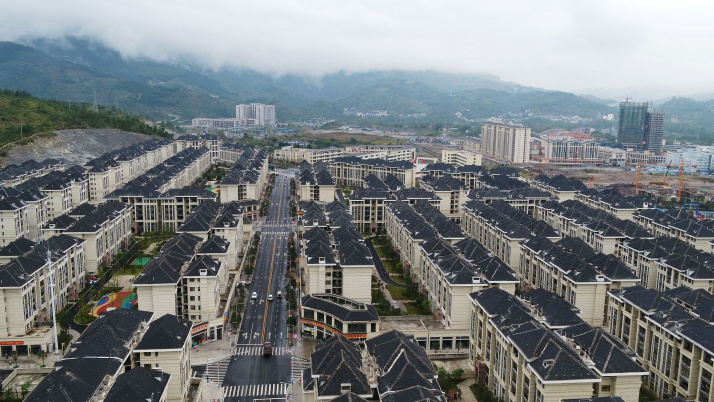
Similarly, the success of China’s targeted poverty alleviation campaign, bringing about 100 million people out of abject poverty since 2012, including the complete relocation of millions of poor farmers from remote mountainous villages to newly constructed urban and suburban residences.
Nowhere else could such mega-projects work like they worked in China. And the reason they worked is because the Party-led system works for mega-projects. Going beyond the great good of poverty alleviation and pandemic containment, understanding how the CPC accomplished both provides insight into the CPC’s governance structure and organizational capabilities. This is especially important at this time of heightened awareness of China’s increasing role in international affairs and the increasing sensitivities to it.
Those who recognize China’s unprecedented success in both pandemic control and poverty alleviation must also recognize its causal relationship to China’s overall Party leadership, and a strong, command-down, Party-led government. While all political systems have trade-offs, and while achieving national objectives is indeed an advantage of China’s Party-led system, it is not the only criterion for evaluating political systems. There are challenges as Chinese society becomes more dependent on information and innovation. This is why continuing reform, opening-up, and system improvement are needed.
From your perspective, what difficulties and challenges does CPC face? Can the Party tackle the future challenges? Do you have any suggestions for CPC?
Robert Lawrence Kuhn: The CPC faces two kinds of future challenges. The first kind are specific issues that affect contemporary China, including (but not limited to): growing the economy while controlling pollution; rebalancing standards of living between rural and urban areas with the Rural Revitalization program; developing indigenous technologies in the face of US sanctions, demographic problems of a graying population and slowing birthrate; and the like.
The second kind of challenges include specific issues that related to the CPC as China’s perpetual ruling party in a one-party-leadership political system, especially as times change, and new questions arise. For example, how to involve citizens more in the process of governance and the oversight of government, like through social media and public polling? What’s the relationship between the ruling party and rule of law? How to institutionalize the anti-corruption campaign throughout the Party and government? How to balance the need for social stability with the importance of access to information in a knowledge-based economy?
The CPC, the Party, is a ‘work in process’. It will always be, and that is its strength. For the world to understand China, it must understand why the CPC asserts that its continuing political leadership is optimum for China’s development. One key is the Party’s adaptability, stressing experimentation and testing new policies. But the CPC, as the perpetual ruling party, has a higher obligation to enhance standards of living and personal well-being, which includes reform, rule of law, transparency in government, public participation in governance, increasing democracy, various freedoms, and human rights. President Xi states that the CPC should be governed by standardized rules and procedures that are open to public oversight. Only by adapting continuously, focusing on real-world issues, can the Party construct a truly prosperous society that is sustainable.
The Party-led system involves effective feedback mechanisms, which in turn can help fuel innovation and energize improvement. Real-time monitoring of results effects changes. The Chinese government uses scientific polling to get a sense of what people think. So, even though there are no elections in the Western sense, there is a good deal of feedback from different constituencies. For example, when officials are nominated to new positions, there’s often a period of time for feedback from colleagues, subordinates and bosses. And when new policies are considered, scientific polling assesses opinions and attitudes of those who would be affected.
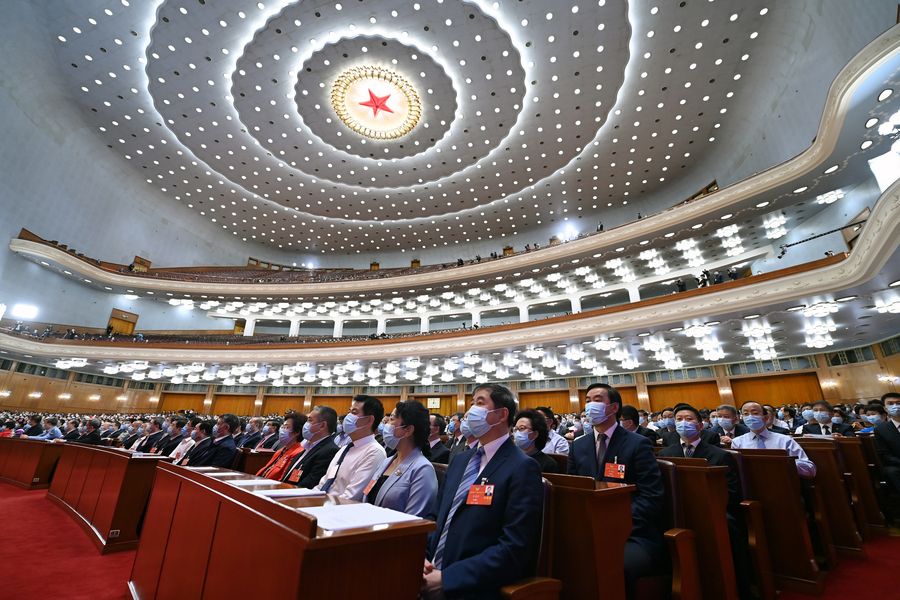
Moreover, the work reports of Party leadership at Party congresses every five years, and the work reports of the government at the National People’s Congress each year, reflect a great deal of input and suggestions from all relevant officials, experts and constituencies. These work reports are not just what top leadership puts together for form and ceremony. No, they are drafted by many teams, and feedback and opinions are solicited from numerous officials and experts; the documents circulate iteratively many times during the six to eight months or more of the drafting period.
These work reports are exceedingly important in the Chinese system; for the government, they assess the achievements of the past year and set the plans for the next year; for the Party, it’s the past five years and next five years, respectively. So, there is this intricate and extensive feedback between experts and officials over many months, plus various in-field research and polling.
Understanding the process of drafting the work reports of the Party and the government is a good way to understand how China’s system works. If one simply states that China is a ‘perpetual Party-led government’, it sounds rigid and aloof. In fact, the drafting of the work reports tells a different story. When one sees how the Party operates, including this monitoring, this polling, this feedback, one begins to see how the Party implements change based upon the real world.
I have been to China over 200 times since my first visit in January 1989 and I follow world affairs closely. I start with an undeniable truism: All systems of governance have trade-offs. The benefits of a system with a single leading party include the capacity to implement critical policies rapidly and assure that strategies which require long-term commitment have long-term commitment. The costs or dangers of a system with a single leading party is that society is much more dependent on the quality of its leaders, and much more vulnerable to their vicissitudes and excesses. There are trade-offs too in stricter public regulations. Going forward in the ‘new era’, the CPC faces challenges: effecting economic reform and transformation and guiding social development and transition, while at the same time, improving transparency and checks-and-balances, and building institutions that are self-correcting.
You have mentioned that the world’s understanding of China is still limited. What’s your advice for the CPC to promote the world’s understanding of the Party and China?
Robert Lawrence Kuhn: Honest, straight-forward, in-depth communications. Recently, President Xi, in a speech at a meeting of the Politburo of the CPC Central Committee, stated that “We should pay attention to control the tone, be open and confident as well as modest and humble, and strive to build a credible, lovable and respectable image of China” … “to showcase a real, three-dimensional and comprehensive China.” Xi pointed out that it is necessary “…to create new concepts, new categories and new expressions that work both in Chinese and foreign contexts.”
President Xi’s directives have been my approach, my personal modus operandi, for more than 20 years. Although in recent years attitudes in the U.S. have changed in one direction, and attitudes in China have changed in the opposite direction, I have not changed at all. I’ve kept consistent. I tell real stories about China, including problems and challenges, deciphering politics and policies, stressing in my communications how China’s senior leaders think, which is often stereotyped or distorted in the West. Since early 2012, I have focused on President Xi’s strategies and policies and his ways of thinking, using my conversations with him in 2005 and 2006 (in Zhejiang province) to show the consistency of his thinking and policies.
On December 18, 2018, at the 40th anniversary of the beginning of the reform and opening-up policy, I received the China Reform Friendship Medal from President Xi Jinping and China’s senior leaders, being among the 100 Chinese and 10 foreigners who have contributed to the reform and opening-up proves over the 40 years. It was indeed a great honor, but as I said at the time, my receiving the Medal was less a reflection of my personal accomplishments and more a recognition of the vital importance of telling to the world the true story of China, in all its complexity, dynamism, richness, achievements and challenges.
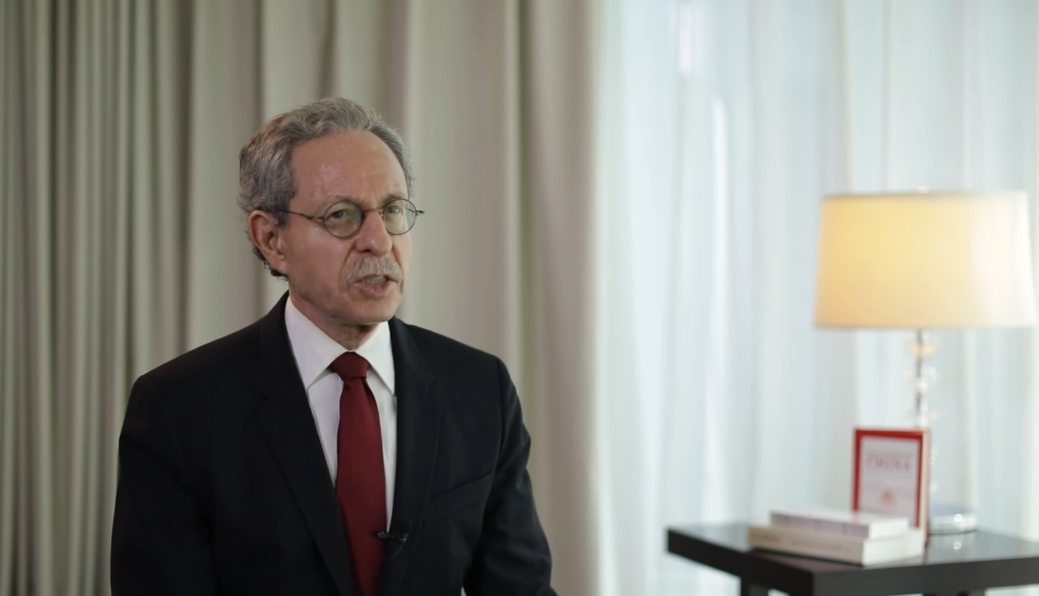
Robert Lawrence Kuhn is the host and co-producer of Closer to China with R.L. Kuhn, a commentator on CNN, BBC, CNBC, Bloomberg, Fox Business, and a columnist in South China Morning Post and China Daily. He is a public intellectual, international corporate strategist, investment banker, and chairman of The Kuhn Foundation. Kuhn is the host of “Closer to Truth”, the long-running weekly PBS series featuring noted scientists and philosophers worldwide exploring the big questions of cosmos, consciousness, the search for meaning and other themes. Kuhn is a renowned China expert and winner of “China Reform Friendship Medal,” China’s highest award that honors 10 foreigners over four decades. Kuhn has published more than 30 books.
Copyedited by Bai Shi