China’s Debt Relief Diplomacy and the Western Conspiracy Theories
 Facebook
 Twitter
 Linkedin
 Google +
The Western campaign of debt trap is actually an effort to hide the Western debt trap.
The last decade had witnessed an unprecedented spike in the malicious campaigns against China. China has been criticized by the Western Media on multiple self-perceived assumptions and debt trap is one of the most consistent elements of propaganda.
The opponents tried to create confusion about Chinese investment and damage the image of China. The Western media started to use the term “debt trap” and malign China. This article is an attempt to decode the terminology and analyze it by using Chinese philosophy of international relations. Thus, it is necessary to first understand Chinese philosophy of international relations and then to expose the propaganda of debt trap.
Chinese philosophy of international relations has deep roots in 5,000 years of wisdom and learning. Zhao Tingyang (2006) defined Chinese philosophy of international relations as “ontology of relation” whereas the Western philosophy as “ontology of things/interest”.? It is a fundamental difference, which steers both the systems. He was of the view that transformation of relations, from enmity to amity, and friendship to brotherhood, is the key feature, which distinguishes the Chinese system from the Western theory of international relations. Civilizational wisdom further provides strong footings. Confucius’s principles of “order, harmony, respect, ethics, fraternity” and “Co-construction of Self with Other” help shape up the Chinese concept and practices of “relation-based international ties”.
Whereas, Western philosophy of international relations revolves around the concept of “self-interest”. It gave birth to a famous quote in international relations, “there are no permanent friends or enemies, only permanent interests”, which was originally attributed to John Henry Temple. It negates the concept of relations, as the strategic focus is self-interest. The West applied this concept to develop bilateral relations and erect multilateral institutes. The decisive victory in World War II provided ample space and time to practice this philosophy. They created a good number of financial and political institutions including Bretton wood institutes such as IMF, World Bank, etc.
Western financial institutions building on their philosophy of interest wove a web of debts to extract maximum benefits. They entangled many countries in the debt trap. They forced countries to default, despite paying back more than the actual loan. For example, in 1980 the total loan of Brazil was $72 billion. It paid back $146 billion till 1998 but ended up with $231 billion. It is as same as the story of Mexico, Argentine, and many other countries. Privatization was the next step to grab the resources through proxies, multinational companies, and agencies. Multinational companies and agencies focused on countries rich in resources and exploited them, which led to the emergence of resource course terminology. These countries were in a helpless position, as they did not have any alternative to western financial institutions and companies.
Under such circumstances, China came forward to assist the poor and developing countries on the basis of win-win cooperation. China adopted the go-global policy to encourage investment in developing countries. It is evident from huge investments in many African, Latin American, and Asian countries. China gave focus to the needs of countries, as they were facing multifaceted problems.
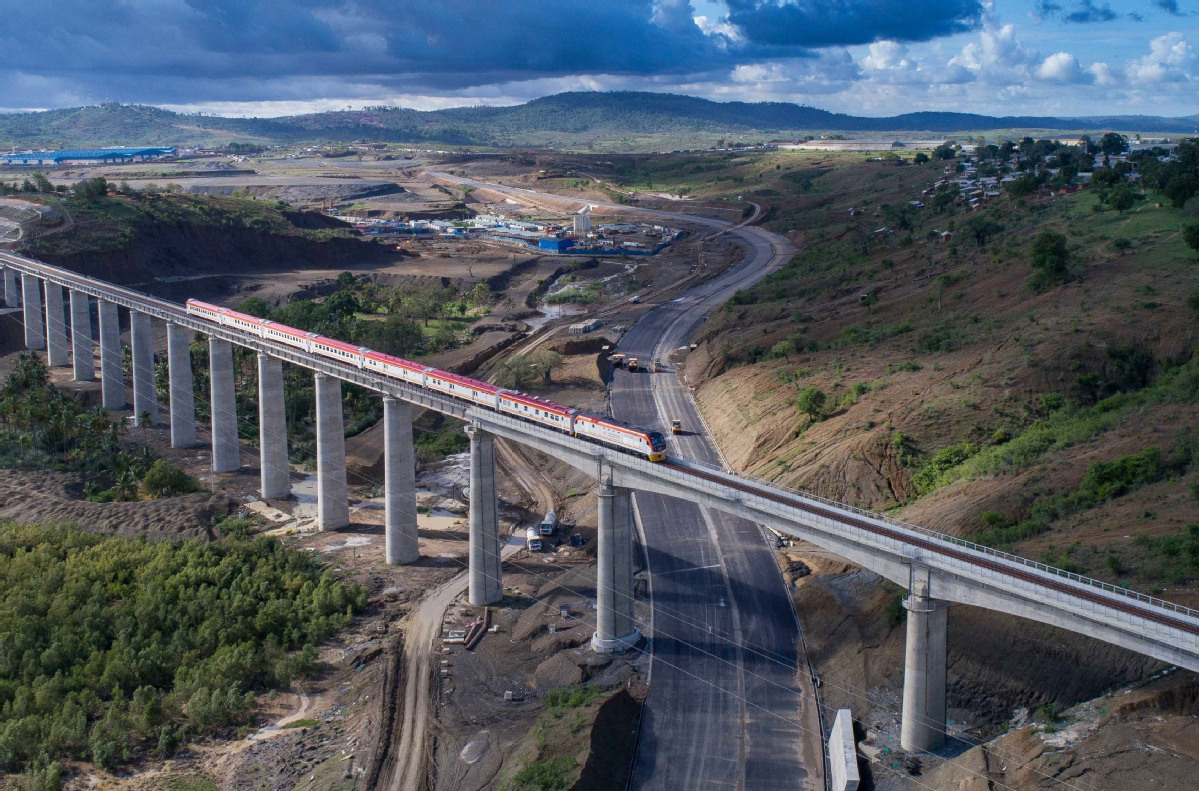
Chinese President Xi Jinping gave a new dimension to China’s participation in global economic development. He launched multiple initiatives, programs, and institutions including the Belt and Road Initiative (BRI), the Asian Infrastructure Investment Bank (AIIB), Silk Route Fund, etc. to enhance economic linkages. The Belt and Road Initiative was launched to enhance connectivity, trade, and economic activities. The major focus of the BRI is to create infrastructure according to the needs of countries and the fourth industrial revolution. The BRI is contributing towards the growth and development of countries through economic activities and trade (accumulative trade volume among BRI countries is $9.2 trillion since its inception).
World Bank conducted a series of studies in 2019 to calculate the potential benefits of BRI. The studies concluded that the benefits of BRI would be multi-dimensional and for everyone, either they are members of BRI or not. The benefits were summarized as 1) travel time will be reduced by 12 percent for BRI and 3 percent for Non-BRI countries; 2) trade will increase by 2.7-9.7 percent, for BRI countries and 1.7-6.2 percent, for non-BRI countries; 3) real income will be enhanced by 1.2-3.4 percent and 0.7-2.9 percent for BRI and Non-BRI economies, respectively. It has also been calculated that BRI will add $930 billion to global GDP in constant price of the base year 2014. The results also highlighted that the 7.6 million extremely poor ($1.90 per day income) and 32 million moderately poor ($3.20 per day income) will break the trap of poverty. It is pertinent to mention here that these projections were made on the infrastructure investments during the first five years ($585 billion).
Unfortunately, the Chinese contribution was not recognized by the Western world and its allies like India. They started to blame China for one thing or others. They are maligning Chinese investment and economic assistance by fabricating the term of debt trap, which is totally unfounded. They are presenting different self-perceived examples of debt trap including CPEC, Sri Lanka, etc. without giving any evidence.
Before delving into whether Chinese economic assistance is a debt trap or not, let’s try to understand the debt trap concept and how it works. In layman language or simplest way to explain is a debt that borrower cannot pay without taking new loans. It initiates a vicious cycle of borrowing, which goes on. Subsequently, the nation becomes hostage to the lender which leads to the desired goal of policy trap by the lender. It mostly originates from non-productive loans. So, on the basis of this description, Chinese economic engagement does not qualify for debt trap theory, as Chinese economic assistance is either investment, grants (does not fall under debt category), or productive loans. Moreover, it is helping the world to create livelihood and economic opportunities. It is also generating financial revenues in the form of taxes and enhanced trade, which is a relief for the debt entangled countries by the Western institution. Hence, China’s economic assistance is “debt relief” but not a debt trap.
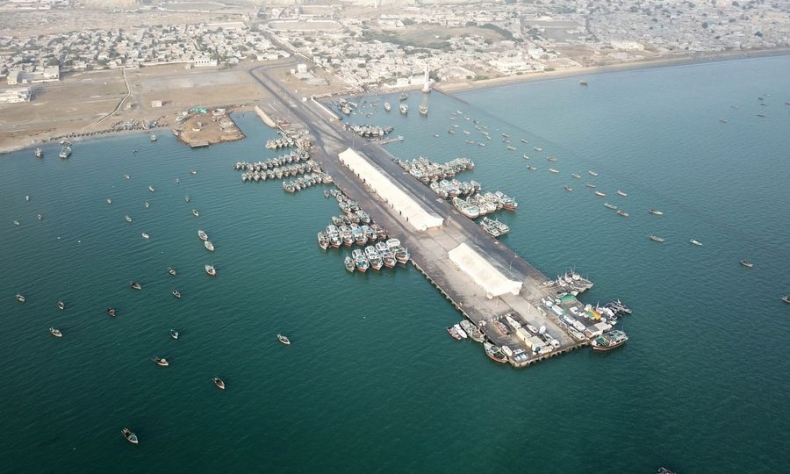
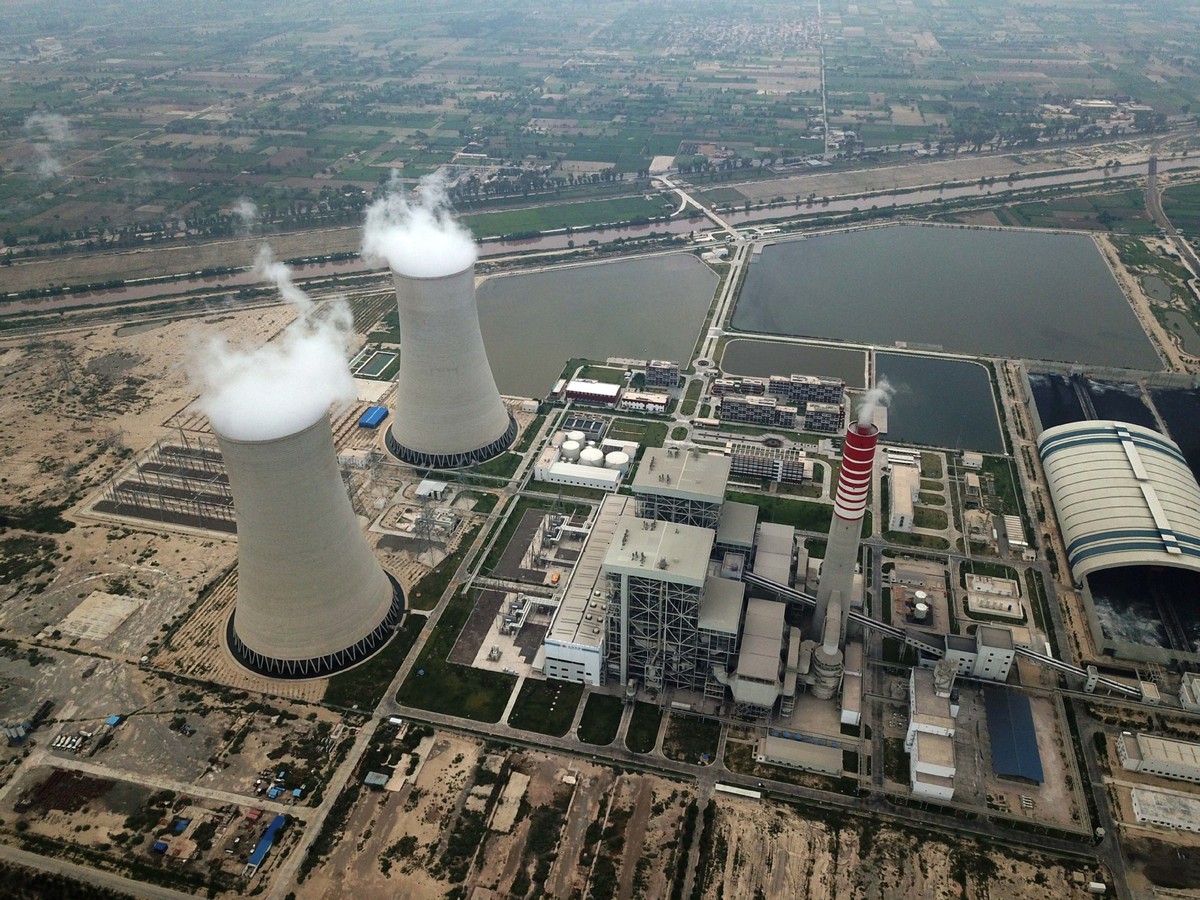
The analysis of CPEC and Sri Lankan case studies also supports the above argument. Let’s start with CPEC. CPEC helped Pakistan to create 83,000 jobs. CPEC also assisted Pakistan to manage the energy crises, which were costing $4-5 billion on annual basis. Gwadar port is turning Pakistan into a new hub of connectivity and transit trade. The second phase of CPEC is helping Pakistan to realize the dream of industrialization and modernization of agriculture. However, these benefits the opponents are falsely propagated on the assumption of the debt trap. In reality, CPEC is debt relief. It will be a source of earning, which will help Pakistan to pay back the debt of Western institutions. The actual debt trap for Pakistan originates from Western loans.
According to official data, CPEC related investments constitute only 5.6 percent of Pakistan’s total debt. Most of the debt is from Paris Club ($10.924 billion), IMF ($7.68 billion), bilateral donors ($24.352 billion), multilateral donors ($39.392 billion), International Bonds ($5.3 billion), etc. So, according to opponents, 94.4 percent debt is not a problem, but China’s 5.6 percent is a problem. It is ridiculous.
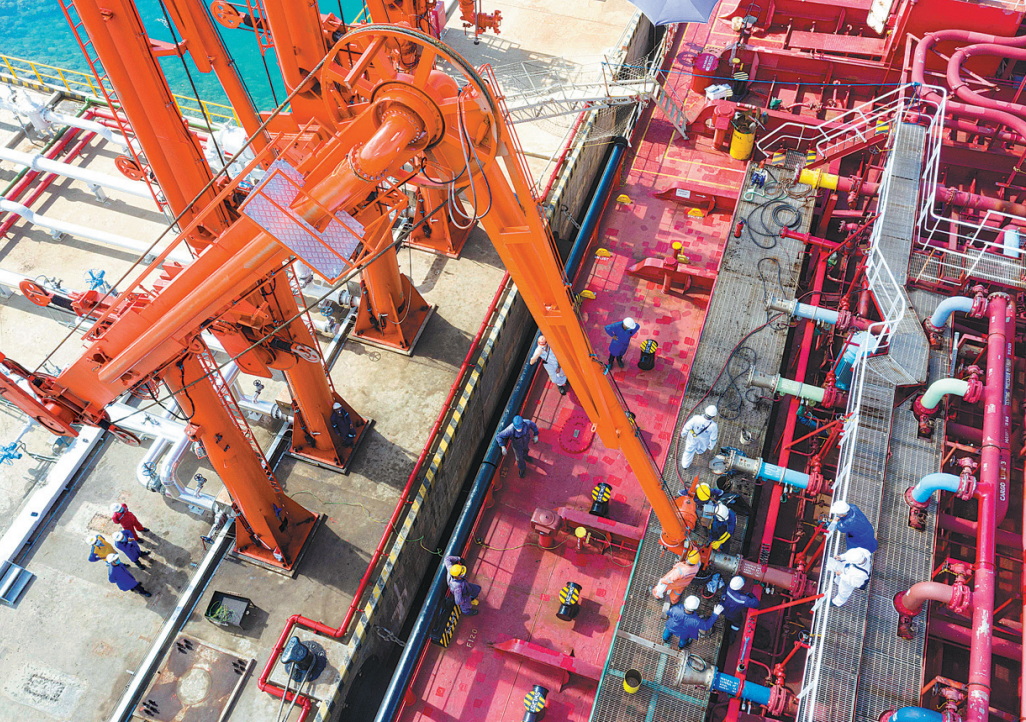
The example of Hambantota from Sri Lankan is another fabricated story. Sri Lankan debt crises originated from 1) borrowing from western institutions, especially from private institutes and 2) sudden change in the interest rate of the US. Sri Lanka was in deep crises and requested Chinese firms to accept the lease of Hambantota for the amount of $1.1 billion. Sri Lanka used the money to repay the other loans. The most important thing to note here is that it was not debt to assets swap, but rather it was done to manage the urgent needs of Sri Lanka at the request of Sri Lanka. Lastly, the total share of China of Sri Lank was 10 percent against the share of ADB (13 percent), Japan (10 percent) and private sector (47 percent).
A number of institutions including Johns Hopkins University research institute, the China Africa Research Initiative, and others at Boston University, etc. conducted comprehensive research to find the “debt trap”. They studied more than 3,000 cases of Chinese loans and investment. They could only point finger toward the Hambantota, which we have discussed above that it is only a fabricated story.
Moreover, McKinsey and John Hopkins found that Chinese investment is creating massive jobs for locals. The results of their studies indicated that the Chinese firms hired 89 percent (Mckinsey) or 85 percent (John Hopkins) from the local population. Chinese companies also have run well-structured training programs to enable local human resources to compete in the job market. Rhodium group also conducted a study on the loan management behavior of China. The results of the study highlighted that “China is a lenient lender”, respects the borrower, and does not try to dictate. China has written off many loans and for the rest is engaged in negotiations, which are favorable for the borrowers.
From the above discussion we can infer two things: 1) Western campaign of debt trap is actually an effort to hide the Western debt trap and 2) China’s investment is not debt trap, rather it is “Debt Relief”, because it is helping countries to create economic opportunities and livelihood opportunities. It is also creating financial resources, which are being used by the recipient countries to pay back loans of Western institutions and break the shackles of the Western debt trap.