The False Narrative on Basic Rights
 Facebook
 Twitter
 Linkedin
 Google +

The Western human rights narrative in its current form is a type of political theater designed to win public support for a foreign policy based on cold calculation of geostrategic and economic advantage.
The U.S. has made human rights a central component of its foreign policy since the Jimmy Carter administration (1977-81). Carter, seeking to improve the international image of the U.S. in the aftermath of the Viet Nam War, criticized human rights abuses and the lack of political freedoms in various U.S.-allied dictatorships, including Chile and Nicaragua. Such criticisms were designed not only to enhance the reputation of the U.S. internationally but also to buttress and give credibility to its ongoing ideological warfare against the socialist world.
Taking up residence in the White House in 1981, Ronald Reagan—a Cold Warrior par excellence—shifted the human rights spotlight away from America’s geostrategic allies and toward its enemies, particularly the Soviet Union. The Soviet Union’s refusal to implement a Western-style parliamentary system was painted as the quintessential abuse of human rights, and was used to rally support for the Reagan administration’s “full-court press” hybrid warfare against the socialist camp and the Global South. Ironically, this included propping up some of the world’s most violent and repressive regimes, including in apartheid South Africa.
Since then, the conversation on human rights—at least in the West—has been whittled down to the discussion on a specific set of individual political rights. This narrative is framed in such a way that the leading capitalist countries appear as the poster children of human rights; conversely, countries with alternative political models are pariahs.
The current barrage of propaganda about alleged human rights abuses in Xinjiang Uygur Autonomous Region also has a very clear purpose: winning popular approval for the U.S.-led new cold war against China. This war has nothing whatsoever to do with promoting human rights—and certainly nothing to do with the human rights of Muslims, given the role the imperialist powers have played in majority-Muslim countries such as Iraq, Libya, Syria, Afghanistan, Iran, Palestine, Yemen and Somalia. The purpose of the new cold war is, rather, to slow down China’s rise, to prevent China from becoming a major power; to prevent the emergence of a multipolar system of international relations; to preserve the U.S.-led imperialist system.
When examined through the lens of international law, however, human rights are much broader than the narrow set of issues now framed by the West. The Universal Declaration of Human Rights, adopted by the UN General Assembly in 1948, speaks of several different branches of human rights, including the right to live in dignity, freedom of thought, freedom of religion, freedom from discrimination; the right to food security and housing security; and the right to work, education, healthcare, clean water and modern energy.
To many people, particularly in the developing world, socio-economic rights are foundational, and they provide the indispensable basis for other rights.

Sovereign development
The definition of human rights was expanded in 1986 at the UN General Assembly to include the right to development: “All peoples shall have the right to their economic, social and cultural development with due regard to their freedom and identity and in the equal enjoyment of the common heritage of mankind.” The right to development includes “the full realization of the right of peoples to self-determination” and recognizes that “states have the primary responsibility for the creation of national and international conditions favorable to the realization of the right to development.”
As such, national self-determination and sovereign development—the right of each country to choose its own development model—are a pillar of human rights as properly understood in the modern era.
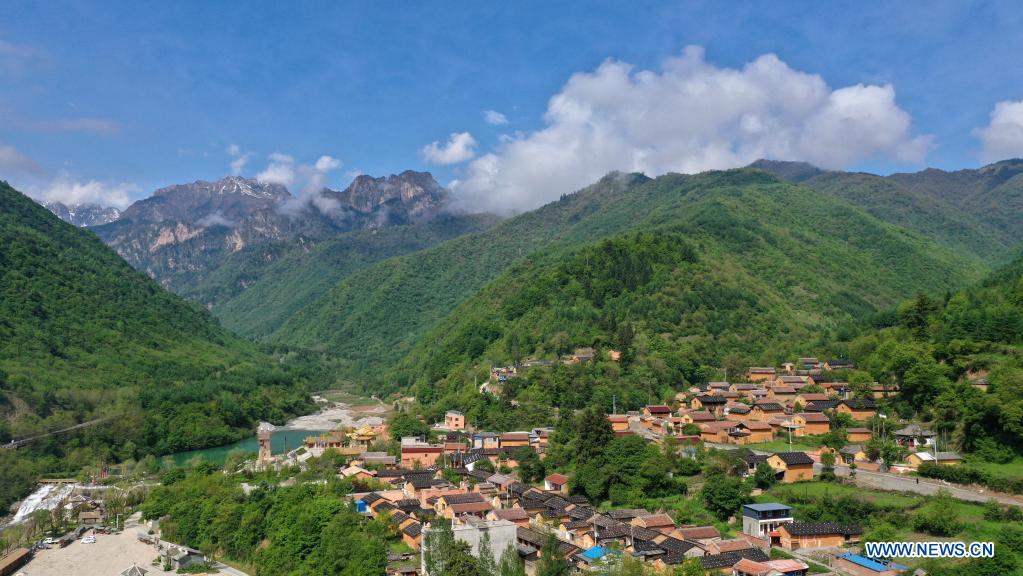
China provides a valuable example. China in 1949 was one of the poorest countries in the world. Its human rights situation was disastrous: Millions of people routinely died in famines; the majority of its people were undernourished and lacked access to basic healthcare and education. Nor did they have even basic political and democratic rights.
The principal reason for this parlous state of affairs is that, for a century, China had been denied the right to sovereign development. Foreign powers, starting with Britain in 1840, had actively imposed “underdevelopment” on China. These foreign powers—most notably Britain, Japan, the U.S., Russia and France—were intent on profiting from China, and had no interest whatsoever in the human rights of the Chinese people.
It was the Chinese revolution, and the founding of the People’s Republic of China in 1949, that created the space for sovereign development and set up a political and economic environment in which the human rights of the Chinese people could flourish. In the 72 years since that time, China has been transformed. Life expectancy has more than doubled. Extreme poverty has been eliminated. Literacy is universal. Everybody has access to healthcare, housing, modern energy and clean water.
To achieve all this in a huge developing country of 1.4 billion people clearly represents an enormous step forward in the human rights of the Chinese people. This progress was predicated on the Chinese people exercising their right to sovereign development and ending imperialist domination.
Western narrative
The hollowness of the Western focus on human rights is amply demonstrated by its selective application. The U.S. has a long record of supporting—and indeed helping to install—profoundly repressive, violent and anti-democratic governments, such as the Augusto Pinochet regime in Chile and the Suharto regime in Indonesia.
In reality, the Western human rights narrative in its current form is a type of political theater designed to win public support for a foreign policy based on cold calculation of geostrategic and economic advantage.
Meanwhile, human rights are increasingly put forward as a motivation for war, under the doctrine of “responsibility to protect.” Libya is an example: Western governments and media repeatedly criticized the Muammar Gaddafi government’s supposed human rights violations. Many of their stories were later proven to be false, but they had the effect of winning public support for a vicious imperialist war in which tens of thousands of people were killed and a whole country was reduced to rubble.
In other words, the imperialist countries have developed an elaborate and sophisticated narrative around human rights which they leverage with the intent to deny peoples their human rights.
Perhaps the most startling irony is that the major capitalist countries are themselves failing in terms of providing basic rights for their people. In the U.S. for example, poverty levels are rising. Millions of people don’t know where their next meal is coming from, millions have no hope of finding work, and over half a million people are homeless. Racial discrimination is also rampant. There are over 2 million people in prison—the highest incarceration rate in the world. Of this prison population, 34 percent is African-American, in spite of the fact that the black community makes up only 13 percent of the population.
The effects of the pandemic are compounded by the virus of racism. Life expectancy in the U.S. fell by 1.5 years in 2020, largely as a result of the government’s utter failure to manage the pandemic. For black and Latinx people, the drop in life expectancy was three years. These communities face a human rights catastrophe.
In the U.S. and Britain, the number of COVID-19 deaths per million population so far is around 1,900. In China it is three. If China had followed the Anglo-American strategy for managing the pandemic, it could be expected to have suffered a death toll upward of 2.5 million. In fact, fewer than 6,000 people on the Chinese mainland have died from COVID-19. Is the right to life not a basic human right? And should we not say that China has done significantly better in protecting that right?
The imperialist countries should no longer be allowed to dominate the discussion on human rights, and the voice of the developing world should be heard. People in developing countries for the most part recognize that promoting human rights at the international level includes promoting the right to sovereign development. This means adhering to the principles of peaceful cooperation, multipolarity, and non-interference in the internal affairs of other countries.
Once countries are allowed to develop in peace freely, according to their people’s specific situations and needs, and choosing a development model that suits them, their human rights will prosper.
Carlos Martinez is an author and political activist from London. He is co-founder of the No Cold War campaign and co-editor of the Friends of Socialist China website.