How to Eradicate Extreme Poverty
 Facebook
 Twitter
 Linkedin
 Google +

As for China itself, the battle against poverty is not yet over. The next steps are to reduce relative poverty and inequality, vitalize central and western rural areas, and bridge the urban-rural gap.
In late 2020, the Chinese Government announced that its goal to eliminate extreme poverty had been met. At the start of the targeted poverty alleviation program back in 2013, under 100 million people were identified as living below the poverty line; seven years later, that number dropped to zero.
To eradicate extreme poverty in a developing country of 1.4 billion people is a truly extraordinary achievement. Only 72 years earlier—at the time of its founding—the People’s Republic of China (PRC) was one of the poorest countries in the world, characterized by extensive malnutrition, illiteracy, foreign domination and technological backwardness.
Since Xi Jinping became China’s top leader in 2012, he has made poverty eradication one of the country’s central policy planks, introducing a program of targeted poverty alleviation by identifying those who lingered in poverty and developing plans to meet their specific needs.
Who lived in poverty?
“In 2014, 800,000 Party cadres were organized to visit and survey every household across the country, identifying 89.62 million poor people in 29.48 million households and 128,000 villages. More than 2 million people were then tasked to verify the data,” according to Serve the People: The Eradication of Extreme Poverty in China, a dossier published on July 23 by the Tricontinental: Institute for Social Research.
The report is based on extensive research, case studies and interviews, carried out by a small team on the ground in China. While it is focused on the targeted poverty alleviation program, it also provides key historical background.
The most important early step was dismantling feudal ownership structures in the countryside and enacting comprehensive land reform in the early years of the PRC. Rural collectivization led to a rapid increase in productivity, “enabling the agricultural surplus to be invested into industrial development and social welfare.” Basic health and education services were extended throughout the country for the first time.
From 1978, China embarked upon a program of reform and opening up designed to increase productivity, technological capacity and income through the introduction of market measures and commodification of various parts of the economy. Between 1978 and 2013, the Chinese population undoubtedly experienced a huge improvement in living standards.
During the targeted poverty eradication strive, the label of extreme poverty was not based solely on income level. By governmental definition, a person can be considered to have shaken off this status only if the two assurances and three guarantees have been met. The two assurances stand for adequate food and clothing; the three guarantees for access to medical services, safe housing with readily available drinking water and electricity, and at least nine years of free education.
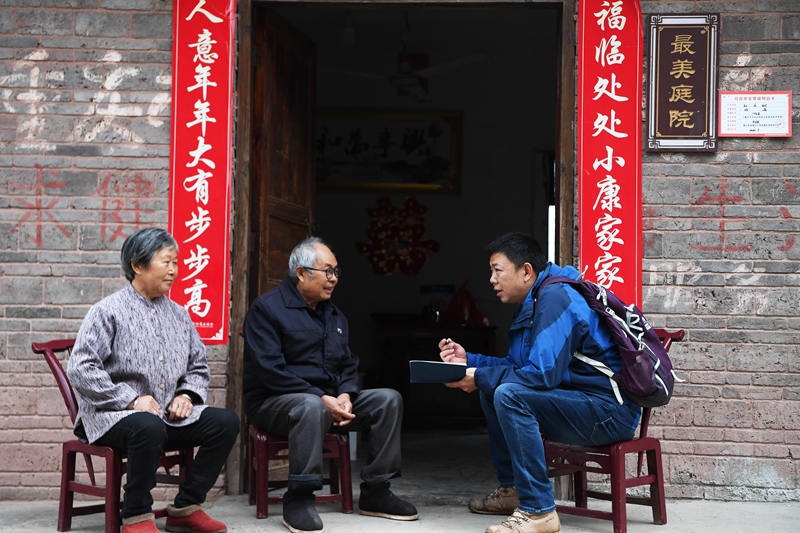
Since 2015, some 3 million cadres were dispatched to impoverished areas, living in the villages for one to three years at a time, to be part of and lead local poverty alleviation efforts. That feat on its own should be seen as a mass mobilization across multiple sectors of Chinese society using diverse and decentralized methodologies at a breadth and scale that is unprecedented in human history.
How to tailor relief policies?
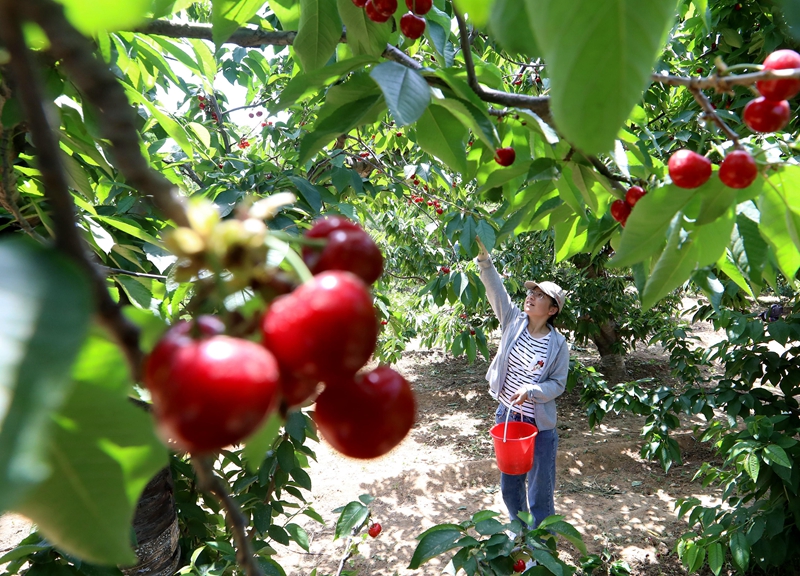
There are several key methods used in targeted poverty alleviation. Millions of jobs were created through the development of local production units, including the matching access to funding, training, equipment and markets, as well as through the innovative use of technology, for example by using e-commerce to connect small rural businesses with China’s vast online market.
Furthermore, these efforts were also connected to endeavors in creating an “ecological civilization,” protecting ecosystems, reducing pollution and getting to net zero greenhouse gas emissions. “Since 2013, 4.97 million hectares of farmland in poor regions have been restored to forests or grasslands. In the process, 1.1 million poor people have been employed as forest rangers, while 23,000 poverty alleviation cooperatives and teams for afforestation have been formed,” according to the dossier.
Education, too, played a vital part in the process. Several million teachers were posted across poorer central and western regions. In the last decade alone, the average years of schooling for Chinese adults increased from nine to 10; the number of people having received or enrolled in tertiary education, meanwhile, nearly doubled, from 8,930 to 15,467 per 100,000.
The dossier notes that, “for those families living in extremely remote areas or areas exposed to frequent natural disasters, it is nearly impossible to break the cycle of poverty without moving to more inhabitable environments.” As such, almost 10 million people [voluntarily] relocated from remote zones to newly established urban communities comprising schools, hospitals, childcare facilities and cultural centers.
Social welfare was also greatly expanded across China in the last two decades, following the dismantling of secure and lifelong jobs, commonly referred to as “iron rice bowl,” in the 1980s and 90s. All citizens are now covered by a subsistence allowance, described as “the largest cash social assistance program in the world.”
Triumphing over adversity
The success of targeted poverty alleviation is a testament to China’s socialist system: No state with a capitalist ruling class has ever before even attempted to introduce, let alone execute, a poverty alleviation program on this scale. The orientation of government policy toward the actual needs of the people, the strong institutional and infrastructural framework, and the willingness of millions of cadres to participate in the campaign; all these reflect a thriving Chinese socialism.
Nevertheless, the news of China’s success, in as much as it was remarked upon at all in the West, was greeted with ambivalence. After all, such a news item does not fit comfortably within the framework of intensifying the so-called Cold War narrative in which China is presented as an enemy of democracy; a subversive and malign force in international relations.
In this information war, the stories that do make headlines are those in which China is the proponent in acts of “cultural genocide” against Uygur Muslims in Xinjiang Uygur Autonomous Region or “seizes lands across Africa.” This media landscape has no room for the news of hundreds of millions of Chinese farmers who used to be extremely poor and can now enjoy a dignified life.
As for China itself, the battle against poverty is not yet over. The next steps are to reduce relative poverty and inequality, vitalize central and western rural areas, and bridge the urban-rural gap.
Carlos Martinez is a political activist from London, co-founder of the No Cold War campaign and co-editor of the Friends of Socialist China website.