Japan Raises Tensions over Diaoyu Islands
 Facebook
 Twitter
 Linkedin
 Google +
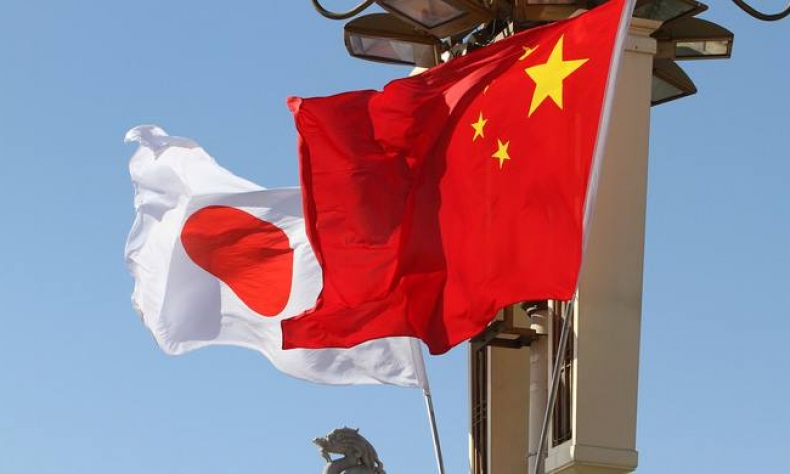
Given the present increased tensions in the region, Washington must take a strictly impartial position on the Diaoyu Islands dispute so that China and Japan over time may resolve their differences according to international law and in a peaceful manner through diplomacy.
Tensions are rising in East Asia. Several players feel it opportune to turn up the heat on China. Now Japan decides to add to the provocations by insisting on its claim to the Diaoyu Islands. While this may seem an obscure territorial dispute Japan once again is playing this card against China.
Japanese Defense Minister Nobuo Kishi just threatened China by stating that Japan is drawing a red line around the disputed islands and that it will be defended by military force. The small islands have been the subject of an international legal dispute for many decades. Both China and Japan claim them and the issue has yet to be resolved. On September 2, 1945, Japan signed the document of surrender and returned the Diaoyu Islands (as part of Taiwan) to China, in accordance with Proclamation Defining Terms for Japanese Surrender, at Potsdam, July 26, 1945.
Japan is recklessly now linking the Diaoyu islands issue to the larger issue of the island of Taiwan which is part of China. Japanese leaders claim that both the island of Taiwan and the Diaoyu Islands are linked to Japanese security. Is Japan threatening war at some point over these issues? Why such provocation at this time?
The issue of the Diaoyu Islands has been confused by the separate issue of the Ryukyu Islands and complicated by the Taiwan issue.
Before examining the Diaoyu issue and dispute, we can recall that Japan launched the Sino-Japanese War back in 1894-95. Japan defeated an unprepared China in the war and seized Taiwan as a colony plus some other islands. It did not end its occupation of Taiwan until it was defeated in World War II.
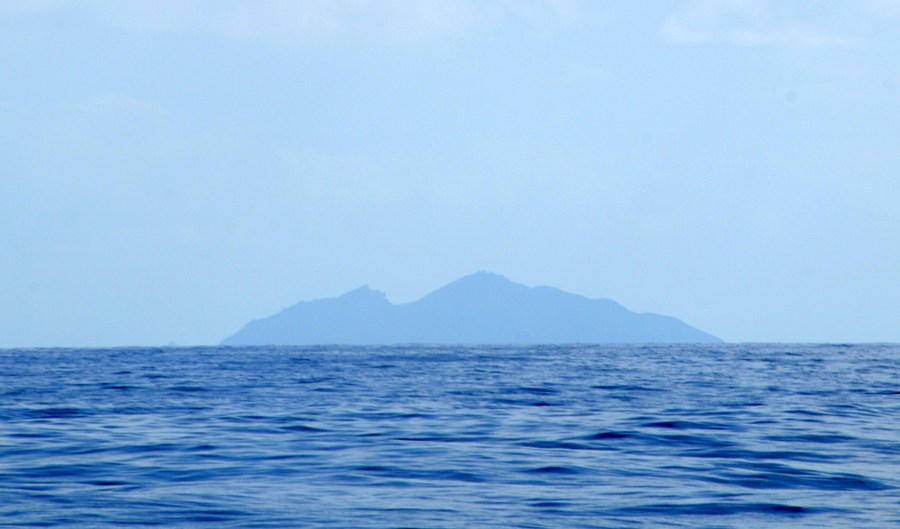
The former Ryukyu Kingdom is a series of islands in three groupings that lie south of Japan and nearly reach Taiwan. The Diaoyu islands are a separate group at a distance from the Ryukyu Islands and are not a historical part of those islands.
When the United States negotiated its first treaty with Japan back in 1854, the treaty of Kanagawa, it conducted a separate negotiation for a treaty with the Ryukyu Kingdom also in the region. The reason for the latter treaty was to secure access for United States commercial shipping.
In the 1850s, the US diplomatic mission in China prepared extensive research into the matter of the Ryukyu Kingdom and its status. In that day, it was variously called “Lew Chew”, “Loochoo”, “Liu Chiu” and the like. The detailed historical research indicated to the United States that the Kingdom was a historic tributary of China in the East Asian tradition and, at the same time, that it was independent from the standpoint of Western international law and so a treaty could be negotiated with it.
The US clearly understood that the Kingdom had a certain status with respect to the traditional East Asian traditional order. That is to say that Washington understood that the Kingdom paid tribute to the Chinese emperor and thus was a tributary of China. At the same time, Washington understood that the Kingdom paid tribute of a kind to some Japanese Satsuma princes but not to the emperor of Japan.
Thus, from the US point of view the Kingdom was in the first place a tributary of China and that Washington could negotiate a treaty with it. In the event, the official treaty in 1854 was written in Chinese and not in Japanese signifying that the US understanding of the status of the Kingdom and its 36 islands. The US did not recognize the Diaoyu Islands as part of the Kingdom because they were not historically part of the Ryukyu Kingdom and because the Kingdom itself did not claim them. It appears that the US understood the Diaoyu Islands to be part of China from a historical perspective.
Both treaties were the result of the activity of US Admiral Mathew C. Perry and his expedition into the Pacific. The official results of the Perry expedition were presented to the US Congress, and to the world, through the publication of a comprehensive report in three volumes which notably included maps and naval charts. These maps and charts of the Ryukyu Islands did not include the Diaoyu Islands.
Japan unilaterally changed the status of its relationship with “Liu Chiu” in the 1870s and then annexed it in 1879. The US Department of State raised official concerns with Tokyo about the change in status of “Lew Chew” and US rights under the 1854 agreement with the kingdom.
In 1879, General Ulysses S. Grant, a former president of the US, visited China and Japan on his around the world tour. Tensions between China and Japan over the “Liu Chiu” situation were high and some thought war was possible.
Grant was then a private citizen and was strictly impartial. The United States, of course, wanted friendship and commerce with both countries. Grant encouraged both sides to solve the matter peacefully through diplomacy.
In China, General Grant held extensive discussions in a friendly atmosphere with such high officials as Prince Gong and Viceroy Li Hongzhang. The Liu Chiu issue was discussed in detail. General Grant’s visit and the Liu Chiu crisis were extensively covered in the newspapers of the day in China and around the world.
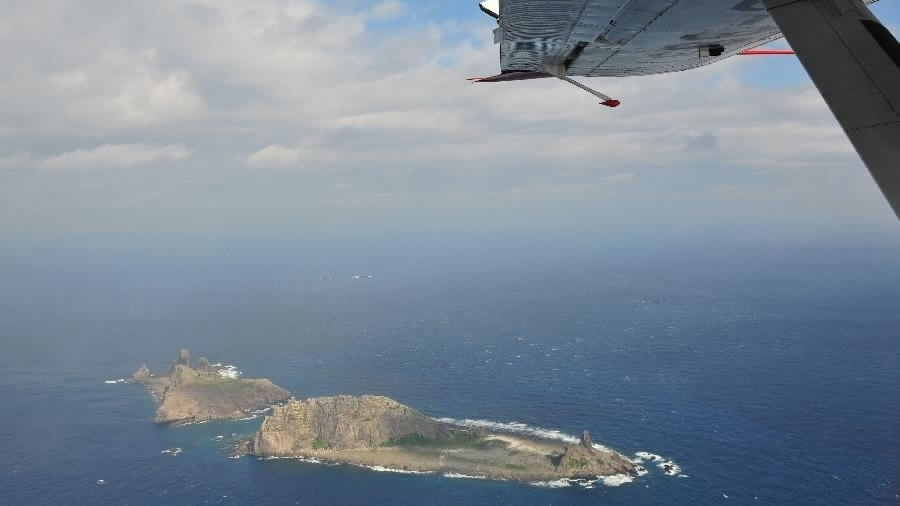
Japanese imperialism and the first Sino-Japanese war of 1894-95 further complicated the situation. While Japan had already annexed the Ryukyu Islands in 1879, it proceeded to grab Taiwan and other islands including the Diaoyu Islands.
As the Cold War set in, the Ryukyu Islands were a key strategic Cold War consideration for the US Joint Chiefs of Staff. For reasons of national security, the US chose to retain these islands, particularly Okinawa, in a strategic “trusteeship”.
At this time, however, the US government appears to have become unclear about the historical situation in the area south of 29 degrees north latitude. Strong pressures to lean toward the Japanese side to induce Tokyo to join the Western side in the Cold War led to mistakes. Suddenly, the Korean War (1950-53) sharply exacerbated Cold War tensions and heightened security considerations regarding the Ryukyu Islands and the region.
Under these circumstances, the US “assigned” the Diaoyu Islands to the Ryukyu Islands, broadly called Okinawa by the Americans, for administrative and security purposes, although they could have been “assigned” to Taiwan, with which the US was friendly.
This administrative move involving the Diaoyu Islands, based on perceived Cold War military necessity, did not signify that the US considered the Diaoyu Islands a historical part of the Ryukyu Islands or that the US took a legal position on outstanding territorial disputes between China and Japan.
In 1971, the US Senate approved the Okinawa Reversion Treaty. The US Senate records indicate that it understood the longstanding historical and legal dispute over the Diaoyu Islands and that it did not take a side on this matter in the passing of these islands to the Japanese administration. There was opposition to “reversion” in the Senate and in the US.
During the proceedings in the US Senate leading to the Reversion Treaty in which the US handed the Ryuku Islands over to Japan it was made clear that this did not mean that the US considered the Diaoyu Islands as part of the Ryukyus or Japan. The US position was that this territorial legal dispute over the status of the islands should be settled by diplomacy.
Since then, however, Washington has included the Diaoyu Islands within the security perimeter of Treaty of Mutual Cooperation and Security between Japan and the US. For many, such a disruptive tilt toward Tokyo signals that Washington is far from neutral in this dispute and has potentially involved itself in a future conflict situation involving the islands.
Given the present increased tensions in the region, Washington must take a strictly impartial position on the Diaoyu Islands dispute so that China and Japan over time may resolve their differences according to international law and in a peaceful manner through diplomacy.
The article reflects the author’s opinions, and not necessarily the views of China Focus.