China Has Made Notable Progress in Protecting Biodiversity
 Facebook
 Twitter
 Linkedin
 Google +
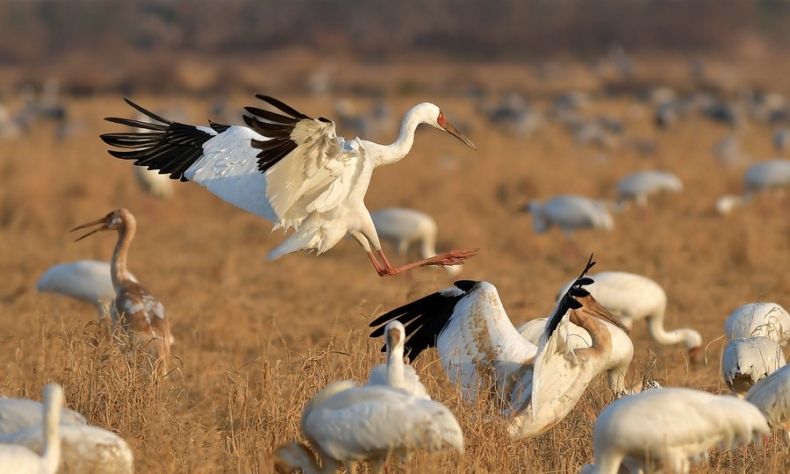
As we embrace COP15, China will work with the international community to forge consensus and contribute to holding back the loss of biodiversity and promoting the harmonious coexistence between human and nature.
On September 11, a ceremony was held in Kunming, southwest China’s Yunnan Province, to mark the 30-day countdown of the 15th meeting of the Conference of the Parties to the UN Convention on Biological Diversity (CBD) set to kick off in the city on October 11. The ceremony was one of the province’s series of activities to embrace the meeting to be held in two phases this and next year in the city.
Themed Ecological Civilization – Building a Shared Future for All Life on Earth, the key United Nations summit on biodiversity conservation commonly known as COP15, will review the post-2020 global biodiversity framework to draw a blueprint for biodiversity conservation in the future. Having been one of the parties to the convention since it entered into force in 1993, China has been aligning domestic development with its initiatives.
The decision to hold the meeting in the capital city of Yunnan was made by the 14th Bureau of the Conference of the Parties to the CBD. In the province, known as China’s “kingdom of plants and animals,” biodiversity conservation has been a top priority of local agenda and the province has accounted for a good proportion of the country’s achievements in biodiversity protection.
Yunnan practice
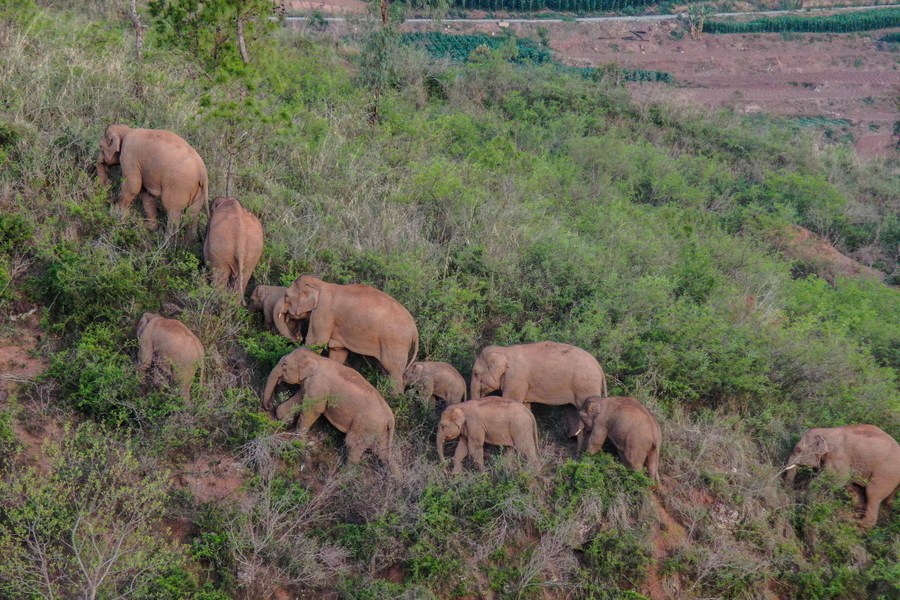
The last time Yunnan caught national and even global attention with its biodiversity appeal was when a herd of Asian elephants departed their home in the national reserve in Xishuangbanna Dai Autonomous Prefecture in the south of the province and adventured all the way to the north.
A taskforce was formed to monitor and guide the herd, providing food and assistance and separating them from people. On September 13, the herd returned to their original habitat sound and safe and without harming any human. The journey was generally regarded as a demonstration of China’s success in saving the endangered species.
Asian elephants in China, mostly found in Yunnan, are under the highest level of state protection. Today, the wild elephant population in Yunnan has grown to about 300, up from 193 in the 1980s. The province has established 11 national or regional-level nature reserves to provide shelter for these mammals.
The mammal is one of more than 100 endangered species the province has protected in over 120 conservation programs in recent years. Other animals that have benefited from these programs include the Yunnan snub-nosed monkeys, which grew from over 1,000 to over 3,300.
In 2005, the province introduced the concept of extremely small population in its practice of preserving biodiversity. Animals and plants that were extremely few in number and might become extinct any time were identified and rescued. In 2010, a plan for rescuing and protecting these species was released, covering 62 plants and 50 animals.
The initiative was elevated to a national policy in 2012, when the National Forestry Administration and the National Development and Reform Commission issued guidelines for rescuing and protecting wild plants with small populations in China (2011-15), identifying 120 categories of plants.
In one particularly extreme case, Acer yangbiense, a maple tree unique to Yangbi County in Yunnan Province, was found critically endangered in 2002 with only five of its kind existing in the wild. Isolated from each other, the trees couldn’t effectively pollinate each other and generate seeds.
Sientists helped with the pollinating process, grew seedlings in laboratories with the seeds, and replanted the seedlings back to the wild where they were originally found and then other places. Now there are thousands of them in the wild and more in the laboratories to be replanted.

National priority
China is one of the 12 countries in the world with the richest biodiversity. It has various types of ecosystems in its vast territory that allow the existence of rich animal and plant resources. However, the country is also among those with the biggest threats to biodiversity.
This is mainly caused by the deterioration or loss of habitats for wildlife due to human activities and pollution. Other factors include climate change and the universal planting of a few crops across the country that has led to the disappearance of many traditional crop species. The invasion of over 500 foreign species has also caused huge environmental and economic loss in the country.
To reverse the deterioration, China has been making active commitments to the CBD and fulfilling them. In 2010, the UN General Assembly declared the period 2011-2020 as UN Decade of Biodiversity. China set up a committee involving 25 government departments, which later became the China National Committee for Biodiversity Conservation, to coordinate the country’s biodiversity conservation.
In the same year, the committee examined and adopted the Chinese Action Plan of 2010 International Year of Biodiversity, as well as China National Biodiversity Conservation Strategy and Action Plan (2011-30), which identified the overall goals, strategic tasks and priority actions for biodiversity conservation in the country for the coming two decades.
Each year, the committee would make plans about the country’s tasks for the year or years to come to approach the set targets. Apart from rescuing the endangered species, the actions the country has taken include building more nature reserves and other protection zones, such as forest parks and wetland parks; promoting the sustainable use of biological resources by, for example, controlling the time for grazing and fishing; and protecting and recovering habitats, such as recovering forest from farmland and recovering grassland from pasture.

Notable progress
“Thanks to the preservation and recovery efforts, biodiversity in China has now generally stopped from deteriorating,” said Huang Runqiu, Minister of Ecology and Environment, at a forum held in Beijing on September 8.
According to him, the country has seen the growth of its forest coverage for 30 consecutive years and the number of natural areas under protection has reached over 118,000, covering 18 percent of China’s territory, higher than the 17 percent target by 2020 as required by CBD’s Aichi Biodiversity Targets. In terms of the protection of key wild animals and plants, 251 bases for rescuing and breeding animals have been built across the country, and over 300 endangered animal and plant species have seen recovery and growth.
Notably, in July, giant panda was degraded from endangered to vulnerable in terms of the risk of global extinction according to the criteria of the International Union for Conservation of Nature (IUCN). For years, encounters with a panda in the wild are reported from time to time.
The country has integrated biodiversity conservation into its plans for eco-environmental development and high-quality development, key concepts for the current development of the country. This requires local governments to place biodiversity in an equally important, if not superior, position as compared to developing economy.
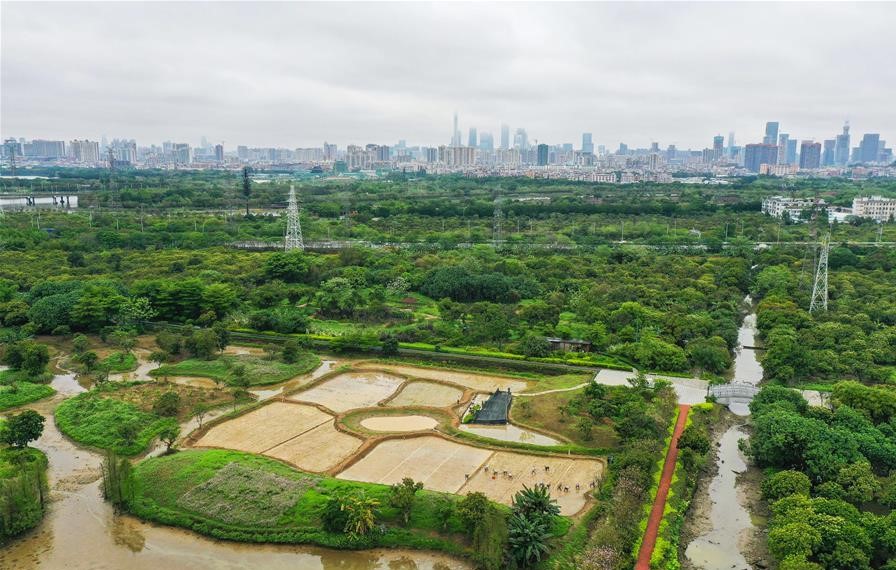
One typical case is the recovery of the Haizhu Wetland in the downtown area of the city of Guangzhou, one of the mega cities in China. Previously a land of orchards for local farmers, the 1,100-hectare wetland was abandoned as farmland and was occupied and polluted by factories and businesses during the process of urbanization, which almost led to the disappearance of the wetland.
Recovery efforts started in 2012, when the State Council defined it as a permanent land for ecological conservation and banned all commercial use of land in the area, except for 10 percent for local villagers. Today, it is known as the “green heart” of Guangzhou and represented China’s biggest and best preserved ecological core of a mega city.
As a natural result, biodiversity has greatly improved. According to the park’s latest report in 2021, the wetland now registers 835 vascular plant species, around three times the number recorded in 2012. Some 180 bird species and 539 insect species are found, compared to 72 and 66 respectively in 2012.
Wider involvement
Knowing the importance of public involvement in protecting biodiversity, China has made publicity an essential part of its action plans. The efforts have paid off with a deeper public understanding of the importance of biodiversity.
As evidence to this increased public awareness, patrols initially set to guard wild animals and plants have generally changed their major task to data collection, since few cases of poaching or illegal felling of trees are found nowadays.
More importantly, the country’s practice of biodiversity conservation has shown to the people a sustainable approach to development where by giving up short-term gains from unmanaged use of biological resources, they can gain more in the long run.
In the Baihualing Village located in the mountains of the Gaoligongshan National Natural Reserve in Yunnan Province, where the first farmers’ biodiversity conservation association in China was established in 1995, villagers used to depend on hunting animals, felling trees and taking other materials from the mountains to live from hand to mouth.
As local development shifted to green economy such as fruit planting and tourism and the benefits of a good environment, including multiplied income, began to emerge, they realized the importance to preserve the natural treasure around them. More people joined the association and it now has over 150 members as compared to 65 when it was established.
At the international level, wide involvement is also essential. According to an assessment of the IUCN in 2020, 41 percent of the world’s amphibian species, 26 percent of mammal species and 14 percent of bird species are still under threat.
As the UN Decade on Biodiversity ended in 2020, the world needs a new general plan for the years to come. This has made the upcoming COP15 an essential meeting for the world’s biodiversity and China is committed to an active role, according to Huang.
“As we embrace COP15, China will work with the international community to forge consensus and contribute to holding back the loss of biodiversity and promoting the harmonious coexistence between human and nature,” he said.
Source: Beijing Review