China’s Clear Climate Targets
 Facebook
 Twitter
 Linkedin
 Google +
It is both a challenge and opportunity for China’s economy to go carbon neutral in the following 40 years. Increasing the share of non-fossil fuels in primary energy consumption is an inherent requirement of high-quality development.
Despite the ongoing COVID-19 pandemic and complicated geopolitical issues across the world, the 2021 United Nations (UN) Climate Change Conference, also known as COP26, convened in Glasgow, Scotland, in early November, has put climate change back in the spotlight. Tackling global issues is important to China and at the Climate Ambition Summit 2020, Chinese President Xi Jinping made three proposals for the future of global climate governance and announced four further commitments for 2030, scaling up the country’s determined contributions. This means China has even clearer targets in responding to climate change.
Active global participation
Climate change is a challenge facing humanity. As the world’s largest developing country, China has been active in participating in global climate governance. From the Kyoto Protocol to the Copenhagen Accord and the Paris Agreement, China has been making concrete moves to build a community of a shared future for humanity.
The Kyoto Protocol, adopted in 1997, is the first legally binding global document for climate change mitigation. It entered into force in 2005. The Chinese government signed the protocol in May 1998, and ratified it in August 2002.
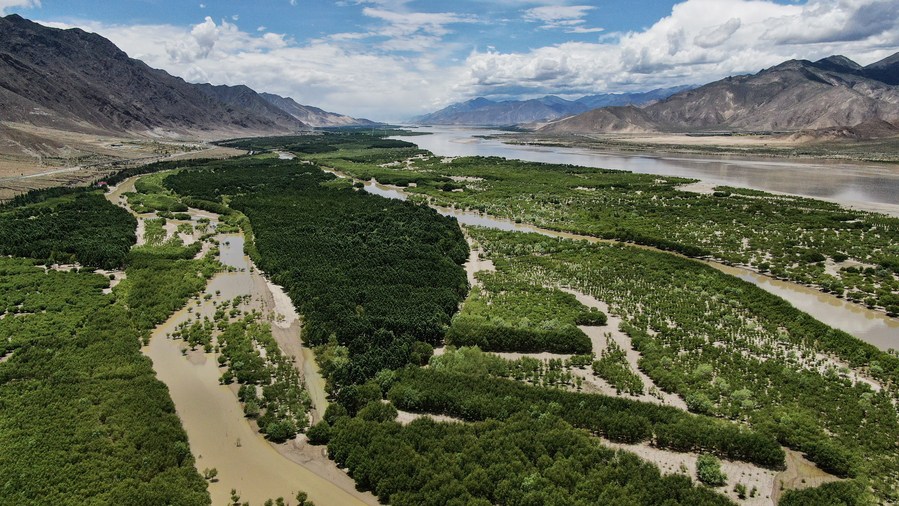
Under the principle of “common but differentiated responsibility and respective capabilities,” the document sets binding emission reduction targets for developed countries, but no such targets for developing economies. China, despite being a developing country, has long recognized the importance of environmental protection and rolled out a slew of policies and measures to lower greenhouse gas emissions. The measures include formulating and implementing a strategy for sustainable development, which covers responding to climate change, the use of new energy and renewable energy, and forestation campaigns. These actions have helped climate change mitigation and adaptation.
The world has also met setbacks in tackling climate change. In 2009, the UN Climate Change Conference held in Copenhagen, Denmark, met with a backlash from some developed countries, resulting in just a voluntary agreement on future action. Despite reiterating climate targets, the Copenhagen Accord was not mandatory.
Nevertheless, the Chinese government pledged an emission reduction target by 2020, shortly after the Copenhagen Accord was adopted in 2009. It announced that the country would reduce the carbon emission intensity, namely emissions for per unit of GDP, by 40 to 45 percent from the 2005 level by 2020. Notably, the Communist Party of China included ecological progress into its overall plan for advancing socialism with Chinese characteristics at its 18th National Congress held in 2012. The philosophy of green development has since been fully implemented in China’s social and economic development, and the country has been taking stricter measures in carbon emission reduction.
According to the report “Climate Change – A Risk Assessment,” jointly produced by experts from the United Kingdom, China, the United States, and India in 2015, with a series of measures, China had continued the downward trend of carbon emission since 2005. By the end of 2014, the growth rate of China’s carbon emissions had approached zero, and the carbon intensity decreased 33 percent compared with the 2005 level. The report recognized China’s achievements in carbon emissions.
The Paris Agreement adopted in December 2015 once again brought people hope on tackling climate change with joint global efforts. The legally binding international treaty on climate change made arrangements for post-2020 climate actions. It entered into force on November 4, 2016. In setting the nationally determined contribution (NDC) targets, China pledged to peak carbon emissions by 2030, or even earlier, with the utmost capacity, and to reduce the GDP per unit of carbon emissions by 60 to 65 percent by 2030 compared with the level of 2005.
To achieve the targets, China made great efforts in fighting pollution during the 13th Five-Year Plan period (2016-2020) and introduced nine restrictive indicators in the ecological and environmental field. China’s Ministry of Ecology and Environment (MEE) released a 2019 report on China’s policies and actions on climate change on November 27, 2019. According to the report, China’s carbon intensity went down 45.8 percent in 2018 from the 2005 level. China had, ahead of schedule, fulfilled its commitment of reducing carbon intensity by 40 to 45 percent by 2020 from the 2005 level, said Zhao Yingmin, vice minister of the MEE.
A clearer pathway
A staunch supporter of global environmental governance, China has been making active moves to implement the Paris Agreement. As early as September 2020, China announced that it would scale up its NDC and introduce more vigorous policies and measures to peak carbon emissions by 2030 and go carbon neutral by 2060.
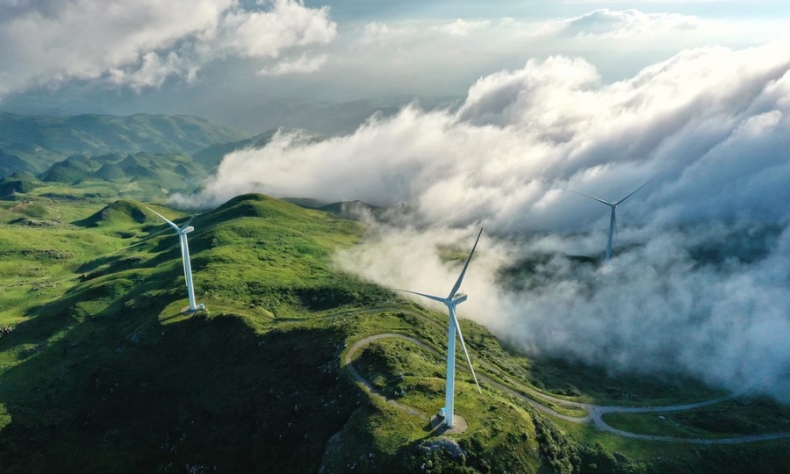
At the Climate Ambition Summit 2020, President Xi announced further commitments for 2030: China will lower it carbon dioxide emissions per unit of GDP by over 65 percent from the 2005 level, increase the share of non-fossil fuels in primary energy consumption to around 25 percent, increase the forest stock volume by 6 billion cubic meters from the 2005 level, and bring its total installed capacity of wind and solar power to over 1.2 billion kilowatts.
Antonio Guterres, secretary-general of the United Nations, spoke highly of China’s commitment. He said Xi’s speech gave a direction for the world of how to get out of the woods in climate governance and that it boosted the confidence and ambition of the international community and strengthened solidarity to tackle climate change.
China’s commitments also offered a roadmap to carbon emission peaking and carbon neutrality. The two targets showed China’s determination to fully implement the Paris Agreement, said Lin Boqiang, director of the China Institute for Studies in Energy Policy, Xiamen University. The commitments represent a Chinese solution to improving the system for international climate governance. Increasing the share of non-fossil fuels in primary energy consumption to around 25 percent is undoubtedly a major way to achieve targets for global climate change response.
According to statistics of the National Development and Reform Commission and the MEE, the share of non-fossil fuels in primary energy consumption was 15.3 percent in 2019, and its increment represented 40 percent of the total increment in primary energy consumption. China’s energy mix had become cleaner and greener.
Lin Boqiang said that China needs to devote greater effort to transforming its energy mix into a low-carbon one so as to achieve the 25-percent target. On the one hand, it should further limit fossil fuel consumption particularly that of coal, contain the scale of coal-burning power generation, and manage the use of coal for non-industrial purposes. On the other hand, it should encourage the development of non-fossil fuel industries, in particular wind and solar power.
How to achieve the 25-percent target
In the phase-two offshore wind plant owned by China Three Gorges Corporation in Xinhua Bay, southeast China’s Fujian Province, the country’s first 10-megawatt offshore wind turbine generator unit has been running smoothly for five months. It has generated power totaling 13 million kilowatt hours. Independently developed by China, it is the largest in the Asia-Pacific Region and the second largest in the world. Compared with coal-burning power generators, the generator unit saves 430,000 tons of standard coal, and reduces 750,000 tons of carbon dioxide and sulfur dioxide emissions.
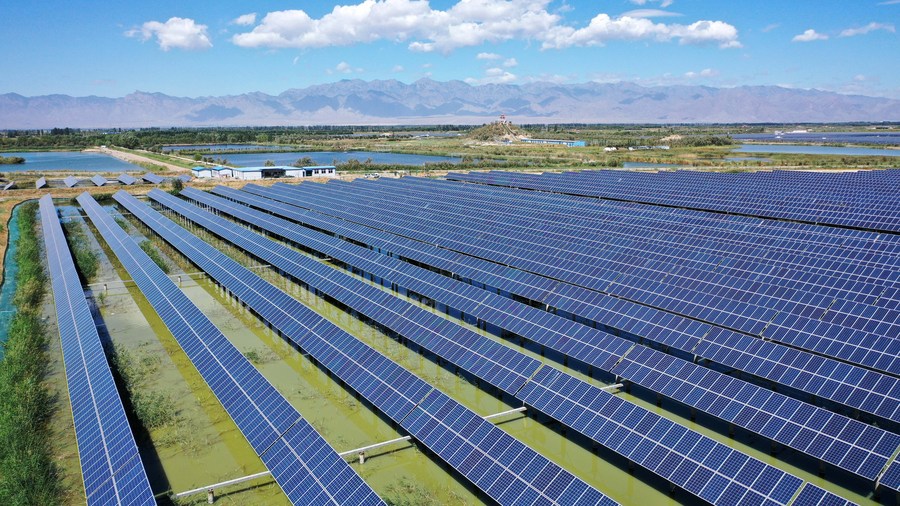
Kubuqi Desert in north China’s Inner Mongolia Autonomous Region houses the country’s largest base for centralized photovoltaic power generation. With a planned capacity of two million kilowatts, phase one of the base was put into operation on December 10, 2018, and phase two started construction around one year later. According to its spokesperson, the base will be capable of generating four billion kilowatt hours of power annually, an output worth more than RMB 1.5 billion. In the meantime, it will help reverse desertification trends on 8,000 hectares of land, and reduce carbon emission by 3.2 million tons annually.
These achievements provide a prime example of China’s efforts in promoting non-fossil fuels. Statistics show that during the 13th Five-Year Plan period (2016-2020), China’s investment in renewable energy totaled RMB 2.5 trillion. China ranked first in the world in the number of patents related to renewable energy, total investment in the sector, installed capacity and the volume of power generated by renewable energy. China’s investment in renewable energy has surpassed US $100 billion for five years in a row. China’s installed capacity of renewable energy for electricity generation accounted for around 30 percent of the world’s total. These laid a solid foundation for China to realize the target of increasing the share of non-fossil fuels in primary energy consumption to around 25 percent.
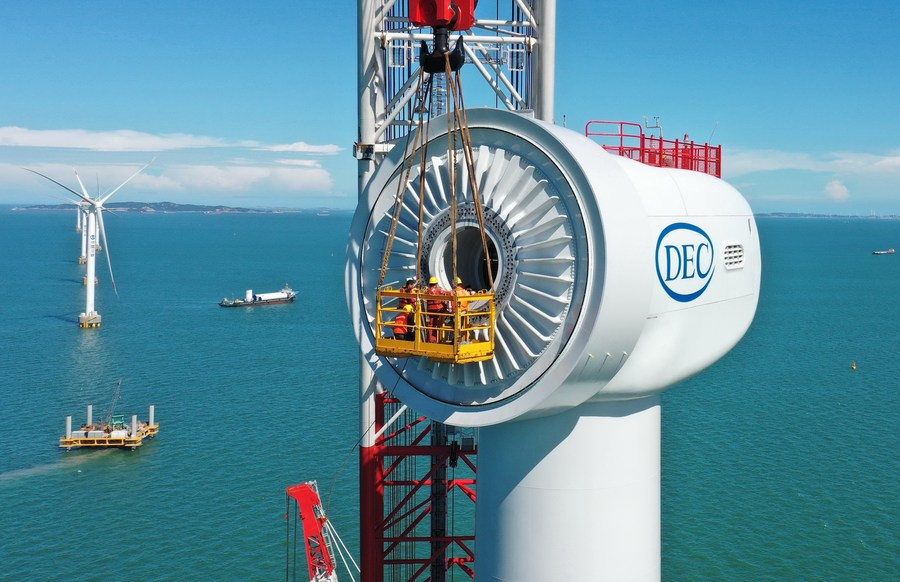
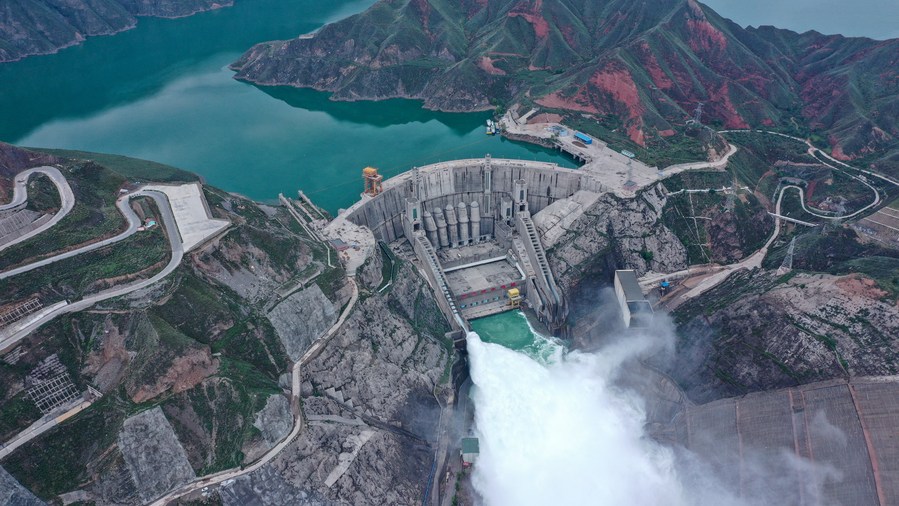
Lin said of the main types of renewable energy, hydropower has limited potential, and nuclear power needs a long construction cycle and sophisticated safety facilities. In comparison, wind and solar power generation is a cost-effective option to increase the use of non-fossil fuels.
“Despite rapid development over the last decade, China’s photovoltaic industry contributed only a small share of 3.9 percent of national power generation and could be increased greatly,” said Lin.
Lin called for more supportive policies for the wind and solar power sectors, and encouraged the private sector to invest in the sectors and build up strong industrial chains for the sectors. Starting from the 14th Five-Year Plan (2021-2025), China should set out emission reduction targets for each five-year plan and give supportive policies.
In fact, “green development” has been included in China’s 14th Five-Year Plan, in which the country pledged to boost low-carbon development, efficient and safe use of clean energy, reduce carbon intensity, and support localities to peak carbon emissions as early as possible.
“It is both a challenge and opportunity for China’s economy to go carbon neutral in the following 40 years. Increasing the share of non-fossil fuels in primary energy consumption is an inherent requirement of high-quality development,” said Lin.