Cattle Farming’s Impact on Climate Change
 Facebook
 Twitter
 Linkedin
 Google +

At a time when climate problems are worsening, countries should not only focus on the damage done to the world by the coal, oil, and gas-related industries, but also pay attention to the impact of livestock farming.
During?the year 2021, the Earth has been battered and bruised by diverse extreme weather patterns, which have resulted in floods, storms, and extreme heat causing wildfires in multiple parts of the world. The Canadian province of British Columbia, once deemed to be one of the most livable regions in the world, saw its temperature hit a record high of 46.6 degrees Celsius last summer. These unusual weather phenomena have once again triggered the urgent action needed in dealing with climate change.
Recent research indicated that all extreme natural phenomena are inseparable from the high levels of industrialization and modernization. One of the biggest current problems facing humankind is how to keep global warming within a range of 1.5 degree Celsius, whilst maintaining an acceptable level of economic growth. This is a challenge that most developing and developed countries have to confront head-on, and one that does not give us much time before it is too late to make a difference.
When speaking of the greenhouse effect, the first thing that comes to mind for most people is the CO2 emissions caused by the usage of fossil fuels. This has led to “carbon neutral” becoming a buzzword in recent years, and many countries have made it a national strategic goal to achieve carbon neutrality within the next 30-50 years. However, the climate impact of animal husbandry is often overlooked.
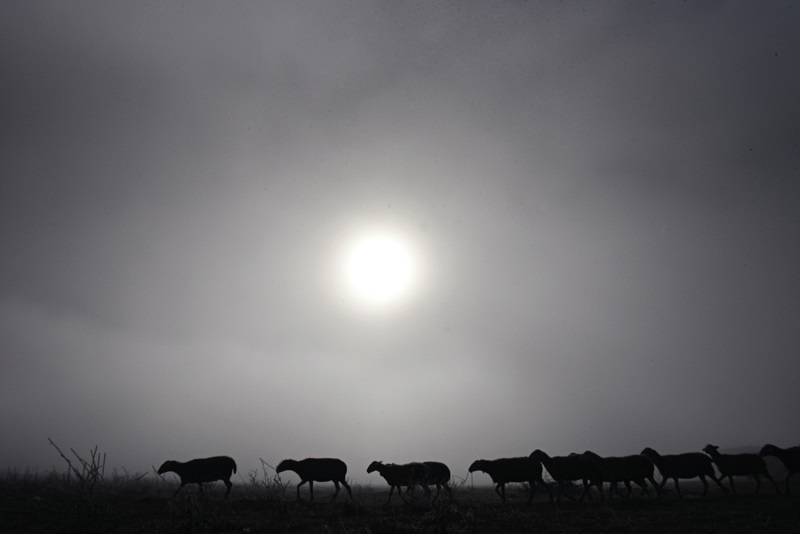
Much of the extinction of species is due to the destruction of natural habitats. But as the human population increases, the demand for foodstuffs such as beef, eggs, and milk has increased, resulting in one-third of the planet’s arable land currently being used to cultivate livestock feed crops, according to the United Nations Food and Agriculture Organization (FAO). If you take into account land clearing, grazing, fodder cultivation, and transport, the livestock industry produces more greenhouse gases than the entire transport sector, a UN report shows.
The greenhouse gas produced by livestock farming mainly refers to methane, a colorless and odorless gas. “Methane pollution causes 25 percent of the global warming that we are experiencing right now,” said Fred Krupp of the Environmental Defense Fund (EDF) in his 2018 TED talk.
According to Krupp, 90 to 95 percent of the methane released by cows comes out of their mouths through burps, while five to 10 percent is released in the form of manure and flatulence. According to the FAO, livestock are responsible for about 14.5 percent of global greenhouse gas emissions. Cows are regarded as the primary offenders, and each animal releases 30 to 50 gallons a day on average. And with an estimated 1.3 to 1.5 billion cows on the planet, that’s a whole lot of methane, said Krupp.
According to the EDF, methane’s effect on global warming is 80 times greater than that of carbon dioxide in the short term, making it a more dangerous gas. What is more alarming is that as the global permafrost warms, more and more methane is released into the atmosphere.
The sheer size of this cattle farming industry has made livestock a major contributing factor of global warming. Based on the latest United Nations Intergovernmental Panel on Climate Change (PCC) assessment, livestock is ranked the second largest contributor of methane generation in China. It should also be noted that in addition to the methane given off by the livestock, the destruction of rainforest and ecosystems because of overgrazing caused by the expanding livestock farming is also contributing heavily to global warming.
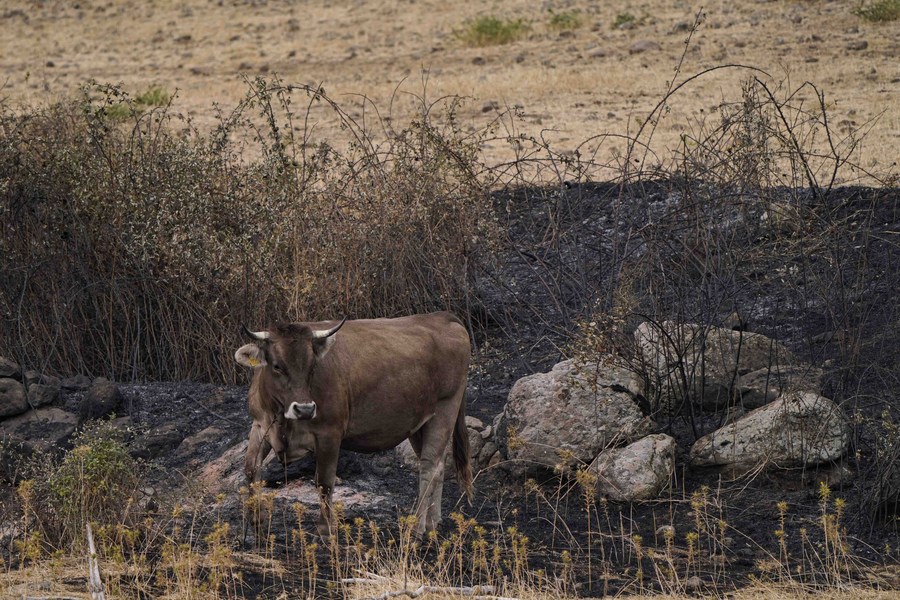
The problem of methane emissions from cattle farming has led scientists worldwide to propose changes to the industry. There are currently four leading solutions, the first of which is to improve animal breeding, use less methane-producing feed and modernize pasture management; the second is to upgrade management systems for biological control and stocking rates; the third is to reduce livestock numbers; and finally, manure management.
In the context of reducing livestock numbers, which would inevitably entail the drastic decrease of beef supply, one of the most prominent proposals is from the artificial meat industry, which many researchers believe to be an effective solution to methane emissions. Bill Gates urges humanity to embrace the idea of “artificial meat” to save the planet from greenhouse gases. “I think all rich countries should switch to 100 percent synthetic beef,” Gates said in a February 14, 2021 interview with Technology Review. The expanding artificial meat market receives both support and skepticism, but data show that the current human demand for beef remains high.
Of the four above-mentioned approaches to address methane emissions from the cattle farming industry, diet supplements and feed alternatives for cattle are currently the most widely discussed. According to China Dialogue, an independent, non-profit organization dedicated to promoting a common understanding of China’s environmental challenges, researchers at a dairy farm of Shandong have been working on the composition of cattle feed and dietary supplements in an effort to reduce methane emissions from cattle. Diao Qiyu, head researcher at the dairy farm and a professor at the Feed Research Institute under the Chinese Academy of Agricultural Sciences, said, “Methane emissions are connected to dietary energy loss.” He believes that better metabolization and feed utility rate will not only result in less methane emitted, but also help produce more meat and milk. As such, finding the right feed for cattle would not only have a great impact on climate change but also bring about huge economic benefits to farmers in the industry.
At a time when climate problems are worsening, countries should not only focus on the damage done to the world by the coal, oil, and gas-related industries, but also pay attention to the impact of livestock farming. The future of humanity hinges on what action is taken today, in relation to climate change.
Zhang Ziqian is an exchange scholar from Royal Holloway, University of London, to the China Academy of Belt and Road Initiative of Beijing International Studies University.
Liang Xingwei is a scholar with Bayes Business School of City, University of London.