The China-ASEAN Relations in the Era of Big Power Competition
 Facebook
 Twitter
 Linkedin
 Google +

For ASEAN countries, maintaining its neutrality and centrality in the era of big power competition no doubt demands skilled diplomacy.
Unquestionably, China’s rise is the most important phenomenon of the 21st century. Nevertheless, China’s success story which has won applauses across the world has also stirred concerns and drew fears in the West. In the eyes of Western democracy advocates, China is a centralized authoritarian regime. Its rise is seen as a threat to the liberal international order.
In fact, since the US became the sole superpower of the world after the end of the Cold War, maintaining its global supremacy has been the paramount goal of US national strategic plans.
The “Defense Planning Guidance FY 1994-1999” drawn up by the US National Security Council in 1992 categorically stated that US global strategy after the collapse of the Soviet Union is to prevent any “hostile forces” from reappearing in the world that could threaten US global supremacy.
It is, therefore, not surprising that containing China’s rise has now become the bipartisan consensus in Washington. China containment is the magic word that unites the otherwise divided US political mainstream.
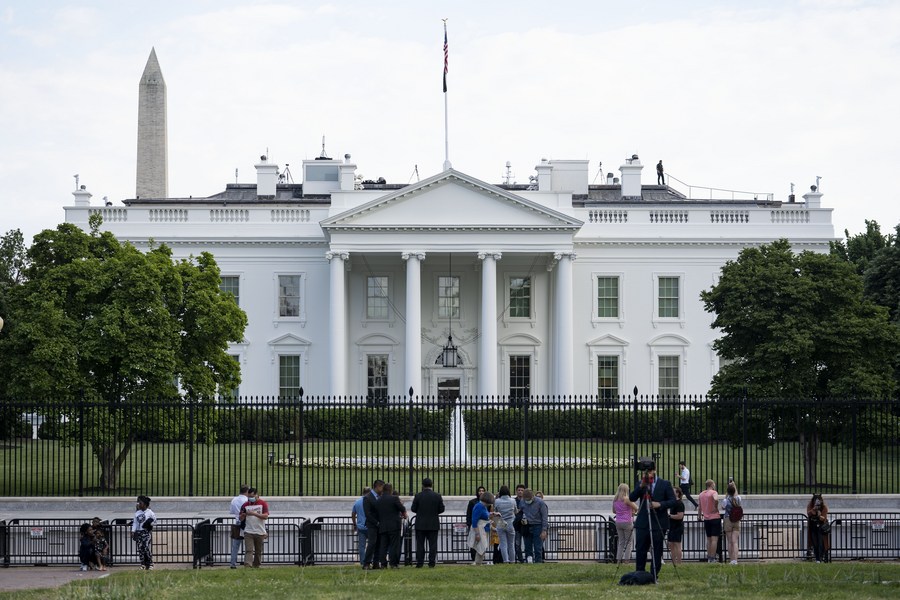
China-ASEAN relations get closer
China has long historical ties with the Southeast Asian nations. China’s relationship with the Association of Southeast Asian Nations (ASEAN) got off to a fresh start after the end of the Cold War. China was invited to the 1991 ASEAN summit in Kuala Lumpur and became ASEAN’s full dialogue partner in 1996. China adopted a policy of good neighborliness and non-interference towards ASEAN, the pillar of its foreign policy which is in line with its spirit of peaceful rise.
China-ASEAN relationship quickly flourished and China actively engaged in all ASEAN-led regional security structures such as ASEAN Regional Forum, ASEAN Plus Three, East Asia Summit, ASEAN Defense Ministers Meeting Plus. During the Asian financial crisis in 1997, China not only did not devalue its Renminbi (RMB) but also provided financial support to the crisis-ridden countries like Thailand and Indonesia. That helped China win much goodwill and trust from ASEAN.
At the first informal ASEAN-China Summit held in Kuala Lumpur in the same year, leaders of both sides decided to create “a 21st century-oriented partnership for good neighborliness and mutual trust between ASEAN and China.”
In 2003, China acceded to the Treaty of Amity and Cooperation (TAC) in Southeast Asia, leading the way among all of ASEAN’s dialogue partners and upgraded the relationship to “strategic partnership for peace and prosperity”. China’s accession to the TAC has contributed to the stature of the TAC as the code of conduct for inter-state relations in the region.
China sent its first resident Ambassador to ASEAN in 2008, launched the ASEAN-China Centre in Beijing in 2011, and established its Permanent Mission in ASEAN in the following year. Meanwhile, the ASEAN-China Free Trade Agreement which took effect in January 2010, provided a strong foundation for the enhancement of ASEAN-China economic relations.

During the official visit to Indonesia in October 2013, Chinese President Xi Jinping announced the proposal to jointly build the 21st Century Maritime Silk Road, the maritime component of the Belt and Road Initiative (BRI), and called for close cooperation between China and ASEAN countries.
ASEAN countries responded positively to Present Xi’s call. The 10 ASEAN member states are among the early supporters of BRI. Chinese foreign direct investment and construction projects in ASEAN countries have increased by 85 percent and 33 percent respectively since the inception of BRI, with Indonesia, Malaysia, the Philippines, and Vietnam receiving the most Chinese FDIs.
In fact, due to the geographical proximity and cordial relations, ASEAN member states have benefited enormously from China’s economic growth. China has remained ASEAN’s largest trading partner for 12 consecutive years since 2009. Trade between China and ASEAN skyrocketed by more than 80 times since the two sides established their dialogue relations in 1991, increasing from $8.36 billion in 1991 to $685.28 billion in 2020, at an average annual growth rate of 16.5 percent. In 2020, ASEAN overtook the US to become China’s largest trading partner. Six member states, namely Vietnam, Malaysia, Thailand, Singapore, Indonesia, and The Philippines contributed the lion’s share of the trade, accounting for 94.8 percent of ASEAN’s total trade with China in 2020.
The resilience of China-ASEAN trade is reflected in the increase of 6.7 percent in bilateral trade between the two sides in 2020 despite the COVID-19 pandemic, when globally merchandise trade shrank by 5.3 percent. Southeast Asia is both economically and geo-strategically important to China. SEA countries’ trade relationship with China is likely to improve further as China and US are both trying to reduce their economic interdependence, and as China turned to Dual Circulations to grow its economy.
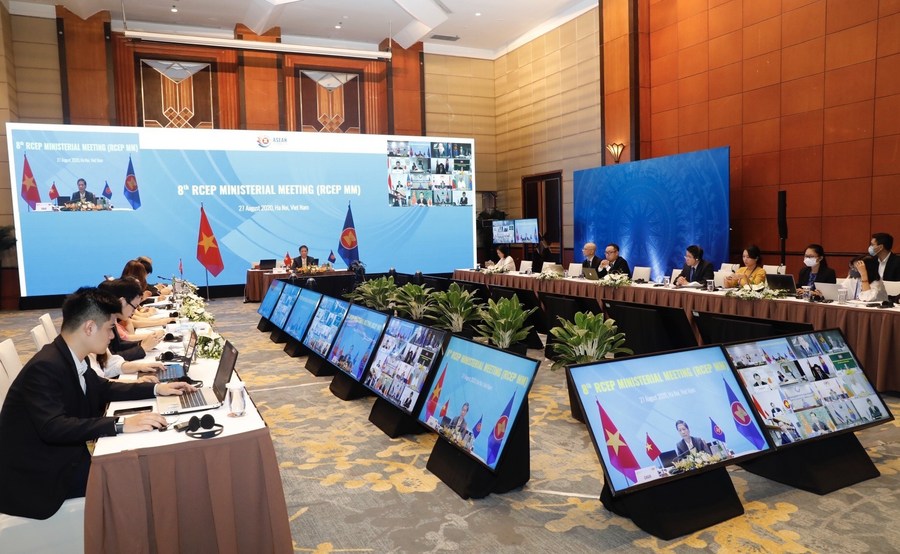
The Regional Comprehensive Economic Partnership (RCEP), of which China and ASEAN countries are members, has just taken effect from January 1, 2022. In the post-pandemic world in which globalization probably will give way to regional cooperation, RCEP will certainly expedite and accelerate the integration of China and the SEA economies.
South China Sea Dispute and the US involvement
The South China Sea is China’s energy lifeline and critical to China’s economic security. About 80 percent of China’s energy imports and over 65 percent of China’s maritime trade transited through the South China Sea each year. It is China’s strategic waterway to the world.
However, the South China Sea is subject to several overlapping territorial claims involving China, Vietnam, the Philippines, Malaysia, and Brunei. The dispute has remained unresolved, and now the South China Sea has become the battlefield of China-US geopolitical contest.
The US involvement in the South China Sea dispute began in 2011 when US President Obama shifted America’s geopolitical focus to Asia under the “Rebalance to the Asia Pacific” strategy. From then on, the US has been sided with the SEA claimant countries in the dispute, a departure from the neutral stand it had upheld in the past.
In 2017, US President Trump updated the “Asia Pacific Rebalancing” strategy with the Indo-Pacific Strategy, which has since become part of the China containment strategy. In the Indo-Pacific Strategic Framework, the US would deepen the relationship with Malaysia, Indonesia, Vietnam, and Singapore.
The Biden administration now has obviously continued to upgrade Trump’s Indo-Pacific policy. It turns the “Quadrilateral Security Dialogue” — which includes the United States, Japan, Australia, and India — into an important collaborative mechanism to contain China. On September 15, 2021, the United States, the United Kingdom, and Australia established the Australia-UK-US Trilateral Security Partnership Agreement (AUKUS), aiming to further strengthen military deterrence and strategic containment of China.
Recent intensive visits by top officials of the Biden administration including the Vice President, State Secretary, Defense Secretary, Trade Representative, and Commerce Secretary are a clear manifestation of the importance that the Biden administration attached to ASEAN, and of its efforts to implement the action plans of the strategic framework to counter China’s growing influence in the region.
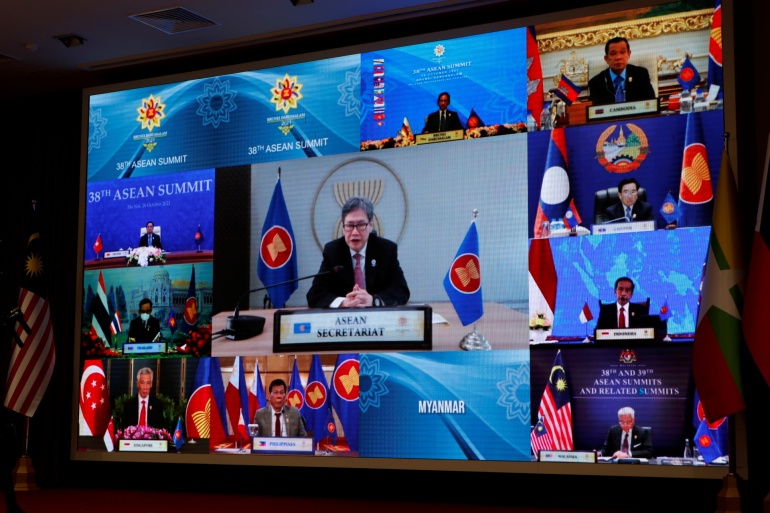
In the virtual 2021 ASEAN Summit held last October, US President Joe Biden announced an investment worth up to $102 million to expand the US’ partnership with ASEAN. Biden emphasized that the US “will explore with partners the development of an Indo-Pacific economic framework” that will define “our shared objectives around trade facilitation, standards for the digital economy and technology, supply chain resilience, decarbonization and clean energy, infrastructure, worker standards, and other areas of shared interest.”
Maintaining neutrality and centrality are important to ASEAN
ASEAN is more of a geopolitical grouping, its members share geographic similarities but each with unique political, social, religious and cultural characteristics. Its member states are at a different stage of economic development, and their recent histories and leadership changes have shaped their relationship with China.
ASEAN is fully cognizant of its strategic position in the global system. Though the level of political trust among the ASEAN countries toward China may vary, ASEAN countries do not want to pick a side in the China-US competition. Neutrality is the common stand of ASEAN.
The US deems China as “the only country with the economic, diplomatic, military and technological power to seriously challenge the stable and open international system.” The US-China relationship is, therefore, unlikely to change in the foreseeable future regardless of the political leadership alternation in Washington.
The US-China relationship will remain one that “will be competitive when it should be, collaborative when it can be an adversarial when it must be,” as US State Secretary Antony Blinken has said.
Southeast Asia becomes one of the battlefields of US-China geopolitical competition as the Asia-Pacific region is key to maintaining US global hegemony. For China, the support of ASEAN is critical to smash the US containment. In view of the geopolitical realities and to rid the bugs off China-ASEAN relations, it is likely that China will have to soon adjust its South China Sea policy to resolve the long-standing dispute.
The United States is a country thousands of miles away from Southeast Asia. Its interest in ASEAN is mainly geopolitical, thus its relations with ASEAN countries are transactional. For China, ASEAN countries are its immediate neighbors. China’s interest in Southeast Asia has to be comprehensive and long-term. For ASEAN countries, maintaining neutrality and centrality in the era of big-power competition no doubt demands skilled diplomacy.
The article reflects the views of the author and not necessarily those of China Focus.