The Media’s Methods of Merit and Mayhem
 Facebook
 Twitter
 Linkedin
 Google +
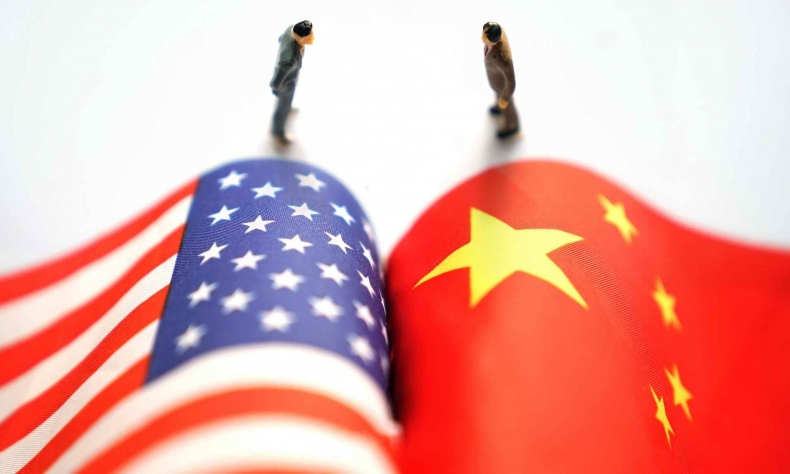
Amid the heightened rhetoric, some voices on both sides of the Pacific are looking for ways to restore the optimism–or at least the realpolitik–of 1972.
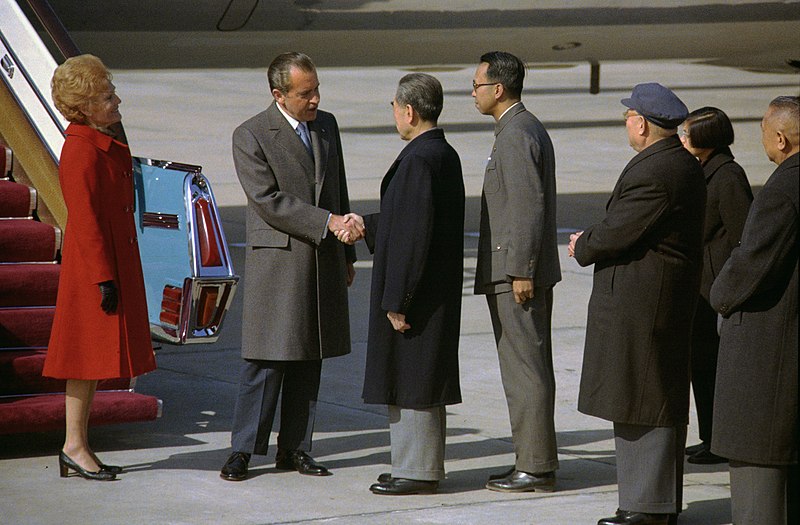
As President Richard Nixon sped across the Pacific on Air Force One in February 1972, the American reporters accompanying him on his historical trip had no idea what to expect. “It was a little bit a feeling of ‘we are leaving Earth and going deep into the cosmos of some distant planet’,” CBS reporter Dan Rather told documentary filmmaker Mike Chinoy decades later.
To many of the journalists shaping American public opinion, the nation they called “Red China” was a land of mystery and misery, a closed society, a “cloistered kingdom,” a pitiable pauper rather than a nation with a rich, long-standing culture stretching well beyond that of the U.S. “I knew nothing about China,” legendary broadcast journalist Barbara Walters admitted to Chinoy. “It really was like flying to the Moon. What were we going to see?”
What they saw, and how they reported on it, fundamentally changed the American public perception of China as it emerged from its isolation and ultimately rose to global power. Over the past half-century, relations between the two nations have ebbed and flowed, and those changing currents have been reflected in the news coverage. While U.S. reporting about China, on the whole, has become more nuanced and knowledgeable, analysts say a fundamental feature is the rapid shifts in the tone of coverage.
“Wild swings have occurred in the way U.S. media outlets view [China],” Cato Institute senior fellow Ted Galen Carpenter wrote in 2020. “At most times, a herd mentality is evident, as a large percentage of news stories portray China in one particular fashion, although there always are some dissenters from the dominant narrative. The nature of that narrative sometimes shifts instantly and dramatically.”
Stories about China in American news outlets–and coverage of the U.S. in China–have facilitated improved communication between the two nations by showing the lives and businesses of “real” citizens, rather than strictly hewing to the narratives advanced by the respective governments. But, at times, it has enlarged the perception gap by focusing on conflicts between the nations to the exclusion of stories with universal themes.
Tones and tactics
Despite the warming and cooling of bilateral relations between the two economic giants over recent decades, there have been consistent differences in overarching storylines: U.S. media have aggressively covered alleged human rights violations in China and Chinese media have decried purported American hegemonic plans to isolate China. An undercurrent of suspicion about the other’s motives has remained even during the warmest of bilateral relations, whether it be in coverage of the deadly 1999 bombing of the Chinese embassy in Belgrade, Serbia, or in the origins of the COVID-19 outbreak. In recent years, Chinese state media have frequently criticized what commentators describe as an American-led global propaganda machine.
“China has long been on the receiving end of Western media bias,” People’s Daily wrote in a 2017 editorial.
“American journalism exploits our ‘negativity bias’ to maximize profits,” Steven Dubner explained on a Freakonomics Radio podcast, “and social media algorithms add fuel to the fire.”
In some ways, U.S. media reporting on China has come full circle since the days before Richard Nixon’s arrival in Beijing. Before “the week that changed the world,” as Nixon vaingloriously called it, American commentary was universally hostile. Hollywood studios led the media demonization of China, one such dramatic example being the 1962 movie The Manchurian Candidate, in which a brainwashed American prisoner of war returns from captivity during the Korean War as an unconscious agent of Chinese communists.
The overwhelmingly positive press that followed Nixon’s 1972 trip transformed Americans’ views of China. A Gallup Poll, an established analytics and advisory company based in Washington, D.C., conducted weeks after the Shanghai Communiqué found that Americans were now three times as likely to use positive words to describe Chinese people than negative ones, with “hardworking,” “intelligent,” “progressive” and “practical” atop the list.
Almost immediately, news narratives in the U.S. began to change. Depiction of the CPC changed from that of rogue rulers to a legitimate government deserving representation in international organizations. And China was no longer viewed as part of a global “Communist monolith,” but as an unaligned nation that could be used as leverage against the “economically decaying” yet “militarily adventurous” Soviet Union.
Roaring rhetoric
American journalism (and public attitudes) continued to be generally positive for the next 17 years. President Gerald Ford opened diplomatic relations by sending George Bush, a former United Nations ambassador, to Beijing in 1974. Five years later, Deng Xiaoping won over American hearts and minds during a 1979 tour of America highlighted by an appearance at the Houston Livestock Show and Rodeo, a turn at the controls of a NASA space shuttle simulator, and a state dinner honoring the first Chinese leader to visit the U.S. since the founding of the People’s Republic of China (PRC) in 1949. Even President Ronald Reagan, who rose to national political attention as a fervent anti-Communist, made headlines during a 1984 trip to China when he hailed “a new convergence of Chinese and American interests.”
“With peaceful cooperation as our guide, the possibilities for future progress are great,” Reagan told students at Fudan University. “You have opened the door and let me assure you that ours is also open.”
The era of “reform and opening up” launched by Deng was covered widely in U.S. media. On the cultural front, there were admiring reports on the flowering of Chinese cinema. Stories proliferated about the explosion in educational and cultural exchanges, along with examples of private enterprises.
The media coverage entered a new phase with China’s accession to the World Trade Organization and host role in the 2008 Summer Olympics. As more international journalists reported from China, there were nuanced reports on economic and social trends, as well as breathless stories on “the China miracle” and a dark foreboding about human rights and coming military confrontation. Among the cacophony of voices was an extremist minority predicting the imminent demise of the PRC, including Gordon Chang’s 2001 book The Coming Collapse of China.
In many of the stories on China’s economic growth, American analysts declared that economic openness inevitably would lead to more political openness. Over the past decade, that thesis was rejected as much of the news coverage focused on crackdowns on dissent and censorship of the Internet and social media. An increasing percentage of stories pivoted to portray China as an unfair economic competitor or a military threat.
In right-wing political circles, China replaced Russia as the bogeyman in a newly revised bipolar world. Political hyperbole became more outlandish. In 2012, New York businessman Donald Trump tweeted that “the concept of global warming was created by and for the Chinese in order to make U.S. manufacturing non-competitive.” As a presidential candidate in 2016, Trump accused China of “raping” the U.S. with illegal trade practices. As president, he launched a trade war and blamed China for the COVID-19 pandemic. But the criticism in Washington was bipartisan and the tough tone of media coverage transcended the political leanings of leading media outlets. A bipartisan bill in Congress proposed spending $500 million on news coverage devoted to “countering the Chinese Communist Party’s malign influence.”
“Such broad-based criticism of anyone or anything deemed to be connected to the CCP weakens the foundations of positive U.S.-China relations, thereby undermining U.S. national security,” Jessica J. Lee and Rachel Esplin Odell wrote on the Responsible Statecraft website.
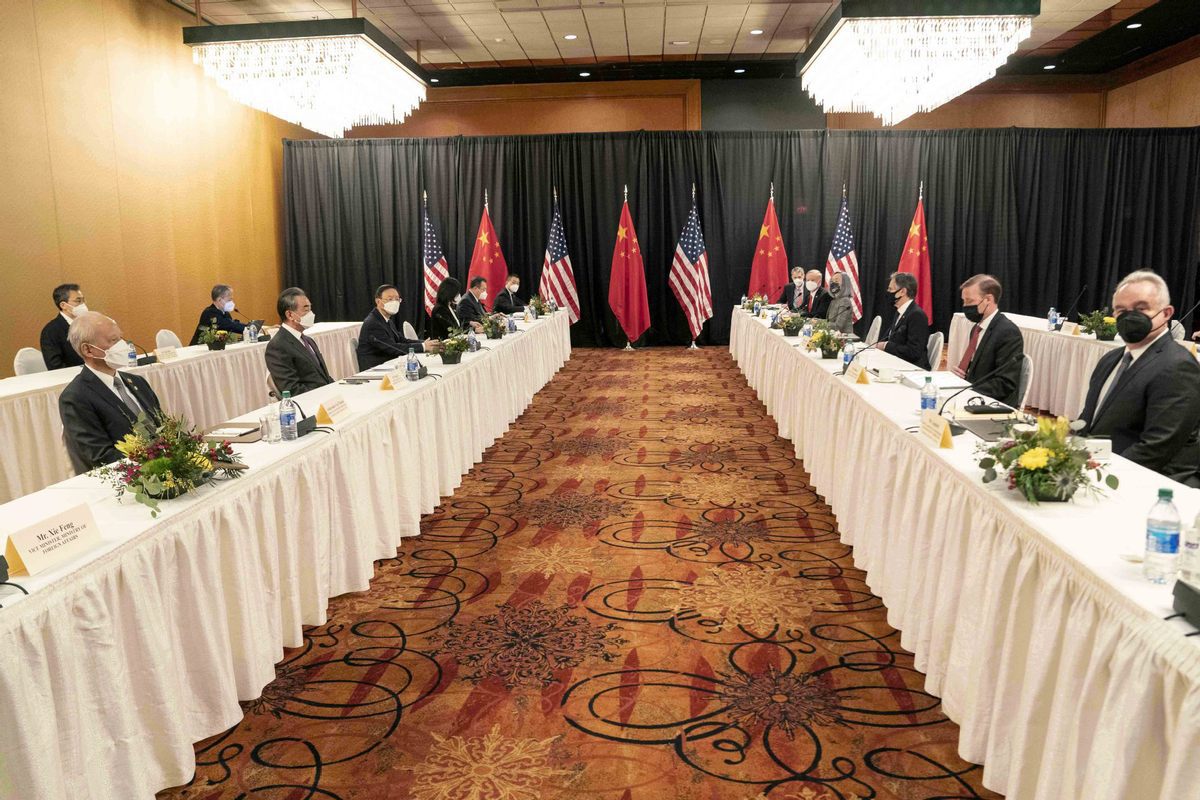
Amid the heightened rhetoric, some voices on both sides of the Pacific are looking for ways to restore the optimism–or at least the realpolitik–of 1972. The Quincy Institute for Responsible Statecraft, a bipartisan group led by former U.S. diplomats, denounced “alarmist” language that it says “deliberately stokes fear, suspicion, and blame as means to intimidate Americans who want to have constructive engagements with China or other countries.”
The author is a former correspondent for BusinessWeek and currently works as co-director of the Global Business Journalism Program at Beijing-based Tsinghua University.