A Return to Pursuing Mutual Benefit
 Facebook
 Twitter
 Linkedin
 Google +
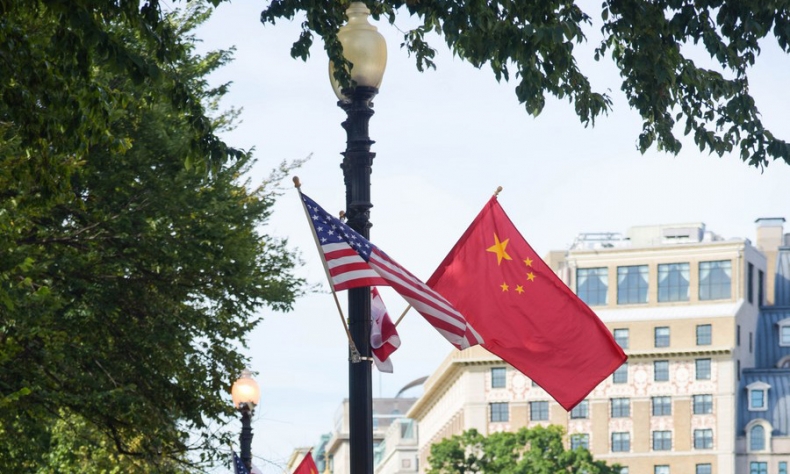
Looking ahead, China and the U.S. need to re-embrace the conviction that helped the two sides break the ice 50 years ago and set out on a new journey, guided by the three principles of mutual respect, peaceful coexistence and win-win cooperation.
The world is currently far from tranquil. Profound changes unseen in a century are unfolding. Against this background, some in the United States, trying to hold on to its hegemony, have resurrected the Cold War mentality and fanned the flames of bloc confrontation. Particularly, their willful distortion of the historical narrative of China-U.S. relations has aggravated the danger that the direction in which these relations develop is led off course. This has fueled instability and division, and added trouble to a world already facing a variety of challenges.
It is imperative to strengthen the political will to properly manage differences. Building a world of connectivity, diversity, inclusiveness, security and shared benefit is a responsibility and obligation that China and the U.S. must undertake, which concerns both the wellbeing of the 1.7 billion Chinese and American people, as well as world peace and prosperity.
Correcting strategic?perception
The arguments that “the engagement between China and the U.S. has failed,” and that “win-win cooperation is just a political slogan,” are inconsistent with the facts, and do not respect history.
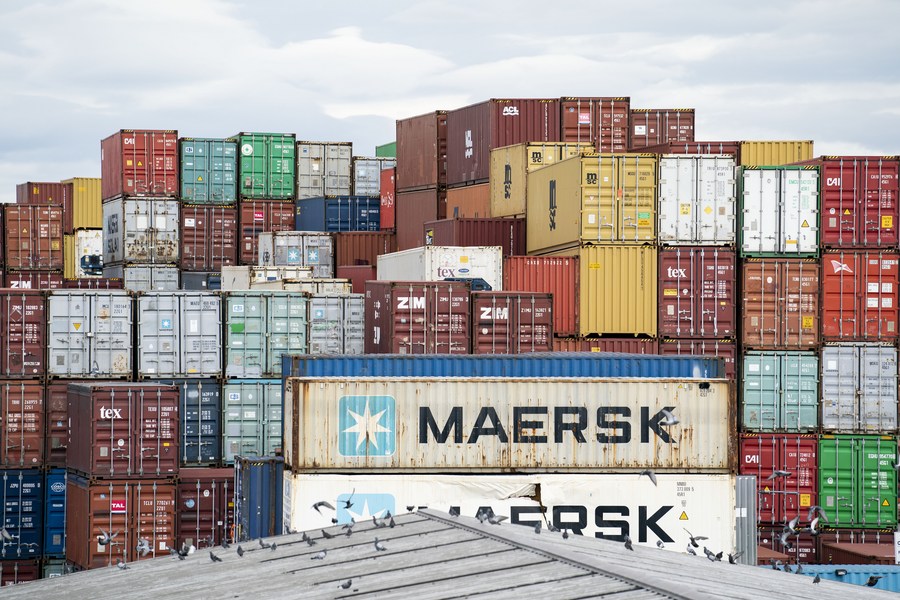
Over the years, the two countries have benefited much from their mutually beneficial cooperation, which has turned China and the U.S. into a community with shared interests. China has achieved rapid growth in part thanks to its opening up to and cooperation with the rest of the world, including the U.S., and China’s continued growth has also created impetus for sustained growth and an enormous market for the U.S. and other countries. If China-U.S. cooperation were not truly win-win, how could it have continued for several decades? How could China-U.S. ties have come such a long way?
China’s overriding tasks are to concentrate on developing itself, meet its people’s aspirations for a better life, and make greater contributions to the world. It does not intend to?replace, outperform or outcompete anyone else. China’s development and rejuvenation are underpinned by clear historical logic and strong internal driving forces. The collective drive of 1.4 billion Chinese people to modernize constitutes tremendous progress of humanity, not a threat or challenge to the world.
What China relies on is the strong leadership of the Communist Party of China, the unity, hard work and perseverance of the Chinese people, and the path of socialism with Chinese characteristics. The country is advancing reform and opening up and pursuing win-win cooperation at a higher level. Such efforts will not only lead to a better tomorrow for China, but also make the world a better place.
If the U.S. keeps defining its relations with China in terms of major power competition and sets its policy goal as “I-win-you-lose,” it will only push China and the U.S. into confrontation and conflict and the world into division and turmoil.
The U.S. sensationalization of the so-called “China threat” cannot solve its own problems, and will only lead the world into a dangerous abyss.
New diplomatic philosophy
In an era of turbulence and transformation, humanity needs a new diplomatic philosophy of peaceful coexistence and win-win cooperation. As President Xi Jinping observes, “Amid the raging torrents of a global crisis, countries are not riding separately in some 190 small boats, but rather all in a giant ship on which our shared destiny hinges. Small boats may not survive a storm, but a giant ship is strong enough to brave a storm.”
The U.S. has been talking about the “rules-based international order.” Do the “rules” refer to the house rules of the U.S., or do they mean the international system with the UN at the core, the international order based on international law, and the basic norms governing international relations based on the purposes and principles of the UN Charter? If they refer to the latter, China and most countries in the world absolutely embrace them, and look to the U.S. for earnest implementation.
However, aligning with a minority of countries to contain others, drawing ideological lines, playing up “democracy versus authoritarianism,” and imposing one’s own values and will on others will only make the world deeply polarized and chaotic. There should be no hot wars, nor should there be a return to the Cold War. Hegemonism, bloc politics or Cold War mentality should have no place in today’s world.
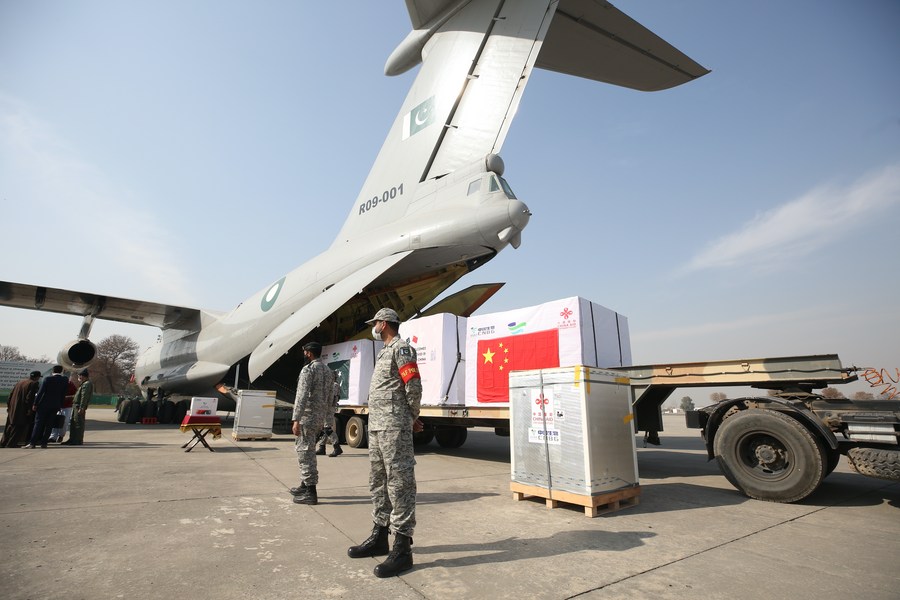
While talking about competition with China, the U.S. is actually overstretching the concept of national security to impose illegal unilateral sanctions, exercise long-arm jurisdiction and seek decoupling and industrial chain breakage, which have gravely undermined the legitimate rights and interests of Chinese enterprises and deprived other countries of the right to development. This is by no means “responsible competition,” but rather unscrupulous suppression and containment.
China stands ready for fair competition regarding which country can run its own affairs better, which country can contribute more to the world, how to further empower global growth, how to provide more public goods for global efforts to tackle climate change and the pandemic, and how to produce better solutions to regional hotspots. It should not be about how to obstruct the other side’s development or interfere in other countries’ internal affairs, how to decouple and cut off supplies and how to build small and exclusionary blocs. The competition should make both sides better and stronger. It should not be a zero-sum game where the winner takes all.
A larger picture
Globalization and the development of science and technology have turned our planet into a close-knit community, where countries have intertwined interests and a shared future. When faced with the multitude of global challenges, no country can remain immune or handle them alone.
The most pressing task facing the international community is to jointly safeguard the life and health of the people, advance global economic recovery, and uphold world peace. That requires a sense of community, one with a shared future, and real efforts to put the purposes and principles of the UN Charter into practice. In this context, President Xi has proposed Belt and Road cooperation, the Global Development Initiative and the Global Security Initiative, which have all been widely welcomed and supported across the international community.
China will continue to keep a global perspective, honor its responsibilities, and hold high the banner of peace, development and win-win cooperation, to promote the building of a new type of international relations and a community with a shared future for humanity.
In China’s view, a peaceful world should nurture diverse civilizations, a stable order should accommodate different systems, and a confident major country should be open to diverse values. True multilateralism is about openness, inclusiveness, rule of law, consultation, cooperation, and progress with the times. Multilateralism should not be used to form new opposing blocs or exclusive circles.
That said, as China-U.S. relations stand at an important crossroads, the U.S. must make the right choice. It must be aware that unipolar hegemony and bloc confrontation have no support, small yards with high fences mean seclusion and regression, and decoupling and supply cuts hurt the interests of all.
The key for the China-U.S. relationship to leave this predicament behind is for the U.S. to abandon its mania for zero-sum games, and give up its obsession with encircling and containing China.
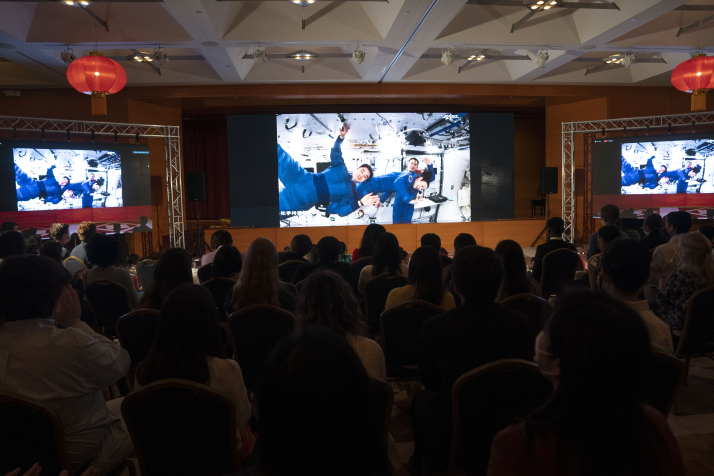
Right way forward
This year marks the 50th anniversary of the Shanghai Communiqué, which laid the political foundation for China and the U.S. to establish diplomatic ties. The most important experience that has been gained from the decades of China-U.S. relations is that differences in social systems do not prevent the two sides from seeking common ground, pursuing win-win cooperation and peaceful coexistence, and jointly making the world a more peaceful and prosperous place.
China-U.S. relations should be based on rationality and facts, not lies, misjudgment and disinformation. Differences do not warrant demonization or stigmatization, nor should they justify hostility or confrontation. The two sides should face up to and manage their differences, and more importantly, resolve and rise above them to expand their common ground.
At the recent Shangri-La Dialogue in Singapore, a premier defense and security summit in the Asia-Pacific region, U.S. Secretary of Defense Lloyd J. Austin unfoundedly accused China of adopting “a more coercive and aggressive approach to its territorial claims in the East China Sea and the South China Sea,” and said “stakes are especially stark” in the Taiwan Straits. By repeatedly spreading disinformation and painting an ugly picture of China, the U.S. will only further expose its intention to sow discord and the true nature of its hegemonic practices and exercise of power politics.
The biggest threat to peace and stability across the Taiwan Straits does not come from anywhere other than the obdurate separatist activities of “Taiwan independence” forces and Washington’s connivance and endorsement of such activities. It is the U.S. that has sought to obscure and hollow out the one-China principle and kept backpedaling on its related commitments.
The U.S. is also the biggest actor fueling militarization in the Asia-Pacific. The U.S. has deployed many military aircraft and warships in the South China Sea on a regular basis and its reconnaissance aircraft have electronically impersonated the civil aircraft of other countries. Since the beginning of this year, U.S. naval ships have transited the Taiwan Straits once a month on average. U.S. military aircraft have engaged in large-scale, frequent and provocative close-in reconnaissance mission to deter and pressure China. Apparently, “militarization” and “endangering freedom of navigation,” terms the U.S. uses to demonize China, are more proper when used to describe its own behavior.
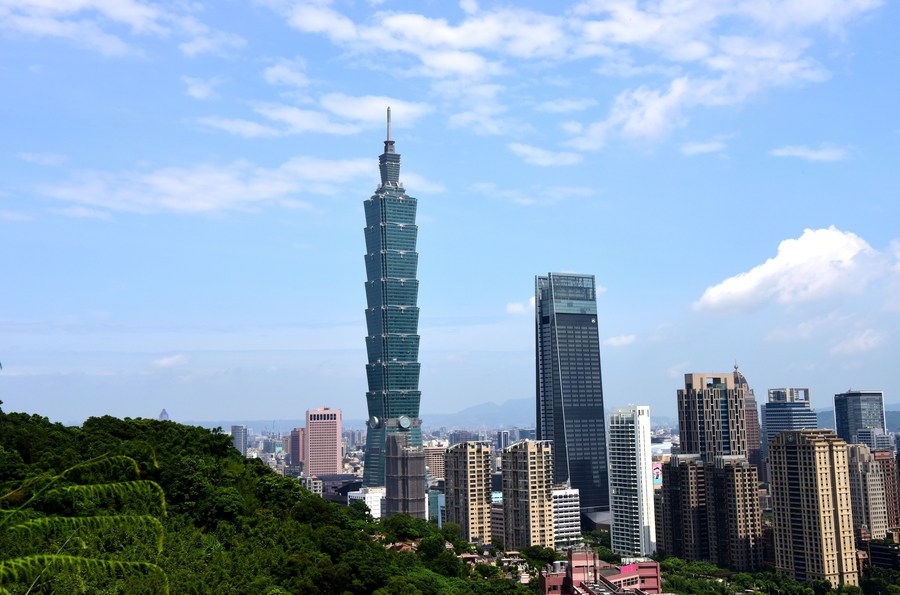
The Taiwan question is the most important, sensitive and fundamental issue in China-U.S. relations, and the one-China principle is the bedrock of Sino-American ties. The U.S. should abide by its commitments made on the Taiwan question in the three Sino-American joint communiqués—the 1972 Shanghai Communiqué, the 1979 communiqué on the establishment of diplomatic relations and the 1982?communiqué.
Since last year, President Xi and President Joe Biden have had several phone calls and video calls, and they have reached important principled agreements on China-U.S.?relations.
Biden clearly stated that the U.S. does not seek to initiate a new Cold War with China, to change China’s system, or to revitalize alliances against China, and that the U.S. does not support “Taiwan independence” or intend to seek conflict with China.
U.S. Secretary of State Antony Blinken also said the U.S. is not looking for conflict or a new Cold War, and is determined to avoid both. It does not aim to block China from its role as a major power, nor to stop China from growing its economy or advancing the interests of its people. The U.S. will increase direct communication and engage constructively with China.
China takes these remarks seriously. Actions speak louder than words, and commitments must be earnestly followed. The U.S. should translate its commitments into concrete policies and actions, including not seeking confrontation or conflict, not seeking a new Cold War, and not seeking an Asian NATO or a region split into hostile blocs, and stop saying or doing things that could create division and confrontation.
Looking ahead, China and the U.S. need to re-embrace the conviction that helped the two sides break the ice 50 years ago and set out on a new journey, guided by the three principles of mutual respect, peaceful coexistence and win-win cooperation.