Protecting Our Past for Our Future
 Facebook
 Twitter
 Linkedin
 Google +

As the World Heritage Convention embarks on its next 50 years of service, UNESCO invites the international society, including China, to reflect on how to conserve heritage, not just for the sake of heritage itself, but to let it become a better source of resilience, humanity, and innovation.
The Convention Concerning the Protection of World Cultural and Natural Heritage, more commonly known as the World Heritage Convention, is by far one of the most important global conservation instruments in the world. Since its adoption on November 16, 1972, the 1,154 natural and cultural World Heritage sites that have been recorded in 167 countries are the testament to the universal appreciation and achievement of this groundbreaking legal framework. It embodies a visionary idea – that some places are so important, that their protection is not only the responsibility of a single nation, but is also the duty of the international community as a whole; and not only for this generation, but for all those to come.
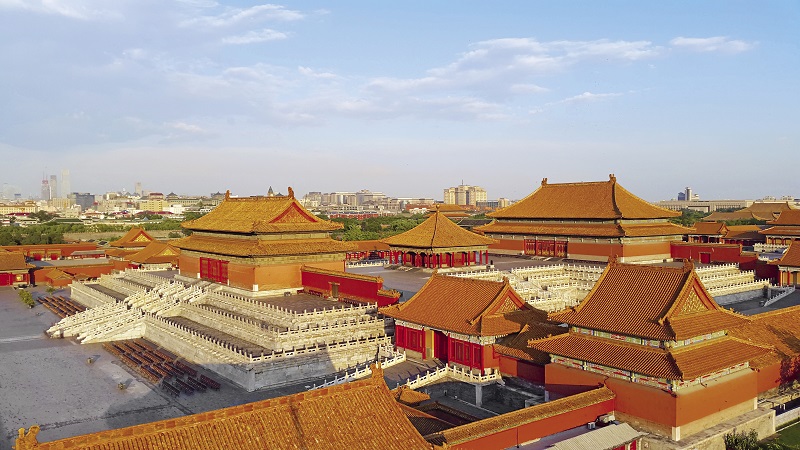
China ratified the World Heritage Convention in 1985, and has since demonstrated its strong commitment to implementing the Convention. From the very first batch of inscriptions in 1987, China has added 56 sites to the World Heritage List, including 38 cultural, 14 natural and four mixed sites. Influenced by the Convention, over the years China has developed rigorous legislation systems and operational guidelines for cultural, natural, and mixed World Heritage sites, along with a team of over 50,000 site managers at local heritage conservation administrations. Young people in China have become more aware of, and engaged in, heritage conservation. The annual University Student Forum on World Heritage and Conservation Proposal Competition, facilitated by the UNESCO Chair on Sustainable Tourism in UNESCO Designated Sites at Sun Yat-sen University since 2011, has had thousands of students from over 100 colleges and universities around China actively participate every year. With the inauguration of China’s Cultural and Natural Heritage Day in 2006 as a nationwide cultural celebration, and the emergence of a chain of TV programs and various shows on World Heritage sites in China in recent years, World Heritage has gained in visibility and popularity, both publicly and online.
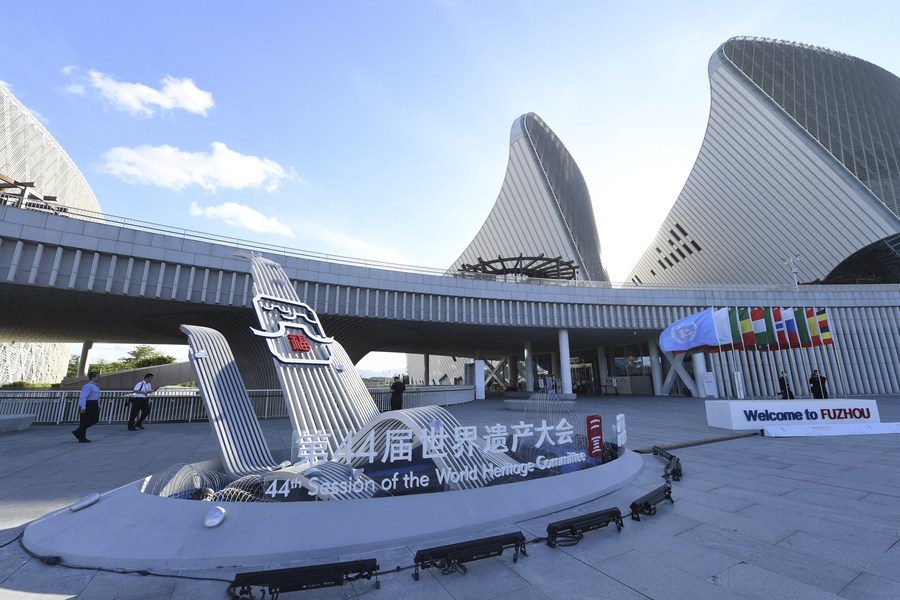
Over the past several decades, China has also steadily become a leading figure in facilitating international dialogue and collaborations on heritage conservation and sustainable development among member states, advisory bodies, experts, and civil society. Along the way, the country has made commendable efforts in supporting other developing countries to enhance the implementation of the World Heritage Convention. There are many examples of this support. Since 1989, China has provided technical assistance to Cambodia in restoring the Angkor monuments. After the 7.8-magnitude earthquake hit the Kathmandu Valley World Heritage site of Nepal in April 2015, China pledged RMB 94 million to start a five-year project to restore the Basantapur Tower. Since 2017, China has jointly organized with UNESCO four International Youth Forums on Creativity and Heritage along the Silk Road, which have brought together young women and men from over 100 countries along the Silk Road, to contribute to the dialogue on heritage conservation and development. China has also forged strong collaboration with Africa in the field of World Heritage since 2018, through joint projects supporting long-term capacity building and strengthening monitoring and management systems of African World Heritage properties. In addition, China has served as a World Heritage Committee member on four occasions, and has twice hosted the World Heritage Committee meeting – 2004 in Suzhou, and 2021 in Fuzhou.
As the world’s largest developing country and a major economy that has undergone rapid development and urbanization over the past several decades, China has been at the forefront of addressing issues of heritage conservation that is in synergy with socio-economic development. It is heartening to see that China’s national five-year development plans already address the role of culture and heritage as a pillar in achieving high-quality development, and a prominent culture component is featured in the 2021-2025 United Nations Sustainable Development Cooperation Framework (UNSDCF) for China, which serves as an overarching framework for collaboration between the UN and China in the years to come. This reflection resonates with the spirit of the UN 2030 Agenda for Sustainable Development, in particular the Sustainable Development Goal Target 11.4, which seeks to “strengthen efforts to protect and safeguard the world’s cultural and natural heritage,” highlighting that culture and heritage are both the ends as well as the means to sustainable development.
For over 15 years, the UNESCO Beijing Office has worked closely with Chinese frontline ministries, site administrations, academic institutions, and local communities to enhance China’s World Heritage site management capacities, foster platforms for exchange, and explore heritage-driven approaches to key developmental issues such as poverty reduction and rural revitalization. In particularly through the UNESCO / China Youth Development Foundation Mercedes-Benz Star Fund Funds-in-Trust Project “Conservation and Management of World Heritage Sites in China”, UNESCO is implementing a range of initiatives such as the “World Heritage and Sustainable Livelihood” pilot activities for local communities, “Panda Ambassador” initiative on heritage education for youth, and “Heritage So Young” initiative on heritage communication in the digital era. In the face of new challenges and opportunities, we need to broaden the definition of heritage, bring heritage into a broader framework, and engage more stakeholders. We need to look at heritage from the perspective of not only protection, but also development. We also need not only to retain the vitality and resilience of the heritage itself, but also to let heritage play a new role in promoting the sustainable development of economy, society, and environment.
The year 2022 marks the 50th anniversary of the World Heritage Convention. This landmark year comes at a watershed moment for conservation. Urban expansion and infrastructure development are exerting unprecedented pressure on traditional monuments and historic urban landscapes. Global climate change is also proceeding at a relentless pace, with its effects increasingly extending beyond the environmental sphere, causing both irreversible impact on nature and biodiversity, as well as multiplying the risk of vulnerable communities. The COVID-19 pandemic has revealed the vulnerability of the heritage ecosystem in the face of a sudden crisis, as demonstrated by the closure of 89 percent of World Heritage sites. Now, more than ever, we need to explore and communicate the new horizons of heritage conservation in the face of global challenges. To tackle these challenges, the international community should pool their wisdom together through intercultural dialogue, commit themselves to in-depth research and practices, explore effective measures that meet national conditions and particularities of heritage sites, and achieve a balance between heritage protection and community development.
World Heritage conservation is not about the past; it is about the future. As the World Heritage Convention embarks on its next 50 years of service, UNESCO invites the international society, including China, to reflect on how to conserve heritage, not just for the sake of heritage itself, but to let it become a better source of resilience, humanity, and innovation. In this process, UNESCO is more than willing to join efforts with China to build capacity for the next generation, harness new trends and transformation, and pass on the knowledge.
Shahbaz Khan is Director of UNESCO Beijing Office and Representative to China, DPRK, Japan, Mongolia, and ROK.