The Contribution of GDI to the World and the China-Pakistan Partnership
 Facebook
 Twitter
 Linkedin
 Google +

The Global Development Initiative demonstrates China’s enduring commitment to uplifting the fortunes of the developing world.
President Xi Jinping announcing the launch of Global Development Initiative (GDI), at the 76th session of United Nations General Assembly holds great promise for the world. The rapid ascent of the People’s Republic of China in the 21st Century to the position of global economic power, is an epoch making development impacting the world in many ways. China is a ‘Civilization State’ with a written history of five thousand years. For the international community, understanding of China’s rise is key to understanding the future of the world.
Firstly, China rose to global position through harnessing its social capital and soft power, with no parallel in history. Secondly, the success of China’s hybrid model of development combining socialist theory with market economy, meritocracy and ‘Chinese characteristics’, necessitates a reconstruction and fresh look at the economic development theories dished out by the Western Universities and Think Tanks. Thirdly, China is dedicated to its own ascent, but also committed the lift of the Developing world and the entire humanity. Fourthly, China’s rise is unique due to its Asian cultural heritage of sharing its prosperity; for establishing peace and development, balance and harmony. Fifthly, with the ascent to power of President Xi Jinping in 2012, China has demonstrated an active conduct of its foreign relations, with the launch of the Belt and Road Initiative in 2013. Significantly, 34 of the 66 BRI states are Muslim majority. Sixthly, the Chinese developed competitive edge in artificial intelligence, quantum physics, robotics, magnetic and stealth technologies, and also in the domain of ideas of strategy, statecraft and diplomacy. Seventhly, China’s successful implementation of its epic initiative?of Belt and Road Initiative (BRI) comprising $1.3 trillion worth of connectivity projects, in extended neighbourhood, of which China-Pakistan Economic Corridor is ‘flagship project’, has encouraged it to move to the next level of global cooperation. Eighthly, the GDI’s whole hearted reception by more than a hundred countries, reflects China’s growing influence and credibility. China is contributing to one third of global economic growth, helping narrow the gap between the Haves and Have Nots, by making affordable goods and services to the one third of the global poor population.
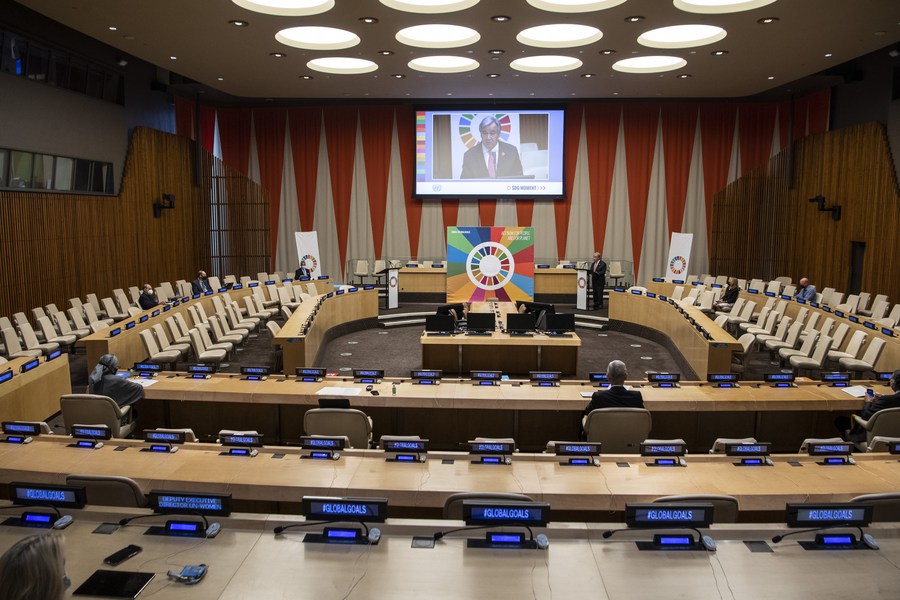
Seen in perspective, the United Nations in 2000, launched the United Nations Millennium Declaration, including eight Millennium Development Goals (MDGs) to be achieved by 2015.?The MDGs served merely framework to guide international development efforts, and achieved progress on only a few of the 8 goals. For example, by 2015 the extreme poverty rate had already been cut into half. Other targets achieved include access to safe drinking water, malaria, and gender equality in schooling. The year 2015 marked the year when the United Nations General Assembly adopted a new agenda for development. Former UN Secretary General Ban Ki Moon referred to this as a defining moment in history calling on states to act in solidarity. Succeeding the MDG agenda, 17 Sustainable Development Goals (SDGs) were created, with 169 indicators. UN resolution 70/1 adopted on September 25, 2015, was titled “Transforming our world: the 2030 Agenda for Sustainable Development”, solidifying 17 new goals that had been in motion since 2014. The goals came into force in January 2016, focusing on areas of climate change, economic inequality, democracy, poverty, and peacebuilding.
China’s sustainable development cooperation — A success story
China’s rise as a global economic power, is beginning to have a transformative impact on the economic and development landscape in many parts of the developing world. Even before the launching of GDI, the Chinese government had been incrementally promoting the development cooperation in key areas including mitigating the impact of COVID-19, development needs of poor countries, infrastructure development, industrialization, education, skills development, poverty alleviation, food security, digital empowerment, confronting the challenges of environmental degradation and climate change. With China now bankrolling the Sustainable Development Goals, the United Nations community stands to benefit from it in many ways including the proverbial Chinese wisdom, social capital, organization, discipline and adherence to timelines in undertaking projects. In fact, the arrival of the Chinese on the UN development scene is likely to infuse new life into the deadwood of the UN Development Agencies and Organizations who have performed more the role of the foot soldiers of the American empire, intelligence apparatus etc. in perpetuating crisis and conflict zones around the world. It will be therefore interesting to watch as to how the Chinese engagement with the UN Sustainable Development Cooperation evolves. The Chinese should ensure that their commitment to enhanced participation in promoting the UN Sustainable development cooperation, should not be seen as an alternative to the prescribed commitments and programs of the other developed nations. It is heartening to know that the Secretary General Antonio Guterres has praised the initiative and assured that UN will be contributing to make GDI a success. The UN needs to be at China’s back by reforming its organization, selection practices and focuses more on professional performance excellence, results, delivery and fair play.
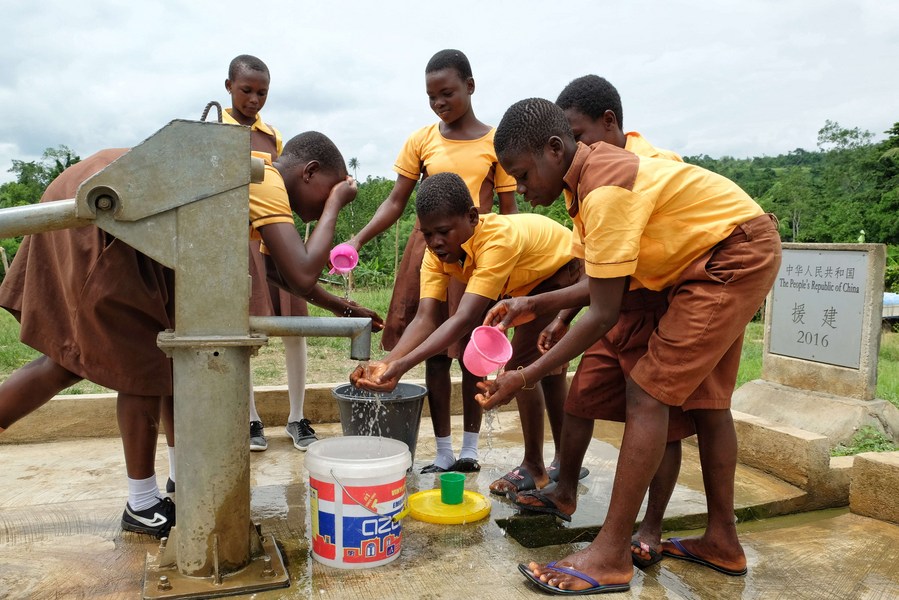
Now we discuss, the themes of GDI and China’s position as well as its contribution to international development cooperation. The main forms of Chinese foreign aid are complete projects; goods and materials; technical cooperation and human resources development cooperation; medical teams and volunteers; emergency humanitarian aid; and debt relief (for interest-free loans).?China’s economic and development cooperation accelerated considerably since the introduction of the ‘Going out’ policy. ‘China is now one of the world’s 10 largest providers of development assistance, but China’s development assistance is dwarfed by the much larger policy bank lending to developing countries. Official Chinese statistics state that between 2010 and 2012 China appropriated in total $14.41 billion for foreign assistance commitments: 56 percent in concessional loans, 36 percent in grants and 8 percent in interest-free loans (State Council, 2014). The John Hopkins School of Advanced International Studies China Africa Research Initiative finds that from 2000 to 2015, the Chinese government, banks and contractors extended $94.4 billion worth of commercial and concessional loans to African governments and state-owned enterprises.
China’s contribution in global poverty alleviation
There goes a Chinese saying ‘that those who suffer, only know what suffering is like’. In 1979 China had 89 percent of the population living under $2 a day, seventy percent of whom were in rural areas. Wang Sangui, a Chinese scholar states in his research that?by subdividing the world into sub-regions, we can compare the effectiveness of poverty alleviation between China and other regions of the world. When measured by the standard of $1.25 per person per day, China had the highest poverty rate compared with other regions of the world in 1990, even higher than sub-Saharan Africa.?China has shown the world, how a poverty-stricken society can transform itself. China’s role is hence seminal in global poverty alleviation initiatives. China hosts the International Poverty Reduction Center (IPRCC), based in Beijing. It was jointly initiated and established by the Chinese government, the United Nations Development Programme (UNDP) and other international organizations in May 2005. White Paper “Poverty Alleviation: China’s Experience and Contribution” states that China achieved astounding success in achieving zero absolute poverty level by lifting nearly 800 million people out of absolute poverty?(measured at?2010 constant values, or 2.3 U.S. dollars in terms of purchasing power parity per person a day. This standard is higher than the World Bank’s benchmark of 1.9 U.S. dollars per person per day). World Bank data says China contributed to 70 percent of worldwide poverty reduction in the last 40 years by December 2020.?The IPRCC is hence meant as an enabler platform for knowledge sharing, information exchange and international collaboration in the areas of poverty reduction and development. In 2021, a total of 480 people participated in its exchanges events, of which 44 were vice-ministerial-level officials or above. On Oct. 19, 2021, 106 of the case studies that were collected during the second call of the Global Solicitation on Best Poverty Reduction Practices were recognized for their excellence at the 2021 International Seminar on Global Poverty Reduction Partnerships in Beijing.
Globally, people living under poverty line of $1.90 is still around 700 million, with COVID-19 jacking up the figure with an additional 100 million out of which 63 percent of the abject poor are from the South Asia. Due to high imprint of the IFIs on economic planning and policies in South Asia, the Chinese successful experience in poverty alleviation, has not received due attention.
China is a major contributor in global agriculture development and food security initiatives
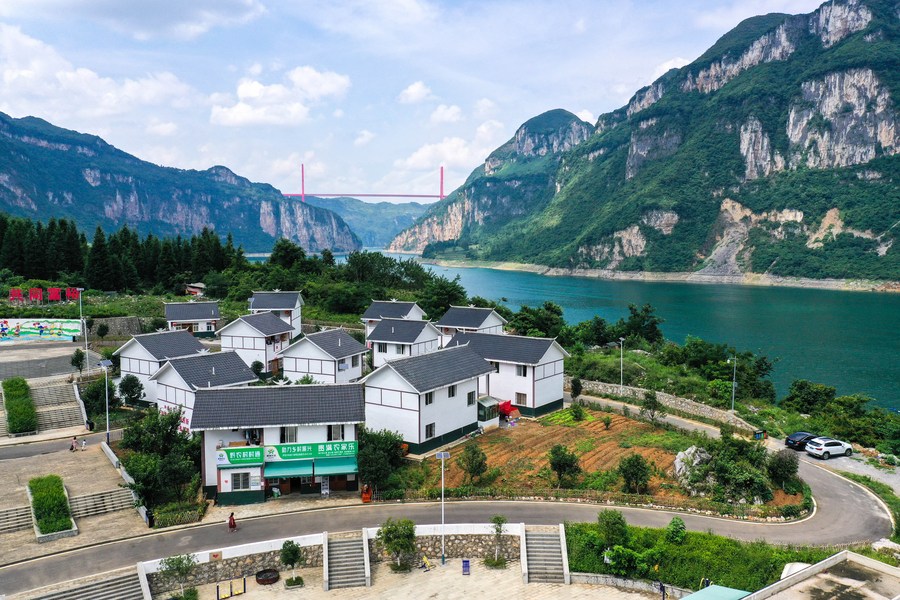
With a quarter of global grain output from less than ten percent of land, China not only has a rich experience, but also keeps innovating and sharing it with the global community bilaterally as well as under the auspices of Food and Agriculture Organization’s South-South Cooperation initiatives established in 1996. According to Chinatoday,?China has sent more than 1000 experts to 37 countries and has received experts from more than 100 countries. China has signed 150 agriculture cooperation agreements with sixty countries and international organizations including fifty African states. China’s cooperation included innovative methods in rice cultivation (hybrid rice Longping), maize, wheat, oilseed, fruits, vegetable, tea, livestock, fish/shrimp farming, etc. China is a major contributor to world food security. It plays an active role in global food security governance.?By the end of 2017, China made investment of $17.33 billion in agriculture projects overseas, with 851 enterprises operating in 100 countries and regions in six continents and employing 134,000 foreign employees.?Further, China has signed more than 60 inspection and quarantine protocols for food imports and exports. China has always given priority importance to agricultural development and food security in its cooperation with African countries, implementing 500 projects, as of 2016.
China takes the lead in promoting ecological civilization, bio-diversity, curbing pollution and mitigating climate change
No country has ever confronted the issues of environment as China faced, but at the same time, no country has done and continues doing more to promote environmental protection and pollution control, than China. Environmental protection is one of China’s basic national policies. China has ratified the Kyoto Protocol. It is now the global leader in producing renewable energy, protecting environment diversity, mitigating climate change, and curbing pollution. President Xi Jinping’s speech during the opening ceremonies of the 21st session of Conference of the Parties to the United Nations Framework Convention on Climate Change (COP21) in December 2015, urged countries to “reject the narrow-minded mentality of a zero-sum game” in favour of win-win cooperation. China is a signatory to Paris Agreement by 174 countries at the United Nations. President Xi Jinping addressed the 15th?Conference of Parties (COP) in Kunming on 12 October, 2021: “If we humanity do not fail nature, Nature will not fail us.” He urged efforts to build a community of all life on Earth. Elizabeth Maruma Mrema, executive secretary of the Convention on Biological Diversity, said that the philosophy of ecological civilization is “critical for all countries to achieve the global biodiversity goals. The Chinese notion of unity of nature and man, we hope, will be a good example for other countries to follow or to emulate”. Ecological civilization was written into China’s Constitution in 2018. It was incorporated in the Kunming Declaration, the first time that the Chinese philosophy was incorporated into a political document under the framework of the United Nations (UN) multilateral environmental agreement. China also announced an initiative to establish a Biodiversity Fund and took the lead by investing 1.5 billion yuan ($233 million) to support biodiversity protection in developing countries. This would help resource mobilization drive necessary to meet the annual global biodiversity financing gap.
China sets an example fighting COVID-19 pandemic, with global community
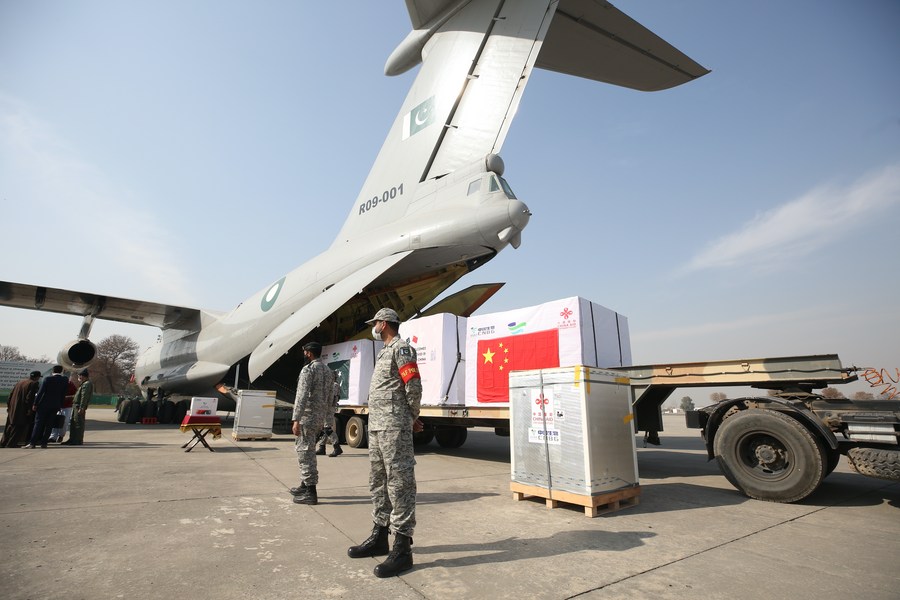
Being the first country hit by the COVID-19 pandemic, China set an example as the ‘First Line of Defense’?against the Corona Virus. President Xi Jinping declared the COVID vaccine as global public good. China offered help to 150 countries, 4 international organizations to fight COVID-19. China sent 29 medical expert teams to 27 countries as of May 31,2020. China provided two batches of cash support totalling $50 million to the World Health Organization (WHO). It also assisted the WHO in purchasing personal protective equipment and establishing reserve centres of supplies in China, and helped its COVID-19 Solidarity Response Fund to raise funds in the country. Local governments, enterprises, non-governmental organizations and individuals in China donated materials. China sent medical supplies to over 50 African countries and the African Union, and dispatched seven medical expert teams to the continent. China’s growing exports to 200 countries and regions included more than 70.6 billion masks, 340 million protective suits, 115 million pairs of goggles, 96,700 ventilators, 225 million test kits, and 40.29 million infrared thermometers.?China set an example of global humanitarian solidarity, by sending assistance to U.S. and Europe.?According to Chinese customs statistics, from March 1 to May 5, China provided more than 6.6 billion masks, 344 million pairs of surgical gloves, 44.09 million sets of protective gowns, 6.75 million pairs of goggles and nearly 7,500 ventilators to 30 states and 55 cities in the U.S. China also extended valuable support to several countries in Europe such as Italy, Spain, Greece, Hungary, Serbia etc. who were left alone to face the coronavirus Pandemic, with closing of borders by their European compatriots.?The Western media is however full of negative stories on China, day in and day out, reflecting the deep frustrations within the Western intelligentsia over China’s rise as a Global Power. The Chinese government has refuted effectively all the “24 Lies”, insinuations and propaganda made by leading U.S. politicians and officials with respect to COVID-19, in a 30-page document issued on 9 May, 2020 by the Ministry of Foreign Affairs. China also issued a White Paper on COVID-19.
China-Pakistan Economic Corridor (CPEC)
If the Belt and Road Initiative is the next wave of globalization, the CPEC provides certainly one of the doors to the new world. The CPEC’s $62 billion worth of projects of infrastructure connectivity, power generation, transportation links, ports, cable lines, etc. was conceived as a lynchpin of long term plans by both China and Pakistan, to deepen their economic cooperation to match their level of “all weather strategic partnership”, China’s first with any country. It also fits neatly into Pakistan’s National Trade Corridor (NTC) Plans of North-South Connectivity. Not only China and Pakistan, but Russia, Central Asia, Afghanistan, Iran, India, Europe and Africa will find the CPEC as an “economic bonanza” opening up “new growth points” for wealth generation in a recession prone global economy. Due to its multiple inbuilt advantages such as youthful population, resource endowments, strategic location, quality of civil and military institutions, social capital etc., Pakistan is ideally placed to replicate China’s success story, if only it could launch reforms emulating China’s best practices and disengage from the IMF template of dependence, debt and despondency. The Global Development Initiative demonstrates China’s enduring commitment to uplifting the fortunes of the developing world. For the broader Islamic world and Pakistan, the GDI offers the short cut to renaissance and revival. While the BRI has shown the way to success in regional connectivity, the implementation of the first phase of CPEC (2015-2020) amply demonstrates China’s capacity, sincerity and credibility. It is in this context that President Xi Jinping’s launching of the Global Development Initiative, which opens up new opportunities for partnerships, becomes enormously significant.
The author is the?former Pakistani Ambassador to Germany, Director of the China Studies Center at the National University of Science and Technology of Pakistan.
The article reflects the author’s opinions, and not necessarily the views of China Focus.