Global Development Is a Collective Responsibility
 Facebook
 Twitter
 Linkedin
 Google +
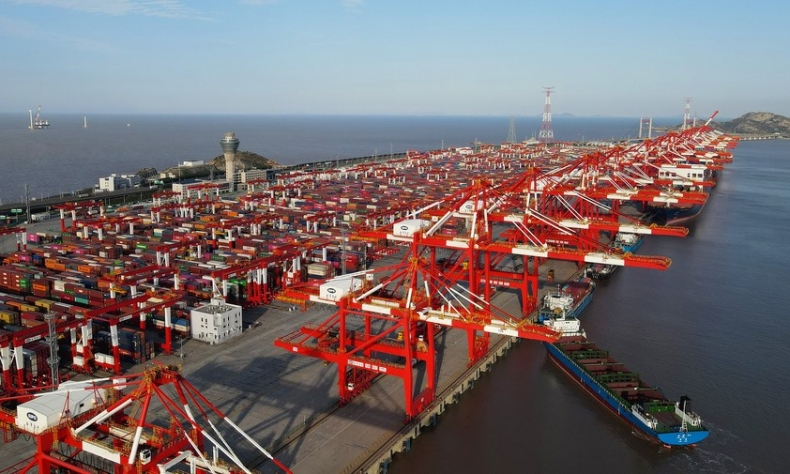
The GDI, in the spirit of prosper-thy-neighbor, presents a refreshing model that can help in building mutual trust, managing conflicts and bringing stability amid uncertain times.
The Global Development Initiative (GDI), first enunciated in Chinese President Xi Jinping’s speech at the General Debate of the 76th Session of the UN General Assembly in September 2021, presents a more comprehensive vision and a step forward from China’s run of its connectivity-driven Belt and Road Initiative. The two apparently complement each other as two stages of a larger goal for building a community with a shared future for humanity.
While the nine years of the Belt and Road Initiative have been focused on enhancing growth through economic corridors and physical infrastructure, the GDI aims to contribute to the evolution of the overall development philosophies through the enhancement of social infrastructure by sharing best practices, capacity-building and knowledge transfer, which makes it people-oriented and largely multilateral.
During the COVID-19 pandemic, which created the Western “vaccine apartheid,” China used Belt and Road connectivity to reach out to more than 100 nations with its vaccines and other medical and humanitarian assistance. Also, now in the middle of a global deceleration caused by the pandemic and the Ukraine crisis, the GDI could not have arrived at a more appropriate time to present an alternative vision advocating shared development through international cooperation.
The advantage of the GDI comes from it promoting development according to the UN’s 2030 Agenda for Sustainable Development, which lends it much greater credibility. It is especially so as the GDI promises innovative harnessing of blue and green economies for improving people’s lives by building bridges between people and nature. This organic alignment of the GDI with the 2030 Agenda and of humans and nature resonates strongly with the Global South, thereby expanding its relevance to a large number of developing and least developed nations. The GDI also promises to promote sustainability and South-South cooperation.
Valuable lessons
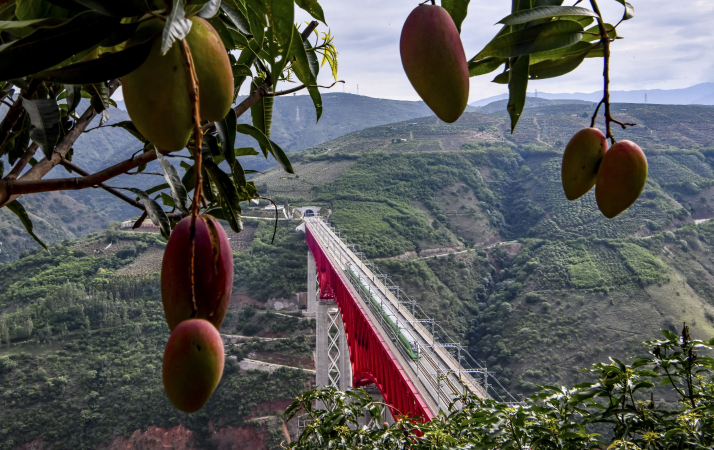
The Belt and Road Initiative provides valuable lessons in decoding the evolving trajectories of the GDI. It began with a dedicated Silk Road Fund of $40 billion. Investment funds focusing on the initiative have since surpassed $1 trillion worldwide. This June saw President Xi pledging a further $1 billion to the South-South Cooperation Assistance Fund, which now totals $4 billion and has been renamed the Global Development and South-South Cooperation Fund. But it is also important to underline how this correlation has its limits as the GDI goes way beyond funding and physical infrastructure. The GDI aims to make a distinct value addition to the global development discourse, especially by making China’s ancient wisdom integral to the global decision-making processes.
Another lesson remains how, in its infancy, the vision was presented first as the Silk Road Economic Belt and 21st-Century Maritime Silk Road and then gradually evolved into the Belt and Road Initiative. Likewise, the contours of the GDI as yet remain an outline in the making. This is consistent with the typical style of Chinese leaders, exemplified by former leader Deng Xiaoping, who once talked of “crossing the river by feeling the stones.” But again this correlation between the Belt and Road Initiative and the GDI has its limits. Thanks to the former, China being a leading voice in global governance has become a well-established fact.
According to the recently launched UN Global Compact China Strategy, as the world’s largest developing country, China is home to 143 of the world’s 500 largest companies as well as to more than 44 million small and medium-sized enterprises. Also, China today accounts for nearly 30 percent of the total global manufacturing sector. For over a decade, China has been the world’s largest trading nation and the world’s second largest economy that underwrites the major part of global growth including that of advanced industrialized Western nations. And now, the failure of these Western nations during the pandemic and the Ukraine crisis has further accelerated this pro-China drift. This increasing outreach of China has of course rattled Western dominance in global governance.
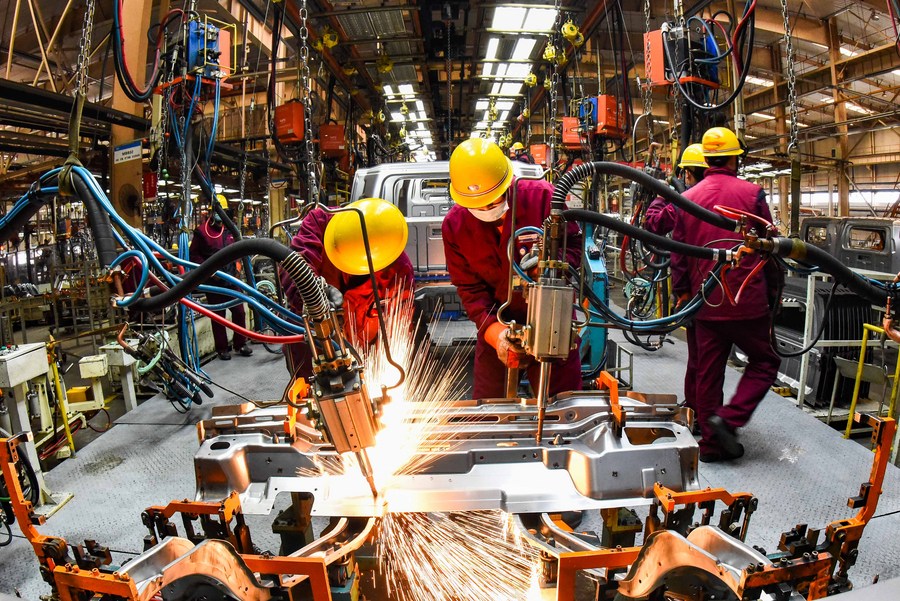
In fact, the past decade has witnessed China’s contributions to, and also its voting rights in, international financial institutions growing substantially, while those of the United States have shrunk. Also, backed by China’s more than four decades of reform and opening-up experience, the GDI, unlike the laissez-faire free market models of the West, presents itself as a state-led rapid development model—one that advocates markets being regulated instead of markets regulating people’s lives. This makes the GDI an aspirational call for action at all levels. Its growing acceptance in Eurasia, Africa and Southeast Asia has led to it developing the specifics of its regional roadmaps and yardsticks.
Deeper engagements
As a seamless movement forward from the Belt and Road Initiative’s partnerships in several of these regions, the GDI aims to upgrade their engagements in relatively complex areas ranging from poverty alleviation to sustainable development through capacity-building, knowledge transfer and innovation to present effective solutions to climate change and energy challenges at the global level. This is what is making the GDI increasingly acceptable even among Western countries that also swear by the spirit of the UN’s 2030 Sustainable Development Goals. Moreover, the GDI, instead of presenting itself as a fait accompli, seeks to engage them from its infancy as an alternative paradigm.
This is where the umbilical cord of the GDI and the Belt and Road Initiative comes alive as the former builds upon the latter, having set the stage to catapult China’s global steering toward shared prosperity for all. This link was aptly described by China’s State Councilor and Foreign Minister Wang Yi, who called them the “twin engines” that aim “to enhance cooperation in traditional areas and foster new highlights.” According to Wang, the GDI is expected to form synergy with other initiatives including the Belt and Road Initiative, Agenda 2063 of the African Union, and the New Partnership for Africa’s Development.

The GDI’s link of “indivisibility” has also been widely appreciated. Just like security in the case of President Xi’s Global Security Initiative, development of the GDI is presented as an indivisible or seamless goal. It proposes that, like security, development must be seen as a collective responsibility where the success of one country remains closely connected to the success of its immediate neighbors, its major partners and indeed of the rest of the world. China’s economic engagement with the Western world has already established this connection, which is being expanded to the entire planet.
Accordingly, after more than four decades of domestic transformation using deep reforms plus manufacturing and trade-led development, the GDI shows how a globalized China’s continued progress has become increasingly incumbent upon the development of the rest of the world. This is why the GDI seeks to build greater international cooperation through free and fair trading and greater market access and regulatory standards, all to redress the emerging shared challenges of our world. Especially with the rising tide of deglobalization, pandemic-induced economic deceleration and Ukraine crisis-driven geopolitical brinkmanship, the GDI, in the spirit of prosper-thy-neighbor, presents a refreshing model that can help in building mutual trust, managing conflicts and bringing stability amid these uncertain times.
This explains why in January representatives from more than 100 countries attended the meeting launching the Group of Friends of the GDI at the UN. In May this year, the GDI was given a place of pride on the agenda of the World Economic Forum Annual Meeting in Davos, Switzerland, where Xi’s January 2017 speech had made China the new flag-bearer of globalization as the West began drifting toward greater protectionism. As the GDI begins to engage more and more nations, it seems like an idea whose time has come.
The author is a professor of diplomacy and?disarmament at Jawaharlal Nehru University (New Delhi, India) and is currently a visiting professor at the University of British Columbia (Vancouver, Canada).