Britain’s Monarchy, Real and Imagined
 Facebook
 Twitter
 Linkedin
 Google +
It is questionable whether the new King Charles III can reverse what has been a long but small decline in the popularity of the monarchy.
There has been a profound changing of the guard at the top of the British state. But it’s too early to be sure how the arrival of King Charles III and Prime Minister Liz Truss will affect British society and relations with the outside world.
The monarch – not the prime minister – is the official head of state of the United Kingdom and of 14 other Commonwealth countries. The king or queen is also head of the Church of England, plays a direct role in the legislative process, presides over the Privy Council, and is the commander in chief of the country’s armed forces.
Although the Westminster Parliament is the sovereign and supreme legal power in the U.K., the monarch is still empowered to open and dissolve each parliamentary session, appoint and accept the resignation of the prime minister and give Royal Assent to parliamentary Bills in order for them to become law.
Much of this has been the case since the so-called Glorious Revolution of 1688 and the Bill of Rights of 1689, amended by the 1707 Act of Union between Scotland and England and the 1920 Government of Ireland Act which created and retained the Northern Ireland statelet within the United Kingdom.
Between 1640 and 1689, there had been a series of momentous struggles for supremacy between parliament and the monarchy, as the rising class of merchant capitalists – mostly Protestants – fought against feudal restrictions on trade, commerce and employment and the powers abused by the monarch to raise taxes and armies. During this period, the monarchy, the unelected and hereditary House of Lords, the Privy Council and the status of the Church of England as the state church were abolished and then restored.
The historic compromises of 1688-89 guaranteed the constitutional position of all these institutions, albeit with more limited powers, while also proclaiming the sovereign power of the Westminster Parliament – in practice, the elected House of Commons – over taxation, the law and the other institutions of state.
Although the role of the monarch in Britain today is largely ceremonial, the powers of the unelected institutions with which it is intimately associated are not. In this respect, the association of the House of Lords, the Privy Council and the Church of England with a popular monarchy has given them – and their powers – a degree of public acceptance that they would not otherwise enjoy.
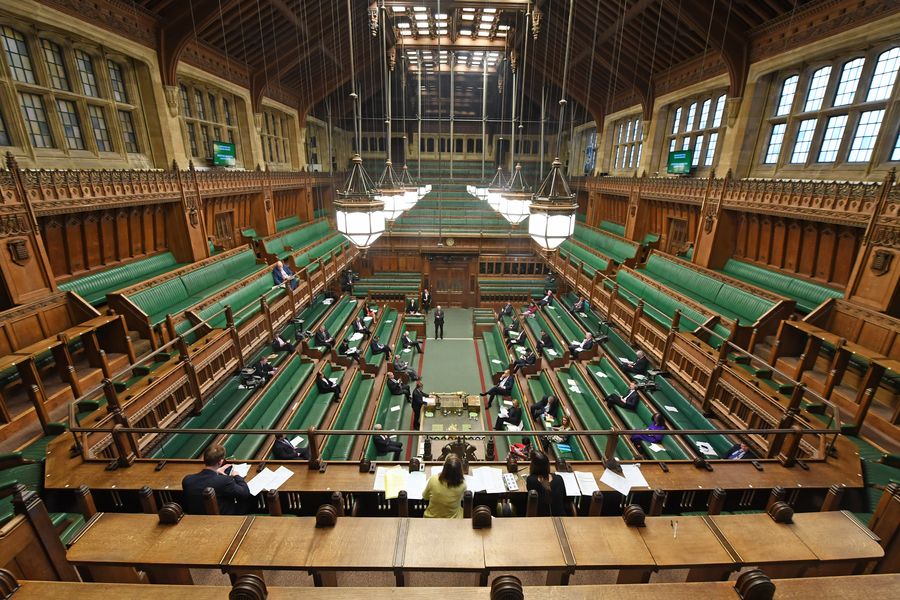
The House of Lords, for instance, is still empowered to initiate, amend and delay most parliamentary legislation. It comprises almost one hundred hereditary peers, 26 Church of England archbishops and bishops and 682 members appointed for life by prime ministers and party leaders.
His Majesty’s Most Honourable Privy Council – its full title – dates back to the 13th century at least, before any parliament. Presided over by the monarch, its members appointed for life include the heir to the throne, senior politicians and judges from Britain and other Commonwealth countries (including the prime minister and leaders of the three main parties in the Westminster Parliament), Church of England archbishops and top civil servants.
The Privy Council’s formal role is to advise the monarch. More significantly, it is an avenue for secondary legislation (“Orders in Council”), on the advice of the prime minister, which avoids the need for parliamentary consent.
For example, such an order in 1984 banned trade union membership for 8,000 staff at GCHQ (Britain’s center for state surveillance of worldwide communications) at US insistence. A series of Orders in Council between 1965 and 2004 enabled the eviction of 1,500 inhabitants from the Chagos Islands and prevented their return, allowing the construction of a huge US military base on Diego Garcia in the Indian Ocean.
The Council judicial committee is the highest court of appeal for some British overseas territories and Commonwealth states.
Then there are the residual powers of the monarchy itself. These include the royal prerogative to dismiss the prime minister and government, dissolve parliament (with House of Commons consent), summon a new parliament through election (by Privy Council order) and refuse Royal Assent to a parliamentary Bill. By convention, these powers are always exercised at the request or on the advice of the prime minister.
Yet constitutional specialists dispute whether or under what abnormal circumstances the monarch would be legally entitled to act contrary to such advice and consent.
Could the royal prerogative be used to undermine, obstruct and even countermand the right of an elected government and parliament to legislate for major or even fundamental economic, social and political change?
In June 1964, the Governor of British Guiana, Sir Richard Luyt, appointed by Queen Elizabeth II, used his emergency powers to suspend the anti-imperialist government of Cheddi Jagan and arrest members of his People’s Progressive Party. He then dismissed chief minister Jagan, who had refused to accept defeat in December alleging electoral fraud and insisting on his constitutional right not to propose a meeting of the new legislature.
Jagan had previously been forced to resign in 1953 after British troops had invaded the country following his first election victory.
In 1972, to break Australia’s parliamentary deadlock, Governor General John Kerr – another appointee of Queen Elizabeth – dismissed Labor Prime Minister Gough Whitlam and appointed right-wing Liberal Party leader Malcolm Fraser in his place.
In Britain, all Westminster, Scottish and Welsh parliamentarians, Privy Counsellors, judges, magistrates, armed forces personnel and police officers (except in Scotland) must swear such an oath of allegiance to the monarch and his or her heirs and successors – rather than to the country, its people, the government or the state. In a severe political crisis, top personnel in parliament, the judiciary, the police or the armed forces could cite their oath of allegiance to the monarch as justification for frustrating the policies of a democratically elected government.
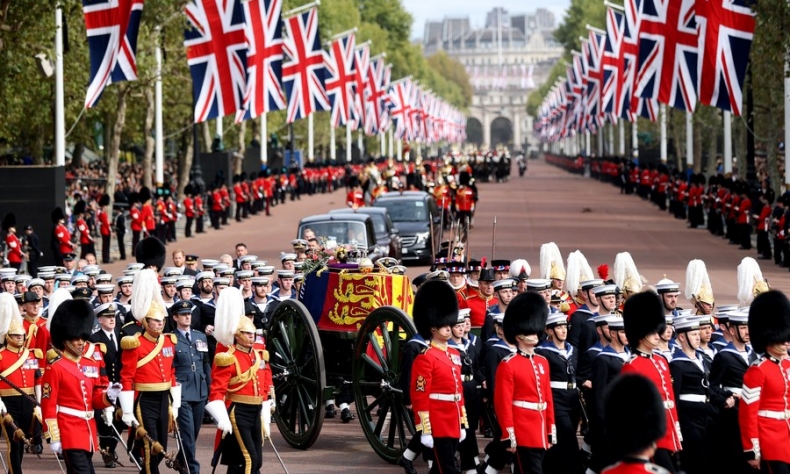
Certainly, the ties between the monarchy and the British and Commonwealth armed forces are close, with Royal Family members holding honorary ranks and, in many cases, undertaking military service. Many royal ceremonies in public are attended by a large and flamboyant military presence.

For republicans, another major objection to the monarchy is that it appears to set a royal seal of approval on a society that is grossly unequal, where a small minority of the population owns much of the wealth and exercises almost all of the power. Moreover, a lot of that wealth is inherited rather than earned.
In the case of the Royal Family, their private assets in land and property – the Crown Estate and the Duchies of Lancaster and Cornwall – are worth more than £17bn, mostly untaxed, generating an annual income of at least £45m directly and £86m via the Sovereign Grant.
With their 13th and 14th century hereditary titles that reflect little or no meaningful connection to the places named (Princes, Princesses, Duchesses, Dukes or Earls and Countesses of Wales, Cornwall, Lancaster, York, Wessex, Forfar, Kent, Gloucester, Sussex, etc.) the Royal Family sits atop a pyramid of inherited wealth, privilege, elitism and snobbery.
Formally and ceremonially, the monarch grants more than two thousand honorary titles and medals every year, many of them featuring the name of the dead and unlamented British Empire. Three-quarters of recipients are from a middle- or upper-class background.
The awards include Knighthoods and Lordships, and are often passports into business boardrooms or – in the latter case – the House of Lords.
Although anyone can nominate a person for outstanding public service, the final list is drawn up by an honors committee and the prime minister before the monarch awards them. In reality, hundreds of the beneficiaries are rewarded for their political service – including financial donations – to one of the major political parties or because of their business activities or their service to the state as military or civil service chiefs.
For all the minor awards handed out to health, education and charity workers, it is a deeply corrupt system, an important element in the revolving door between politics, big business and the state, and made to appear normal by the royal seal of approval, supposedly above political considerations.
Yet the majority of people in Britain do not view the monarchy through a prism of wealth, privilege, militarism and empire.
Instead, they see the monarchy as depicted by most of the mainstream media in the person of Queen Elizabeth: a patriotic symbol of national unity and stability, an experienced and wise head of state, a long-serving and dedicated public servant above the political fray and, with all that, the loving mother of a troublesome but fascinating Royal Family.
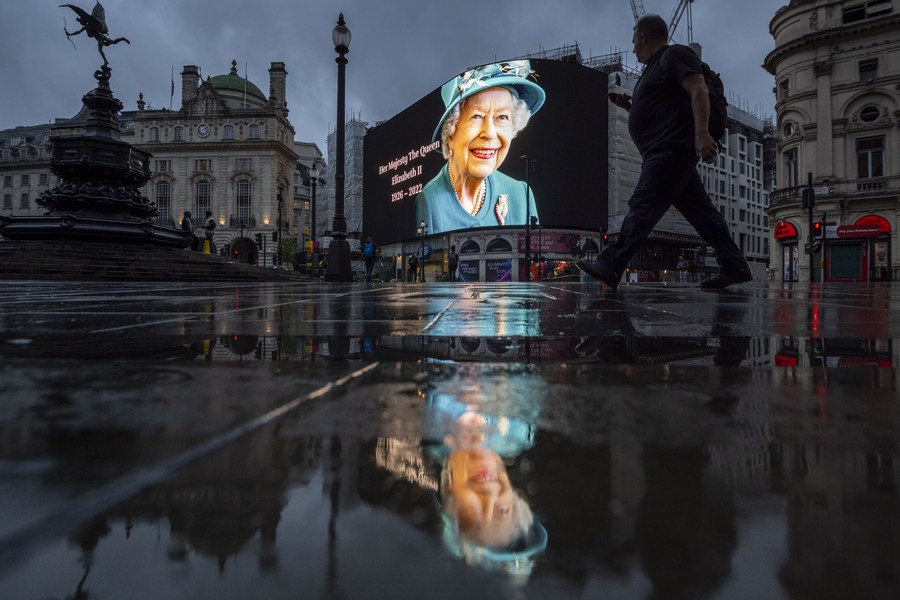
That, plus the mystique and the pageantry, is what attracted so many people from home and abroad to pay their tribute at royal residences and events following the Queen’s sudden death on September 8. Politically, though, the impact of these events is already fading, as millions of people across Britain turn to face dire problems of rising prices, possible job losses, lack of decent housing and deteriorating public services.
Against this background, reforming or abolishing the monarchy is not widely seen as an urgent necessity, even by many ardent reformists and socialists. Thus, there is still no significant organized republican movement in Britain.
Many Labour Party activists have no great enthusiasm for the institution, but most of its leaders and elected representatives are keen royalists or – fearful of the mainstream mass media and public opinion – pretend to be so. That’s a far cry from the founder of the Labour Party, Keir Hardie, who declared in 1897: “In this country loyalty to the Queen is used by the profit-mongers to blind the eyes of the people. We can have but one feeling in the matter – contempt for thrones and for all who bolster them up.”
As might be expected, the Conservative Party is the most fervently monarchist, the Liberal Democrats a little less so. Most Green Party activists would describe themselves as republicans in principle.
In Scotland and Wales, royalist sentiment is not quite so strong, especially among SNP and Plaid Cymru supporters who view the monarchy as an English institution. The king or queen is sworn to defend the union of England, Scotland and Wales, which the nationalists are committed to breaking. Indeed, the death of the late queen and the accession of the new king unleashed an orgy of “Britishness” in the mass media. Official SNP policy is to retain the British king or queen as the head of state in an independent Scotland. Plaid Cymru (the Welsh nationalist party) favors abolition of the monarchy.
Most of the left outside the Labour Party is more openly republican but, as with the Communist Party of Britain, recognizes that this is more of a strategic than a short-term objective.
As for public opinion, polls indicate that around two-thirds of people think Britain should continue to have a monarchy, up from 60% before the death of Queen Elizabeth. Between one-fifth and a quarter would prefer to have an elected head of state. While a substantial majority of elderly people are pro-monarchy, only a minority of the under-25s feel the same way, although recent ceremonials have increased royalist sentiment slightly.
It is questionable whether the new King Charles III can reverse what has been a long but small decline in the popularity of the monarchy.
Robert Griffiths is a former Senior Lecturer in Political Economy and History at the University of Wales and currently the General Secretary of the Communist Party of Britain.