Robert Kuhn: The 20th CPC National Congress Is Axial to China’s New Era
 Facebook
 Twitter
 Linkedin
 Google +
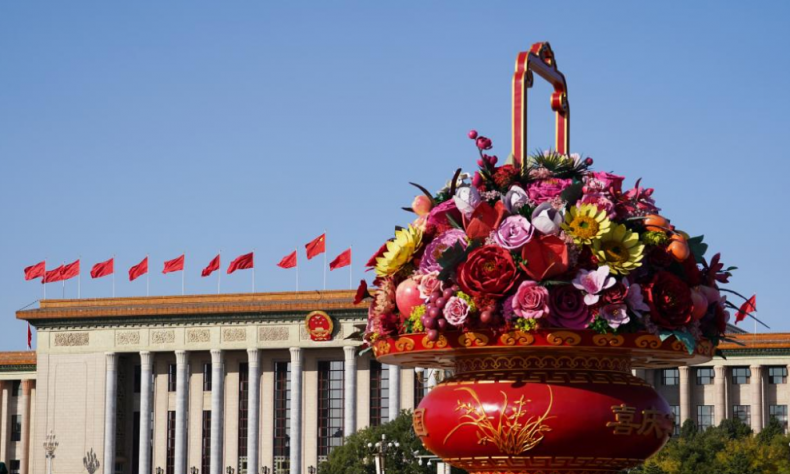
The significance of the 20th CPC National Congress is not only will it set the agenda for the ensuing five years, it will also draft the roadmap for the next 13 years to 2035 and sharpen the vision for 2049.
Editor’s Note: The 20th National Congress of the Communist Party of China (CPC)?is convened on October?16 in Beijing, which is of great significance to China. How will China develop in the next 10 years??What challenges will the CPC face in the future??In an interview with China Report,?Robert Lawrence Kuhn, an international corporate strategist, investment banker and renowned China expert, shares his insights. Authorized by China Report, the excerpts of the interview are published by China Focus.
As an expert on China, how do you think?China’s economic and social development in the past 10 years?
Robert Lawrence Kuhn: China has become the world’s second largest economy, second largest consumer market, largest manufacturing country, largest country in goods trade, and largest in foreign exchange reserves. China’s GDP more than doubled from about 54 trillion yuan in 2012 to over 114 trillion yuan in 2021, and its proportion of the world economy increased from 11.4 percent to more than 18 percent. The per capita GDP has increased from $6,300 to $12,500.
I have been coming to China for more than 30 years; I have been telling China’s story to the world in various forms. Although China has many achievements, none has been as representative of the real China, and none has been so powerful in impact, as China’s commitment to eradicate all extreme poverty in the country and China’s systematic implementation that made it happen by the end of 2020.?I have found that China’s poverty alleviation program is the best story to undermine biases and disrupt stereotypes about China.
To me, China’s success in the war on poverty and the war on the COVID-19 has structural similarities.?Consider three powerful parallel factors: CPC leadership, General Secretary Xi’s commitment, and the CPC mobilization.
The past five years, in particular, I have witnessed extraordinary challenges and extraordinary achievements for China and the CPC. We can list some of the most important: (i) China’s success in minimizing COVID-19 cases and deaths far below that of other countries; (ii) China’s economy, which has continued to grow despite various headwinds; (iii) China’s society, especially the transformations of poverty alleviation, rural vitalization and Common Prosperity; (iv) China’s diplomacy, which has become more confident and assertive; (v) China’s military/defense strength, which has continued to grow, especially the PLA Navy; (vi) the CPC fulfilling its commitment to self-purify by its relentless anti-corruption campaign.
What do you think of the 20th National Congress of the CPC which is held in October this year?
Robert Lawrence Kuhn: To begin, one must appreciate the so-called “Two Establishments” — establishing Xi Jinping as “core” of the Party and thus China’s unchallengeable leader, and establishing Xi Jinping’s political theory as the foundation of Party ideology – both of which were “established” formally by “Historical Resolution” in late 2021.
Since the 19th CPC National Congress in 2017, Xi’s political theory is known as “Xi Jinping Thought on Socialism with Chinese Characteristics for a New Era”. This background will enable a close reading of the political proclamations at the upcoming CPC Congress.
CPC National Congresses, held every five years, normally set the agenda for the ensuing five years. The significance of the 20th CPC National Congress is not only will it set the agenda for the ensuing five years (2023-2027), it will also draft the roadmap for the next 13 years to 2035 and sharpen the vision for 2049, the 100th anniversary of the founding of the People’s Republic of China, when the great rejuvenation of the Chinese nation is expected to be realized. Thus, the 20th CPC National Congress is axial to China’s New Era.
You have studied China for more than 30 years. What is your greatest feeling about the CPC and China in the past 10 years?
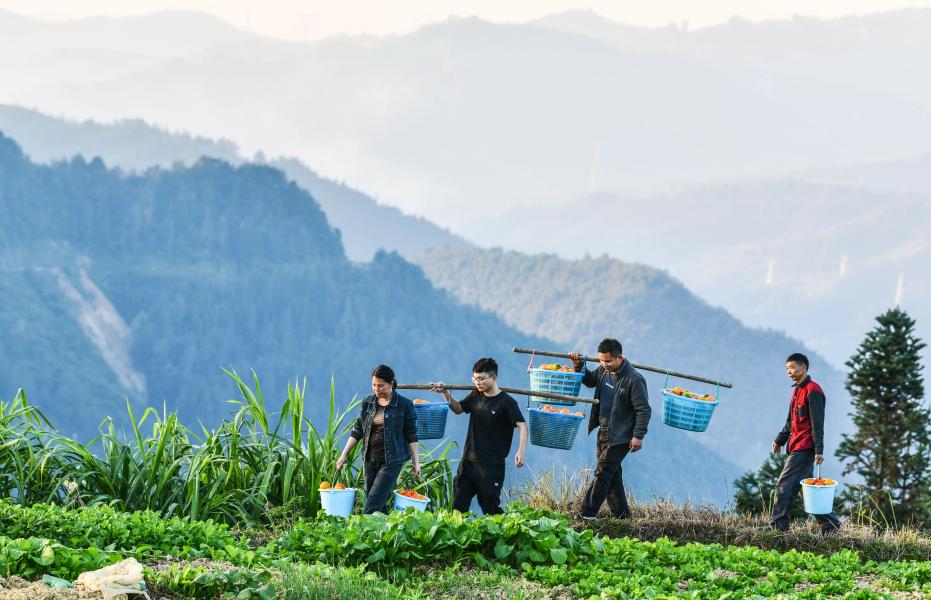
Robert Lawrence Kuhn: Perhaps my sense of the CPC’s greatest achievement on the past 10 years has been the eradication of all extreme poverty in China, some 800 million people over four decades or so, and the final 100 million of the intractably poor over the past 10 years, via President Xi Jinping’s “Targeted Poverty Alleviation Campaign”.
When China eradicated all extreme poverty at the end of 2020, China achieved the poverty reduction goal of the United Nations 2030 Agenda for Sustainable Development 10 years ahead of schedule. No other country has brought so many people out of poverty, and did so in such a short period of time. China asserts that these historic achievements validate the country’s socialist political system, which means the continuing leadership of the Communist Party.
What can the world learn from China’s success in poverty alleviation? Many things. Certainly, China is committed to sharing its poverty-reduction experience with the world community, especially with the poorest nations — strategy, structure, programs, systems, insights, checks and balances — all aspects.
But each country is different. We cannot take programs from one country and impose them wholly, without adaptation, on another country.
However, the principles are what’s important. And China’s principles of poverty alleviation are clear: “targeted” poverty alleviation employs specific measures to fit specific circumstances and needs, and a clear organizational structure to implement those measures, monitor them, and check them.
Nonetheless, to me, what is even more clear is this. For a country to make a success of poverty alleviation, the number one criterion is that the leader of the country must make an absolute and resolute commitment to accomplish it. The senior leader of the country needs to make the overall mission of poverty alleviation a high priority for the nation. Nothing less will work well.
What all countries should recognize in the fight against poverty is the critical importance of motivating officials to make poverty alleviation a priority in the hierarchy of values in their work. This can come only from the top down. This is a big lesson that China offers to the world.
When the Western society talks about the CPC and China, it often talks about “one-party” ruling. What do you think of the statement?
Robert Lawrence Kuhn:?I deem it important to understand what China means by “whole-process people’s democracy”.
President Xi Jinping calls democracy “a shared value of humanity and a key tenet upheld by the Party and the Chinese people” — to be used, he says, “to solve the problems that the people want to solve.”
Party theorists describe whole-process people’s democracy as a full-chain, omni-directional, and full-covered democracy, embedding process democracy and outcome democracy, procedural democracy and substantive democracy, and direct and indirect democracy. They stress that people’s democracy and the will of the state are united.
That’s the theory, but what’s the practice?
The Party’s call is to expand the orderly political participation of the people, strengthen the protection of human rights and the rule of law, and ensure that the people enjoy extensive rights and freedoms in accordance with the law. This includes the people exercising the right to vote and democratically elect representatives to the people’s congresses, and ensuring that the people know, participate, express, and supervise the work of the people’s congresses?under the leadership of the Party.
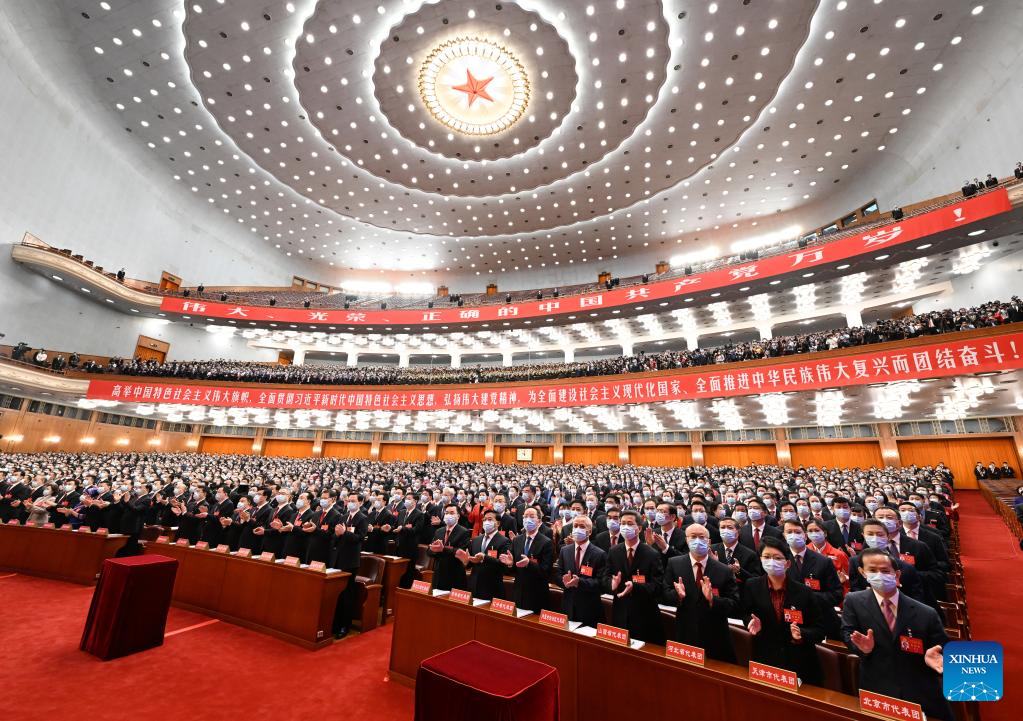
Democracy in the Party-led system involves absorbing public opinion via feedback mechanisms, such as polling to discern what people think, for example about proposed new policies — a process that the Party calls “pooling people’s wisdom.”
So, even though there are no elections in the Western sense, there is a good deal of engagement with different constituencies. Another example is when officials are nominated to new positions, there is a period of time for candid feedback from colleagues and subordinates as well as from superiors.
Moreover, the work reports of Party leadership at Party congresses, held every five years, and the work reports of the government at the National People’s Congress, given every year, reflect a great deal of input and suggestions from all relevant officials, experts and constituencies. These work reports are not just what top leadership puts forth for form and ceremony. These axial documents are drafted by diverse teams, with comments and opinions solicited from numerous officials and experts; the documents circulate iteratively many times during the six to eight months or more of the drafting period.
President Xi stresses the important role of the Chinese People’s Political Consultative Conference?(CPPCC)?in the development of deliberative and consultative democracy. The CPPCC has the growing social powers of expertise, influence and public pressure.
Why does the world misunderstand the Party? The problem, I argue, is partly semantics, because the English word “party” connotes, in democratic political systems, a political party that competes in free and open multi-party elections, such that when a ruling party does not compete in free and open multi-party elections, that political system is deemed not democratic.
This portrait mispaints the Chinese system, which is founded on a different principle, where the Party is the ruling organization, not a competing political party. It is a dedicated elite from all sectors of society, consisting of less than 7 percent of the population but tasked to represent 100 percent of the population.
Thus, the Party, as the ruling organization, is not the equivalent of a ruling political party in Western systems, where political parties represent only a certain group of voters and are time-constrained by election cycles. For this reason, the Chinese Party, the CPC, has a higher and broader obligation to enhance the living standards and personal well-being of all Chinese citizens. This includes reforms, rule of law, transparency in government, public participation in governance, increasing democracy, and various freedoms, and human rights.
What challenges do you think the CPC will mainly face in the future and how to deal with them?
Robert Lawrence Kuhn: China is the world’s second largest market and it will likely become the largest. It has been said that no major international company can afford not to be in the China market. While this continues to be sure, no one can deny the increasing difficulties and uncertainties of the past several years. A slowing economy, Covid lockdowns, real estate and financial worries, international tensions — all have taken their toll on foreign companies willing to invest in China.
Yet, China’s leadership recognizes and appreciates that China needs foreign companies operating profitably in China, both for competitive pressures that drive productivity and technological progress. Thus, certain foreign companies that are willing to think and act boldly can have the support of the Chinese government and access to this huge market.
The primary characteristic of the system of socialism with Chinese characteristics is the perennial leadership of the CPC. For the world to understand China, it must understand why the CPC asserts that its continuous governing leadership is optimum for China’s development. But for the CPC to retain its ruling status, it has a higher obligation to govern itself properly, maintain highest standards of rectitude and probity. President Xi sets the high standard for the Party: governed by rules and procedures that are standardized, supervised, and open to oversight.
Anti-corruption, of course, is the centerpiece of the Party’s self-revolution. “Worms can only grow in something rotten,” President Xi Jinping said early on in his unprecedented and sustained anti-corruption campaign. “Corruption is now raging,” he warned, “if it is not curbed, our Party and country will surely be doomed.” Xi’s solution is a system that checks the exercise of power, grants oversight powers to the people, and makes the exercise of power more transparent and institutionalized.
CPC self-revolution, embedding tough internal checks-and-balances, is a relentless process that can never stop.
Reporters: Xu Hao and Zuo Lin
Editors: Bai Shi and Zhao Qiang