The Moral Alternative: Building a Community with a Shared Future for Mankind
 Facebook
 Twitter
 Linkedin
 Google +

Poverty results from the moral bankruptcy of the global financial system. ?It can only be addressed by pursuing China’s goal ‘to make global governance fairer and more equitable’.
On February?25,?2021, Chinese President Xi Jinping?announced that China had secured a complete victory in its fight against poverty. Globally, though, 685 million – one in 12 – people still suffer poverty that is even more severe.
As prosperity grows, so does the acceptable poverty threshold. Piped water, electricity, and even handphones?become essentials. The average poverty line observed in upper middle-income countries is $6.85/day. 3.72 billion people worldwide, 46 percent, have incomes of less than this amount – including almost one in four people in China, over a third of whom live in urban areas.
Poverty serves as an example of the many challenges confronting humanity that cannot be tackled by national governments acting alone. Indeed, like climate change, extreme wealth inequalities, famine, morbidity, economic migration and global insecurity, poverty largely results from governments prioritising national self-interest over the well-being of others.
The global financial system based on largely unfettered competition is, as António Guterres, UN Secretary General, has acknowledged, “morally bankrupt. It favours the rich and punishes the poor.” Recognising this, it had been hoped that the world’s people would come together to demand the eradication of poverty through the 17 global Sustainable Development Goals (SDGs) announced in 2015 as part of the UN 2030 Agenda.?However, this has not happened. Only a third of Britons, Americans?and Germans, for example, “would feel guilty” if “they personally…ignored the needs of poor people in poor countries”. Self-interest and individualism reigns.?The world and the world’s people lack a moral compass.
There is an alternative vision. It is one that envisages a shared future for humanity and would involve “countries with different social systems, ideologies, histories, cultures and levels of development coming together for shared interests, shared rights and shared responsibilities in global affairs, and creating the greatest synergy for building a better world”. This vision might be considered Utopian?by scholars and politicians schooled in the neorealist tradition of international relations which considers that states must compete for supremacy. It is, though, the core of China’s foreign policy as presented to the UN General Assembly by President Xi Jinping in 2021. Before considering what this alternative vision might mean for global poverty reduction, it is important to understand the structures and forces that have hitherto prevented greater reductions in global poverty.
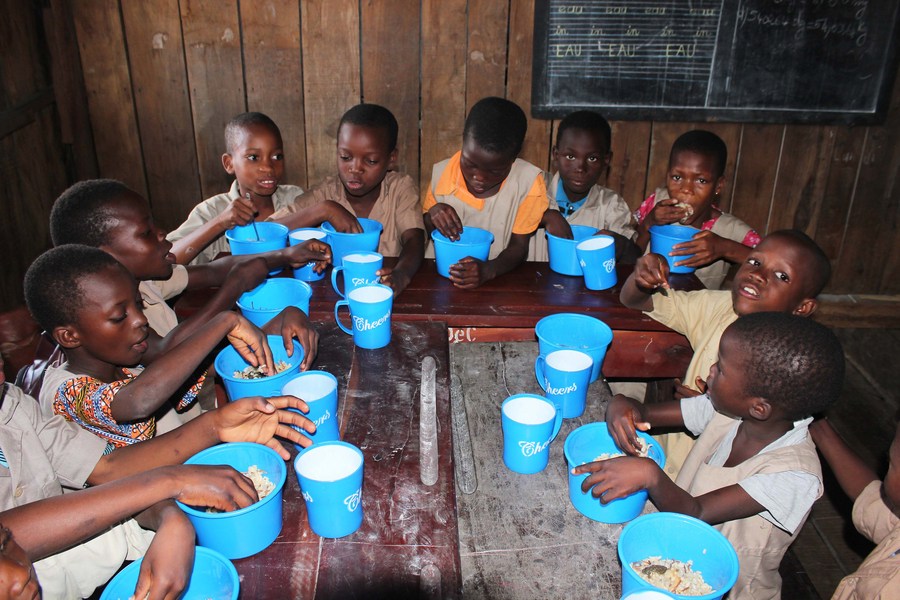
Poverty results from the unfair primary and secondary distribution of resources. The primary distribution is market-driven. It takes place within and between countries through the production and sale of goods that generate income in the form of wages and returns on investments.
The secondary distribution is engineered by governments through taxation and transfers which determine the resources that people can access and deploy. The secondary distribution largely occurs within nation states. Currently, Overseas Development Assistance (ODA), discounted loans from the International Monetary Fund (IMF)?and the?World Bank, and international charitable giving contribute comparatively small sums to a global secondary distribution.
Primary inequality
Today’s pattern of economic inequality has its origins deep in history. As recently as 2008, 50 percent of the variation in countries’ per capita GDP could be explained in terms of incomes in 1870. Moreover, whereas per capita incomes in Western Europe in 1870 averaged four times those in Africa, European incomes are now 12 times greater.
Inequality and poverty are daily being reproduced by a global trading system that ensures that the primary distribution of economic resources continues to favour developed countries and the multinational corporations domiciled therein.
The current trading?system dates from the ending of fixed exchange rates in 1971, the subsequent 1970s escalation in oil prices, and the emergence of the neoliberal agenda championed by U.S.?President Ronald Reagan and others in the 1980s. This marked the end of an era that, informed by the disaster of World War II, had been premised on the realisation that peace and prosperity could only be guaranteed through international cooperation.
It was replaced by a model of national individualism shaped by a romanticised vision of Western history. It recalled religious minorities fleeing state oppression in Europe to build a new unified country, with pioneers taking individual enterprise and ‘civilisation’ west towards what would be America’s Pacific coast. It was a vision that displaced memories of slavery and genocide that underpinned the economic success of the settlers and their so-called liberal capitalism.
This neoliberal framework advocated?– and sought to enforce – small government, strong private property rights, and free trade and markets. It led to the policy of “structural adjustment” implemented by the World Bank and the IMF. This made financial assistance to developing countries conditional on the privatization of state-owned enterprises, deregulation of their economies, trade liberalization, “competitive” exchange rates and the elimination of barriers to foreign direct investment. Developing countries were therefore obliged to engage in globalisation and to do so from a position of economic weakness.
With minor amendments this system remains in place. Arguably it has facilitated the globalisation of world trade credited with stimulating global economic growth and reducing poverty in the last 40 years. It provided the environment in which China, after opening-up under Deng Xiaoping, has become the world’s second largest economy.
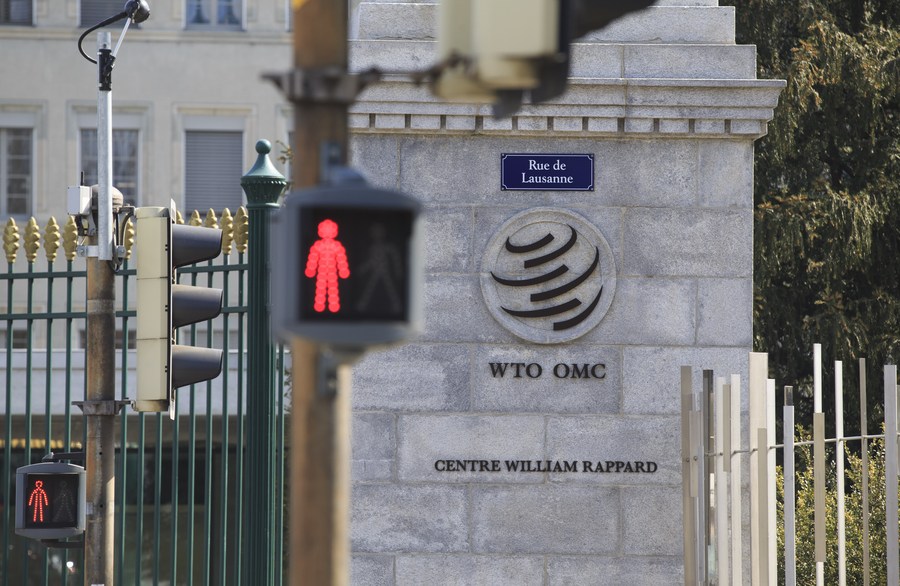
However, the neoliberal economic system continues to penalise developing countries. The World Trade Organisation, for example, the global body nominally intended to police fair trade, notoriously fails to do so. Instead, it provides nominal legitimacy to trade practices that discriminate against developing economies, similarly supporting the imposition of high trade tariffs on processed goods exported by low-income countries. Moreover, its appellate body, established to rule on trade disputes, no longer functions because the U.S., having lost several appeals, refuses to approve new appointees. While supposedly committed to open markets and free competition, the U.S.?has imposed embargoes on Chinese trade and employed domestic legislation to prevent other nations doing business with China.
The United Nations’ commitment, under the SDGs, to eradicate extreme poverty and to half other forms by 2030 was premised on fundamental reform of the WTO – the so-called Doha Round. This failed to happen; rich countries were simply unprepared to change a system that massively favoured them. This, alone, makes the SDGs unattainable.
Insufficient secondary distribution
If the primary distribution of global resources is grossly unequal, the secondary distribution intended to correct imbalances is grossly inadequate and unfair. Since 1970, developed countries have been expected to devote 0.7 percent of the gross national incomes (GNI) to ODA. Very few countries have ever reached this target even for a single year. Moreover, ODA is typically a manifestation of self-interested economic and strategic power rather than a reflection of global solidarity. In this regard, the behaviour of the British government is unusual only?in?its transparency: it openly states that it uses “development as a key part of…foreign policy [bringing] more countries into the orbit of free-market economies [which] will help low-?and middle-income countries become our trade and investment partners of the future”.
In negotiating the SDGs, developing nations were encouraged to open their markets and curtail the size of government as a means of reducing poverty (SDG-1). However, developed countries refused to reciprocate by establishing measurable targets for knowledge transfer, capacity building or financial support (SDG-17). Conditionality for development assistance extends beyond the adoption of neoliberal economics to a preference for modes of governance. For example, the UNDP, the United Nations’ agency for development, has since the 1990s promoted western-style democracy in contradistinction to the neutrality of the UN Charter. Underfunded, the agency feared further reductions in financing from the United States.
The simple arithmetic cost of eradicating extreme poverty in low-income countries equates to just 0.1 percent of the combined GNI of developed countries. That of implementing a social protection floor covering incomes, healthcare and education in all low-, lower- and upper-middle income countries could readily be covered by a global wealth tax. Yet, despite SDG Target 1.3 promoting social protection, there is no international agreement to fund even basic social protection for just low-income countries.
A just alternative
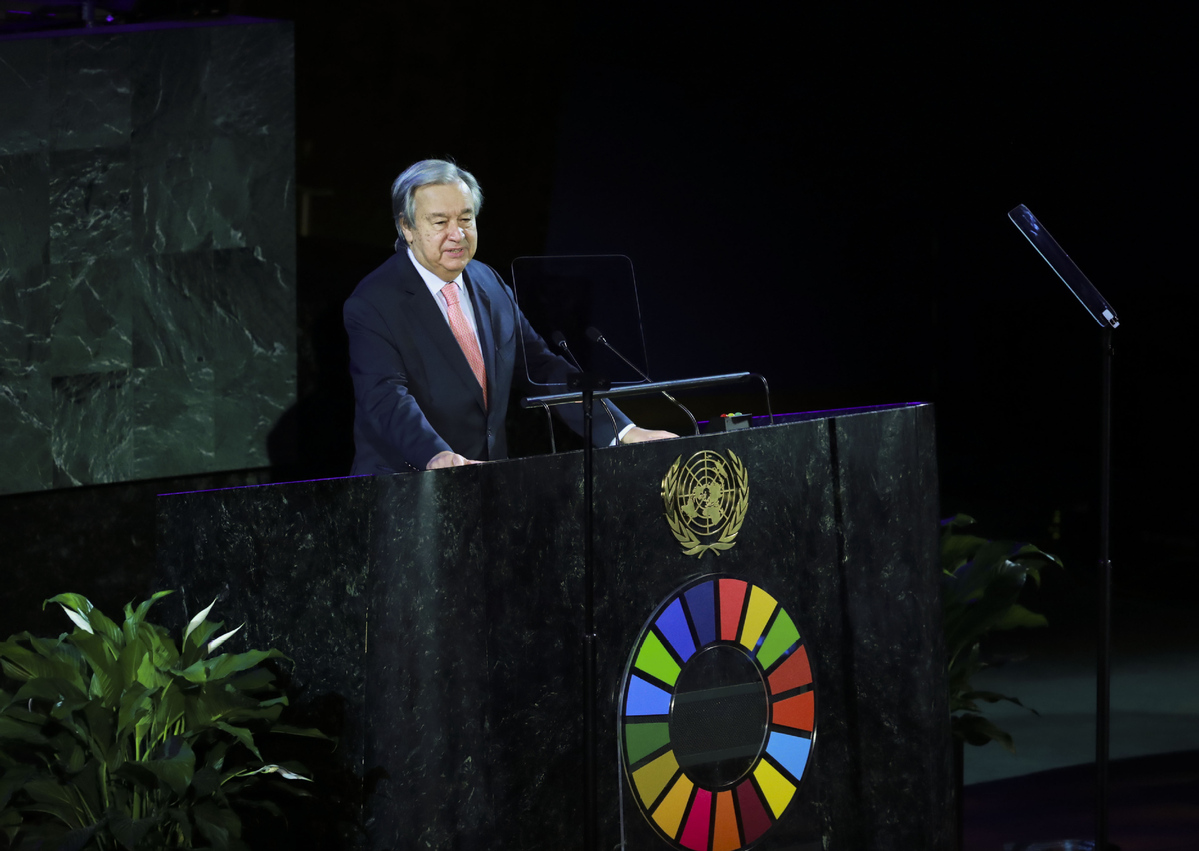
In marked contrast to the prevailing geopolitical system that presents economic competition as a surrogate war to achieve global domination, President Xi delivered a report to the 20th National Congress?of the Communist Party of China (CPC)?on October 16, 2022 with a call to “let us all join forces to meet all types of global challenges”. He continued by committing China to continue its “national policy of opening to the outside world” with a view to creating “new opportunities for the world…and to contribute its share to building an open global economy that delivers greater benefits to all peoples”.
This is no new commitment. President Xi expressed similar ideas in his address to the Boao Forum for Asia in March 2015 and to the British Parliament in the same year. Indeed, such benevolent developmentalism reflects the Confucian tradition of “wang dao”, the strong caring for the weak.
These words are backed by action. China responded to the 2008 global financial crisis, not by austerity, but by mounting the world’s largest expansionary stimulus package that was sufficient not only to ensure its economic recovery, but to protect much of the developing world. Since 2013, China has provided over 150, mostly developing, countries with infrastructure investment worth almost $840 billion under its Belt and Road Initiative. True to its word, it has not constrained the fiscal space of recipient governments by insisting on ideologically driven policy changes.
Responding to the Covid-19 pandemic, China began shipping vaccines globally well before its own population was fully vaccinated and has, in total, directly delivered 1.64 billion doses to 118 countries. In 2021, China distributed more vaccine than the COVAX facility, co-sponsored by the World Health Organisation, to which China also donated vaccines. Now, with developing countries hit by the pandemic, rising food prices linked to the Ukraine crisis and increased debt repayments, China is providing necessary liquidity financing.
As at the time the 2008 Great Recession, China has been supporting major emerging economies with loans and currency swaps helping their governments to manage the impact of these exogenous events. Many governments have also had to cope with an unprecedented withdrawal of funds by international investors seeking to protect the value of their portfolios irrespective of the impact on local poverty rates. Moreover, countries considered not to be geopolitical allies of Western countries have been unable to access funds on favourable terms from the IMF, a longstanding practice that can only be considered corruption.
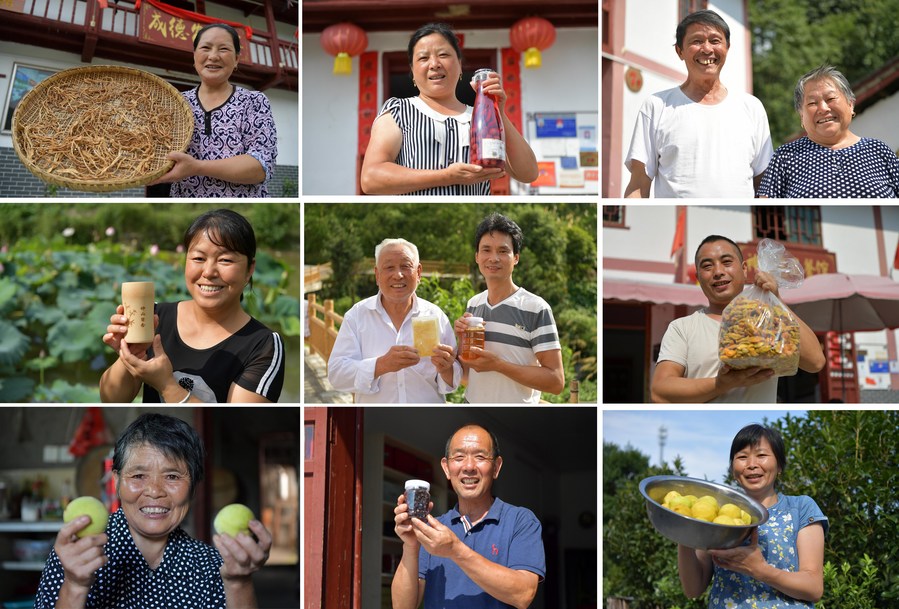
China eradicated extreme poverty – SDG Target 1.1 -a decade ahead of schedule and the International Poverty Reduction Center in China?(IPRCC) has shared its expertise globally since 2005. Following the 20th?CPC National Congress, domestic attention is now focused on achieving common prosperity, a concept that embraces SDG Target 1.2, halving poverty in all its dimensions. But China’s vision of “building a human community with a shared future” also encompasses, as President Xi has made clear, “achieving common prosperity for all”. Evidence of this worldwide commitment is provided by the Global Development Initiative (GDI) designed to speed up implementation of the UN 2030 Agenda. Launched in October 2021, it focuses on poverty alleviation, food security, vaccination, and development, demonstrating China’s commitment to work with international agencies.
The GDI also aims to “improve the global governance system at a faster pace, increase the representation and voice of emerging markets and developing countries, and build an open world economy”. It, therefore, reflects President Xi’s pledge to play “an active part in the reform and development of the global governance system”. China, President Xi continued, “upholds true multilateralism, promotes greater democracy in international relations, and works to make global governance fairer and more equitable”.
This is not the occasion to guess at China’s vision for the ideal global community. However, many others believe that global poverty can only be eradicated by shifting the balance of strategic power from the IMF, World Bank and WTO, controlled by the developed world, to the United Nations where all nations are represented. The UN General Assembly currently has the duty to discuss but not the power to act. For the General Assembly to become the world’s legislative forum, its membership should be elected. China’s political system of People’s Congresses serves as a model: national legislatures could elect representatives to the UN General Assembly from among their own number.
Poverty results from the moral bankruptcy of the global financial system. It can only be addressed by pursuing China’s goal “to make global governance fairer and more equitable”.
The article reflects the author’s opinions, and not necessarily the views of China Focus.