Why Western Media Misrepresent Key Messages
 Facebook
 Twitter
 Linkedin
 Google +

On the one hand, this is an existential defense mechanism, psychologically speaking. On the other hand, many Americans understand their interests align substantially with American hegemony, and therefore, there is an anti-China alignment.
Although domestic and international media were welcomed to the recent 20th National Congress of the Communist Party of China and well-represented there, and while many outlets provided fair and balanced reporting of the event, quite a number of Western news media mischaracterized key messages so severely that they inverted them completely.
These included discussions and explanations of whole-process people’s democracy and common prosperity, the mainland’s position vis-à-vis Taiwan, and China’s repeated commitments to true multilateralism, peace and development. Why did these inversions happen? What sort of interpretive framework is guiding Western media and thinking about China today? Here are six possible answers.
First, the U.S. is experiencing absolute and relative decline according to several key indicators. As numerous internal and external studies conclude, and as confirmed by recent performances in Iraq, Afghanistan and other places, as the oft-cited 2018 strategic assessment describes, “America’s longstanding military advantages have diminished,” and “the country’s strategic margin for error has become distressingly small. Doubts about America’s ability to deter and, if necessary, defeat opponents and honor its global commitments have proliferated.”
These declines both mirror and intersect with other problems including geopolitical overreach, crisis-prone fiscal and monetary policies including unsustainable deficit spending, intense political polarization and increasing systemic dysfunction, increasing income inequality at home and a declining share of world production, declining life expectancies (now lower than China’s), catastrophic breakdowns in public health protections, along with increases in the incidence of violent crimes including murders, suicides, drug and alcohol addiction.
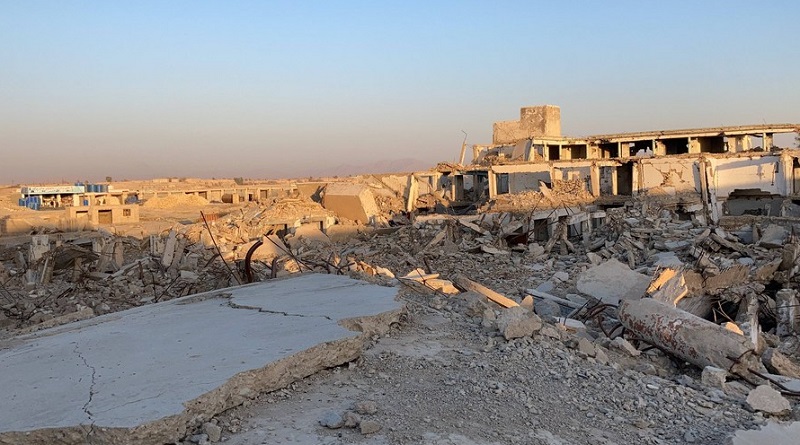
In numerous polls conducted over the past several years in the U.S., roughly 80 percent of respondents have agreed that the U.S. “is falling apart,” as one poll expressed it, with many Americans contrasting their woes with China’s rise. Consequently, when China says it’s in a new era; that it’s now a nation of more than 400 million middle-income earners and has eliminated extreme poverty altogether (while poverty in the U.S. is increasing and the middle-class is eroding); that it’s standing up against U.S. hegemony and promoting reform of the U.S.-dominated system toward more true multilateralism and international democracy, it’s unsurprising that the U.S. feels more vulnerable and threatened and thus becomes even more aggressive in what it says and does.
Second, Americans in particular have such an incredible distrust of government generally that they built and sustained a political system designed to limit, if not defeat, itself, in part to suppress the potential for political tyranny in a central government, in part to diffuse more power to the states, but also to protect the privileges of private interests, most especially the owners of private property. The founding fathers purposely divided government with the separation of powers, checks and balances, and a federal system where individual states have their own rights and responsibilities.
While this system held certain advantages in the 18th century, and while it was capable of more discipline during previous periods of crisis, it’s been unable to marshal itself effectively in recent decades. That said, while many Americans are frustrated with their poor governance, in fact they’re relatively unsurprised when government fails because such failures have long been normalized culturally, even systemically. After all, Americans have never really trusted political power; they have never really trusted political leaders: With such a historically deep and culturally present orientation, why would Americans trust in any other country’s political system or leaders? Why would they believe or welcome positive achievements from China or anywhere else?
Third, many in the U.S. still believe America won the Cold War, and that it did so given a superior political and economic system. To be sure, many now deride Francis Fukuyama’s “end of history” thesis, written during the Soviet Union’s dissolution, arguing that history had concluded definitively that the U.S. system was better than communism; however, most only mock his conclusion that the U.S. had in some vital ways reached the pinnacle of political development—they don’t dispute his basic contention that communism is wrong-headed and dangerous.
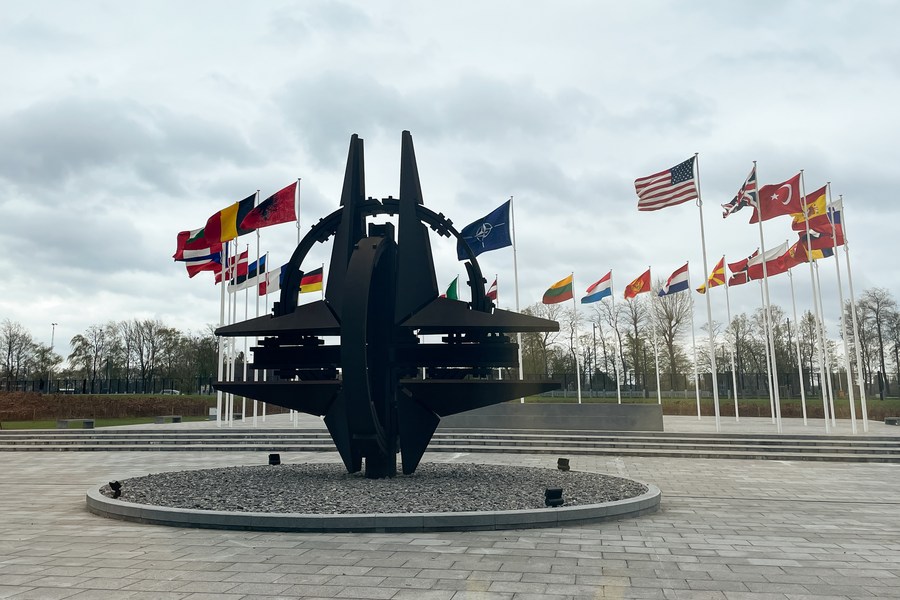
It should be recalled that before the Soviet Union was falling and for many years after, especially after China joined the World Trade Organization, many Americans believed China was no longer communist. Some scholars would point to speeches by Chinese leaders, providing numerical evidence that references to Marxism were falling year on year, while market-oriented reforms and opening up increased. However, on many fronts, socialistic and communistic politics has been resurging globally in tandem with the failures associated with the American model at home and abroad, especially since the Soviet collapse and the endless costly and destructive wars that followed, along with intensifying economic, environmental and health crises, including growing threats to food, water and energy security.
Meanwhile, more than a few Americans born after the Cold War have shown an increasing sympathy to socialism, and these changes along with those globally have led predictably to a resurgence of anti-communist messaging, with much of it directed at China—which the U.S. repeatedly describes by returning to its old Cold War, anti-communist discourses, lambasting Beijing for leading a global communist plot designed to overthrow American power worldwide.
Fourth, whether understood as a longstanding ethnocentric Orientalism or simply racism, many in the West and certainly the U.S. are understandably sensitive to what they perceive as the erosion of white power. This is evidenced by the ongoing but deeply frustrated struggles for social justice by Native Americans, African Americans, and Latinx Americans, but it’s also seen well-documented spikes in anti-Asian violence and discrimination in the U.S., including frequent resorts to racist, dog whistle tactics by American politicians at the highest levels, both coded and explicit, directed at minorities within the U.S., but also directed at countries like China and others in the Global South which are perceived as posing a direct challenge to white power globally.
Fifth, numerous anti-China containment tactics, including the trade war, tech decoupling; pushing China’s neighbors to increase offensive military capabilities and enter anti-China blocs under the so-called Indo-Pacific strategy, with acts like advancing the Quadrilateral Security Dialogue among the U.S., Japan, India and Australia, commonly referred to as the QUAD, and proliferating carriers of weapons of mass destruction to Australia through the trilateral security alliance of the U.S., the UK and Australia, or AUKUS; undermining the one-China principle through increasing provocations related to Taiwan; supporting separatism in China’s Xinjiang, Tibet and Hong Kong regions. All of these efforts require a logic, a narrative, that simply demonizes China at every turn.
Sixth, many in the West, especially the U.S., are genuinely confused and lack perspective. The past few years of crises have left many reeling and personally diminished. Some estimates indicate that approximately 60 percent (according to self-reports) but perhaps as many as 80 percent (according to blood surveys) have been infected with COVID-19, while other studies indicate that as many as 20 percent of those who have been infected have suffered from?long-COVID, with symptoms including cognitive declines and significantly increased risks for early-onset Alzheimer’s disease. Add spiking rates of alcoholism and drug abuse, including a prescription drug crisis, along with a relatively unchecked mass media culture overrun with fake news, and we see a toxic mix of misunderstandings and a worsening culture of double standards, if not declining capacity for rationality and good decision-making on a national scale with tremendous global implications.
That said, it would be a mistake to conclude that some cabal of corporate journalists or political elites have simply misled public opinion or that most people don’t have a fundamental understanding of self-interest. In the late 1800s, for example, as the U.S. was increasingly asserting itself as a global imperial power, many blamed what became known as “yellow journalism,” media elites stoking U.S. nationalism and international confrontation because it helped increase newspaper sales. It’s more accurate to say that American readers then and now were attracted to the stories they wanted to read. While these trends today also accelerate political fracturing and declines in the U.S., they also align with a general hysteria that China has risen at America’s expense, that whatever America’s misdeeds and misdirections, China’s are worse, and so on.
On the one hand, this is an existential defense mechanism, psychologically speaking, to imagine, to name only one example, that the international war crimes and human rights abuses associated with two decades of war and occupation in Afghanistan are somehow more benign than China’s constructive policing actions against separatism in Xinjiang. On the other hand, many Americans understand their interests align substantially with American hegemony, and therefore, across the political spectrum, across many national economic interests, across public opinion, there is an anti-China alignment. Consequently, they’re all doubly motivated to read and believe anti-China messaging.
The author is a professor of politics and international relations at East China Normal University and a senior research fellow with the Institute for the Development of Socialism with Chinese Characteristics at Southeast University.