Conversation on a Green Conversion
 Facebook
 Twitter
 Linkedin
 Google +
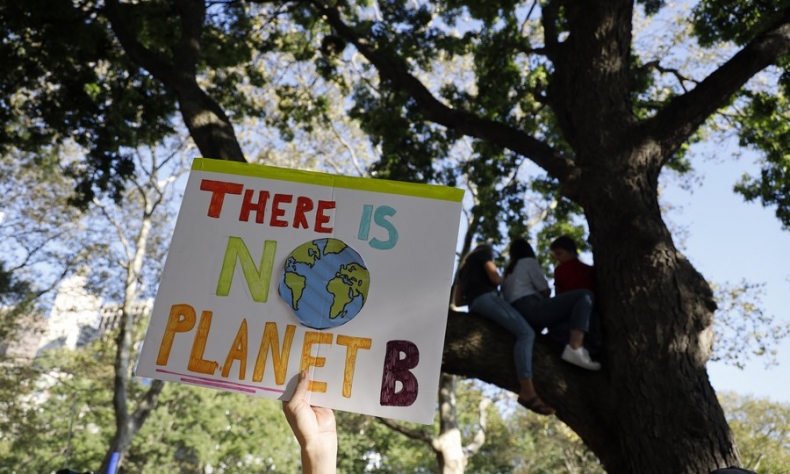
If the key players fail to sit down together and talk things over for a peaceful world, it would be a ‘gross betrayal of the next generations to come and none of us would want that on our conscience.’
Ten?years ago, no one would have believed that on a Saturday evening, considered prime entertainment and social enjoyment time, over 50,000 people would be watching something that was neither a football match nor a blockbuster film, not even a top pop concert, but a roundtable where officials and experts talked about the importance of going green, doing it together, and China’s role in it.
Yet that’s exactly what happened at a recent conference themed “A Green Belt and Road Initiative (BRI) and Green Shared Future” hosted by the BRI International Green Development Coalition (BRIGC) and China Global Television Network. The event was anchored in Beijing but the viewers were from different parts of the world – the United States, Ethiopia, Pakistan, and beyond. And they included a large number of young people, mostly college and university students. Though they came from diverse regions, they shared a common thread: climate carnage. Some were experiencing the worst drought of their lives; some were coping with unprecedented flash floods, and some with hurricanes and wildfires.
The rising number of such extreme weather events has now created a greater global concern about climate change and a greater interest in the upcoming UN climate summit COP27 to be held in Egypt, as well as greater expectations from it. And they have also triggered interest in a green BRI, evinced from the number of people attending the roundtable.
A green BRI
The BRI, announced by China in 2013, has become the biggest infrastructure project in modern times, building highways, railways, industrial parks, airports, telecom towers – in short, the whole gamut of connectivity to improve lives and livelihoods in the partnering countries and regions, which now number about 150.
On the eve of its 10th year, the initiative has a new focus, green development. In his opening address at the conference, Huang Runqiu, China’s Ecology and Environment Minister, called green development a defining feature of the initiative today, which means exploring a new path so that there is synergy between development and environment protection.
Thanks to the global concerns about climate change, extreme weather events and biodiversity loss, building a green BRI, using clean construction methods, clean energy, clean transport, and green finance, is on the agenda. A green BRI means reducing pollution and carbon emissions and protecting biodiversity while improving economic opportunities for the participating countries. Erik Solheim, former UN Under-Secretary-General and one of the participants at the roundtable, called it a “one chance in a generation to get it right.”
A crucial component of the green BRI is China’s carbon goals. Besides the domestic goal of peaking carbon emissions by 2030 and attaining carbon neutrality by 2060, President Xi Jinping’s announcement last year that China would no longer build any more new coal-fired plants abroad is being regarded as having “huge implications.” Dimitri de Boer, director for Asia at ClientEarth, a European environmental law charity, called it “the best news for the climate since the Paris Agreement (to limit temperature rise).”
There are multiple reasons for that. According to the U.S. think tank Global Energy Monitor (GEM), in the earlier days of the BRI, China was planning to build about 44 coal-fired plants abroad, in at least 13 countries in Asia (Russia, Mongolia, Vietnam, Indonesia, Bangladesh, and Pakistan), Europe (Bosnia, Herzegovina, and Serbia) and Africa (Cote d’Ivoire, Madagascar, Kenya, Malawi, and South Africa). While some have already been constructed, some were cleared for construction and some had only been announced.
According to GEM estimates, shelving the new projects means potential future emissions of 200 million tonnes of carbon dioxide have been averted. De Boer also quoted studies to say that if all the coal plants China had agreed to build as part of the BRI were operational, they would raise global temperatures by 2.7 degrees Celsius by the end of the century.

One policy, multiple effects
And there are still more benefits. Besides saying no to new coal plants abroad, the “most exemplary” part of China’s carbon policy, according to Kevin P. Gallagher, director of Boston University’s Global Development Policy Center, is the Chinese decision to increase financing in low-carbon development across the world, which he called “the central task of our times.” In this aspect, China is leapfrogging what the West is doing because though many Western governments and institutions are also discouraging coal–powered projects overseas, they are not committing to new low-carbon development.
A recent example of China’s work to promote low-carbon development is the agreement signed in early September between the state-owned Bangladesh Power Development Board and a Chinese-Bangladeshi consortium to build a 55 megawatt wind power plant at Mongla, the second biggest seaport in Bangladesh. By 2050, Bangladesh is targeting to produce 40 percent of its energy from renewables and according to reports, China is the largest investor in its renewable projects.
“So China is really poised to be a leader here,” Gallagher said. Besides policies, the leadership is also due to China’s “enormous financing capacity and technological superiority.”
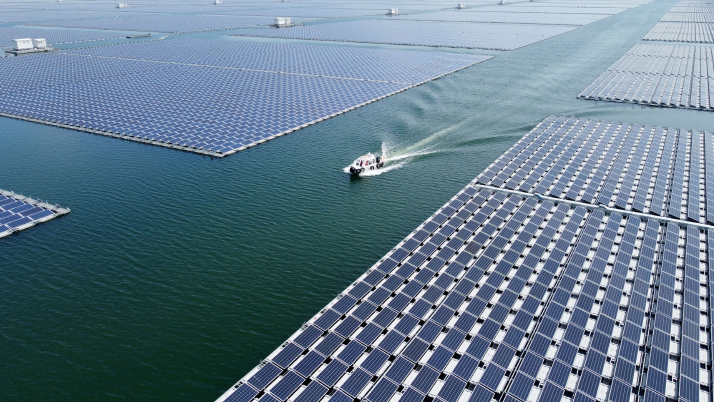
Solheim, who is currently associated with the Beijing-based BRIGC, offered more details on China’s expertise in green technology. China produces more than 80 percent of all solar panels in the world. Last year, it generated 80 percent of the new hydropower in the world. It also produces 80 percent of offshore wind power, and 99 percent of all electric buses. Besides basically dominating in all the green technology that the world needs, Solheim said China is also engaging more and more in green practices. An example was that “no nation has brought down pollution as fast as China.” Solheim said China has done in seven years what took the U.S. and Europe 30 years to achieve.
The speakers at the roundtable emphasized that developing a green BRI to combat climate change ultimately requires global cooperation. Zhou Guomei, director general of the Department of International Cooperation at China’s Ministry of Ecology and Environment, described how China was sharing its expertise. The government has so far supported capacity building for more than 3,000 officials and technical staff from over 100 countries.
Grace Fu, Singapore’s Minister of Sustainability and the Environment, had another example of China’s involvement in international cooperation: the Sino-Singapore Tianjin Eco-city. The eco-city, 150 km away from Beijing, lies in the?Tianjin Bohai?New?Area, identified as China’s new growth engine. Before it was built, the area was arid, consisting mainly of saltpans and polluted water bodies.
“In one decade, an area of non-arable saltpans was transferred into a low-carbon, liveable and vibrant smart city,” Fu said. “Its zero waste strategy is being replicated in other cities.” Her hope, she said, was that the conversation on green development is advanced so that “we can learn from one another … and build a better world together.”
The elephant in the room
What is especially thought-provoking about the climate conversations is that they did not start and end with that one roundtable but have been continuing on different platforms, with the pointer always coming back to one thing – China-U.S. relations. Both countries worked together at COP21 in 2015, which resulted in the Paris Agreement. Today, with many more crises erupting, experts worldwide say the two governments need to work together to give climate action direction and momentum.
However, since U.S. Speaker Nancy Pelosi’s ill-advised visit to Taiwan, China has suspended climate cooperation with the U.S. That’s one reason climate activists will be watching the Communist Party of China’s 20th National Congress, in the hope that China will relent despite the provocations because what is at stake involves not just the U.S. but the fate of the entire world.
At another forum since then, a historian articulated the thought on everyone’s mind. Rana Mitter, professor of history at Oxford University, speaking at a roundtable on global security, warned that “global cross-border climate change had changed the rules of the game for everyone.” Therefore the major creators of climate change, the U.S., China, India, and the EU, need to make sure that their climate dialogue continues irrespective of other issues. “It’s not always easy to separate issues of security, issues of culture, issues of international boundaries, but the problem is climate change doesn’t care about that. It’s just going to keep on happening,” he said.
If the key players fail to sit down together and talk things over for a peaceful world, it would be a “gross betrayal of the next generations to come and none of us would want that on our conscience.”
Sudeshna Sarkar is a journalist and editor based in Beijing. A former commentator for a regional program of Deutsche Welle Radio, she follows China’s development, culture, and international links.