Shifting Gears
 Facebook
 Twitter
 Linkedin
 Google +
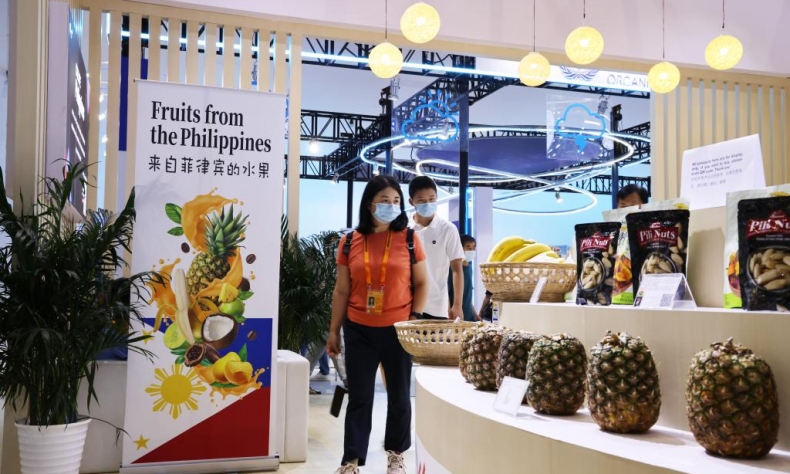
The state visit of Marcos to China was an opportune time for both countries to reach the next level of their bilateral ties: from comprehensive strategic cooperation to comprehensive strategic partnership.
Philippine President Ferdinand Romualdez Marcos Jr. visited China on January 3-5 with the aim of shifting China-Philippines relations to a higher gear.
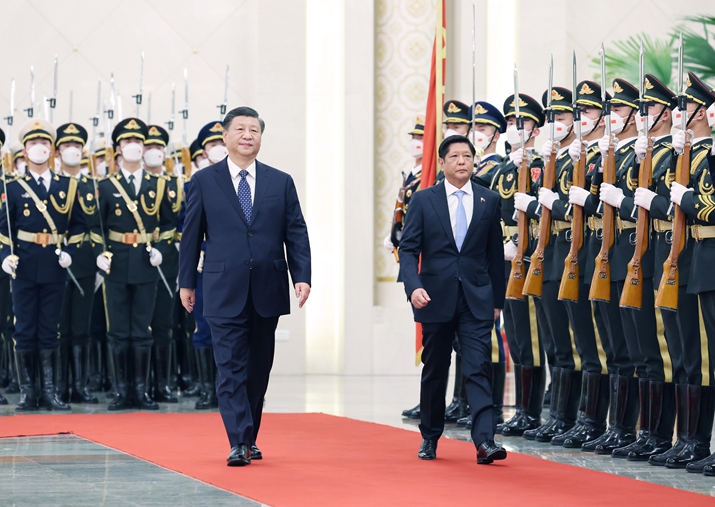
While meeting with Marcos in Beijing, Chinese President Xi Jinping said China views the Philippines as a priority in its neighborhood diplomacy and approaches its relations with the Philippines from a strategic and overall perspective. He added that he is ready “to stay in regular strategic communication with President Marcos and make comprehensive plans for the growth of bilateral ties so that the two countries will stay good neighbors helping each other, good relatives sharing affinity, and good partners pursuing win-win cooperation, delivering more benefits to the two peoples and contributing more positive energy to peace and stability in the region.”
Marcos expressed his readiness “for close communication with President Xi and closer cooperation on all fronts to open a new chapter in the Philippines-China relationship of comprehensive strategic cooperation, better resolve common challenges and issues facing the two countries, deliver more benefits to the two peoples, and make new contributions to reestablishing the region as a major engine of the world economy.”
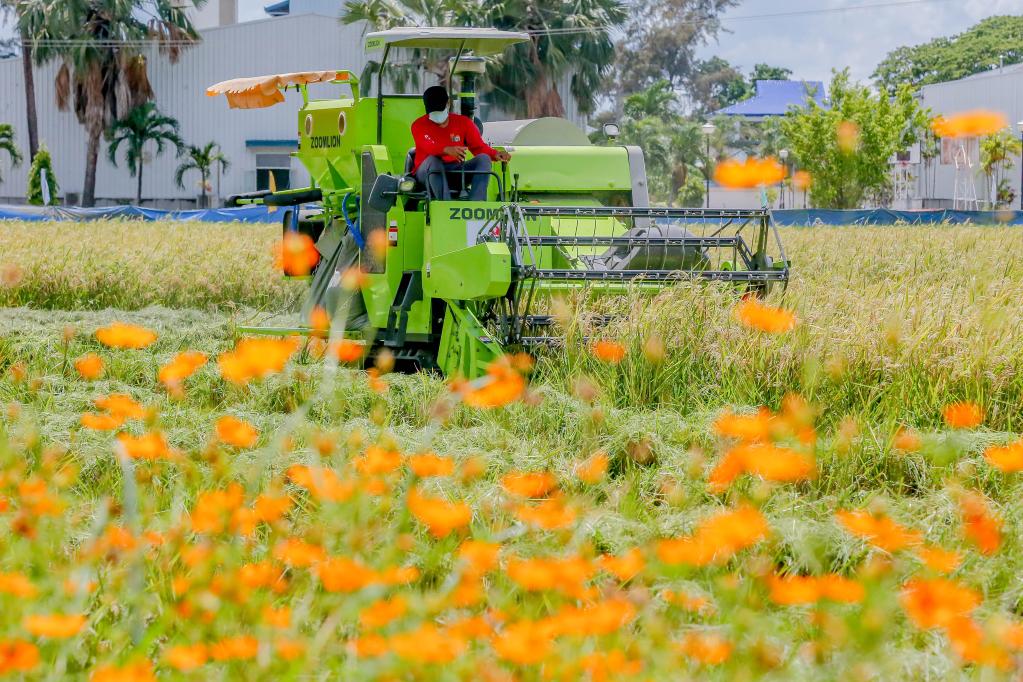
The two leaders agreed that the two governments need to work together in the fields of agriculture, infrastructure, energy, and people-to-people exchanges as their four priority areas of cooperation. In fact, these four areas “are the main pillars for the China-Philippines relationship?of comprehensive strategic cooperation, and more efforts must be made to nurture new growth areas and highlights in these fields.”
A new chapter
To broaden their bilateral ties, the Philippines is pursuing digital cooperation with China, particularly in the area of the digital economy. There are increased opportunities for the two countries to promote cooperation in this domain by encouraging Chinese Internet companies to invest in the Philippines.
To bring their people closer together in a rapidly changing world, the Philippines is also enhancing tourism cooperation with China.
“As our doors open up in the new normal, I will invite our Chinese neighbors to once again return to the Philippines as tourists, as students, as investors. Aside from sharing the wonders of our archipelago with our Chinese friends, strengthened people-to-people exchanges will allow us to bridge gaps in understanding between our two countries at every level,” Marcos said before his departure for China.
As part of sustaining their infrastructure development cooperation, the Philippines is committed to a framework agreement with China for the ongoing construction of three bridges as part of the Twelve Priority Bridges Under the Pasig-Marikina River and Manggahan Floodway Bridges Construction Project in Metro Manila. Infrastructure development is one of the core competencies of China the Philippines can benefit from.
Most importantly, the Philippines under Marcos is renewing its commitment to participating in the Belt and Road Initiative proposed by China. To this end, the Philippines is seeking grants from China amounting to 1.5 billion yuan ($218 million).
Longstanding friendship
Marcos is laying all the building blocks to elevate the status of bilateral ties to a higher plane, especially in the context of its participation in Belt and Road cooperation. This is logical as the Philippines since ancient times has always been an integral part of China’s maritime trade activities in Southeast Asia as a permanent neighbor and an ancient friend. Before the Spanish colonial rule of the archipelago, the Chinese and inhabitants of the various kingdoms of pre-Hispanic Philippines enjoyed generally peaceful and friendly relations for more than a millennium. The Chinese and pre-colonial Filipinos liked each other and had close, mutually beneficial and reciprocal ties.
Documented bilateral relations date back many centuries and were built through extensive commercial, social and cultural interactions. Ancient inhabitants of the Luzon, Visayas and Mindanao regions of the Philippines participated in Nanhai Trade recorded between the ninth and 16th centuries. Nanhai Trade was the ancient commercial network between Chinese and Southeast Asian traders.
China’s Tang Dynasty (618-907) left behind valuable ancient records of Chinese trading activities with the people of Butuan, Manila and Mindoro, among others. The Kingdom of Butuan was the archipelago’s main trading post with records of commercial activities beginning in the ninth century, while Ma-i (Mindoro) also served as a trading center with recorded activities in the 10th century. Eventually, the Sultanate of Sulu, the Kingdom of Manila and a Kingdom in Pangasinan became active in trade activities in China’s Fujian and Guangdong provinces recorded between the 11th and 15th centuries.
Historical factors and geographic proximity deeply connect the Chinese and Filipinos. This extensive shared ancient history has resulted in the formation of intricate social relations and cultural familiarities between the two peoples that can facilitate the development of shared future between the two countries despite their differences on the South China Sea issue.
These differences are not irreconcilable and common ground on them can be found through friendly consultation and direct negotiation for purpose of cooperation.
One aspect of ties
Both countries have recognized that the South China Sea is just one aspect of relations and should not set the tone of overall bilateral ties. President Marcos and President Xi reaffirmed the importance of maintaining and promoting peace and stability in the region and the freedom of navigation in and overflight above the South China Sea, and reached consensus on the peaceful resolution of disputes on the basis of the Declaration on the Conduct of Parties in the South China Sea (DOC), the UN Charter and the 1982 UN Convention on the Law of the Sea, according to a joint statement between the two countries released on January 5.
The Philippines and China can promote cooperation in the South China Sea as mandated by the DOC. Areas of cooperation cover marine environmental research and protection, safety of navigation and communication at sea, search and rescue operations, and combating transnational crimes including but not limited to trafficking in illicit drugs, piracy and armed robbery at sea, illegal traffic in arms, and international terrorism. The two countries can also pursue cooperation on joint development of natural gas and oil projects, as they agreed in 2018 during Xi’s state visit to the Philippines.
For the purposes of continuity and to sustain their countries’ efforts to maintain peace and stability in the South China Sea, President Marcos and President Xi need to reexamine the achievements and limitations of the bilateral consultation mechanism pursued during the administration of former Philippine President Rodrigo Duterte. Through the mechanism, the two parties were undoubtedly able to establish multiple channels of official communication to promote cooperation and avoid armed conflicts in the South China Sea.
As a confidence-building measure, the mechanism allows both countries to discuss with each other their existing differences as well as their common interests in the South China Sea. It is also a tool kit for preventive diplomacy as it provides greater clarity and transparency on some details of their respective national positions, now made known candidly to each other, unlike before where details of their national positions are deliberately kept secret away from each other. Through the bilateral consultation mechanism, therefore, the Philippines and China can be more transparent and candid to discuss not only their differences, but also their common interests.
The state visit of Marcos to China was an opportune time for both countries to reach the next level of their bilateral ties: from comprehensive strategic cooperation to comprehensive strategic partnership.
It is through the comprehensive strategic partnership that China-Philippines relations can really shift to a higher gear. It can foster closer China-Philippines friendly relations and commit both countries to pursue mutually beneficial cooperation where their respective national interests are inextricably linked and shared with each other.
The author is president of the Philippine Society for Intelligence and Security Studies and former president of the Philippine?Association for Chinese Studies.