Full-Chain Cross-Border Logistics Solutions
 Facebook
 Twitter
 Linkedin
 Google +

Every challenge is an opportunity in disguise. Chinese and Southeast Asian courier service firms still have a long journey ahead to integrate resources and gain competitive advantages.
Customers shopping on cross-border e-commerce platforms often encounter problems such as delays, inability to track international transportation and customs clearance status, and even missing parcels. Complaints about such problems can affect the earnings and credit ratings of e-commerce businesses engaged in cross-border selling.
Cross-border logistics is a costly, time-consuming process involving multiple participants in domestic and international transportation, customs clearance, and final delivery. Today, most logistics firms only provide one type of service, preventing customers from accessing end-to-end visibility. Fragmented logistics chains have become a major factor inhibiting the development of cross-border e-commerce.
Opportunities and challenges
The increasing internet penetration rate in Southeast Asia has driven the region’s e-commerce to thrive in recent years. According to the e-Conomy SEA 2022 report released last October by Google, Temasek, and Bain & Company, the region’s digital economy was expected to grow 20 percent year over year in 2022 to US$194 billion, and the gross merchandise value (GMV) in the e-commerce sector was predicted to increase by 16 percent to US$131 billion.
Yang Hangjun, deputy dean of the School of International Economics and Trade at the Beijing-based University of International Business and Economics, remarked that e-commerce underwent rapid development in Southeast Asia against a backdrop of sustained economic growth, fast-growing market demand, and changing customer behavior due to the COVID-19 pandemic. The e-commerce boom also boosted development of the logistics sector.
Contrasting traditional models of international trade, crossborder e-commerce involves large quantities of small-volume orders and requires highly effective and reliable transportation of goods, which presents both opportunities and challenges for logistics companies.
In the traditional OEM (original equipment manufacturer) model, overseas buyers had to work with freight agents who subcontracted part of the business to local couriers. The profit margins of local logistics firms were squeezed and customer loyalty was difficult to acquire, according to industry insider Mr. Cai. The rise of cross-border e-commerce has changed the traditional way of international trading and made Chinese and Southeast Asian logistics service providers increasingly competitive.

Jack Lee, founder and CEO of Smile Shop, a leading Cambodian e-commerce business, told China Report ASEAN that cross-border sellers can either store goods in overseas warehouses operated by the online shop, which enables fast delivery by courier companies in the country of destination, or choose international shipping from the country of origin, which involves transportation from a local warehouse to transfer center and finally to customers in other countries.
E-commerce giants like Shopee provide self-operated logistics services while working with third-party companies in different regions and on different legs of the shipping process. Products sold by Chinese sellers on Shopee are first packed and labeled with Shopee’s logistics labels before being delivered to warehouses in China. The company then transports them to business outlets in the countries of destination before buyers receive their goods from local express delivery companies.
Jack Lee said that competition for cross-border logistics is all about keeping customers happy. Regardless of how packages are transported, online shoppers now expect to be able to follow the progress of the shipment, but few logistics firms are yet capable of offering end-to-end solutions.
Cost-effectiveness
Located at the intersection of major global trade routes, Southeast Asia boasts busy ports that handle vast volumes of goods. An important component of cross-border e-commerce, international logistics enjoys broad prospects in the region and has great potential for integrating upstream and downstream industries. With the number of industry players continuing to grow and quality of service varying so widely, e-commerce businesses are now facing multiple choices as well as uncomfortable risks.
Logistics multinationals such as DHL, UPS, and FedEx have secured a considerable market share in Southeast Asia thanks to their well-funded global shipping networks. Scale effects have brought them first-mover advantages and enabled them to launch proprietary logistics operations and invest in local courier companies.
Facing an already crowded domestic market, many Chinese industry leaders have ventured into the international market with Southeast Asian countries as their first stop. SF Express started building outlets in Singapore in 2010 and launched Singapore- Malaysia-Thailand e-commerce express delivery service in October 2022. ZTO Express, one of only a handful of firms providing one-click service, has secured integrated logistics chains at home and abroad by exploring special air freight routes in the region.
Jia Guanhui, head of JD International Logistics Asia Pacific, revealed that through its own and jointly-operated overseas warehouses, JD Logistics has realized integration of crossborder logistics services such as two-way cargo collection and consolidation, fast customs clearance, and transshipment.
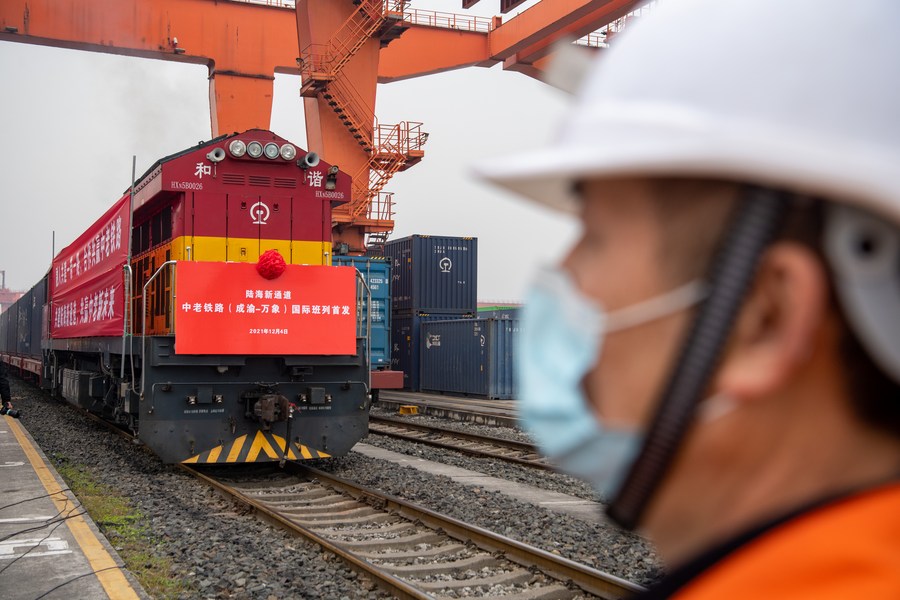
Local companies in Southeast Asia have also joined the party. Indonesia-based J&T Express became a first-tier courier and logistics solutions provider in only a few years thanks to close cooperation with cross-border e-commerce platforms. Other major market players in the region include Singapore’s Ninja Van, Malaysia’s ABX Express, and Thailand Post.
According to Professor Yang Hangjun, complex customs requirements, different systems of customs duties, and inconsistent policies in Southeast Asian countries have created daunting challenges for cross-border logistics. Companies unfamiliar with the rules often encounter frustrating problems like prolonged customs clearance, loss of shipments, and customs delays.
To improve the efficiency of transnational transportation, SF Express and other established logistics companies have been equipped with high-cost, self-operated cargo planes and realized full process control. With costs considered, most logistics firms opt for charter flights, belly freight, or land and sea transportation at even lower prices.
An increasing number of cross-border e-commerce sellers prefer overseas warehouses that lower transportation costs and speed up delivery. Storing some products in warehouses in destination countries can reduce transportation costs by 75 percent or more and cut the whole transport process from 10 to 15 days to 48 hours or less. The overseas warehouse model also helps to avoid customs delays and traffic peaks and facilitates an easier return process.
Key support for the cross-border e-commerce industry is a sound international warehousing system. Warehouses play an important role in cutting cross-border logistics costs, improving the customer experience, and securing core competitiveness, said Professor Yang.
Despite reduced transportation costs, Jack Lee cautioned online sellers relying on overseas warehousing about higher storage expenses and noted that a good understanding of local market demand and proper inventory management are needed. Logistics companies running international warehouses must address the continuing challenge of heavy operating costs and improving operational effectiveness.
Integrating local resources
Due to complex geographical conditions, frequent extreme weather, and underdeveloped infrastructure, logistics costs in Southeast Asia as a whole average about 20 percent of GDP, much higher than the 7 percent in the U.S. and 14 percent in China. Motorcycles, boats, and even buffaloes are utilized for freight transport in remote areas.
Many companies have worked out solutions for last-mile delivery. ZTO set up more than 1,000 business outlets and 16 distribution centers in Vietnam, Thailand, Laos, Myanmar, and Cambodia. With a total area greater than 100,000 square meters, such facilities serve over 80 percent of areas in those countries. Equipped with more than 2,000 logistics hubs, warehouses, and delivery stations across Southeast Asia, Ninja Van’s courier service is available in most remote villages in Singapore, Malaysia, Indonesia, Vietnam, the Philippines, and Thailand.
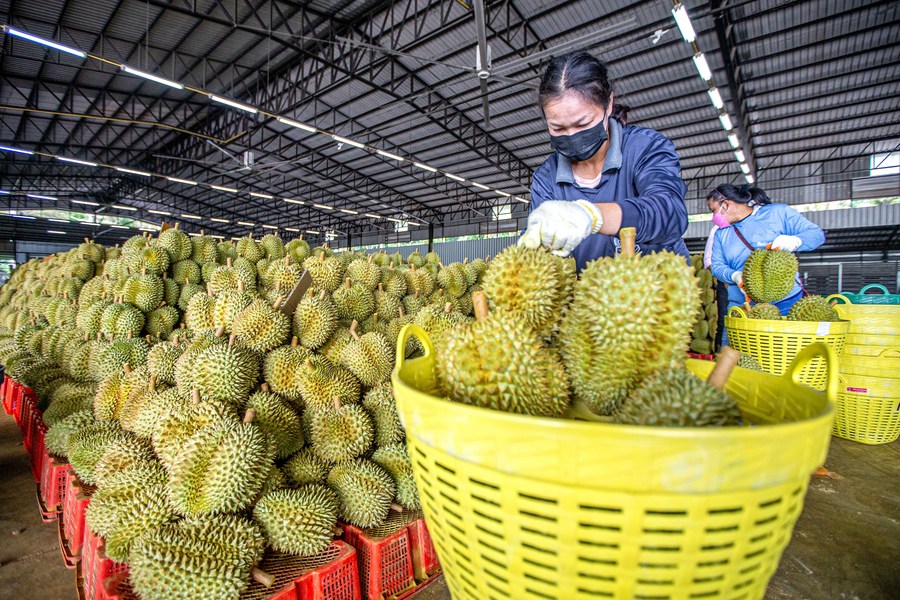
Professor Yang Hangjun believes that last-mile delivery is key to tapping the e-commerce logistics value chain in Southeast Asia. Industry leaders are now investing heavily in expanding their logistics networks but have not yet made substantial progress.
Language and cultural barriers and inadequate market research can make overseas market expansion even more difficult. Jack Lee recalled that in the early days of his business, he had to learn how to manage local employees who would not work overtime while often taking short breaks during work hours. The business would come to a halt with strikes as well, he added.
Jia Guanhui noted that Southeast Asia is a diverse market with varied levels of economic development, business environments, and basic supply chain capabilities in different countries, so Chinese logistics enterprises need to become familiar with local policies and cultures as quickly as possible to better meet customer needs and gain competitive edges.
Integrating local resources represents a significant step towards adaptation. In 2019, SF Holding, which operates the courier firm SF Express, acquired a 51.8 percent stake in Kerry Logistics Network, a leading logistics service provider in Southeast Asia. The company said that the buy would help to expand its international freight forwarding operations through Kerry’s extensive Southeast Asia network. Seeking greater e-commerce logistics cooperation, in September 2021, Chinese e-commerce giant Alibaba Group became a new investor in Singapore-based Ninja Van.
Professor Yang suggested stronger business ties between Chinese couriers and local industry players including e-commerce platforms, express delivery firms, and freight forwarders through strategic alliances, investment, and mergers.
Ma Junsheng, director of the State Post Bureau of China, has frequently encouraged Chinese firms to share resources in network construction, cargo collection, and air transport to create logistics channels for leapfrog development.
Every link matters when upgrading the logistics industry. End-to-end solutions meet customer expectations and create value. Integrating existing fragmented cross-border e-commerce logistics chains has become a growing trend as well as another challenge for industry participants.
“Every challenge is an opportunity in disguise,” said Jack Lee. Chinese and Southeast Asian courier service firms still have a long journey ahead to integrate resources and gain competitive advantages.