China-U.S. Relations: Avoiding Conflict, Managing Competition & Pursuing Win-Win Cooperation
 Facebook
 Twitter
 Linkedin
 Google +
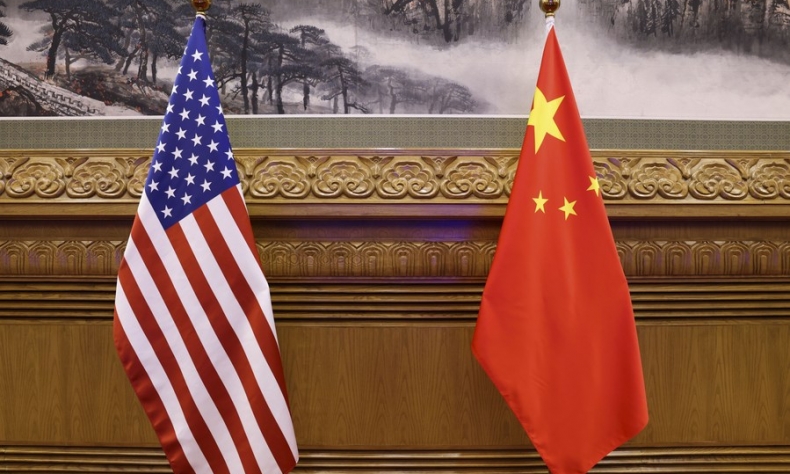
The U.S. and China would never be allies. But that didn’t mean they had to be enemies. If managed well, they’d be strong competitors, but it would not move from adversarial to hostilities.
Editor’s Note: Bobby R. Inman is retired U.S. Navy admiral and chairman of Strategic Renaissance 21 (SR21). In an interview with China Focus, he shared his insights into U.S.-China relations and how to manage their disputes while seeking cooperation between the two powers.?The excerpts of the interview are as follows.
On the benefits of people-to-people exchange
Bobby R. Inman:?I spent 31 years in the U.S. Navy from 1951 to 1982. I’ve now been in the private sector [for] forty years and in that process, have served on multinational corporate boards, [and] had many engagements in other countries. So, my understanding and watching of cultures is influenced more by these 40 years than by the previous 31, of which 22 were in the intelligence world.
Because the world is changing so much and it’s constant. In my first visit to Hong Kong, in three months, it will have been 11 years, to keynote an energy conference and then have dialog with four retired PLA (People’s Liberation Army) officials in Shenzhen. And my direct statements then, was that the U.S. and China would never be allies.
There was no precedent for the world’s two largest economies to have totally different histories, totally different forms of government, totally different cultures. But that didn’t mean we had to be enemies. That, if we managed it well, we’d be strong competitors, but it would not move from adversarial to hostilities. And, I still have that view 11 years later.
Global challenges & cooperation
Bobby R. Inman:?Both countries need to focus on defining and developing areas where we can cooperate, and to clearly understand areas where we can’t cooperate. But to build fences around those, to keep the adversarial from becoming hostile in the process.
As I think about what’s possible. Clearly, global warming, climate change, is very high on that list. And having endured the hottest summer on record in Austin (Texas) this past year, it isn’t hard to convince me that there is global warming.
So, on the other hand, as we consider how to help diminish the global warming process, so much of that focus is on fossil fuels. And I look at so many parts of the world where fossil fuels remain absolutely critical to their economies. So, I look at how do you deal with hunger? How do you deal with education? And how do you balance that off against gains,?whatever gains you might make in global warming and dealing with global warming, climate change? But this, I guess, is clearly an area where we can cooperate. I have talked for years in speeches about threats and challenges, and pandemics were always on that list, usually, fourth or fifth priority. And my question always was, were the global health organizations ready to deal with a global pandemic?

Sadly, we now know the answer was no. They weren’t across the way. A great many countries have taken different approaches to dealing with it, with different levels of success in the process. We know a lot more now than we did about developing vaccines more rapidly, about controlling movement and exposure. But the reality to me is that we’re going to continue to have pandemics, probably every year?there’ll be a new one. It’s now part of what, as a global population, we’re going to have to deal with. So, finding ways to collaborate on how one minimizes the impact of pandemics is another area that I think we ought to focus on.
Finally, if you’ll forgive my falling back on my Navy experience, now 40 years removed, I found that ship visits, crews getting ashore and meeting the local population, was very beneficial to both sides. It let the host country see the forces as friendly rather than potentially hostile, and it educated the visitors on the cultures, that they were not threatening and they were potentially friendly. So, I’m a great believer in human exchange, visits, that they help ameliorate processes.
The next generation
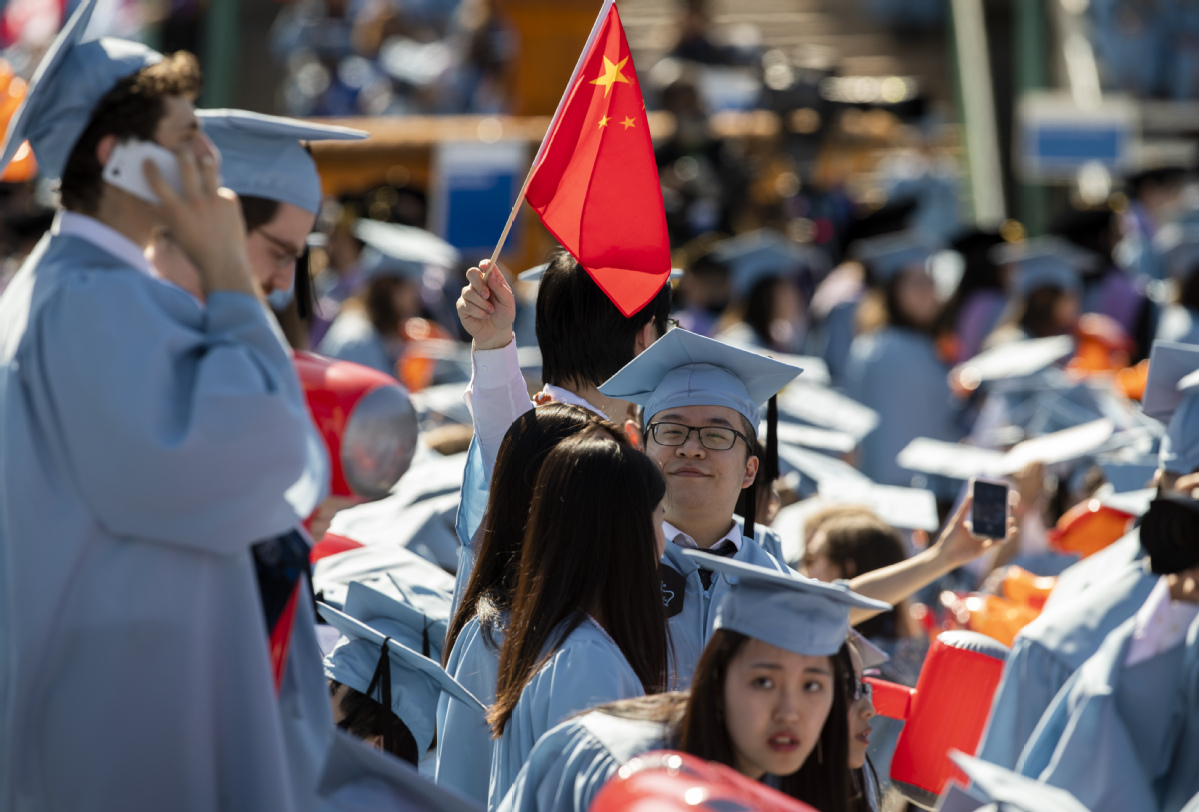
Bobby R. Inman:?Beginning in 1979, more than 100,000 Chinese students came to U.S. colleges and universities. That’s declined in this last decade. But that says there’s a very large portion of the Chinese population with direct exposure to the U.S., its customs, its habits, its culture. From my side, as a long-term trustee at California Institute of Technology, I saw how brilliant those students were, and they became greatly desired by CalTech professors who wanted those Chinese students to help them in their research in the process.
As we all know, some of those stayed in the U.S., some became college professors, particularly in the science and engineering fields. Now, a great many have gone back to China. The number of students has declined, partly because of U.S. restrictions on immigration, partly on general concerns about [the] growing adversarial nature of our relations. But I would like to see a resumption of that level of exchange, because I think both countries benefited from it.
Managing competition
Bobby R. Inman:?We are edging our way into a new era.?I frequently remind my audiences as they worry about China’s growing strength. The only time we’ve ever ended up in a conflict, in actual fighting with China, was in the Korean War. And, we’ve [had] 70 years of peaceful, sometimes strained relationships along the way. So, conflict is not something that’s automatic, that’s going to occur.
When I came to the private sector, I agreed to put together the U.S.’s first large-scale joint research venture owned by 15 computing corporations in the computing and semiconductor field to compete with Japan. The Japanese had the state-of-the-art equipment for manufacturing microchips and they declined to sell the state-of-the-art equipment to the U.S..
So, at that same time, the Ministry of Industry and Technology funded a five-year program investment to give Japan the lead in computing in the years ahead. So, the private sector came together in the U.S., microelectronics computer technology was the result of that, and we were successful from two dimensions. We found that pushing the frontiers of research gave you an edge, but it was the innovation with which you used that technology that ultimately made the difference.
How fast did the emerging research turn into usable products that were advanced beyond any others? And we simply outstripped the effort that was being funded in Japan. It led to a significant resurgence in U.S. competitiveness, in this field. Now, what’s the lesson I learned from all of that?
Funding of research with very bright people working on it is the fundamental plank for advancing your economy. But, parallel to that, is innovation, in pulling that research out to design and manufacture a product is as important. If you’ve got a technology lead, you want to protect it. You put it in compartmented programs. But, for the vast bulk of research and activity out in the commercial world, private sector, trying to lock it up, simply slows down your own implementation of it in the process. So, I’m not a fan of moving to constrain the flow of technology used for commercial purposes.
Areas of cooperation
Bobby R. Inman:?I have watched from a distance the Belt and Road Initiative and I have a concern about companies taking on debt that they can’t service. But I’m a great believer in investment in infrastructure, particularly electric power, things that would improve the ability to educate economies across the developing world in the process.
I do believe this is an area where careful dialog, looking at countries, collaborating on what each could do to help those economies grow. As you look at the scale of poverty still in much of the world, economic growth, sustainable economic growth, is going to be key to bringing them out of poverty.

Hopefully that will also lead to more stable governance in many of those entities, where we’ve too often watched military stage coups, take power, hold on to power because it was lucrative to them personally in the process. So, looking at global development activities, sorting out where can we, in fact, collaborate? Institutions like the World Bank and the IMF and all.
I put that on the table. It’s a harder problem, but I think it’s one where we can make real gains. We’ve already talked about climate change, global warming, in the process. There are probably a number of other areas that I haven’t given enough thought to, but I think we need a conscious effort to look at where are there problems, globally. Pandemics. Where collaboration offers a better route for success, and not just success for China and the U.S., but for helping the rest of the world deal with those problems as well.
On China’s development
Bobby R. Inman:?I look at the amazing growth in China, from 1978 on through, certainly through most of this last decade. The millions of people brought from poverty into prosperity in the process. I don’t think nearly enough credit is given to how many people have been lifted out of poverty into prosperity, and contributing along the way. The challenge is how do you sustain that effort.
Looking at what fueled that growth, I’m a skeptic that state owned enterprises led that effort. My own experience was that there was innovation in the private sector that drove much of the gains. I understand, my first time out in Central Party School, I got lectured on having watched, carefully studied, the collapse of the Soviet Union. China was not going to make that mistake.?And China is stronger than it was when it began.
The Taiwan question
Bobby R. Inman:?I had, for years, in dialogs at Central Party School, advertised caution, slow, ultimately a Hong Kong kind of solution for the Taiwan challenge. That looks less promising than the current environment. But I believe as long as Taiwan does not declare independence, that the ambiguity, in fact, has served all of us well. I last visited Taiwan, approaching a decade ago, I guess now, five or six years.
And I observe the period under Ma [Ying-jeou], when relations with the mainland dramatically improved. And when we were there, we encountered a very large number of tourists from the mainland who were there to see the treasures that the KMT had taken to Taiwan from the mainland when they fled in 1949.

That peaceful relationship, broad exchange with economic issues, worked. But Ma’s party did not produce winning candidates in the process. I’m sort of watching what’s the election going to look like in Taiwan when Tsai [Ing-wen] comes to the end of her term. Is there another Ma out there, who could turn the whole nature back toward friendlier relations, stronger economic relations with the mainland?
And I think the prospect of that is sufficiently promising that one should not hasten trying to integrate Taiwan by force.
The episode of the Ukraine has hardened U.S. attitudes, that the use of force to compel Taiwan, as long as Taiwan had not declared independence would, I think, unify the U.S. public in real hostility in the process. Whether or not that would impact on enough on to ‘save’ Taiwan is a separate issue. But what it would do, would to move U.S.-China relations to enemy as opposed to strong competitor.
So, this is a challenge for both sides. I don’t consider some of the prominent congressional visits to Taiwan helpful, but they were playing to domestic U.S. politics in the process. And until we run the course on this movement toward adversarial attitudes, [it’s] not going to be easy to change.
And it may be longer than that. It may be when we get past the 2024 presidential elections, to hope that we can be in a trend at that point back toward developing, expanding our peaceful relationships in the areas where we collaborate. There are pretty fierce voices, you know, we call them the Wolf Warriors, condemning the U.S., that gets broadened by Chinese diplomats.
That gets very broad play across the media in the U.S. and there is an element, clearly hostile to China, that [is] noisy, if not that influential at this point in time. I think we need on both sides, an effort to cool down the rhetoric and spend more time [asking] where can we collaborate. Right now, the idea of ship visits probably is pretty remote, but I think over the long term in both directions, people-to-people exchanges help people understand different cultures, different approaches, and see them as different but not hostile.