Getting the Gist of Chinese Modernization
 Facebook
 Twitter
 Linkedin
 Google +
Chinese modernization currently offers several nations on each continent an additional reference or choice as regards achieving modernization, albeit strictly according to national conditions.
This year’s “two sessions,” one of the most momentous in decades, have polarized global attention as it projects a more confident and modernized China with ambitious and reasonable goals set and feasible strategies mapped out. Thus, the Chinese modernization becomes even more visible. After being clearly defined by the report delivered to the 20th National Congress of the Communist Party of China (CPC) in October 2022, the term “Chinese modernization” has been hotly discussed both domestically and internationally. Until then it was modernization “with Chinese characteristics” that defined the country’s path.
In fact, eight considerations highlight the significance of the “Chinese modernization.” The process features certain elements in common with other modernization processes in contemporary history. It is, however, characterized by features unique to the Chinese context.
The first factor is the country’s huge demography. China is still the most populated country amid a global scenario of nation-states with usually much smaller populations, India excepted. Although not the fastest growing population, this demography has innate strength in being the one that, on balance, has experienced a unique qualitative transformation. Having complied with fundamental third world indicators in 1978 –which marked the start of China’s reform and opening-up to the outside world – by the end of the last decade several Chinese provinces, regions, and cities had steadily closed the life expectancy gap with more advanced countries. In 2019, life expectancy in Beijing was 82 years, as compared to that in Washington, D.C. of 78. The most recent data shows that China’s life expectancy – at 77.9 – has overtaken that in the United States of 76.1. Top U.S. analyst Ian Bremmer expressed surprise in a Time magazine article that this statistic had not appeared in the headline of every U.S. newspaper.
Second, common prosperity for all is highlighted in the Chinese modernization. In 1997 the Gini coefficient, denoting income inequality, was 0.379, and in 2008 reached a peak of 0.491, according to former vice president of Chinese Academy of Social Sciences Cai Fang. A Gini coefficient of zero signifies perfect equality. In 2019, shortly before the COVID-19 pandemic, it had undergone a marginal decline to 0.465. Beijing has striven to adjust the social balance.
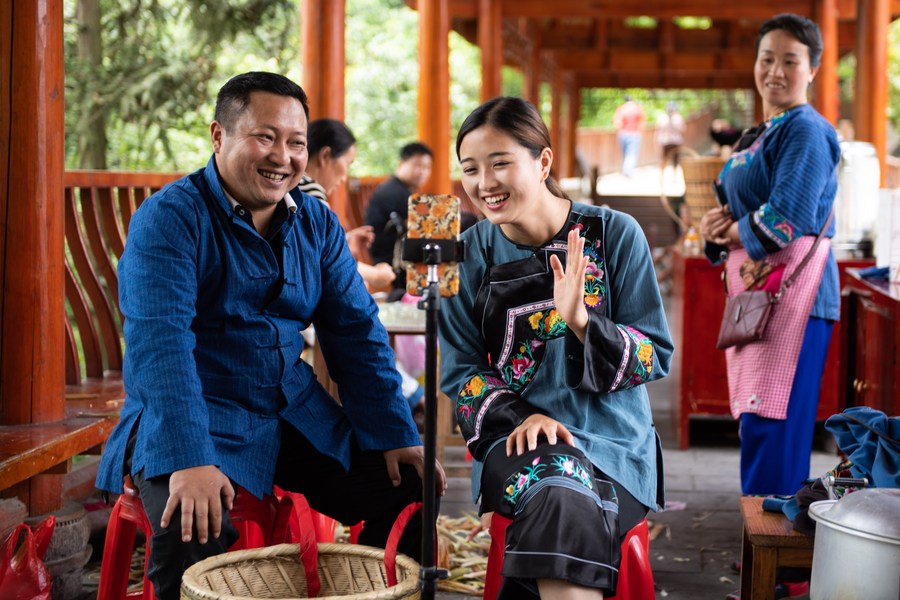
Since the late 1970s, China has operated a wealth distribution system based on labor, which allows various distribution channels. Taxation and social security are part of the “second distribution” system, whose aim is to apportion national wealth in a fairer way. But, deciding that this was insufficient, the authorities has implemented, in an ongoing process, the “third distribution” system. This creates chances for high-income groups and enterprises to share some of what they have with society, through charitable donations. The system features such measures as follow-up policies, particularly those related to taxes, regarded as of critical relevance.
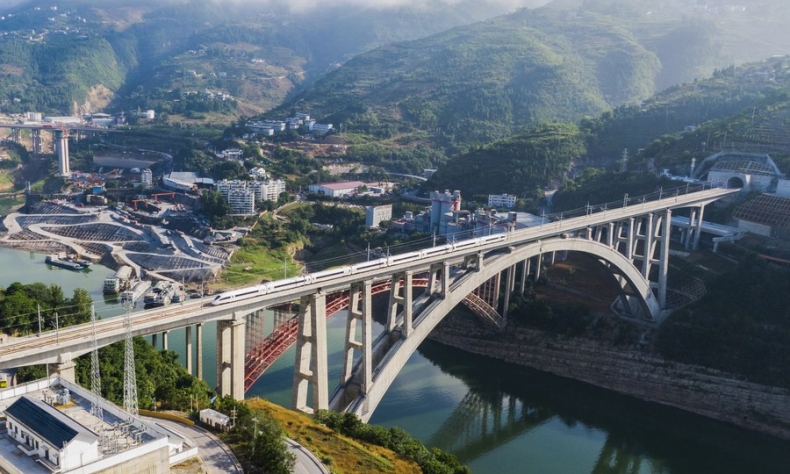
Third, Chinese modernization may justly take credit for the country’s material and cultural-ethical advancement. This point is endorsed by key results backing the indisputable argument that this country, which 70 years ago was primarily an agricultural nation, possesses today the world’s most extensive education and social welfare system and largest high-speed railway network, as well as cutting-edge technologies in many sectors.
Fourth, harmony between humanity and nature is also factored in the modernization process. The country’s rapid growth has made clear to China that blind accumulation of material wealth could ultimately imperil nature. In 2018 the Chinese Constitution was amended to include the concept of “ecological civilization,” a principle that coheres with the country’s most cherished roots. It is no surprise that former French Foreign Minister Laurent Fabius – the driving force behind the Paris climate change negotiations – commended in his recent article “China: A Key Actor in the Fight Against Climate Change”,? the Chinese ancestral wisdom promoting a fundamental balance between Heaven and Earth through the mediation of Man. Beijing supports the goals and principles of the UN Framework Convention on Climate Change, and the Paris Agreement (to which it has contributed), and underscores the need to implement the 2030 Agenda for Sustainable Development by reaching the CO2 emissions peak before 2030 and carbon neutrality by 2060.
Fifth, peaceful development is valued. The trajectory of China’s development is clear and should be correctly interpreted from the historical perspective. More than a decade ago, Chinese analyst Zheng Bijian interpreted China’s rise as a peaceful one in sharp contrast to that of the archetypal conquering, colonialist, imperialistic path trodden by the known powers which was a main component of their economic development. Most recently, eminent Singaporean diplomat and academic Kishore Mahbubani made the correct, and quite remarkable observation that of the UN Security Council’s five permanent members, China alone has not fired a single military shot across its borders in 30 or more years.

Sixth, modernization does not equate to Westernization. Back in the 1970s, 1980s, and 1990s, the predominant view of Washington and Brussels was synthesized in the “change through trade” catchphrase. In other words, the more China was exposed to trade, Western institutions, technology, and culture, the more Asia’s most fundamental and influential country would move towards embracing Western lifestyles and development patterns – even its political system. Beijing has indeed joined the global community of nations, but has at its core remained profoundly Chinese, in tune with its historical trajectory. It was in 2015 that, among a company of analysts and personalities from different avenues of thought, former Secretary General of NATO and European Union High Representative for Common Foreign and Security Policy Javier Solana acknowledged that “the West has failed to accord China – much less the other major emerging economies – the degree of influence over global governance structures that it merits.” Solana astutely concluded: “But this is about to change, because China has decided that it will not longer sit still for it.”
Seventh, although China’s modernization does not equate to Westernization, this does not imply any closing of? doors to the West or to the outside world as a whole. On the contrary, unsurprisingly, this fact is amply recognized in 2023 among external authoritative observers. Major consultancy firms and think tanks, including MERCATOR in Berlin, Natixis in Hong Kong, McKinsey in New York, and the Paulson Institute in Washington, among others, have hinted or concluded – in light of policies Beijing has adopted over recent years? such as “common prosperity” and “dual circulation” – that China’s entrepreneurship at the private and state-level is business-friendly and interdependence-related. In other words, Chinese modernization envisages more connections with the outside world, rather than disconnecting from it.
Eighth, consequently, it can be logically concluded that Chinese modernization currently offers several nations on each continent an additional reference or choice as regards achieving modernization, albeit strictly according to national conditions. Among the most resounding examples to cite here are not only the continuation of the Belt and Road Initiative, adapted to present conditions, but also the Global Development Initiative (GDI), which President Xi Jinping announced in 2021 at the 76th session of the UN General Assembly, and whose main goals coincide with those of the UN 2030 Agenda for Sustainable Development. China’s having become the major trading partner of over 140 countries and regions, and led the globe in total volume of trade in goods – accounting for 18.5 percent of the world economy, up 7.2 percentage points over the past decade – is no accident.
Augusto Soto is director of the Dialogue with China Project based in Spain.