Reconciling Saudi Arabia and Iran: The Significance of China’s Effort
 Facebook
 Twitter
 Linkedin
 Google +
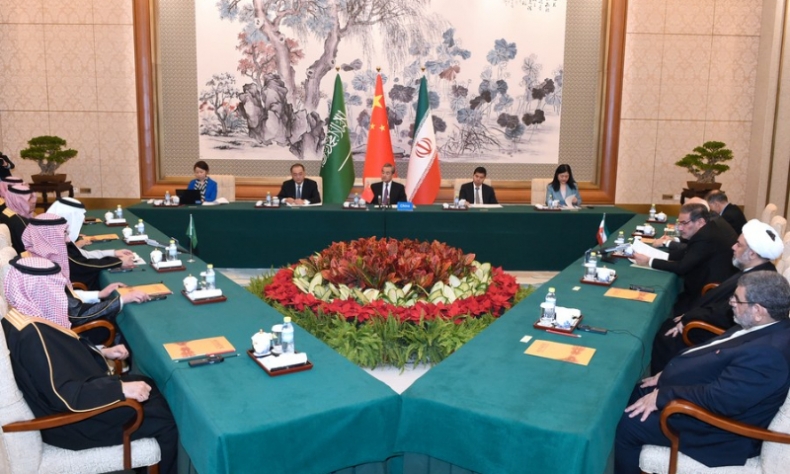
This is why China’s role in restoring Saudi-Iran ties may well be the harbinger of a new dawn in West Asia and a new era in international relations.
It would be wrong to view the restoration of relations between Saudi Arabia and Iran as something that happened suddenly.
The long antagonism and changing situation
Since the Iranian Revolution of 1979, ties between the two important Muslim neighbours have been strained. For the Saudi elite the Revolution was not only anti-monarchical but also a boost to the Shia sect within Islam. For the Iranian revolutionaries, Saudi opposition was motivated largely by its intimate relationship to American and other Western elites and their interests. This strained relationship sank to its nadir in 2016 when a respected Shia cleric, Nimr al-Nimr, was executed by the Sunni Saudi authorities.
Meanwhile, a chasm of mistrust was developing between the West and Saudi Arabia. In the midst of all this, the U.S., mainly for commercial reasons, sought to increase its own oil output through fracking of shale rock and therefore indirectly, reduced the significance of Saudi oil in the global market. As a result of all these and other developments, the Saudi elite in the last two or three years was beginning to feel that it is being pushed into a corner.
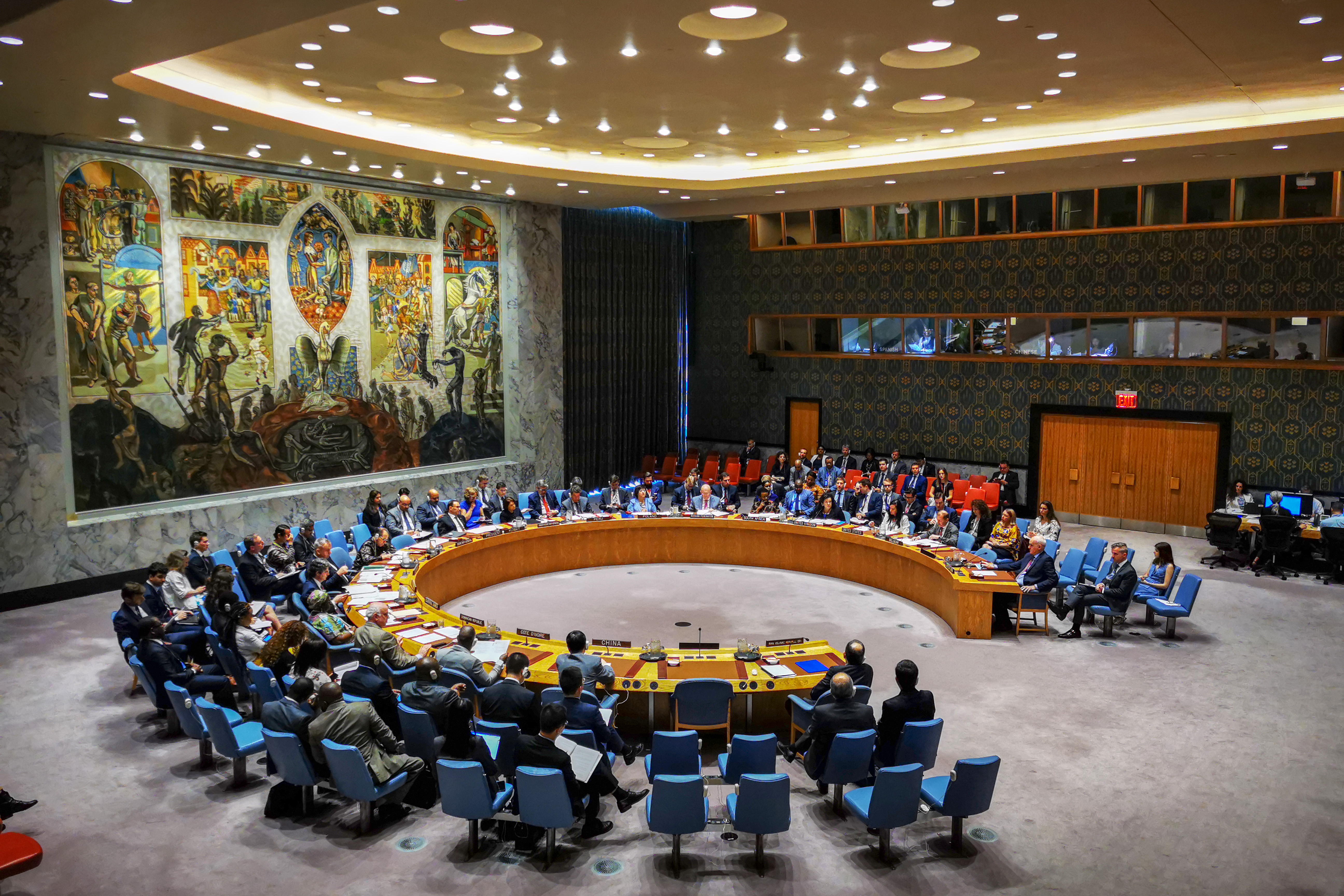
Ironically, the Iranian leadership was also beginning to feel isolated. When the Joint Comprehensive Plan of Action (JCPOA) was agreed upon by the five permanent members of the UN Security Council, Germany and Iran in April 2015, the Iranian people were hopeful that with financial and economic sanctions lifted, investments would flow into the land and the country would emerge as a vibrant actor in the regional and global arena. However, that hope was short-lived as a new U.S. president, Donald Trump, torpedoed the JCPOA in 2018, mainly because of pressure from Israel. Iran’s economic woes became even more severe and undermined its political stability and weakened its social cohesiveness.
Given the colossal challenges facing the Saudi and Iranian governments, they were impelled to reach out to one another so that their mutual antagonism would not further emasculate their waning strength. China’s readiness to bring the two countries together was, given the circumstances, a bonanza.
China’s unique role as a peacemaker
Only a nation with the gravitas of China could have played the role of mediator. U.S.’s decades old antagonism towards Iran precluded any such role for her. Russia with ties to both the adversaries could have stepped in except that its war in Ukraine was consuming all its energies.
China not only has good relations with both countries but also imports huge quantities of oil from Iran and Saudi Arabia.
However, China’s role, significant as it is, does not hold the key to genuine restoration of ties between Saudi Arabia and Iran. It is the two countries themselves that will determine the success or failure of the Chinese effort. For a start, if they can help to end a number of conflicts in the region purportedly linked to the two protagonists, it would be a good sign. Of course, other actors from inside and outside the region are also involved.
Will a wider range of peace come to the region?
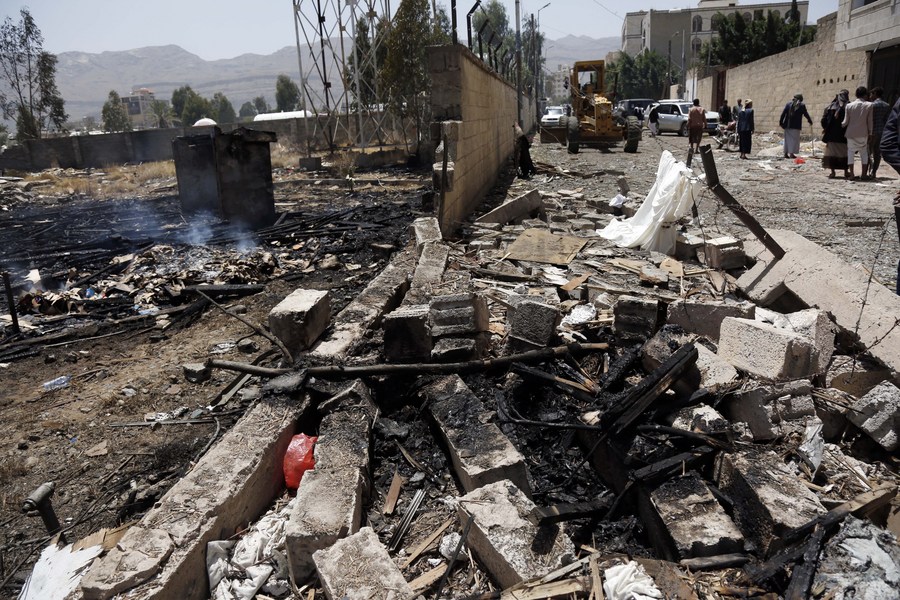
A conflict which has drawn both sides is the one in Yemen. The formal government is supported by the Saudi elite while rebels opposed to it, the Houthis, are reportedly sustained by the Iranian authorities. According to the United Nations, a hundred and fifty thousand Yemenis have lost their lives in the 9-year conflict. Thousands of others have also perished as a result of famine and disease. If the Saudi-Iran thaw, engineered by China, can lead to the resolution of the Yemen conflict in the immediate future, a lot of peace-loving people all over the world will rejoice.
Though a variety of forces and factors are intertwined in the Yemen conflict, as in each and every one of the other conflicts, there is an underlying cause to all of them which is related to the one most perennial and persistent dichotomy within the Muslim world. This is the Sunni-Shia dichotomy which we have alluded to.
While the Sunni-Shia dichotomy is rooted in political history, Sunnis and Shias continue to subscribe to certain characteristics that define Islam. This includes the Oneness of God, the prophecy of Muhammad, the essential values and principles of the Quran as the basis of living and belief in judgement in the hereafter.
But the bond emanating from these characteristics sometimes succumbed to the pulls and pressures of politics and power and of personalities and vested interests who chose to give greater significance to the differences that separated Sunnis from Shias than their similarities. This is why right through the centuries it has been difficult to bridge the Sunni-Shia chasm. Be that as it may, there have been numerous attempts to bring Sunnis and Shias together. And there have been moments when they have forged strong bonds in facing common challenges or in pursuing shared goals.
I initiated a modest move in 2013 through my NGO, JUST, to get the two groups to adopt a common position on a matter of grave concern to both. The former Prime Minister of Malaysia, Mahathir Mohammad, and the former President of Iran, Muhammad Khatami, were persuaded to issue a joint appeal to Sunnis and Shias to stop killing one another as inter-sectarian violence was rife at that time in some parts of the Muslim world. There was very little media coverage on the Mahathir-Khatami appeal. Hardly any Muslim leader of stature responded. Even Muslim civil society groups gave scant attention to the plea from the two leaders. In other words, a noble call to end fighting fell on deaf ears.
The China initiative on Saudi-Iran ties is different in its approach. It focuses on inter-state relations. It hopes that state actors will be prepared to use state power to reduce and even eliminate inter-state animosities. At some point down the road, the three states, Saudi Arabia, Iran and China and other states will have to deal with the ramifications of the Sunni-Shia dichotomy.

Who is the opposition to the Saudi-Iran peace?
For the time being let us turn to some of the opposition to the Saudi-Iran peace plan. The loudest denunciation of the plan has come from the Israeli government. Israel fears that the plan will work against Israel’s machinations in the region. Israel is hell-bent on isolating Iran and mobilising all the Arab states in the region against Iran. Towards this end, it has not only exploited the Sunni-Shia dichotomy but also the Arab-Persian division since Iran is the only Persian state in the Arab world.
If the Iran-Saudi accord makes it difficult to isolate Iran, it is inimical to Israel’s ambitions for yet another reason. As a way of strengthening its position in its Arab neighbourhood and within the Muslim world, Israel has always wanted to establish formal diplomatic relations with Saudi Arabia. That has become more problematic now that Saudi Arabia and Iran have come together. It is significant that Saudi Arabia has also made it clear that it will not recognise Israel as long as it does not recognise Palestine’s right to nationhood and acknowledges the right of Palestinians to return to their homeland.
If any other nation is even more apprehensive of the Saudi-Iran bid to reconcile through China’s initiative, it would be the United States of America. It is only too apparent that China has become a major actor in West Asia. It is amazing that China has succeeded to bring the U.S.’s closest friend in the region next to Israel and its furthest foe in West Asia together through an accord ?and in the process enhanced its role as a peace mediator. Indeed, a peace mediator is a role that befits the only nation in human history that has emerged as a global power through relatively peaceful means, without engaging in wars and committing wanton violence.
Perhaps it is in this role as a peacemaker that China may be able to end the protracted conflict between Israel, on the one hand, and Palestine and other Arab states, on the other. Perhaps this is how Palestinians will be able to exercise their right of self-determination and regain their dignity as a nation — something which was never possible as long as the region was under the U.S. hegemony.
This is why China’s role in restoring Saudi-Iran ties may well be the harbinger of a new dawn in West Asia and a new era in international relations.
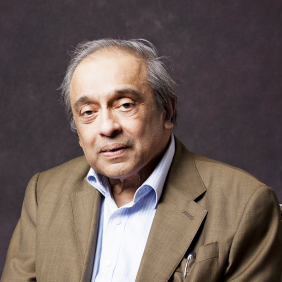
Dr. Chandra Muzaffar is the President of the International Movement for a Just World (JUST), an international NGO based in Malaysia. Chandra was Professor and Director of the Centre for Civilisational Dialogue, University of Malaya (1997-1999) and Professor of Global Studies at Universiti Sains Malaysia (2007-2012). He has published extensively on civilizational dialogue, international politics, religion, human rights and Malaysian society. His latest publications include A World in Crisis: Is There a Cure? and Reflections on Malaysian Unity and Other Challenges.
The article reflects the author’s opinions, and not necessarily the views of China Focus.