A Disruptive and Damaging In-House Dynamic
 Facebook
 Twitter
 Linkedin
 Google +
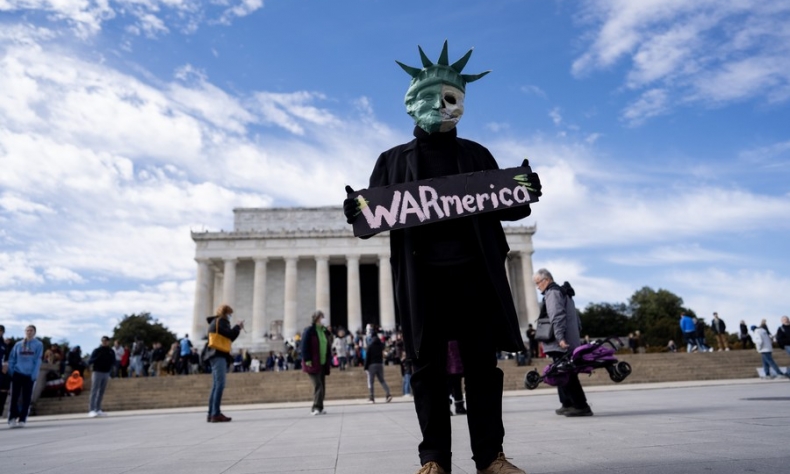
Within the Sino-American relationship, U.S. Congress is no longer just a disturbing factor, but has been transformed into a disruptive, damaging force.
Kevin McCarthy, current Speaker of the U.S. House of Representatives, hosted a meeting with Taiwan leader Tsai Ing-wen in California on April 5 as Tsai made a “transit” through the U.S. en route to Central America.
Washington has been rife with speculation about whether McCarthy will still visit Taipei later this year, with critics arguing that any high-profile visits would only further strain the Sino-American relationship.
Then U.S. House Speaker Nancy Pelosi’s visit to Taiwan in August 2022 led to escalated tensions across the Taiwan Straits. The Chinese Government and military forces undertook the necessary responses to this action of crossing the red line that undermines China’s sovereignty and national security. In his quest to lock down the House speakership, McCarthy announced that a Taiwan visit would be a key item on the agenda if he was elected. His visit was then initially scheduled to take place in March, but was delayed in the aftermath of early February’s balloon incident.
From January 28 to February 4, a high-altitude Chinese weather balloon, described as a “spy craft” by the American military, was spotted in North American airspace. China said it was an unintended entry due to force majeure. On February 4, the U.S.?Air Force shot down the balloon over U.S. territorial waters off the coast of south Carolina.
The incident also led to U.S. Secretary of State Antony Blinken postponing his trip to Beijing—originally scheduled for February 5.
The Taiwan question
Many American politicians considered Pelosi’s Taiwan visit a “success” by placing new emphasis on the Taiwan question and trampling on China’s red line, an essential action for high-profile members of U.S. Congress in showcasing their so-called “values,” “courage” and “political correctness.”
As a main contributor to the downward spiral of China-U.S. relations over the past decade, the Taiwan question has again become one of the core sensitive topics, the most dangerous trigger and the biggest risk in bilateral relations.
It seems U.S. Congress has replaced the White House in setting the Taiwan-related agenda and the latter has lost the willingness and the capability to contain Capitol Hill’s provocative actions concerning the island.

In addition to dispatching higher-ranking politicians on frequent Taiwan trips, the current Congress and its predecessor also share the same opinion on the U.S. military hyping the Chinese mainland’s so-called “military timeline to take Taiwan.” Through legislative activities, Congress has continuously pressed the Joe Biden administration to approve more arms sales to Taiwan, and those of advanced, precise and cutting-edge weapons in particular. To enhance Taiwan’s “asymmetric warfare” capacity, U.S. Congress also urges the Biden administration to exercise more breakthrough military cooperation with Taiwan, such as sending more military personnel, jointly producing weapons and building ammunition depots in Taiwan.
It seems U.S. Congress is pushing the U.S. military and the White House moving toward “strategic clarity” on Taiwan, hampering China’s complete reunification and playing the Taiwan card to contain and suppress China.
The whole-of-government approach
Plus, the U.S. decision-making and implementation mechanisms have changed. The whole-of-government approach is taking shape at an accelerated speed, with Congress playing an ever more critical and active role.
The 117th Congress, which convened in Washington, D.C., on January 3, 2021, during the final weeks of Donald Trump’s presidency and the first two years of Biden’s presidency, and ended on January 3, conducted intense discussion on several versions of the 2021 Strategic Competition Act, a bill addressing various foreign relations issues—with a focus on China. Although the outcome did not meet initial expectations, these discussions have greatly inflated the American determination to contain China.
After the 118th Congress was inaugurated on January 7 following midterm elections in November 2022, there have been more China-related legislative activities than ever before. As of March 10, in 60-odd days, the Democrats and Republicans had proposed more than 150 China-related bills for deliberation, most of which were suggested by the Republicans. The number of such bills is still increasing, and even accelerating.
The topics so far have included, just to name a few, restarting deliberations of the Strategic Competition Act, ramping up the investigation into the origins of the COVID-19 pandemic, banning Chinese citizens from buying land and property in some parts of the U.S., prohibiting the sales of American crude oil and other strategic reserves to China, banning short video app TikTok (owned by Beijing-based tech giant Bytedance) in the U.S. over “national security concerns,” and so on.

Although most of these proposals would eventually fail, the hearings and discussions through the legislative procedures are hyping the “China threat” rhetoric, inciting anti-Chinese sentiments in the U.S. and accelerating the pace of China-U.S. decoupling.
Through these legislative procedures, members of U.S. Congress have made many detailed, specific suggestions and requirements to the White House. Even though most of them will not be adopted immediately, they have enriched and updated the latter’s anti-China toolkit and serve as an excuse and leverage that Washington uses to exert political pressure on China.
On January 10, driven by McCarthy, the U.S. House of Representatives voted 365 to 65 in favor of a resolution establishing a select committee on the strategic competition between the U.S. and China. The bipartisan select committee is an expanded and upgraded form of the Republican-led China Task Force in the House of Representatives that McCarthy established in 2020. It focuses on enhancing bipartisan collaboration and Congress consensus and action on China-related topics. And it also reflects the emergence of a whole-of-government system serving America’s competition strategy targeting China.
A disruptor
These moves over the past months have revealed how U.S. Congress has become Mount Olympus for American politicians who aim to contain and suppress China. It dominates the agenda-setting authority in China-related policies?with unprecedented strength and pace. It disturbs and damages normal dialogue, communication and cooperation between the Chinese and U.S. governments, consequently offsetting all the efforts made to restore bilateral relations.
Two fundamental factors further contribute to the already deteriorating status quo.
First is the exacerbation of political polarization in the U.S. The 118th Congress has the Republicans gain control of the U.S. House of Representatives, while the Democrats keep control of the Senate. Although the Democrats’ unified control of the White House and Congress with the inauguration of Biden has ended, neither party has a clear advantage in the Senate or the House, indicating a “soft division.” Therefore, the seesaw battle between Democrats and Republicans will only intensify, and both parties will smear each other on a range of domestic and international topics in the lead-up to the 2024 presidential election. They will focus more on their so-called political correctness and try to outperform their rivals in getting tough on China.
The second is that the U.S. has developed a common strategic cognition on China. Through constant debates and adjustments from the later period of the Barack Obama administration to the Trump administration and the current one, plus the consequences of adverse interactions with China, the Democratic Party, Republican Party as well as the strategic community in the U.S. now consider China the biggest geopolitical “threat” and a major challenge to the international order. They have reached a consensus that having a long-term, intense strategic competition with China is a must to safeguard America’s global leadership.
The country is currently exerting serious efforts to incorporate competition against China into long-term strategies and systems, and motivate not only the two parties, governmental organs, military forces, strategic community and allies, but also American citizens to participate in the anti-China campaign. For example, the Republicans in Congress and the Biden administration used February’s balloon incident to spark anti-China sentiment among the American population.
Within Congress, the Democratic Party and the Republican Party are exchanging interests in China-related topics and working together to forge a systematic, long-term strategic status of competition and confrontation. Within the Sino-American relationship, U.S. Congress is no longer just a disturbing factor, but has been transformed into a disruptive, damaging force.
The author is an editor at World Affairs magazine and an adjunct fellow with the Center for International Security and Strategy at Tsinghua University.