U.S.-Japan-ROK Cooperation Mechanism Is on a Dangerous Path
 Facebook
 Twitter
 Linkedin
 Google +
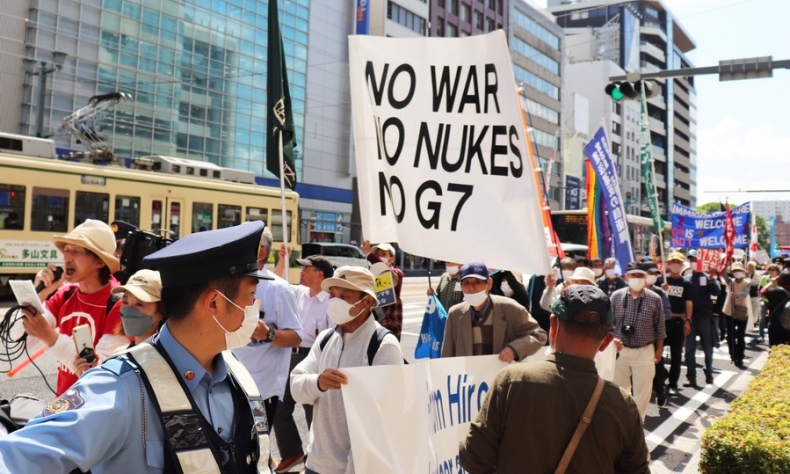
The U.S.-Japan-ROK cooperation mechanism, as these developments show, is now on a dangerous path. The closer their cooperation becomes, the more dangerous it is going to be for Northeast Asia.
The trilateral relationship among the U.S., Japan and the Republic of Korea (ROK), which aims to strengthen American dominance and promote a new cold war mentality against China, is deteriorating regional situation in 2023.
U.S. double dealing
Despite the fact that the Cold War has long ended, the U.S. has ignored the fact that the world’s theme has switched to peace and development, and it has continued to retain its Cold War military tool, the North Atlantic Treaty Organization (NATO), expanding it further and further.
However, it failed to forge a military bloc similar to NATO in Asia and mainly relies on its alliances with Japan, the ROK and the Philippines to contain China. The central part of the alliance system—the mutual defense treaty between the U.S. and Taiwan authorities in 1954—collapsed with the normalization of China-U.S. relations in the 1970s.
Still, the U.S. Government continued to make duplicitous moves. The so-called Taiwan Relations Act of 1979 signed by President Jimmy Carter to continue relations with Taiwan even after severing diplomatic ties with it, and the “six assurances” made in 1982 by President Ronald Reagan, which are the six core U.S. foreign policy principles regarding Taiwan, justify “defensive” arms sales to the Chinese region. This is against international law and seriously infringes on China’s sovereignty.
Separatist activities in support of “Taiwan independence” became rampant after the Cold War, with the U.S. supporting them both openly and secretly. This led to a crisis across the Taiwan Straits when then Taiwan leader Lee Teng-hui made a “transit” trip to the U.S. in 1995. Since then, a major strategy of the U.S. in the Asia-Pacific region has been to mobilize all possible partners, including Japan and the ROK, to impede the reunification of the Chinese mainland and Taiwan.
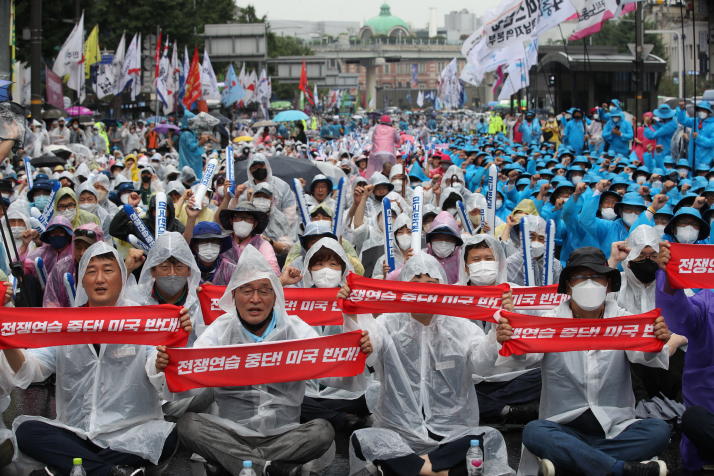
When Barack Obama entered office in 2008, he proposed a “Pivot to Asia” strategy of rebalance, which was ostensibly meant to strengthen a “rules-based” regional order and address regional and global challenges. However, the real reason was to contain China’s growing influence. Since then, the U.S. has expanded its alliance network in the region and established the so-called Indo-Pacific Strategy under President Joe Biden to strengthen Washington’s position in Northeast Asia, Southeast Asia, South Asia and Oceania, including the Pacific Islands. The U.S. is also part of the Quadrilateral Security Dialogue, a grouping that also includes Japan, India and Australia.
Now Washington is planning to build a trilateral alliance mechanism with Japan and the ROK. With ROK President Yoon Suk Yeol cooperating with Washington, U.S. strategic moves are expected to accelerate.
Tokyo’s old empire dream
Japan historically harbored expansionist ambitions. Since the Meiji Restoration in the 1860s, when a revolution ended the military government and restored imperial rule under Emperor Meiji, Japan imported Western technology and undertook modernization. By the 1930s, it had accrued formidable military resources, with which it invaded neighboring countries.
The Potsdam Declaration in 1945, which defined the terms for Japan’s unconditional surrender in World War II (WWII), explicitly stipulated that Japan would have to eradicate militarism and establish a pacifist government. However, the U.S. supported a large number of Japanese militarists, enabling them to dominate postwar Japanese politics.
For example, Nobusuke Kishi, who was Japan’s prime minister from 1957 to 1960, was a senior official in Japan’s wartime cabinet during WWII and was imprisoned as a Class-A war criminal from 1945 to 1948. In the Treaty of Mutual Cooperation and Security signed between Japan and the U.S. in 1960, Kishi included Taiwan under the jurisdiction of the Japan-U.S. alliance.
During the Sino-Japanese War of 1894-95, Japan also occupied China’s Diaoyu Islands in the East China Sea and the Japanese right wing has been provoking and confronting China over the islands, trying to create an excuse to jettison its pacifist constitution and rearm.
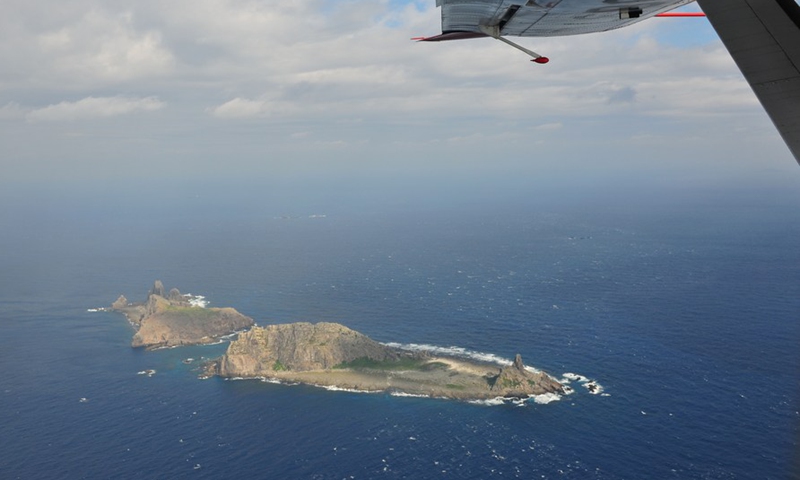
When Kishi’s grandson Shinzo Abe became prime minister for a second term in 2012, he did it with a series of aggressive rhetoric challenging China, including a proposal to station governmental institutes and officials on the Diaoyu Islands.
The Diaoyu Islands issue is closely related to the Taiwan question. After the Cold War, Japan remains one of the overseas bases of the “Taiwan independence” separatist forces.
Japanese Prime Minister Fumio Kishida has inherited Abe’s political legacy and not only courts international anti-China forces to intervene in the Taiwan question, but also plans to intervene if there is a conflict across the Straits. Last year, Kishida’s administration approved three security and defense policy documents that propose significantly enhancing Japan’s military capabilities and a major increase in military spending over five years.
The normalization of the semiconductor trade between Japan and the ROK in March is their joint effort to decouple U.S. technology from China. Japan lifted export restrictions on materials for semiconductor chips while the ROK withdrew the trade arbitration case it had filed against Japan in the World Trade Organization.
A wild ambition
The core of the U.S. policy toward the Korean Peninsula is to control it rather than maintain peace.
When the ROK and the Democratic People’s Republic of Korea (DPRK) began seeking national reconciliation and signed the Joint Declaration on the Denuclearization of the Korean Peninsula in 1992, the U.S. had to withdraw its nuclear weapons from the ROK under pressure. However, Washington intervened again under the pretext that the DPRK was developing nuclear weapons, thus interrupting the inter-Korean reconciliation. Since then, spearheaded by the U.S., the situation on the peninsula has gone from bad to worse, finally reaching a dead end.
While the U.S. was pushing the issue to an impasse, China proposed the Six-Party talks on the Korean Peninsula nuclear issue, the six parties being China, the two Koreas, the U.S., Russia and Japan, and an agreement was reached in 2005. But the U.S. imposed financial sanctions on the DPRK shortly after the agreement, which led to the suspension of the Six-Party talks, and the DPRK embarked on a path of nuclear armament.
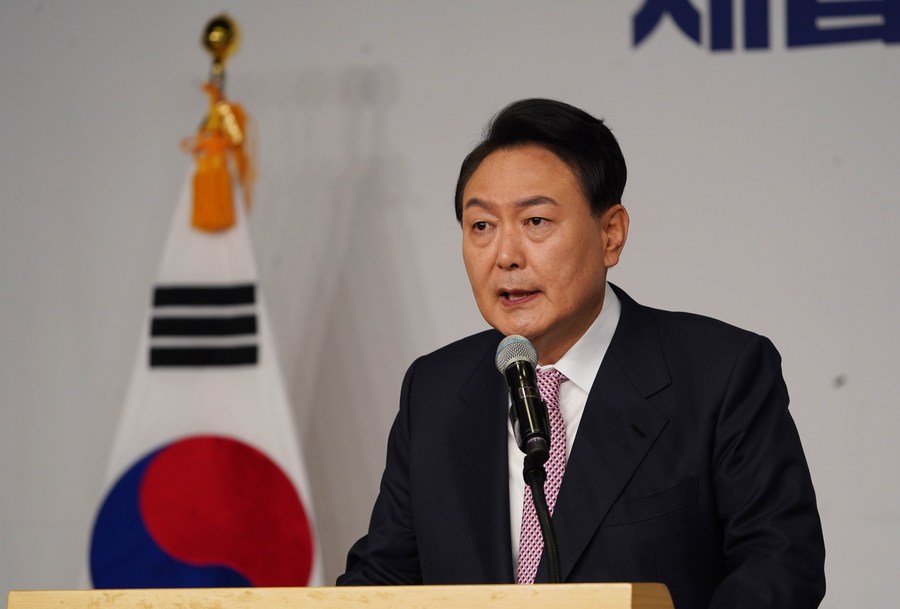
Yoon came to power against this backdrop when the resolution of the nuclear issue seemed hopeless. Instead of trying to maintain regional peace, he proposed an “audacious initiative” in collaboration with the U.S. that was bound to rile the DPRK. During his visit to the U.S. in April, Yoon told a joint session of the U.S. Congress that Pyongyang had chosen “dictatorship… abandoned freedom and prosperity and dismissed peace” and its nuclear program and “missile provocations pose a serious threat to the peace on the Korean Peninsula and beyond.” He supported strengthening the “U.S. extended deterrence” as well as speeding up the ROK-U.S.-Japan trilateral security cooperation “to counter increasing DPRK nuclear threats.”
The Washington Declaration made by the two presidents in April said the U.S. commitment to extending deterrence to the ROK would be “backed by the full range of U.S. capabilities, including nuclear.” The U.S. would also enhance the regular visibility of strategic assets to the Korean Peninsula, including a visit by a U.S. nuclear ballistic missile submarine to the ROK. The coordination between the two militaries would be strengthened and a new nuclear consultation working group would be established.
The ROK is also pursuing establishing an agency to share intelligence with Japan and the U.S. An ROK official has said its scope would not be limited to network security but include intelligence fields concerning the DPRK and even Russia.
The U.S.-Japan-ROK cooperation mechanism, as these developments show, is now on a dangerous path. The closer their cooperation becomes, the more dangerous it is going to be for Northeast Asia.
The author is a senior researcher on international studies and an op-ed contributor to Beijing Review.










