People or Peoples First?
 Facebook
 Twitter
 Linkedin
 Google +
The world community has comprehensively failed to ensure a fair primary distribution of global income. Moreover, this failure is compounded by the intergovernmental organizations established to manage the secondary income distribution being complicit in perpetuating existing inequalities.
While extreme poverty has been eliminated from the Chinese countryside, it persists in much of the developing world. Indeed, global poverty is increasing, created daily by a world economy that is out of control.??
The detailed evidence for this assertion can be found in my new book?Poverty and the World Order: The Mirage of SDG1?(Agenda Publishing, 2023); here I summarize some of the main arguments.
Poverty results from the unfair primary and secondary distribution of resources. The primary distribution is market driven. It takes place within and between countries through the production and sale of goods which generate income in the form of wages and returns on assets and investments. Governments can attempt to influence the primary income distribution, for example by insisting on minimum wages, but the potential is limited and comparatively few regimes actively try to do so.
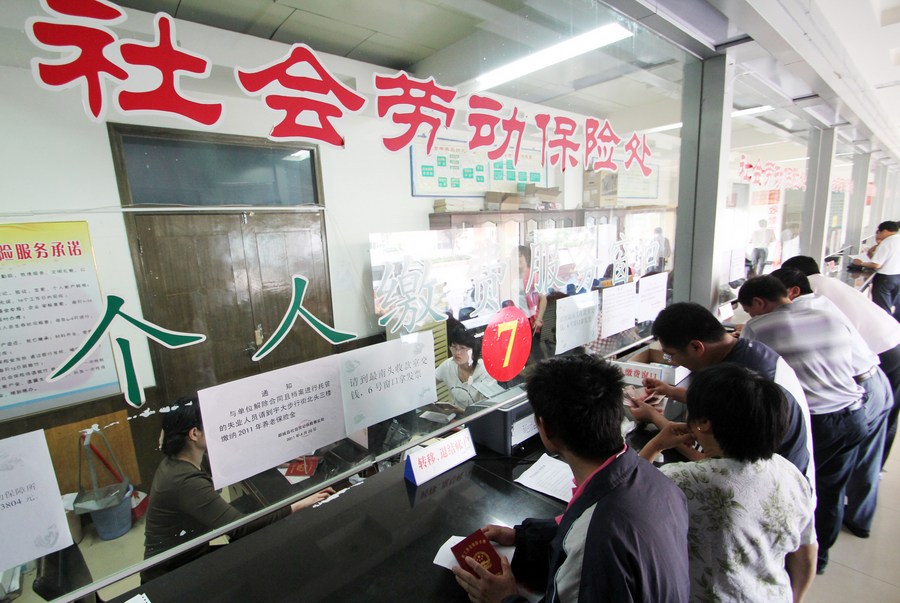
Instead, governments seek to engineer a secondary distribution through taxation and transfers which determine the resources that populations can access and deploy. For the most part, this currently occurs within nation states. In China, for example, about a fifth of annual income derived from production (GDP) is taken in taxation. This is slightly above the average for the Asia and Pacific region but much less than the third that is typical among the OECD club of rich countries.??
Income taxes in China are low, just six percent of the total compared to an average of 16 percent in Asia Pacific countries and 23 percent in the OECD. In contrast, value-added and other taxes on goods and services are comparatively high (41 percent). Another 21 percent of government revenue is extracted from business corporations and much of the remainder (24 percent) is raised through social security contributions.
China’s taxation succeeds in reducing income inequality. The degree of redistribution in 2018 was identical to that of Norway, one of the most equitable countries in the world. Moreover, the transfer of resources from rich to poor was proportionately much greater. However, not surprisingly after-tax incomes in China were still less equal than those in Norway because the latter’s aggregate tax rate is considerably higher and the distribution of market income more equal. The 2018 tax reform in China has made the tax regime more progressive – favouring low incomes – but lowered tax rates have reduced the yield and the volume of redistribution achieved. Government expenditure can also reduce inequality. A little over half of the tax revenue raised in China is spent on social insurance payments (including retirement pensions, medical insurance, industrial injuries and unemployment), social assistance (dibao?cash payments to prevent poverty), health services and labour market programs. This spending further reduces inequality in living standards and prevents people slipping into extreme poverty.?
While governments can moderate income inequalities generated by the market, the fundamental causes of poverty lie beyond the competence of individual national governments.??
Today’s pattern of poverty and inequality has its origins deep in history. To illustrate, differences in the per capita GDP of countries in 1870, that is before the first wave of globalization associated with Western colonization, explained 50 percent of the variation in national incomes as recently as 2008.
Equally remarkable is the increase in the scale of inequality witnessed in the twentieth century and subsequently. In 1870, per capita incomes in Western Europe were about four times those in Africa; by 2008, this difference in incomes had tripled.??
In a world separated into nation states, many less than 100 years old, the responsibility for economic and social development rests in the hands of individual governments, the world’s people being divided into peoples. People and peoples are placed in competition according to the laws of the global marketplace that some – typically the winners – consider to be sacrosanct.??
However, economic laws should not be confused with the laws of physics which, for example, determine that apples never fall upwards. Rather the rules of the marketplace are matters of convention that serve the interests of the “haves” rather than the “have-nots.” Global resources are unevenly distributed, and history has not treated all peoples equally. Unlike in an Olympics final, competitors do not start from the same line. Instead, those ahead race further ahead with the result that global inequality and relative poverty increase.
The architects of the current world order, working as World War II took millions of lives, had the wisdom to foresee the potential growth in inequality. Therefore, they proposed institutions to regulate world trade and to support weaker nations, designed respectively to moderate the primary and secondary distributions of global income.
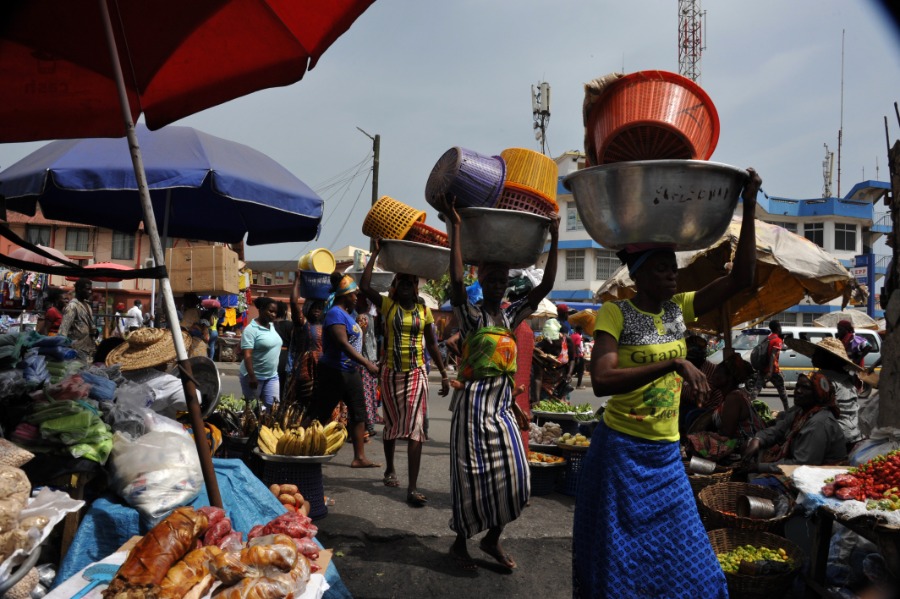
In 2015, as the world celebrated the possibility of eradicating extreme poverty with agreement on the Sustainable Development Goals (SDGs), it was recognized that there was also a need for “a global partnership.” This was to “work in a spirit of global solidarity, in particular solidarity with the poorest.” Without the proactive support of richer nations, the least economically developed states cannot eradicate extreme poverty as required by the SDGs.??
Also under the rubrics of the SDGs, lower middle-income countries are encouraged to halve poverty by 2030 – defined as individual income of less than US $3.65/day. Likewise, upper middle-income countries, such as China, are supposed to cut poverty by half with reference to a higher threshold – US $6.85/per day.???
Even before the COVID-19 pandemic pushed millions of people back into poverty, these targets were only achievable with the support of more affluent countries. The SDGs imply China lifting 262 million people above the threshold between 2015 and 2030. Incredibly ambitious, this target accords with China’s aspiration to achieve common prosperity by 2050.
At first sight, affluent nations are committed to supporting the developing world in reducing poverty.? SDG17 is intended to “strengthen the means of implementation and revitalize the Global Partnership for Sustainable Development.” It includes 19 separate targets – more than for any other SDG – and took the longest time to negotiate.??
However, the reality is that much of discussion time was consumed by richer countries resisting the demands of the G77 and China negotiating block of developing countries. They largely succeeded. All but one of the 19 targets lack numerical specificity meaning that rich countries escape accountability.? Moreover, the one exception is the restatement of the pledge that rich countries contribute 0.7 percent of their gross national income to overseas development assistance. This pledge was made as long ago as 1970 and has never been fulfilled.
The commitment to promote a universal, rules-based, open, non-discriminatory and equitable multilateral trading system was vaguely worded. Nevertheless, it was given a degree of precision by reference to the role of the World Trade Organization and the explicit link to the successful outcome of the Doha Development Agenda. The Agenda – also called the Doha Round – was a series of discussions that commenced in 2001 having as a “fundamental objective” “to improve the trading prospects of developing countries.”?However, the Doha Round was abandoned in 2015, the year in which the SDGs were implemented, rich countries being unprepared to make the concessions necessary to reach agreement.??
In 1986, the United Nations General Assembly adopted Resolution 41/128 and declared an inalienable human right to development. The failure of the Doha Round and the lack of specificity of SDG17 would seem, a priori, to infringe this human right. Millions of people – and many peoples, especially in the global South, are denied the ability to enjoy economic development and, hence, its concomitant social, cultural and political freedoms. Nation states must engineer their own development in a global marketplace, the rules of which are discriminatory.??
The world community has therefore comprehensively failed to ensure a fair primary distribution of global income. Moreover, this failure is compounded by the intergovernmental organizations established to manage the secondary income distribution being complicit in perpetuating existing inequalities. The International Monetary Fund and the World Bank continue to interpret their role as being to enforce market-orientated reforms that disproportionately benefit the rich nations which largely fund and control them.??
The world’s people cannot develop, nor poverty be addressed, if the world’s peoples are locked in unfair competition.? Chinese President Xi Jinping has called on countries to come “together for shared interests, shared rights and shared responsibilities in global affairs” thereby creating the greatest synergy for building a better world.” This is the only way of eradicating global poverty. The world’s people must be prioritized above the world’s peoples.