GDI Reemphasized China’s Commitment to Accelerating SDGs
 Facebook
 Twitter
 Linkedin
 Google +
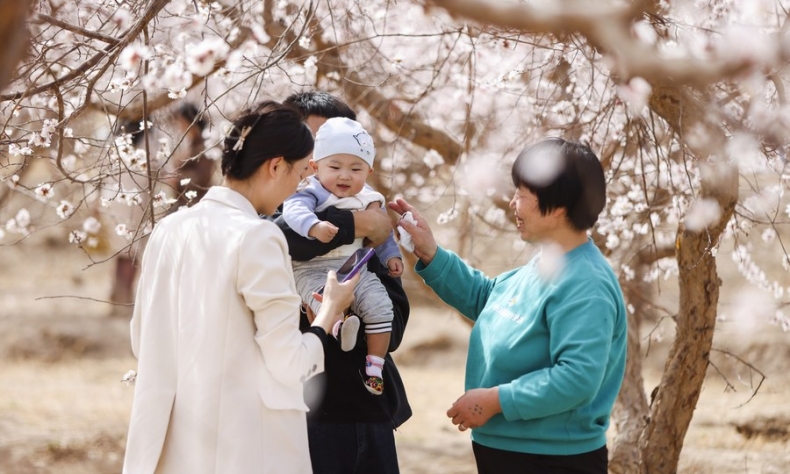
With President Xi Jinping’s announcement of the Global Development Initiative, I think that reemphasized China’s commitment to accelerating SDGs.
Editor’s Note:?UNFPA, the United Nations Population Fund, one of China’s earliest international partners in the field of population development, has been in China since 1979. With China’s greatly improved population health and services, the UNFPA now looks at how they can share China’s experience and expertise with other countries. The population development is a focus of China due to the aging society and dwindling fertility rate in recent years. Justine?Coulson,?Resident Representative of the UNFPA in China, gives her insights into these topics in an exclusive interview with Sun Chao, the author of “Global Leaders on the Belt and Road Initiative”. Authorized by Sun Chao, the excerpts of the interview are published by China Focus.
Share China’s experience and expertise with other countries
Sun Chao: Is it your first time working in China? How do you see Chinese people??How do you feel when working in China?
Justine Coulson:?Thank you for the opportunity to talk today about my experiences and about the work of UNFPA in China. I arrived with my family in China just over a year ago and I’ve spent most of my time in Beijing. It is the first time I’ve lived in China, even though I have lived and worked in many places in the world. So I was excited to be offered a job here. For me, the experience in Beijing has been a positive one. We’ve made many friends, and there are many different things to do. We love hiking on the Great Wall. We love going out to eat so much wonderful Chinese food. For my son who’s 12 years old, Beijing is a safe city and he has had the chance to have a lot more independence, being able to go off on his bike on his own to visit his friends.
Sun Chao:?The UNFPA is one of China’s earliest international partners in the field of population development. Would you please share with us the major achievements made by UNFPA in China?
Justine Coulson:?UNFPA, the United Nations Population Fund, has been in China since 1979, and we started delivering our first programs on the ground in 1980, so it’s been a long partnership with the government of China and the other national partners. In many ways, I don’t think of it as UNFPA’s achievements, but think of it more as the achievements of China in women’s and young people’s health and well-being which UNFPA has supported. As the situation has changed in China and the country has developed, we’ve also changed the way that we work. To give you an example, when we opened our office in 1980, the maternal mortality ratio in China was 100 deaths per 100,000 live births, which meant that for every 100,000 babies born, 100 women died, which is high. Today, the latest figure for 2020 has reduced to just over 16 deaths per 100,000 live births. That brings China very close to those countries that have the lowest maternal mortality ratios in the world, and the government has just committed to reduce that number even further by investing even more in strengthening maternal health services. In the very early days of our work here, we provided general capacity building and shared experiences from other countries but that relationship has changed over time. With China’s high level of capacity today, we now look at how we can share China’s experience and expertise with other countries that are still struggling with high rates of maternal deaths.
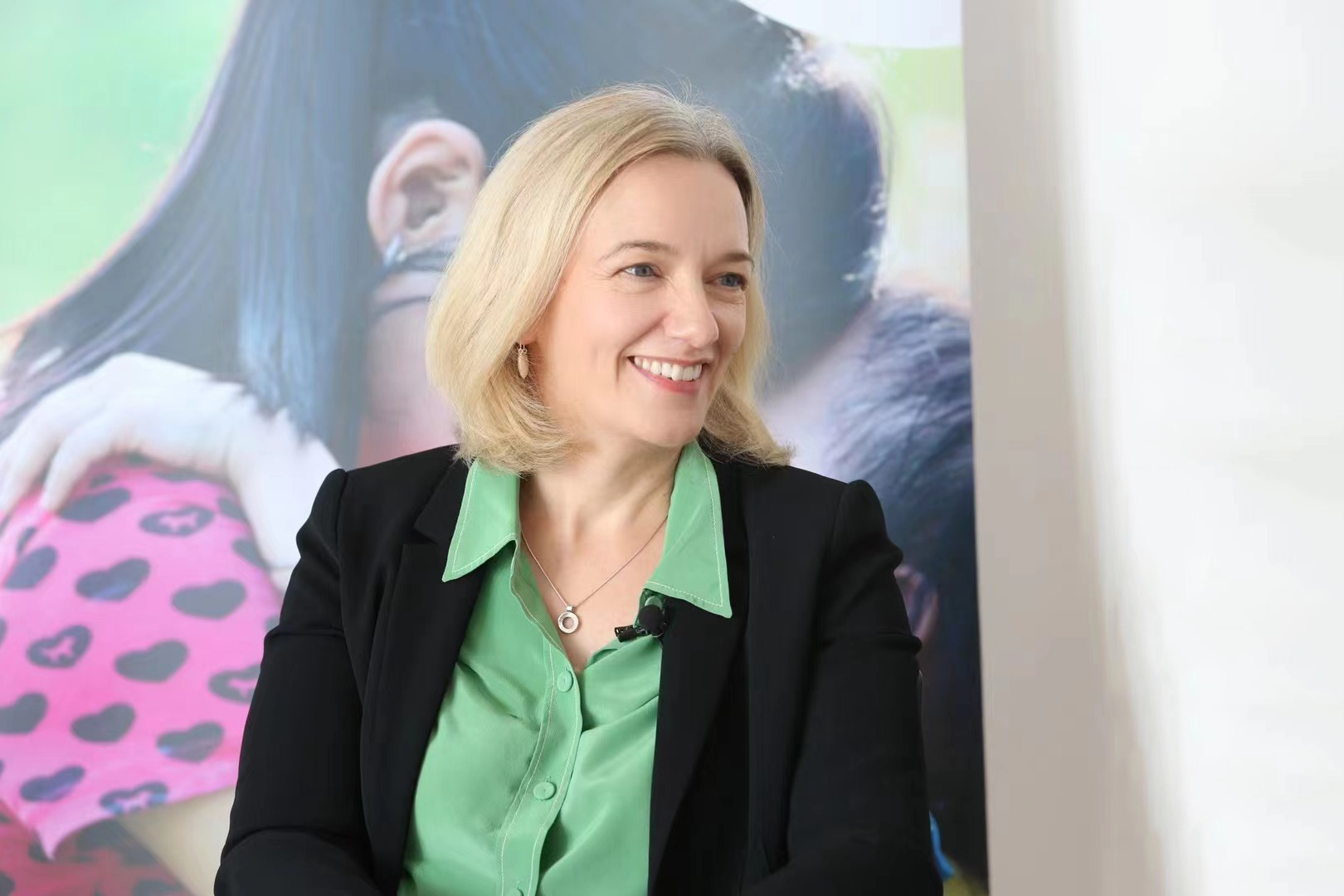
Sun Chao: The cooperation between China and?the UNFPA has been fruitful over the years, with the scope of cooperation expanding and the mode of cooperation changing. In what areas will the two sides strengthen cooperation in the future?
Justine Coulson:?I think that everything that we do as UNFPA with our Chinese partners in the future will be within a framework of addressing low fertility and aging. As you know, the three-child policy was announced back in 2021, and we are working with our partners in the?government to look at what policies and practices could be put in place to help China address the challenges that come when you see low fertility and also a rapidly aging population in a country.
Maximize choices for females
Sun Chao: The UNFPA works to create a brighter future for women and adolescent girls all over the world despite many new challenges. I think you, as a female leader, have deep feelings on women’s development.
Justine Coulson:?I care passionately about gender equality and I care passionately about maximizing choices for females and giving them every opportunity to be the best that they can be. What we see globally, under the Millennium Development Goals (MDGs), and now the Sustainable Development Goals (SDGs), is that there have been improvements, particularly in terms of reproductive health and also in the health of newborns and in levels of enrollment in primary education. But when a girl gets to the age of 10 in many countries, there’s a whole range of additional risks that she faces: sexual violence, unintended pregnancy, possibly being forced out of school, possibly not being?given the same opportunities as her brother because she’s a girl. We see girls being married off when they are still children, before the age of 18, without their consent. We see harmful practices like female genital mutilation. So there are many challenges for adolescent girls during that period in their lives and if we don’t help them at that point, if we don’t protect them, if we don’t ensure that they can complete their education, that is a disadvantage they carry right throughout their adulthood. They start their family early, they’re likely to have their second baby early, they are not able to finish their education and this can have an impact on their ability to earn money or have a career as they move through life. For UNFPA, it starts with the 10-year-old girl and supporting her during her adolescence is so critical, and then we support women throughout the life course. With rapidly aging populations, we have also started to think more about the needs of older women over 50. What are the challenges of women in that age group and what role does UNFPA need to play to support women over 50, to ensure that they continue to enjoy gender equality and good health and well-being?
Sun Chao: Speaking of women’s development, is there any experience from China you think can be better shared with the rest of the world?
Justine Coulson:?One thing that struck me here in China is how many times I’ve found myself in a meeting with a group of professionals where the majority of them are women. Recently, I had an experience where we met with our partners at the National Bureau of Statistics and all the statisticians, demographers and scientists at the table were women. So I do think there are sectors in China where women have been able to excel in their careers and reach senior positions and we know that now the majority of students who are registered in universities in China are women. As I mentioned previously, there are investments the government has made in sexual and reproductive health that have benefited many women and the new Outline for Women’s Development in China lays out a clear framework for continuing to invest in women, so they can realize their potential but also benefit Chinese society as a whole.

Sun Chao: In 2021 China had the lowest number of births and its demographic structure is changing. Should China worry about its low fertility rate and aging population?
Justine Coulson:?Currently the Chinese population stands at 1.42 billion people, which continues to be the largest population in the world. But it’s true that when we look to the future, because women are having fewer and fewer babies, then the population is not going to grow in the way it has historically. We did some analysis with our national partners that suggest that potentially, the population size has reached its peak or is close to reaching its peak. It’s important to think now about what’s going to happen in the future and there are two possible scenarios – either that you may see the population size remain the same for some time before it eventually slowly declines or that you potentially see a much faster decline. So, with the new policies around fertility support under the concept of the three-child policy, there is a commitment to having better support for maternity leave, for paternity leave, and improving the quality and affordability of childcare, for example. But based on what we’ve seen in other countries, it is likely that these policies will achieve a slight increase in fertility which is then likely to flatten out, and we’re looking at a potential reduction in population, maybe by 2050. But that isn’t necessarily a bad thing. Population decline is not automatically bad, just as rapid population growth is not automatically bad. It is about looking at those projections and then governments plan for those demographic shifts. So the fertility support policies are an example of this.
The other thing that we can think about is when you look at the increasing numbers of people over 60 in China, these are people who are retiring and are wealthier, better educated, healthier than any previous generation. So we can ask a question about what role can they play in contributing to the Chinese economy and society. As we see longevity increasing, it will become normal for people to live to 90 or 100. Are people really going to retire at 60 and then sit for 40 years and do nothing? That’s very unlikely. So how do we create better flexibility in the workplace for older people to work part-time or to start a new business or to contribute in some other way??And when we consider the shrinking workforce, how can technology come into play with more processes in the workplace being automated? When governments invest in the quality of human capital, the labor force is higher educated, more technologically skilled and some of those work practices that may require less education, less skill can be moved into an automated process. So there are lots of opportunities moving forward, and I do think that the Chinese experience over the next 20 to 30 years will be one that other countries look to. For example, we might think of African countries as having rapidly rising youthful populations,?but that isn’t the case for all countries. There are African countries now that in the next 15 years will start seeing a rapidly aging population and a reduction in fertility. So, I do think that the Chinese experience will be one that other countries will watch closely.
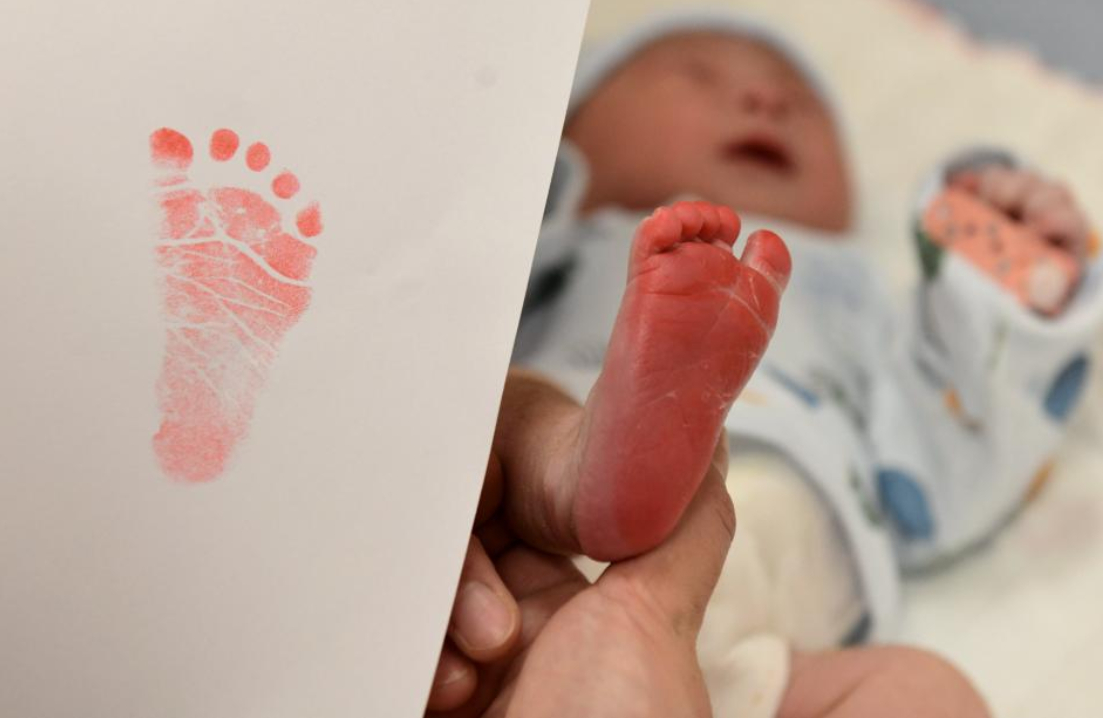
Sun Chao: I’m wondering if you have reports?on in-depth analysis on China’s population, development, and how to better deal with the new challenges and new tasks?
Justine Coulson:?One piece of research we’ve done recently is with our partner, China Population and Development Research Center, which looks at the current population and develops projections through to 2050, in terms of how the population could possibly change over time. A lot of work we’ve been doing recently focuses on low fertility and aging population because there’s a lot of discussion on this topic within this region generally, not just within China. Singapore is a country that struggles with low fertility, Japan is too. So, there’s been a lot of discussion around the different policies, interventions and investments that countries are making and then evaluating those to see what has worked. One thing we do know based on global research is that it’s never just one particular policy. You always have to have a range of interventions if you want to have some sort of impact on addressing declining fertility. But it’s very challenging. So, if you take a country like Singapore (for example). Singapore makes many fertility support-related investments between the point when a woman falls pregnant to the point when a child is 13. But Singapore’s total fertility rate remains around 1.1 and their policies have only managed to maintain this rate rather than achieve a major increase in fertility in terms of the number of children a woman has. So, it is very challenging but we always stress as UNFPA that in the end it’s always about reproductive choice. You have to make choices available to women and their partners in terms of whether and when they have children and how many children they choose to have. Availability of contraception is very important. The availability of funded maternity leave or subsidized childcare can be very important for people who want to have children but maybe feel that they can’t afford to do so. So finding ways to maximize choices for women and their partners is one of the most important things.
Sun Chao: Speaking of partnership, UNFPA has a lot of partners in China. I’m just wondering if there are some examples of a good partnership with China’s counterparts.
Justine Coulson:?We have many good partners in China. One thing that struck me when I first arrived and we met all of our partners was how many of our partners truly appreciated the work that we’ve done together over the 40 years. For example, with a partner like the China?Population and Development Research Center, UNFPA was the UN agency that helped to fund its establishment many years ago. Now it’s become a full-fledged independent center not just benefiting China, but also doing research with other countries around the world. We also have a very strong partnership with CFPA: the China?Family Planning Association, and we continue to work very closely together. As now China is what we call an upper middle-income country, our work at the UN is less on the ground trying to deliver things because the capacity exists in China to do that. We do much more work with partners at the national level in terms of policy design, program design and so on. So with CFPA as an example, we work very closely together and then they’re the ones that are helping to deliver services on the ground. At the moment we have a strong partnership in Qinghai province?and Shanxi province where we’re working to strengthen the availability of contraceptive services and to strengthen midwifery services to ensure that local women have a better experience of childbirth and delivery.
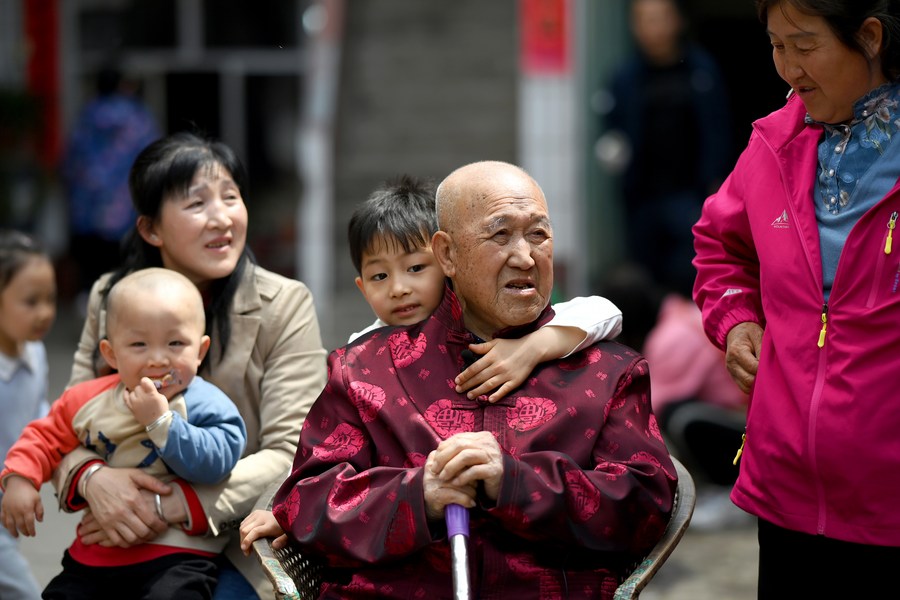
GDI reemphasized China’s commitment to accelerating SDGs
Sun Chao: How can we better work together to share experiences, and to better achieve Sustainable Development Goals under the UN mechanism?
Justine Coulson:?As you know, with President Xi?Jinping’s announcement of the Global Development Initiative (GDI), I think that reemphasized China’s commitment to accelerating SDGs, not only domestically helpful but also playing a role in helping less developed countries to accelerate progress on the SDGs. And when we look across the 17 goals, many countries are not on a track to achieve them in full by 2030. This means our work as UNFPA has also changed. Back in 1980 when we started working here, we focused on helping the government and other partners to make changes on the ground to support Chinese communities. Now we have a specific focus in our Country Program- which is the strategy we agree with the government every four to five years – that we will work with Chinese partners in the area of South-South Cooperation,?leveraging the capacity and experience that exist here to support those less developed countries where we have UNFPA country offices and where we know that further support is needed. For example, in Sierra Leone, we’ve had a program where Chinese funding has helped us to strengthen training and the delivery of cervical cancer services for women and that partnership has developed further and there’s now a partnership between the Ministry of Health in Sierra Leone and a provincial hospital here in China and the provincial hospital is providing training for hospital officials in Sierra Leone. This is just one way in which UNFPA brokers south-south partnerships, so other countries can benefit from Chinese expertise.
Sun Chao: Since the 21st century, the world has undergone profound changes, but the effectiveness of global governance has been hindered. What are your points of view on the transformation of the global governance system under the current circumstances?
Justine Coulson: COVID-19 particularly has had a huge impact on all societies and all people in so many different ways that we never could have predicted before. Our priority as UNFPA is making sure that we don’t fall back on the progress we made under the MDGs?and the SDGs so far. This is absolutely critical. Then, looking at governance issues and also, going back to your question about young people, building the next generation of leaders is key. So, we should work with young people to open up their minds to the world, ensuring they want to work in partnership, and that they want to contribute to society. The All-China Youth Federation recently held the first World Youth Development Forum. What was interesting about this was how many young people across the world wanted to engage in and be part of the conversation between countries, sharing experiences, and working out what role they can play as young people to make their societies better, and how to change the world. There’s the potential if we make the right investments in young people, and if we create those platforms and spaces for them to take on leadership roles. That can be something positive for the future of the world.
Sun Chao: As the tradition of our interview, we would like to invite you to share your favorite sentence or motto with our audience.
Justine Coulson:?Can I have two? The one sentence?that I always say to my son is “Open yourself up to the world and all the opportunities it offers to you.” The other sort of motto that always stays?with me is from Nelson Mandela’s book “Long Walk to Freedom”. He talks about being an optimist and what it means to be an optimist and he says that it means that you always “Turn your head towards the sun and keep your feet moving forward”. For me that’s something that I carry as a motto in both my professional life and in my personal life where things may seem difficult and you may feel that you’re not making progress. I always like to look towards the sun, keep moving forward and look for those positive opportunities and moments.