Anti-CPEC Nexus and the Hand Behind “Debt Trap”
 Facebook
 Twitter
 Linkedin
 Google +
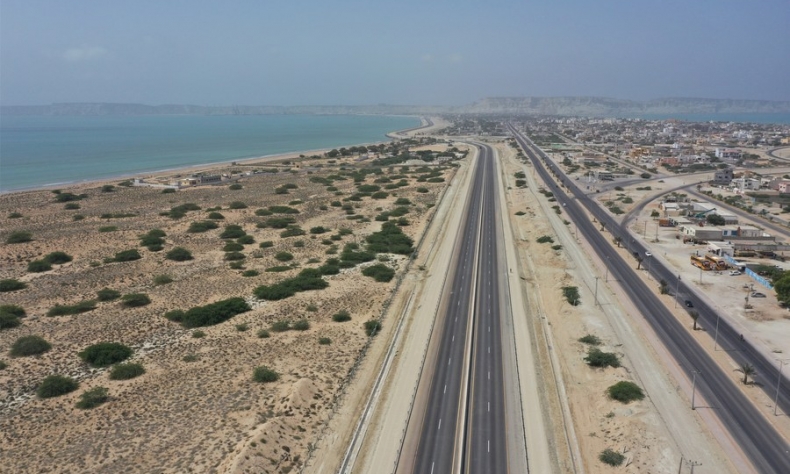
The U.S. is supporting and running anti-CPEC malicious campaigns. They have also coined terminologies like ‘debt trap’ controlling Pakistan.
This?year marks the 10th anniversary of the launch of the Belt and Road Initiative (BRI) and China-Pakistan Economic Corridor (CPEC). With joint efforts by China and Pakistan, the CPEC has achieved remarkable progress, benefiting both the two peoples with comfortable transportation, reliable power supply and more business opportunities.
However, not all countries and forces are glad to see the construction of CPEC. Anti-CPEC nexus has many members, but the United States stand out among all. The United States, being a sole superpower, has its own design and objectives for global system and governance. That’s why the U.S. international relation philosophy and practices revolve around strategic alliances rather than friendships. It has developed habit to use alliances to grill foes. The worst part of the story is that alliances are also used for arm-twisting of friends, if they are not toeing the U.S. policy. For that purpose, the U.S. has developed multiple tools, but financial tool stands out among all. As the biggest economy and hub of financial system, the U.S. tries to dictate its terms. Its financial might is being used to lure and punish countries.
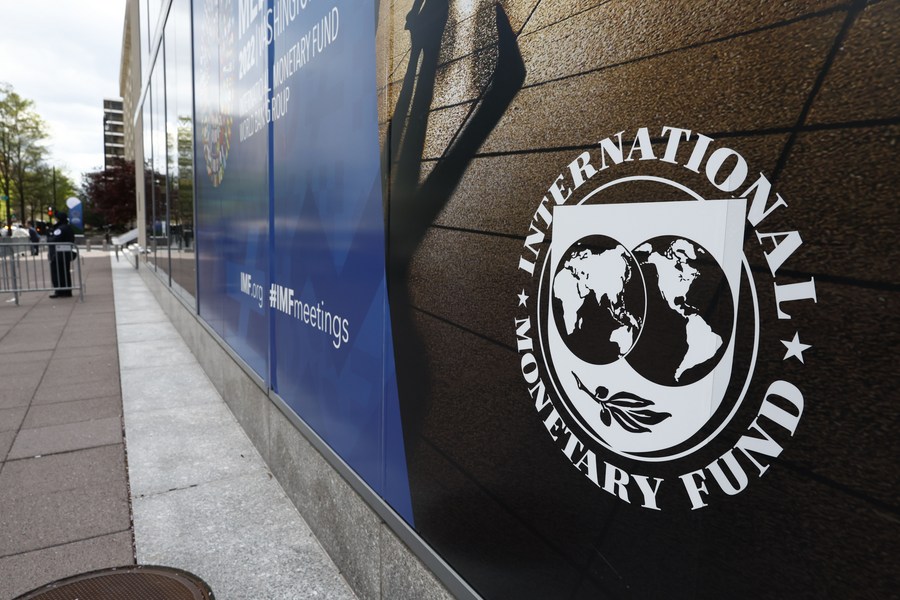
Besides, there is no second opinion that international financial institutes are under heavy influence of the U.S.-led international financial institutions (IFIs) like International Monetary Fund (IMF) and World Bank, which are most commonly used by the U.S. to entangle countries into debt trap.
Pakistan is one of the most prominent examples on this front. Since the creation of Pakistan, IFIs started to build close contact with Pakistan. They trapped Pakistan at the name of economic growth and development. World Bank was the first institution to engage Pakistan and extended first loan of $27.2 million in 1952. IMF and Asian Development Bank came in action in 1958 and 1966, respectively. Since then, they have started to create space to interfere in internal matters of Pakistan. However, signing of Structural Adjustment Program (SAP) with IMF in 1988 changed the whole dynamics. SAP provided opportunity to IFIs to interfere in the financial and internal affairs of Pakistan. Gradually they are positioning themselves for the micro-management.
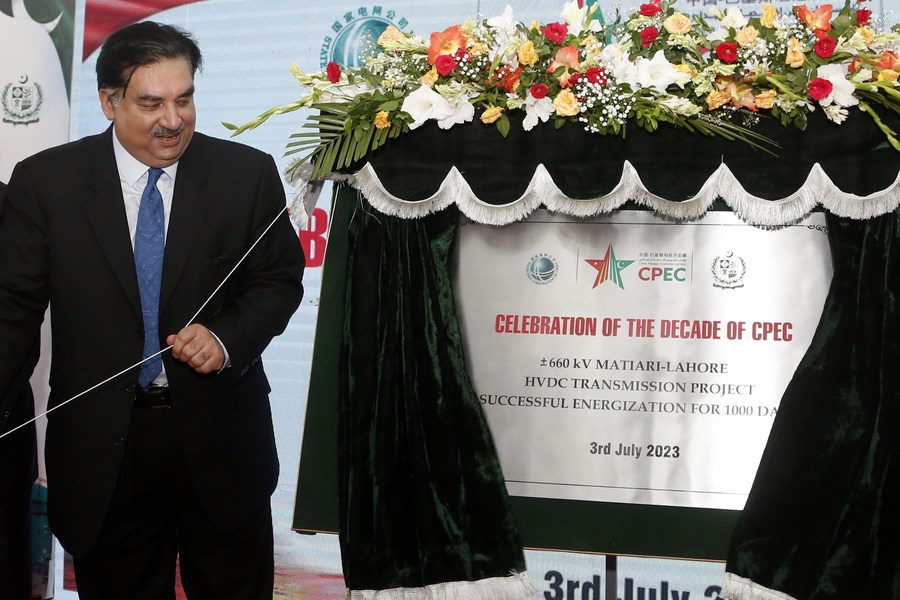
Although IFIs were implementing policy of interference for a long time, the signing of CPEC began to defuse the risks. Thus, they came up with new policies and plans to enhance their interference, so that they can halt CPEC cooperation. Howbeit, it is pertinent to highlight here that IFIs are not doing it on their own. They are following U.S. policies. It is an open secret that since the launch of China-Pakistan Economic Corridor, the U.S. has been opposing it. The U.S. politicians, media and think tanks always portray CPEC as a step by China to create its hegemony in Asia, especially in South Asia. Thus, the U.S. is doing everything to sabotage CPEC. The U.S. is supporting and running anti-CPEC malicious campaigns. They have also coined terminologies like “debt trap” controlling Pakistan. They have also dubbed CPEC as geo-strategic initiative, which is not rational at all. But all the elements of CPEC indicate that it is an economic initiative.
The role of IFIs is part of the anti-CPEC policy. The U.S. is using its dominant position in decision making at IFIs. For example, the U.S. enjoys veto power at IMF and World Bank. According to IMF rules, there is need of 85 percent votes for any major decision and the U.S. has 16.50 percent votes. It means that without the U.S. approval, the IMF cannot make any major decision. The U.S. uses this power to reward allies and punish opponents or countries which do not comply with the its policy. In this way, the U.S. exerts its influence to get its desired results. For example, according to IMF’s rules of business, it cannot give loans to any country where a major conflict is going on. Whereas in the case of Ukraine, IMF changed rules of business and provided $15.6 billion to the conflict-ridden country. On the contrary, it has not yet approved Pakistan’s request for $1 billion loan. Why? The answer is quite obvious that Pakistan is not complying with the U.S. policy to abandon CPEC and Pakistan-China relationship. Thus, IMF is not realizing next tranche.
Despite such immense pressure, Pakistan is resisting to comply with U.S. anti-China and anti-CPEC policy. Pakistan has categorically told the U.S. and its allies that Pakistan cannot build relations with the U.S. at the cost of CPEC and Pak-China relationship. It has antagonized the U.S. by opposing the idea of deploying Financial Action Task Force (FATF) by the U.S. FATF has been deployed to compel Pakistan to abide by the U.S. policies.
In this backdrop, to understand the U.S. interference in the economic affairs of Pakistan and its impact on Pakistan-China relationship, one has to study the nexus between the U.S. and its financial partners such as IMF, World Bank and technical organizations like FATF. For that purpose, we have selected two institutions i.e., International Monetary Fund (IMF) and Financial Action Task Force (FATF).

Let’s start by International Monetary Fund (IMF). It is one of the most influential and leading organizations which are helping U.S. achieve its agenda. The same strategy has been deployed over Pakistan and CPEC. For example, IMF is asking Pakistan to share data and plans of economy and future investment. Although IMF does not use the word of CPEC in agreements, its focus always remains on CPEC. For example, the present IMF program?signed by Pakistan in 2019, has clauses with direct relevance for the CPEC. Three most specific and relevant points are discussed below.
First, under fiscal monitoring clause, IMF has asked government of Pakistan to share all data relevant to the country’s expenditures in?all sectors. There is a consensus among experts that it is an indirect effort to assert some types of control over CPEC projects. As we know, CPEC is a joint venture of Pakistan and China. Although proportion of Chinese investment is much higher than Pakistan, still Pakistan contributes significant financial resources. Thus, getting access to data on Pakistani expenditure on development projects or investment in infrastructure means seeking information of CPEC related projects. Pakistan does not like dictation or control over CPEC projects, which IMF tries to exert.
On the other hand, IMF puts conditions on the allocation of financial resources including for development and pro-poor programs. It is being done in the disguise of fiscal deficit management. IMF has prescribed that austerity, especially focused on development and pro-poor programs, will help Pakistan manage fiscal deficit. IMF deems it’s necessary for controlling the fiscal deficit. However, IMF is not telling Pakistan, what would be long term implications of these measures on national growth. Thus, many experts are of the view that these conditions have been designed to slow down the pace of work on CPEC. Why and how…? As, CPEC is a joint venture, so delaying allocation from Pakistan side will ultimately slow down the investment form China. It is an indirect way to impact work on CPEC. Fortunately, Pakistan is resisting the pressure. Therefore, IMF has halted program and is continuously raising questions and blaming Pakistan for not fulfilling requirements of the agreement.
Second, let us see what is happening with the energy sector under the IMF agreement. IMF is asking Pakistan to reform energy sector to control losses and make it more efficient. IMF is also asking Pakistan to reform the sector to shed off circular debt. Apparently, it is a good suggestion since Pakistan is burdened with circular debt and inefficiency. However, decoding of the clause and its implementation reveals that the real target is Chinese investment in energy sector. Since the signing of agreement, IMF is pushing Pakistan to re-open and audit its agreements with Chinese power companies. Pakistan had to fulfil the first demand of IMF by conducting audit of all power companies. Opponents were planning to malign CPEC energy projects by using the report. However, the report did not find anything which can make CPEC energy investment scape goat.
Unfortunately, it did not satisfy many people. They have started a new campaign against Chinese investment in energy. They are compelling to reopen agreements with Chinese companies. They are accusing Chinese companies of circular debt problem for Pakistan. On the contrary, the fact is that Chinese companies invested in Pakistan according to the law of land. For example, Chinese companies invested in electricity by following Pakistan’s Power Policy 1994, which was formulated with the assistance of IMF and World Bank. It was also appreciated by the U.S. and other institutes as a game changing policy. Chinese companies had never demanded any special concession or privilege in return from Pakistan.
Despite these facts, IMF is still buying anti-CPEC propaganda and pushing Pakistan to re-open the projects. It is good to note that Pakistan is resisting the pressure, which has annoyed IMF. That’s why, IMF is making excuses not to release $1 billion installment for Pakistan.
Third, investment environment is another area, which is part of the agreement. IMF has special love for investment regime and is asking Pakistan to improve investment environment. Again, it is a good suggestion. It will help create a congenial trade and investment environment to fetch more foreign direct investment. However, it is like ‘the devil is in the detail’. Since the signing of the agreement, IMF and its allies are propagating that Pakistan is giving special preferences to Chinese companies, which is not true. Pakistan has categorically rejected such baseless blames. Pakistan has told that Chinese are enjoying same incentive, which Pakistan is offering to everyone, irrespective of their nationalities.
The article reflects the author’s opinions, and not necessarily the views of China Focus.