Traditional Chinese Medicine and AI, a Perfect Marriage for Health and Wellbeing
 Facebook
 Twitter
 Linkedin
 Google +
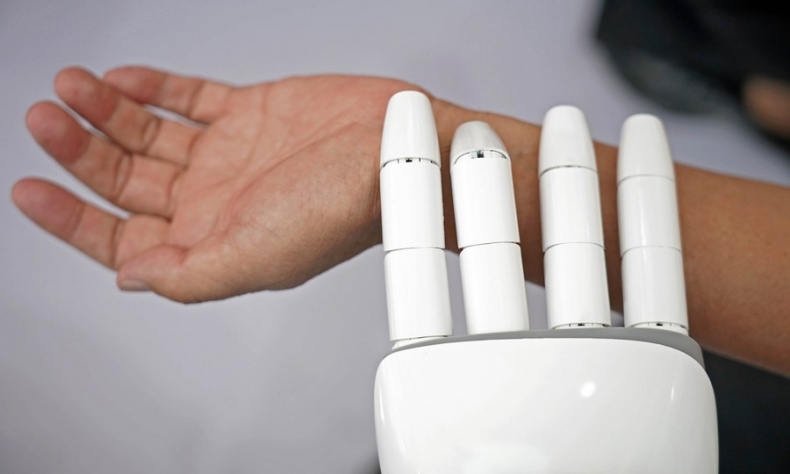
TCM has benefitted billions of people in its storied history and responsible AI can help it reach the next level to help even more of us.
A landmark United Nations conference debuted in?mid-August that surprisingly and convincingly married some of the world’s most ancient medical wisdom to the most advanced modern high technology. The first edition of the World Health Organization (WHO) Traditional Medicine Global Summit was successfully held to explore and promote evidence-based traditional, complementary and integrative medicine. Among the most venerable of these is Traditional Chinese Medicine or TCM. Using the latest Artificial Intelligence (AI), the summit presaged how TCM is poised to scale new heights of increased efficacy, efficiency and global adoption.
WHO’s Director-General Tedros Adhanom Ghebreyesus praised the “enormous” contributions of traditional medicine, like TCM, for “bringing together ancient wisdom and modern science for the health and well-being of people and planet”.
TCM has now been recognized as a viable alternative medical system. It’s enshrined with its own chapter in WHO’s “bible” “The International Classification of Diseases”.
Perhaps one of the people least surprised and most pleased by TCM’s renewed global focus is China’s President Xi Jinping. He’s a longtime enthusiastic and frequent TCM advocate. He has said that TCM is “the treasure of ancient Chinese science and the key to the archive of Chinese civilization” and he said that TCM “has made remarkable progress and contribution to people’s health since 1949” when China adopted a mixed system that combined both its TCM with the allopathic medicine we know in the West. And, even given China’s huge population the hybrid system has indeed worked remarkably well!
Life expectancy at birth (LEB) is a universally recognized, broad socio-economic measure reflecting a nation’s well-being. LEB includes factors such as health and disease metrics, but also nutrition, living standards, and education. At the New China’s founding in 1949, its LEB was only 35 years. By way of comparison,?it was 68?in the U.S. that same year, almost twice as long a lifetime as in China. Fast forward to today, China’s LEB at 78.2 years is now even ahead of the U.S. at 76.1 years.?To ensure that progress continues, under President Xi’s leadership, China’s?State Council has released “Healthy China 2030”, an action plan which covers such areas as public health services including TCM, environment management and food and drug safety.
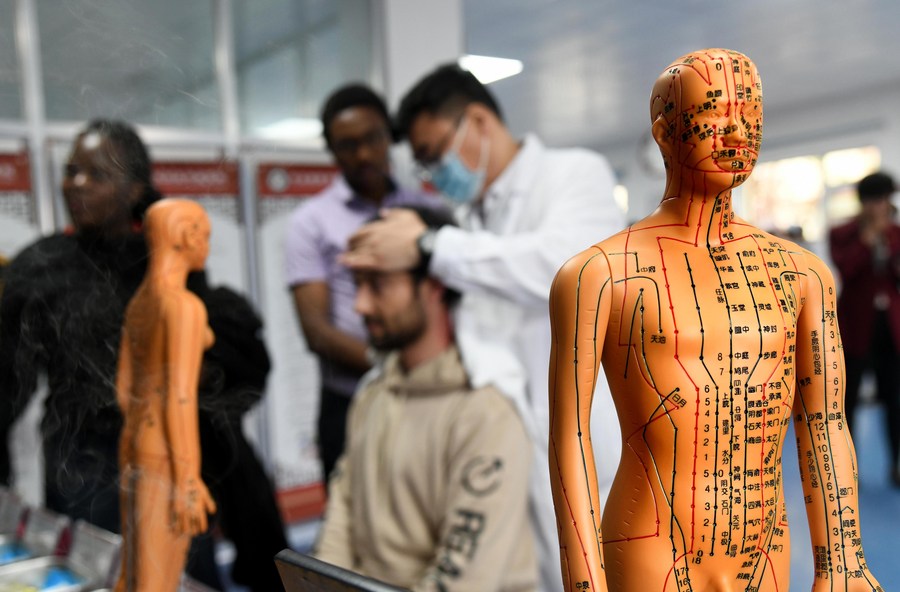
TCM also figures prominently in Xi’s signature Belt and Road Initiative (BRI) and supports BRI’s fifth pillar, people to people connectivity and in the process enhances China’s soft power. As a component of the BRI, China has built numerous TCM treatment clinics, especially in Africa, as part of its Health Silk Road initiative and sent TCM professionals from China to train and assist local health care professionals. Now even traditional African therapists are using TCM to treat their patients.
In some ways TCM is almost as old as China itself. The “Yellow Emperor’s Inner Canon” is considered the foundational written source of TCM. It’s 2,200 years old and dates back to the Warring States period (475-221 BC). My daughter, like other TCM practitioners today, is still required to read this and other classics and to intimately know their content.
TCM seeks to restore the dynamic balance between two complementary forces yin?(passive) and yang?(active). A healthy state only exists when there is harmony between the two. The basis of TCM is “qi” or life force that flows through invisible meridians or body channels. The meridians are influenced by our circadian or daily rhythms, the seasons and planetary movements. TCM doctors pay attention to the five basic elements: wood, fire, earth, metal and water.
A TCM diagnostic exam is completely different from allopathic. In the latter the doctor is concerned with factors like height, weight, blood tests and observable symptoms or those described by the patient. TCM has a four-part examination to diagnose a patient: looking, listening, touching and asking. Unlike in allopathic practice, which usually treats a symptom, in TCM each element is interrelated and together provide a holistic snapshot that can be treated by a combination of some of the thousands of TCM herbal medicine components and/or by acupuncture.
Allopathic medicine is complicated enough and its study is one of the most difficult and time consuming, but TCM is infinitely more complex. Because meridians are invisible, and because there are so many interacting, interrelated factors since by definition TCM is holistic, it could take years of experience-based trial (and ouch-error) for a practitioner to locate the precise place to put a needle or to prescribe the exact combination of herbs, feathers and other TCM ingredients to boil into a soup for treatment.
This is where today’s AI married to TCM becomes a synergistic force-multiplier. With an abundance of AI-mined data, TCM as a holistic treatment regime may also overcome, except perhaps for individual TCM ingredients, the insistence of the allopathic community and its regulators on expensive time-consuming double-blind clinical studies, the evidence-based component that was insisted upon at the WHO Summit.
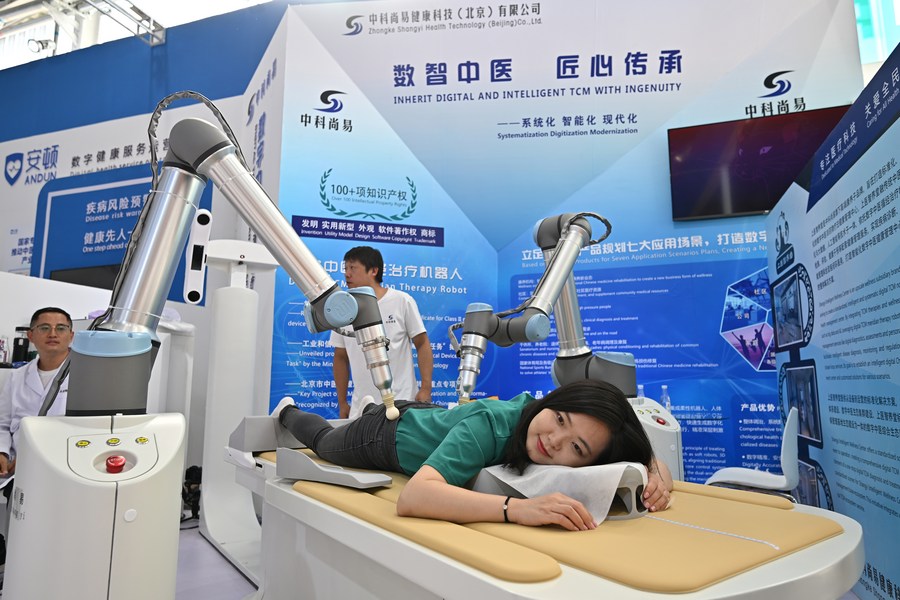
AI refers to the ability of machines to perform tasks that usually require human intelligence such as decision making, learning and reasoning. We think of AI as something born in the last year, but that’s confusing today’s AI, such as ChatGPT, with AI that debuted in 1956 at a Dartmouth College conference. Yes, while AI is approaching its 70th?anniversary, that was your grandfather’s AI: far more limited, rigid and confined to simple tasks like playing chess or solving mathematical theorems. But AI hasn’t made just one great leap forward, but has gotten more robust over the decades.
Today’s AI can process ever increasing amounts of data on powerful cloud computing platforms. Powered by machine and deep learning which are based on advanced statistical learning and neural networks, today’s AI can learn from digesting vast amounts of data and can even adapt to new situations without pre-programming.
While scientists have been experimenting with AI-assisted TCM since the 1970s, their results were limited by the then relatively backward state of technology. Today, horizons and capabilities are expanding at warp speed. “Impossible” is no longer in the lexicon.
By now, AI has the ability to digest millions of TCM patient records with billions of data points. Since TCM has so many variables, many of them learned over the years by sheer accumulated experience, AI can be used to compare the patient’s holistic snapshot and suggest the most efficacious treatments, regardless of the TCM practitioner’s experience or lack of it. It can even compare, say, for example, a patient’s tongue image. It can also help locate precise invisible acupuncture points.
And now too, just as is being done to search for potential allopathic medicines, AI can do the same for TCM medicines with an efficiency previously not possible. This is best illustrated by the experience of the only Chinese woman Nobel Prize winner, Tu Youyou.
Tu was searching for a cure for the often-fatal tropical disease called malaria in the 1960s. Searching in remote areas in the vast country, Tu laboriously tracked down and examined ancient texts and home folk remedies across China, identifying 2,000 potential remedies and settling on 380 to test on mice. Only one, sweet wormwood, seemed to work which was described in a book written by a famous doctor in the Jin dynasty (260-420 CE). Tu’s discovery of artemisinin in 1972, won her the Nobel Prize in medicine in 2015 and saved millions of lives.
By sharp contrast, using AI today, a researcher could easily find most all relevant information online. Using AI, a researcher could generate various hypotheses and test them using simulations and experiments. AI could help optimize the design and synthesis of new formulations, and could critique the data. It could even help design the gold-standard double blind clinical studies needed for drug approval in most countries. While Tu’s research accomplished so much with so few resources, AI combined with her inquisitive scientific mind, would have sped up her search and saved even more lives.
Many people today, myself included, have been critical of AI and urged it to be paused or temporarily constrained. AI is like fire to our distant ancestors—a source of heat and protection if properly used, or a source of death and destruction if not handled with care. We shouldn’t throw the baby out with the bathwater, but carefully impose meaningful and enforceable redlines. TCM has benefitted billions of people in its storied history and responsible AI can help it reach the next level to help even more of us.
The article reflects the author’s opinions, and not necessarily the views of China Focus.