Taiwan-Related Legislation: A Race to the Bottom at the U.S. Congress
 Facebook
 Twitter
 Linkedin
 Google +

That the ruckus at the U.S. Congress about Taiwan-related issues has triggered a race to the bottom is alarming. It testifies to the relentless degradation of the political environment and the U.S.’s growing anxiety about losing its hegemony.
Barely six months after the 118th?Congress was sworn in, the U.S. Senate and House of Representatives launched a tidal wave of legislation aimed at assisting Taiwan and resisting China. Ever-intensifying rivalry between the Republicans and Democrats has spawned the political tactic of using Taiwan to contain China and exploiting the island province to further their respective gains. This has triggered both parties’ race to the bottom through Taiwan-related legislation. Unless this ominous trend is checked, risks in the Taiwan Strait will multiply, tensions between China and the U.S. will heighten, and regional stability will be scuttled, so jeopardizing world peace and prosperity.?
Surge in legislation against China in support of Taiwan
Since the beginning of 2023, the U.S. Congress has introduced a slew of legislative proposals concerning Taiwan, the volume, omnifarious topics, and ominous implications of which have attracted broad attention.?
First, there has been a spike in the quantity of legislation documents. U.S. Congress website data show that, as of the end of May, 2023, the bills and resolutions whose titles included the word “Taiwan” amounted to 24. Moreover, within the brief period from late February to early March alone the House passed a dozen such acts, including?the Taiwan Conflict Deterrence Act?(H.R. 554),?the?Taiwan?Non-Discrimination?Act of 2023 (H.R.540), and the?Taiwan Assurance?Implementation?Act. And last early May the?Senate?Committee on?Foreign?Relations?introduced two more bills relating to Taiwan.?The Taiwan question has also been high on the?House Select Committee on the Strategic Competition between the United States and the Chinese Communist Party?agenda.?Since its establishment last January, the committee has held several hearings, conducted an unusual war-game scenario on a Taiwan Strait war with Washington think tank the Center for a New American Security, and issued misleading reports?on Taiwan.?
Second, the legislation has covered a wide range of topics that include military, diplomatic, economic, technological, and value-related issues. Among them are the?Taiwan Democracy Defense?Lend-Lease Act,?“which authorizes the President to lend or lease defense supplies to the Government of Taiwan, in the case of preemptive aggression by the Chinese Communist Party;”?the?Taiwan Representative Office?Act seeks to rename the “Taipei Economic and Cultural Representative Office” the “Taiwan?Representative Office;” the?Deterring?Communist Chinese Aggression against?Taiwan?through?Financial Sanctions Act, which?wields the baton of financial sanctions; the?United States-Taiwan Advanced Research Partnership Act, which?aims to combine the strategies that use Taiwan to contain China and suppress China in the sci-tech sector; and the?Taiwan Cybersecurity?Resiliency?Act, which?proposes authorizing the American military to arm Taiwan with U.S. cyber technologies. It is hence evident that U.S. legislation concerning Taiwan is increasingly focused on specific issues that are entwined with other matters.?

Third, these documents have malicious intentions. Using Taiwan to contain China has become a key ploy whereby the U.S. realizes its goal of outcompeting China. By making the Taiwan issue a matter of concern to its domestic politics, and under the presumption that Taiwan is the Achilles’s heel of China, the U.S. is trying to exploit the issue in a way calculated to impede China’s reunification efforts and obstruct its national rejuvenation process. American politicians seek, through U.S. Congress legislation, to build a legal long-arm that enables it to meddle in the Taiwan question and cloud the one-China principle with uncertainty; in effect, to compromise its integrity through a salami-slicing approach that will ultimately cause a qualitative change into U.S.-Taiwan relations.?
In addition, the U.S. is trying to transform the Taiwan question into an international issue. As part of U.S. efforts to contain China on the fronts of geopolitics, economy, technology, and ideology, the aforementioned bills and acts are aimed at transforming Taiwan into a beachhead – albeit on the pretext of safeguarding regional peace and stability, ensuring supply chain security, and pitting democracy against autocracy. The U.S. has, in a bid to draw U.S. allies into its campaign to blockade China by creating crisis panic, gone so far as to draw comparisons between Taiwan and Ukraine.?
A race to the bottom at the U.S. Congress?
The U.S. legislative process requires a bill to pass through the relevant congressional committees and then move to the Senate and the House for study, debate, and approval before being presented to the president for signature into law. During committee consideration, however, some of the bills concerning Taiwan were considered as specifically defined. They were hence singled out for special expedited consideration and subsequently approved overwhelmingly through broad bipartisan support. Though these bills stand a good chance of passing through the House and the Senate, they still face uncertainties as regards being enacted into law.?
This is attributable to two factors. The first is that of U.S. congressional infighting, arising from partisan conflicts. The GOP’s slim majority in the House has created a split Congress, and as the 2024 presidential election approaches, fighting between Republicans and Democrats grows bloodier. Certain members of the U.S. Congress have hyped Taiwan-related issues and tried to outdo each other in battering China and bolstering Taiwan. Instrumental to their self-serving propaganda, these issues serve as political gimmicks calculated to make them stand out from the crowd.?
Should?the?House and the Senate present different versions of a bill,?a conference committee composed of House and Senate members needs to resolve such differences. Legislative process is hence prolonged. One example is the Taiwan Policy Act of 2022 introduced by the 117th?Congress, described as the?most in-depth and comprehensive adjustments in U.S.?Taiwan policy since the Taiwan Relations Act of 1979. However, the omnibus bill was eventually shelved due to going too far. But this will not stop Congress’s anti-China elements from reintroducing it someday, or adding Taiwan-related substance to certain sweeping pieces of legislation. The so-called?China Competition 2.0 bill,?recently launched by?Senate Majority Leader Chuck Schumer,?for instance,?is expected to meddle with Taiwan-related issues. ?
The second factor is that of the constraints on the White House by virtue of partisan conflicts. Free of accountability for the implementation of foreign policies, members of ?the U.S. Congress are particularly susceptible to the influence of political factors, military-industrial complexes, and forces seeking “Taiwan independence.” They hence have no compunction about supporting “Taiwan independence” separatists, even if it entails inciting confrontation between the U.S. and China, or hijacking the White House’s China policies.???
However, an unusual consensus among the White House, the Congress, and both parties in the U.S. has been formed, to take a tough stance on China. Saying no to everything to do with China is indeed regarded as political correctness. President Joe Biden himself has publicly stated, on several occasions, that the U.S. would “defend Taiwan (in the event of an invasion).” But his comments prompted immediate clarification from White House officials and confirmation that the U.S. remains committed to the one-China policy. Such incidents, however, have sent the wrong signal to “Taiwan independence” secessionists.?
The White House might acquiesce in or even encourage malicious legislation on Taiwan, under the excuse that it is an independent action of the U.S. Congress. Such an act, however, would be at odds with the White House’s claim of working to build a floor under China-U.S. relations. The Biden administration has declared that it will seek a thaw in bilateral relations, and cooperation with China, especially in global and regional hotspot issues. But whether or not this will lead to moderation in regard to its provocations on the Taiwan question remains to be seen.???
Consequences
Unscrupulous legislation by the U.S. Congress on issues concerning Taiwan has had toxic effects, thus posing enormous risks to which the international community should be alerted.?
First, American anti-China politicians have repeatedly challenged China’s red line, severely undermining mutual trust between the two countries. Those in the U.S. Congress abuse their legislative power to introduce a succession of perverse bills in regard to Taiwan. Their purpose is multifold. It is to set the Congressional agenda, contort the narrative on Taiwan, create a toxic environment regarding China affairs at the U.S. Congress, and ossify the U.S.’s China policy; and moreover, to generate a chilling effect among those politicians with a more rational attitude toward China and so foster a herd mentality in regard to China policies. The harm of such legislation goes way beyond Capitol Hill. It demonizes China among the American public and mires expectations for China-U.S. relations in the “self-verification trap,” and also heightens risks of a downward spiral in bilateral relations.?????
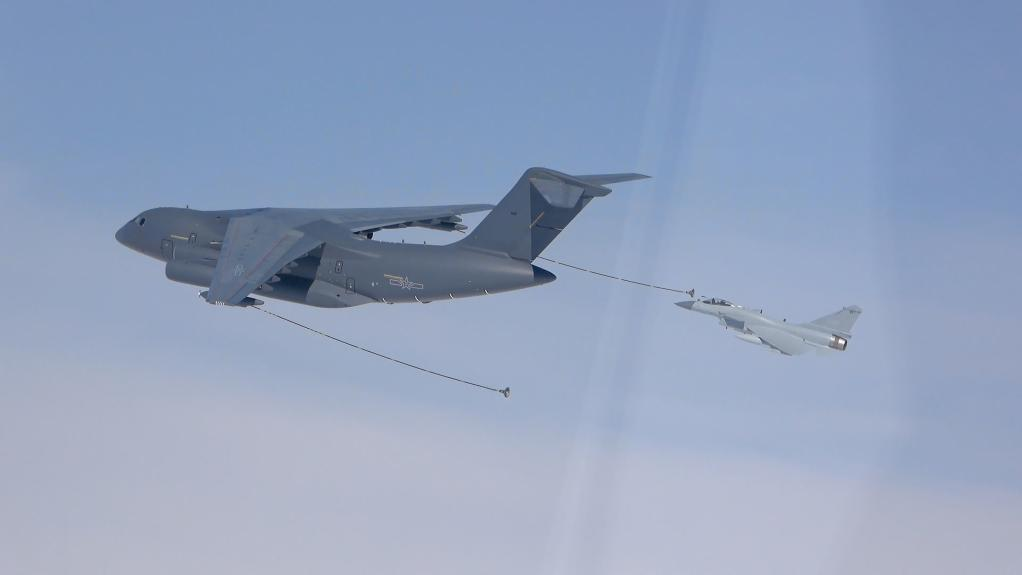
Second, anti-China politicians in the U.S. have repeatedly crossed the bottom line in regard to issues concerning Taiwan, and as a result severely undermined stability in the Taiwan Strait. They clamor for a shift from strategic ambiguity to strategic clarity, insist on arming Taiwan to the teeth, and advocate a porcupine strategy on the part of Taiwan that turns the region into a powder keg. Pursuing a strategy of offshore balancing, the U.S. seeks to divide and rule the Asia-Pacific, and in the process to coax and coerce Western rallies to joining in its escalation of tensions in the Taiwan Strait. The world should be alert to the possibility that, after igniting a crisis in the Strait and profiteering from it, the U.S. may retreat to a safe distance, thus leaving Taiwan to face the destructive consequences alone. We must moreover urge the people of Taiwan to give serious thought to whether the U.S is sincere about assisting them, and indeed capable of doing so, or whether it is leading Taiwan into the abyss.?
Third, anti-China politicians in the U.S. flout international consensus and thereby jeopardize the international order.?On May 16 this year?the U.S.?House Foreign?Affairs?Committee?passed the?Taiwan International Solidarity Act, which challenges the authority and legality of UN Resolution 2758. American politicians manipulate and distort international laws concerning Taiwan, and attempt to obscure both the jurisprudence and narrative on the issue. Their ultimate purpose is to rock the foundations of international law and upset the post-WWII international order.???
Under the illusion that they can rely on American help in their quest for independence, the Taiwan authorities have ramped up collusion with the U.S. Taiwan spends huge sums lobbying U.S. congress members in exchange for their introduction or adoption of bills in support of the island. The warmongering policies of such congress members, however, take precedence over any possible concerns they may have about Taiwan’s interest, or the life and safety of its 23 million people. Last December the Taiwan authorities headed by?Tsai Ing-wen?announced the extension, starting from 2024, of compulsory military service from four months to one year. This is a move that, rather than making Taiwan safer, will bring it closer to danger.??
The U.S. urges Taiwan’s semiconductor manufacturing industry to move to its territory, and tries to entice the island’s flagship firm,?Taiwan Semiconductor Manufacturing Co. (TSMC),?to invest in production there. Several members of the U.S. Congress, meanwhile, have floated the idea of blowing TSMC up, and threaten to destroy any infrastructure on the island that may be used prior to reunification of the two sides of the Taiwan Strait. Western businesses in the Strait, including those from the U.S., are keenly aware of the growing instability in Taiwan that is triggering a capital flight, leading Taiwan to poverty rather than prosperity.?
Certain members of the U.S. Congress, moreover, are instigating new China exclusion acts, and fueling discrimination and even hatred toward people of Chinese origin. They are thus not helping but harming Taiwan. People seeking “Taiwan independence” have willingly rendered themselves as pawns of the U.S. amid its schemes against China. As such they would not hesitate to betray the interest of Chinese nation and hurt the feeling of Chinese people. But once deemed of no further value, such pawns will be kicked out of the game.??

Conclusion
The Taiwan question concerns China’s national sovereignty and territorial integrity. It is, therefore, at the heart of the country’s core interests. The one-China principle is the political foundation of China-U.S. relations, a universal consensus of the international community, and a basic norm of international relations. Anti-China politicians in the U.S. intend to weaken, distort, and hollow out this principle through U.S. Congress legislation. But such attempts are doomed to failure.?
That the ruckus at the U.S. Congress about Taiwan-related issues has triggered a race to the bottom is alarming. It testifies to the relentless degradation of the political environment and the U.S.’s growing anxiety about losing its hegemony. The detrimental effect of this trend will undoubtedly spill over to other regions, and eventually the entire world. Persistent provocations on the part of certain American politicians about the Taiwan question are despicable, and ill-intentioned acts will lead Taiwan to harm, and even destruction.
In addressing these “high waves” and “strong winds” in the Taiwan Strait, China remains steadfast in its battle against secession and foreign interference. The country will continue to rally compatriots on both sides of the Taiwan Strait to work for China’s complete reunification, and will work with regional countries and other members of the international community to safeguard regional peace and stability. China will moreover safeguard the international system with the United Nations at its core and the international order underpinned by international law.
Yuan Sha is an associate research fellow at the Department for Asia-Pacific Studies,?China Institute of International Studies.