Ushering in the BRI Second Decade, a Strong Pillar for Re-Globalization
 Facebook
 Twitter
 Linkedin
 Google +
The second decade of the BRI will see further contributions to the UN 2030 SDGs. BRI countries will also play an increasingly important role in IMF and WTO reforms and in upholding multilateralism.
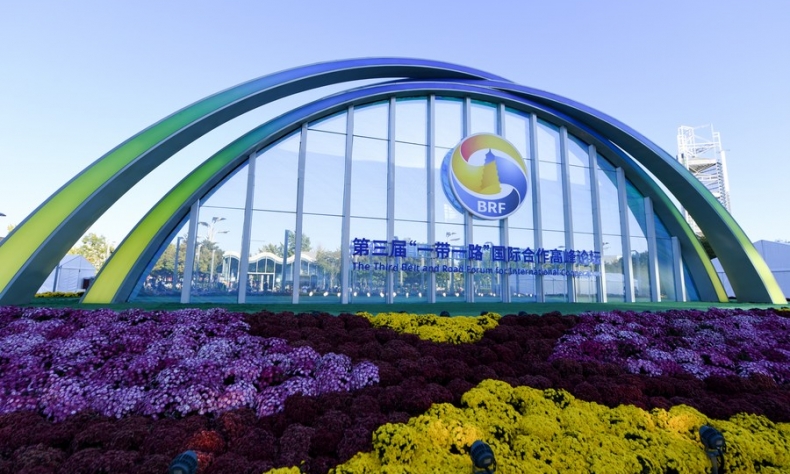
The third Belt and Road Forum for International Cooperation (BRF), held in Beijing on October 17-18, was a great success. Attended by 24 foreign heads of state?or government, it saw the signing of 89 multilateral and 369 bilateral cooperation agreements. Business delegations also inked trade and investment agreements worth $98 billion.
The forum marked the conclusion of the first decade of the BRI and the arrival of the second decade with more ambitious perspectives. As UN Secretary-General Antonio Guterres said during the opening ceremony, the BRI has brought hope and progress based on development for billions of people the world over.
First BRI decade: strong engine for growth and multilateralism
The sound achievements of the first BRI decade can be summarized in two fields.
First, it has provided strong and sustainable driving forces for economic development and people’s livelihood for billions of people in the Global South. The massive scale of infrastructure development, including over 10,000 kilometers of railroads, over 100,000 kilometers of highway, hundreds of bridges, and numerous other major projects including high-speed rail and clean energy infrastructure, has changed the fundamental conditions for industrial, agricultural and social development.
Chinese construction and engineering companies completed over $1 trillion in infrastructure projects. This fast-improving physical connectivity has accelerated industrial development with over 80 industrial parks set up in BRI countries, creating 420,000?jobs. It has brought about trade facilitation by reducing transportation and trading costs. According to a World Bank study, the enhanced physical connectivity generated by BRI projects could reduce trading costs by 1.8 percent, lift foreign trade volumes by 4.1 percent, and increase FDI by 5.0 percent for participating countries. Further, the GDP of low-income developing countries (LIDCs) could be lifted by as much as 3.4 percent, 7.6 million people could be lifted out of extreme poverty and 32 million people could be pulled out of medium-level poverty by 2030.
With its goals and practices converging precisely with the 17 major goals of the UN 2030 Sustainable Development Goals (SDGs), the BRI has been included in the 2016 UN General Assembly Resolution, adopted by all 193 member states. The UN Security Council Resolution 2344, adopted in March 2017, has also called for enhancing regional cooperation through BRI.
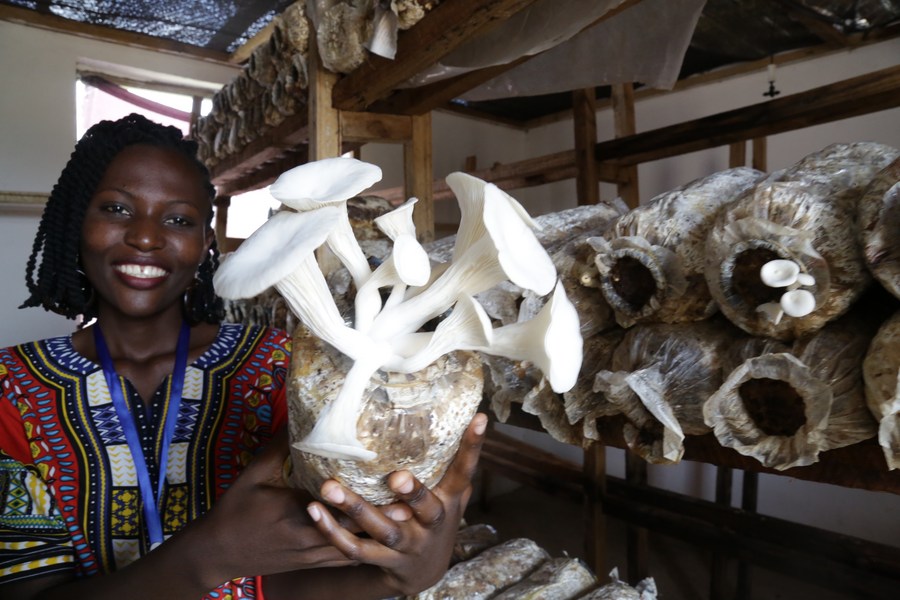
Second, the BRI has successfully developed institutional cooperation mechanisms for accelerating bilateral, regional, cross-regional and global cooperation among developing countries, thus upholding multilateralism and globalization. There are numerous free trade arrangements among participating developing countries, including ASEAN in Southeast Asia, the African Free Trade Zone in Africa, the Latin America and Caribbean Community, and the Euro-Asia Economic Alliance in Central Asia. They are, however, separate from each other.
The BRI has developed a new approach to develop cross-regional trade connectivity through the Silk Road Economic Belt linking Asia and Europe, and the 21st Century Maritime Silk Road linking Asia, Africa and Europe. It has developed six cross-regional economic corridors and 21 free trade agreements between China and countries across Southeast Asia, Europe and Latin America.
All free trade agreements and trade facilitation mechanisms are inclusive and uphold the multilateral trade rules of the WTO with non-discrimination as the core. Further, there are no unilateral trade restrictions disrupting global supply chains.
BRI development is based on the actual social and economic needs of the participating countries. They share the inputs and the benefits therefrom.
Second BRI decade: strong pillar to re-globalization
At the threshold of the second BRI decade, the world is now faced with serious challenges of geopolitical confrontation and geo-economic fragmentation. Gita Gopinath, First Deputy Managing Director of the IMF, noted that world trade and investment restriction measures had grown three-fold since 2018, underscored by measures such as ‘nearshoring’, ‘friend shoring’ and increasingly discriminative measures such as subsidies and local content requirements. Consequently, cross-border direct investment flows are increasingly focused on geopolitically aligned countries, especially in major strategic industries.
An earlier IMF staff report found that a limited geo-economic fragmentation will cause the world economic output to fall by 0.2 percent, while a serious geo-economic fragmentation will cause a fall of up to 7 percent. In the extreme case of technology de-coupling, global GDP could fall by 8-12 percent. Against this backdrop, WTO Director-General Ngozi Okonjo-Iweala has called for re-globalization.
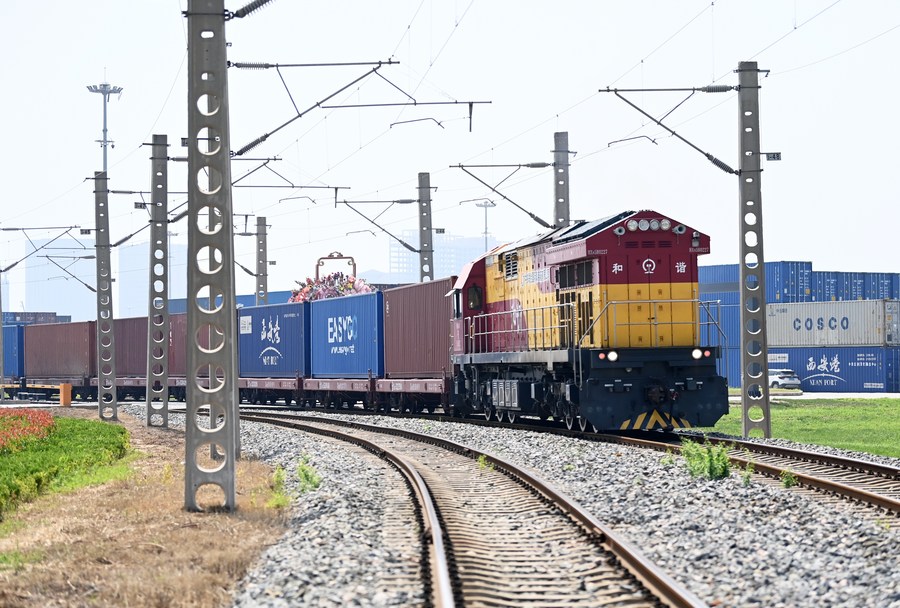
During the third Belt and Road Forum for International Cooperation, Chinese President Xi Jinping announced eight major steps that China will take going forward. The first two are especially essential in regards to supporting re-globalization.
The first step aims at building a multidimensional Belt and Road connectivity network. On land, China will speed up the high-quality development of the China-Europe Railway Express, participate in the trans-Caspian international transportation corridor, host the China-Europe Railway Express Cooperation Forum, and make joint efforts to build a new logistics corridor across the Eurasian continent linked by direct railway and road transportation. On the sea, China will vigorously integrate ports, shipping and trading services under the Maritime Silk Road and accelerate the building of the New International Land-Sea Trade Corridor and the “Air Silk Road”. The complete Belt and Road connectivity entails even larger infrastructure and business investment, much larger trade flows, and supply chain build-up. This will deliver greater employment, further poverty reduction, and accelerated GDP growth.
The second step concerns supporting an open world economy. China commits to establishing pilot zones for Silk Road e-commerce cooperation, as well as entering into free trade agreements and investment protection treaties with more countries. China will also hold the Global Digital Trade Expo annually.
Such measures will notably expand the FTA network and accelerate market integration along Belt and Road, resulting in a more interconnected Asia, Europe, Middle East and North Africa, Sub-Sahara Africa, Latin America and the Caribbean. It will present a larger base for upholding WTO rules-based multilateralism and support the UN’s goal of re-globalization.
Over 140 countries have signed BRI cooperation agreements, representing the vast majority of developing countries. According to the latest edition of the IMF’s World Economic Outlook, emerging markets and developing economies as a whole will see GDP growth of 4 percent for both 2023 and 2024, more than twice the speed of developed economies which will have 1.5 percent and 1.4 percent respectively. With this trend expected to continue over the medium term, it necessarily translates into developing countries occupying a greater role in the world’s economy. Together with the free trade zones network and free trade flows in BRI countries, this will play an important role in fighting geoeconomic fragmentation and supporting re-globalization.
To maximize the potential of the BRI during its second decade, all participating countries, beyond working hard among themselves, should also work closely with the world multilateral mechanism, especially the United Nations, IMF, World Bank, WTO and G20.
The second decade of the BRI will see further contributions to the UN 2030 SDGs. BRI countries will also play an increasingly important role in IMF and WTO reforms and in upholding multilateralism. Undoubtedly, geoeconomic fragmentation, based on geopolitical confrontation, will only be a temporary trend in history. BRI, during the second decade, will serve as a strong pillar and make historical contribution to re-globalization, leading to the common destiny of humanity.