Whole-Process People’s Democracy from a Global Comparative Perspective
 Facebook
 Twitter
 Linkedin
 Google +

Whole-process people’s democracy tells those that are pursuing democracy that each country is entitled to search out the political system and path to democracy best suited to their national conditions.
Developing?whole-process people’s democracy is one of the intrinsic requirements of China’s modernization. It is a creation of the Communist Party of China in the process of advancing democratic theories and practices through drawing on the historical lessons of China and the world in governance. Whole-process people’s democracy fits Chinese conditions, as manifested in China’s nationwide vibrant vitality. It also contributes Chinese wisdom to the global promotion of democratic practice.
In 2023, the Academy of Contemporary China and World Studies conducted a survey in 23 countries across five continents on practice and modern development of democracy in China. Results showed that the value and practice of whole-process people’s democracy has won widespread plaudits throughout the international community.
Democracy takes root in China
Democracy is a universal aspiration. In light of different social and political conditions, as well as historical and cultural traditions, however, different countries have followed different democratic paths. Upon the end of the Cold War came a call from the international community to follow the Western approach to democracy, which it regarded as “universal,” eternal, and humanity’s sole pathway to a happy life.
Western countries hence exported their particular vision of democracy, which certain developing countries aped. But the result, rather than peace and development, was turmoil. Former Dutch foreign minister Wopke Hoekstra once said that many countries had lost interest in Western democracy, rather preferring their own versions, and nor did they buy the Western interpretation of human rights. The loudly overt disinclination on the part of these countries to bow to Western democratic norms strikes a chord in the international community, Hoekstra said.
Results of the Academy of Contemporary China and World Studies survey showed that 95.7 percent of respondents endorsed the view whereby countries should choose the path to democracy and modernization that is best suited to their national conditions; moreover that variances in countries’ national conditions and stages of development make impossible the Western one-size-fits-all democratic model.
Whole-process people’s democracy has advanced and been formed on the basis of China’s historical traditions, culture, and economic and social development. It embodies the essence of fine traditional Chinese culture. As the world’s longest “continuous civilization,” China boasts more than 5,000 years of history, which embodies the Chinese nation’s most profound spiritual pursuit. It is also imbued with the Chinese nation’s specific world view, values, and conceptions of history, civilization, and democracy. Chinese traditional culture regards people as the foundation of a state which, when solid, endows stability and tranquility upon that state. The people are thus more important than the ruler. Traditional Chinese democratic ideas and aspirations regarding the common good so form the cultural basis whereon the values of whole-process people’s democracy are nurtured.
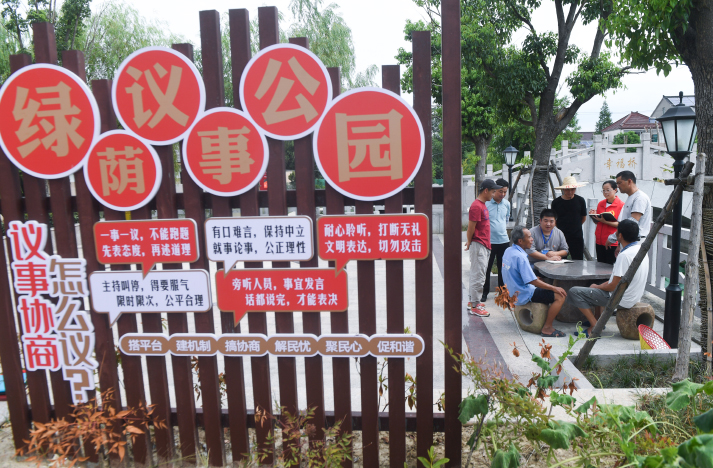
The survey also showed that the traditional values conveyed by whole-process people’s democracy have achieved recognition throughout the international community. More than 86 percent of those polled endorsed the values of harmony, benevolent government, rule of law, and rule of virtue as most precious and relevant to improving global democratic politics.
Democracy with people at the center
Democracy is not a decorative ornament, but an instrument for addressing issues that are of concern to the people. Distinguished British journalist, academic and political commentator Martin Jacques has targeted Western democracy with a torrent of questions. Given that many in the West regard their governance system as the world’s best – hence one with which the Chinese system could not possibly hope to compete – why is it that the West is in such a rapid decline? And how has China managed to attain such upending changes over the last 40 years? Don’t the two respective governance systems have impact on such distinctly contrasting trajectories?
The Global Satisfaction with Democracy Report, published by Bennet Institute for Public Policy at the University of Cambridge, showed that people in more than 100 countries and regions are dissatisfied with Western democracy, and that 2019, the year the COVID-19 pandemic broke out, reflected the highest level of democratic discontent on record. The reason may be that the malfunctioning Western democracy has resulted in governance failure; hence that Western democracies are suffering a crisis of faith.
Whole-process people’s democracy, meanwhile, requires that the running of the country by the people is specifically reflected in governance policies and measures. Ronnie Lins, CEO of Center China & Brazil: Research and Business, said in 2017 at the BRICS Governance Seminar in Quanzhou that China’s governance model exhibits extremely high efficiency by virtue of the country’s remarkable achievements. China has indeed won the people’s support through state governance that emanates from democratic practice, which is tailored to the people’s interests and needs.
Results of the Academy of Contemporary China and World Studies survey showed a global belief on the part of respondents that China’s employment of whole-process people’s democracy to improve the state’s capacity for governance and modernize the state governance system stands as testament to the strong practical efficacy of the Chinese democratic system. An average 94 percent of respondents from 23 countries – a 7 percent increase over the previous year – praised China’s capacity for state governance, saying that the country’s highly efficient, stable, and sustainable policy decision-making embodies the modernization level of the country’s democratic governance. A substantial proportion of respondents from developed countries – almost 10 percent higher than that of the previous year – was particularly lavish in their plaudits.
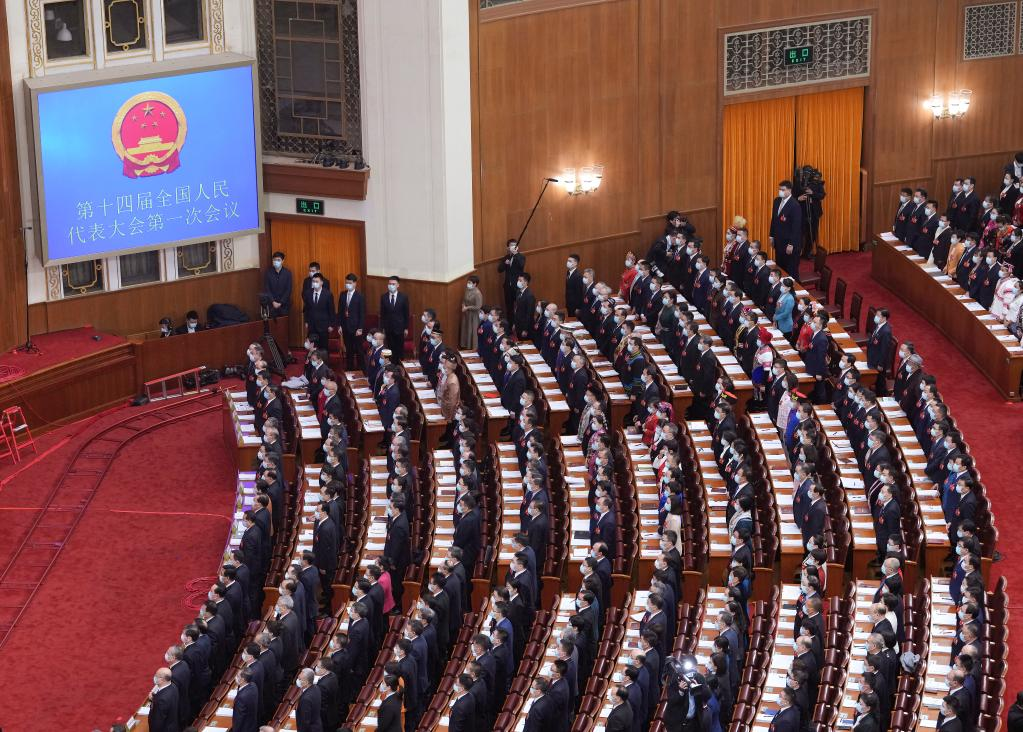
Whole-process people’s democracy lays great store on resolving the contradiction between people’s ever-growing needs for a better life and unbalanced, inadequate development. It is committed to realizing sound, stable, high-quality development, and ensuring that development results bring the people ever greater benefits. Ong Tee Keat, chairman of the Center for New Inclusive Asia in Malaysia, said in an interview with Beijing Review that China’s democracy is for the people and realized through a goal-driven approach. Substantial improvements in people’s lives, large-scale poverty reduction, and a far higher standard of public health services provide solid evidence that the priorities of the Chinese government are fueled by its pursuit of the people’s wellbeing.
The practical efficacy of whole-process people’s democracy has won widespread approbation throughout the international community. The survey showed that respondents from 23 countries are optimistic about China’s economy. An average 93 percent of them believed that China’s economy shows resilience and high potential, and that it will sustain growth in the long run. They spoke highly also of China’s manufacturing and technological innovation, saying that whole-process people’s democracy has spurred social innovation. More than 90 percent of respondents praised China’s Internet technology, high-speed rail technology, 5G telecommunication technology, infrastructure, and super hybrid rice technology. They believe that China heads the world in technological innovation, and provides its people with high-quality products.
Holistic approach to democracy
Functionally, democracy is supposed to build consensus in society, rather than social division or confrontation. But today, political polarization is rampant in Western democracies. Disputes and confrontations prevail within organizations and communities, and also among different political parties, social classes, and ethnic groups. The State of Democracy in the United States: 2022, published by China’s Ministry of Foreign Affairs in March 2023, observed that the United States has fallen victim to the vicious cycle of democratic pretensions, dysfunctional politics, and a divided society. Such problems as money politics, identity politics, social rifts, and the gulf between rich and poor have worsened. A 2024 Gallup poll shows that only 28 percent of American adults are satisfied with U.S. democracy – lower even than the 35-percent satisfaction rate shortly after the Capitol riots on January 6, 2021. A record low indeed.
China, meanwhile, after more than 40 years of reform and opening-up, has created two miracles of rapid economic growth and long-term social stability. Whole-process people’s democracy has been instrumental in maintaining long-term social stability. It ensures that the people gain equal benefits from development achievements and enables them to express their demands and concerns in a timely manner. Favorable public opinion thus provides a stable foundation for China’s sustainable development. The Academy of Contemporary China and World Studies survey showed that 92 percent of respondents in 23 countries – almost 5 percent more than in 2022 – regard Chinese society as stable, solidary, safe, and orderly. Similarly positive opinions among respondents in developed countries rose by nearly 10 percent.
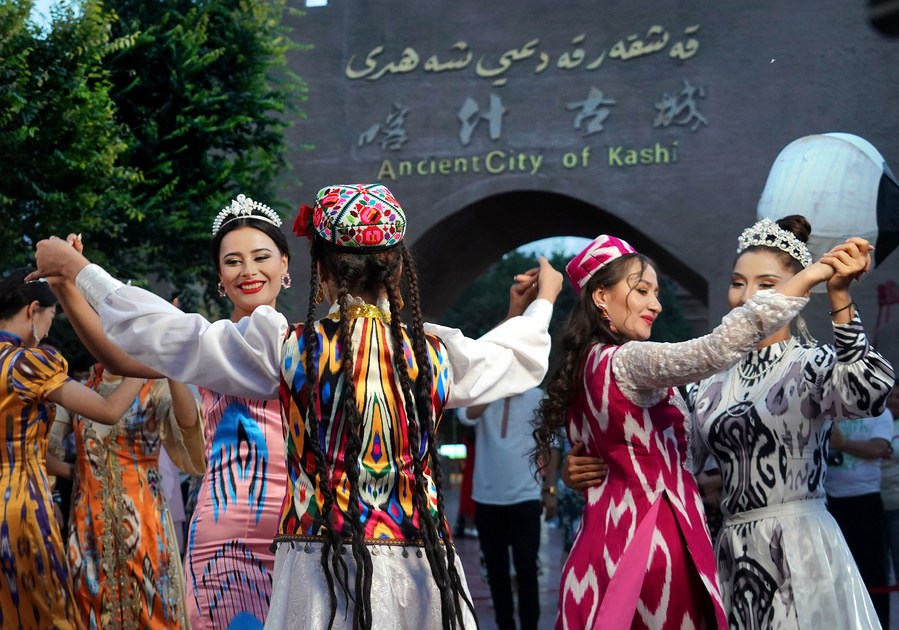
Practice has shown that the Chinese people fully recognize and support the role that whole-process people’s democracy plays in realizing the running of the country by the people, and building consensus. This demonstrates China’s institutional strength, as well as the vitality and bright future of whole-process people’s democracy, the latter of which (the survey showed) has greatly improved public confidence in and satisfaction with the government. More than 98 percent of Chinese respondents said that they trust the government, and are satisfied with the country’s democracy and clean government. Over 94 percent of the Chinese people polled expressed satisfaction with social fairness and the environment, and confidence in the Chinese culture. The effect of whole-process people’s democracy is obvious in having heightened the people’s sense of advancement, happiness, and security, as reflected in the opinions of more than 96 percent of Chinese respondents.
Since 2021, the Academy of Contemporary China and World Studies has organized the Global Young Leaders Dialogue program, under which it launched a global youth salon themed on observing whole-process people’s democracy through Beijing’s practice. Young people from more than 10 countries, including the United States, Italy, Pakistan, Nepal, and Colombia, had an immersive experience of China’s whole-process people’s democracy in the offices of the Standing Committee of the Beijing Municipal People’s Congress, and in the Beijing Municipal Committee of the Chinese People’s Political Consultative Conference, as well as in residential communities. In the event, these young representatives from foreign countries “acted” as deputies to the people’s congress where they pressed the voting key, so experiencing the solemn exercise of state power on behalf of the people. They also put into operation the Beijing Municipal People’s Congress online budget supervision system, and were awed at the extent to which big data empowers the people’s congress review of the government budget.
These young foreign representatives believe that China’s democracy consists in a process of building consensus, which entails collecting and fully discussing public opinions, and then reaching consensus. For both mundane matters, such as everyday life issues and transport, and more important ones, like urban planning and implementation of reform measures, the people can express their opinions and make suggestions through democratic channels, thus for administration, legislation and law enforcement to be more procedure-based, democratic, sound, and effective.
There is no one-size-fits-all political system. Each country presents its distinctive values in building democratic systems and advancing democracy. Whole-process people’s democracy is not about exporting Chinese democracy to other countries. Rather, it tells those that are pursuing democracy that each country is entitled to search out the political system and path to democracy best suited to their national conditions. In the future, countries should learn from each other while forging ahead. Both drawing on the experience gained from fine political civilizations and giving full consideration to their national conditions and political practice, countries should take a problem-oriented approach to seeking out a model of democracy that fits their national contexts. Countries should join hands in opening up new chapters in the politics of human civilization.
Yu Yunquan is president of the Academy of Contemporary China and World Studies.