Global AI Governance: Realistic Difficulties, Mode Selection, and Chinese Solutions
 Facebook
 Twitter
 Linkedin
 Google +
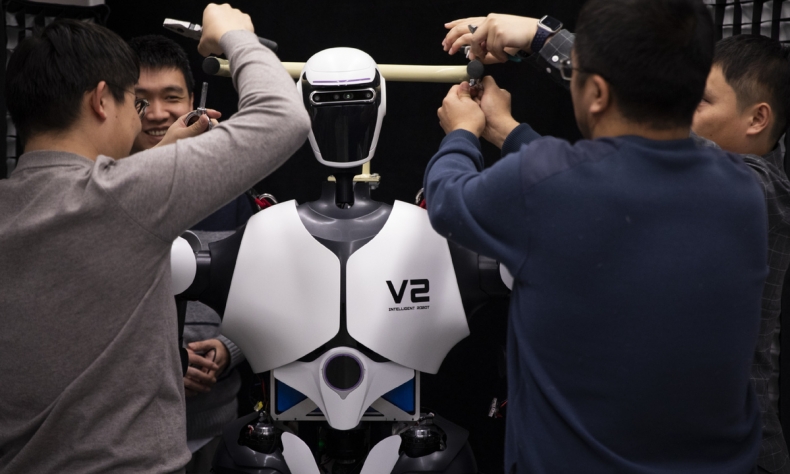
Today, global AI governance is still in the exploratory stage, and the complex nature and uncertainty of technology require global collaboration.
The rapid advancement of artificial intelligence (AI) technology has undoubtedly become the center of global attention in recent years, especially generative AI technology. This technology is rapidly shaping the trends of digital society, while its risks are also spreading, thus making it imperative to strengthen global AI governance so as to enable effective risk control.
Emerging risks
Generative AI, represented by ChatGPT, started a new technological trend in late 2022, exerting a profound impact on various aspects of society, including healthcare, culture, and finance. Large-scale AI model applications such as Pika 1.0 and Gen-2 are emerging. OpenAI released Sora, its first large-scale text-to-video model, in February 2024, which caused a sensation around the world. Commenting on the role of technology, Christian Lous Lange, a Nobel Peace Prize laureate, said, “Technology is a useful servant but a dangerous master.” With the accelerated expansion of generative AI applications, hidden risks continue to emerge.
Generative AI is based on data and algorithms. With the reinforcement learning of large-scale AI models, risks such as data security, privacy protection, and algorithmic discrimination are gradually emerging. Since generative AI is characterized by being a “content creator” and “virtual-real fusion,” once it is used on a large scale, the spread of false and harmful information will be accelerated, affecting social stability. Experts even fear that terrorists will use large-scale AI models to trigger a nuclear war.
The wide use of generative AI will boost productivity and reshape the global economy, while also widening the technological gap and development gap between developed countries and developing countries. Jensen Huang, the founder of tech titan NVIDIA, proposed the concept of sovereign AI and asked countries to develop autonomous AI. Since developed countries have strong technological and economic ability, it is easy for them to gain the upper hand in international competition. In contrast, the lack of resources and technologies in most developing countries creates the possibility that they may be left behind developed countries in the AI race. In addition, with the rise of generative AI, intelligence is being added to all walks of life. Some developing countries are dominated by low-tech and labor-intensive industries, and their economies are more vulnerable to AI shocks which would further exacerbate the North-South divide.
Under the power of generative AI, machines can become triggers, communicators, and decision-makers of human ideas. But the natural ethical question then arises: if technology is used inappropriately who is responsible for it? More importantly, the foundation of human civilization lies in people’s subjective initiative and creativity, as well as the multiple social networks between people. The rise and development of generative AI has strengthened the materialization relationship between human beings and technology while weakening the evolution of individual intelligence as well as the emotional connection between groups, thus creating great challenges in the inheritance of human civilization.

Urgent need of global governance
In the face of such large risks, an increasing number of countries are enacting bills to supervise the development and use of AI. According to the AI Index Report 2023, the results of a survey of the legislative records of 127 countries show that the number of bills concerning AI increased from one in 2016 to 37 in 2022. AI technology is transnational, and there is an urgent need to break through regulations among nations and build a globally coordinated regulatory framework.
However, global AI governance faces horizontal and vertical challenges. Horizontally, there is a North-South imbalance in AI development and governance. Developed countries have leading science and technology industry clusters, and have a bigger say internationally. Developing countries, on the other hand, are in a global “depression,” both in terms of technology and influence. Vertically, due to differences in history, culture, and religion, countries have different views and practices on AI development. As a result, respecting the voices of countries and bridging the gap between the North and the South are essential for realizing global AI governance.
In this context, the global cooperation model represented by international organizations and the regional integration model with regional organizations as the main player provide a reference scheme for global AI governance.
As the most influential international organization in the world, the UN plays a leading role in global AI governance. The UN Security Council held its first meeting regarding AI on July 18, 2023, and then established a high-level advisory body on AI governance in October. The second Global Forum on the Ethics of AI was held in Kranj, Slovenia in February 2024, during which UNESCO signed agreements with eight global scientific and technological institutions and companies on the design and use of AI systems in accordance with the values and principles of AI ethics set in the Recommendation on the Ethics of Artificial Intelligence.
Led by market economy countries, the Organization for Economic Cooperation and Development (OECD) works to address global economic, social, and governance challenges. In 2019, the OECD Council adopted the Recommendation on Artificial Intelligence (the OECD AI Principles), namely, inclusive growth, sustainable development, and well-being; human-centered values and fairness; transparency and explainability; robustness, security, and safety; and accountability. OECD published a report on a blueprint for building national compute capacity for artificial intelligence in February 2023. The report provides guidance for policy makers on how to develop a national AI compute plan along three dimensions: capacity (availability and use), effectiveness (people, policy, innovation, and access), and resilience (security, sovereignty, and sustainability).
As a representative institution for economic and trade cooperation, the G20 includes both developed and developing countries and takes into account the development needs of both sides. At the G20 Ministerial Meeting on Trade and Digital Economy held in Tsubuka in June 2019, Japan initiated the G20 AI Principles and participants emphasized in a joint statement that the use or development of AI should respect the rule of law, human rights, and democratic values. In September 2023, the G20 Summit that took place in New Delhi, India, discussed the establishment of a human-centered AI governance framework, calling for global supervision of rapidly evolving AI technologies.
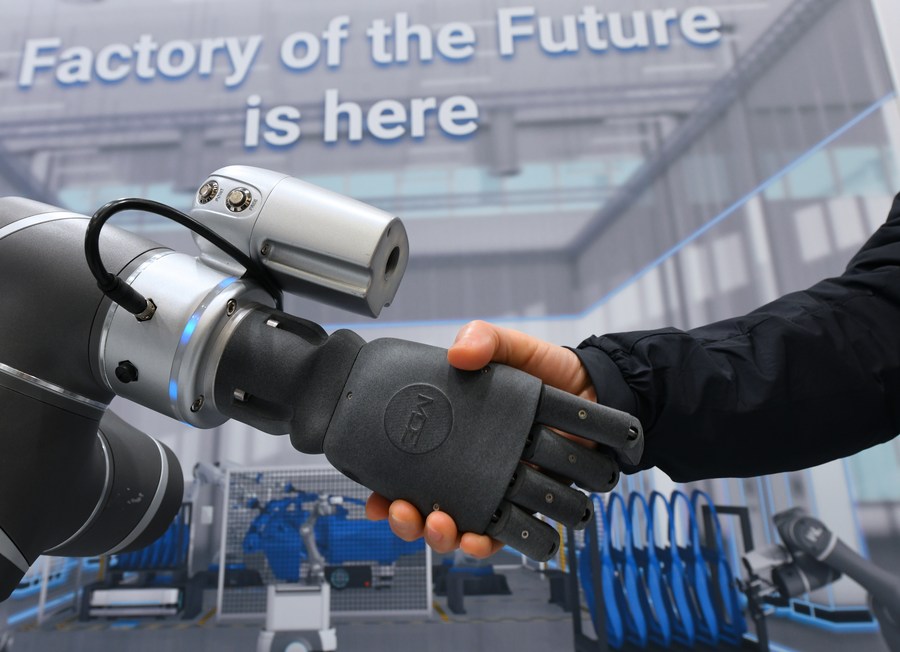
As global organizations, the UN, the OECD, and the G20, have provided guidance for global AI governance.
As a typical representative of regional integration organizations, the EU’s initiatives for AI governance are more prominent than those in other regions. In February 2020, the European Commission published a white paper on AI that transformed the governance from ethical guidance to legislative regulation. In April 2021, the world’s first comprehensive AI supervision bill, the Artificial Intelligence Act, was launched in the EU, and a preliminary agreement was reached on the legislation of the bill in February 2024. Through the hierarchical management of AI, it is strictly forbidden to manipulate technology and take advantage of human weaknesses. This move of the EU shows its ambition on AI governance.
The Association of Southeast Asian Nations (ASEAN) officially released guidelines on AI governance and ethics in February 2024. The guidelines empower ASEAN organizations and governments to responsibly design, develop, and deploy AI systems to strengthen users’ trust in AI. Different from the EU’s strong regulation, since ASEAN’s member states are in large all developing countries, their main purpose in utilizing AI is to promote regional economic development, thus making AI governance relatively more open.
Regional organizations such as the EU and the ASEAN have formulated localized governance frameworks in line with regional conditions, the results of which have auxiliary significance for global AI governance.
Win-win cooperation
The governance of AI involves the development of mankind as a whole. And since China is the world’s largest developing country, the second largest economy, and a strong country in AI development and governance, contributing Chinese solutions is the need of the times and the responsibility of China as a major country.
The features of traditional Chinese culture of “harmony in diversity” and “people-oriented” vision focus on the harmonious unity of personal development with social progress, which is in line with the global advocacy of using AI to promote the progress of human civilization. The Ethical Norms for the New Generation Artificial Intelligence, China released on September 25, 2021 includes the basic concept that “human beings are the ultimate liable subjects” of AI governance, which reflects China’s people-oriented concept and high attention to AI ethics.
According to the statistics of the China Academy of Information and Communications Technology, from 2013 to the third quarter of 2023, the number of AI patent applications worldwide exceeded 1.29 million, of which those from China accounted for 64 percent, ranking first in the world. In addition, China’s AI governance level is also at the forefront of the world. According to AI Governance International Evaluation Index, the U.S. and China are leading in AI development in terms of overall quantity, and China ranks in the first echelon, second only to the U.S. in terms of AI governance.

China is actively building a community with a shared future for mankind and advocates peaceful development, equality, mutual benefit, and win-win cooperation. From proposing the Global AI Governance Initiative to systematically elaborate on AI governance to signing the Bradchley Declaration to collaborate on the establishment of AI governance methods; from the high-level dialogue between China and the EU to discuss key issues such as data regulation, to the agreement to establish an intergovernmental dialogue on AI during the China-U.S. summit in San Francisco, China is committed to building a fair and open global AI governance mechanism and making contribution to the scientific and technological development of human civilization.
China has formulated a series of laws and regulations to guide the controllable and sustainable development of AI. In addition to this, by putting forward global initiatives and signing declarations of cooperation, China carries out cooperation among major countries and participates in global AI governance. Due to geopolitical factors, there are many obstacles and challenges for China’s advocacy of global AI governance. In the future, China needs to pay close attention to the trend of AI technology, play its role within the UN framework, strengthen regional, global, bilateral and multilateral coordination mechanisms, enhance participation and voice in international affairs, and promote global AI governance.
China actively advocates ethical norms, laws and regulations that are universally recognized by the international community, and contributes Chinese wisdom to the formulation of global standards. According to the Ministry of Industry and Information Technology, China is actively promoting the construction of a more flexible, inclusive, and rapid-response governance mechanism, establishing platforms for AI ethics assessment and data collection, and promoting the standard setting for the ethical application of AI. In addition, the Belt and Road Initiative (BRI) can also benefit AI global governance by promoting cooperation among participating countries, especially developing countries, and hence promote the balanced and equitable development of AI around the world.
The key to industrial development lies in talents. Strengthening talent training will help upgrade AI and improve global AI governance. China can establish and improve the transnational talent training system and promote the integration and transformation of industrial chains, talent chains and value chains by building an international cooperation and exchange platform led by the government and with the participation of multiple social forces such as universities, enterprises and think tanks. For this purpose, China and the EU held the first Sino-EU Youth Artificial Intelligence Competition, and China and Russia held seminars to discuss AI talent training and technology development.
Today, global AI governance is still in the exploratory stage, and the complex nature and uncertainty of technology require global collaboration. Guided by the idea of building a community with a shared future for mankind, countries in the world will be able to jointly address technological, ethical, and security challenges, ensure the healthy development of technology, and safeguard the common interests of mankind.
Yi Di is a research fellow and deputy secretary general of Taihe Institute.










