Stability, Credibility Should Be Valued in China-U.S. Ties
 Facebook
 Twitter
 Linkedin
 Google +
Cooperation, instead of confrontation or decoupling, is the only right way for the two largest economies to deal with each other, thus benefiting the two peoples and the rest of the world.
The past two weeks have seen a succession of high-level interactions between China and the U.S., which analysts see as a positive sign of the two sides to further cooperation and manage differences. In particular, the phone talk between Chinese President Xi Jinping and U.S. President Joe Biden accentuated the will of the two sides to carry forward the San Francisco vision and avoid strategic misjudgment and the risk of sliding into confrontation, despite growing divergences.
The issue of strategic perception is always fundamental to the China-U.S. relationship, just like the first button of a shirt that must be put right, President Xi stressed during the phone talk on April 2. He then noted that the bilateral relationship should move forward in a stable, sound and sustainable way, rather than going backward.
Right strategic perception of paramount importance
Since the San Francisco summit last November, the most important consensus reached by China and the U.S. is about the need to stabilize and improve this important bilateral relationship. As Xi noted during his meeting with?representatives of the U.S. businesses and strategic and academic communities in Beijing on March 27, “Whether China and the United States have a cooperative or confrontational relationship bears on the well-being of the Chinese and American peoples and the future of humanity.”
Reviewing the ups and downs of the bilateral relations in recent years, it becomes quite obvious that a right strategic perception of each other is of paramount importance to handling sensitive issues properly and finding the right way to get along with each other, thus promoting a steady and sound development of the bilateral ties.
However, dominated by the deep-rooted zero-sum mentality, some U.S. politicians have been intent on containing China’s rise by slamming tariffs on Chinese products and enacting regulations to limit the free trade of some tech-related products under the pretext of national security. The strategic fear and hegemonic actions are rooted in their misconceptions about China. As President Xi clearly stated in his meeting with Biden last November, China does not have a plan to surpass or unseat the U.S., and the U.S. should not scheme to suppress and contain China.

From its vision of “jointly building a community of a shared future” with the rest of the world to its role in the international community, and from lending a helping hand to the developing world and helping build a peaceful world to its focus on advancing Chinese modernization so as to live up to its people’s expectations for a better life, the Chinese government has not shown even the slightest sign of pursuing hegemony. The concept of “Tian Xia Wei Gong” or “pursuing common good for all under heaven” has been the cultural DNA of the Chinese nation since it was put forward by Confucius over 2,000 years ago, and has influenced Chinese politics and collective thinking of the Chinese people.
Meanwhile, Washington’s strategic focus has been to cling on to and maintain its diminishing hegemony. One of its moves is to seek a “small yard, high fence” approach to install economic restrictions against China on a range of technologies, which are regarded as having significant military potential. Such actions are disrupting global supply chains. However, its domestic issues suggest Washington should shift its focus to its real problems instead of interfering in other countries’ domestic affairs.
The founding dean of Harvard’s John F. Kennedy School of Government,?Graham Allison, put forward the notion of “Thucydides’ Trap” to describe an apparent tendency towards war when an?emerging power?threatens to displace an existing?great power. Now, the American political scientist believes that Thucydides’ Trap is not necessarily inevitable. “But in order to avoid Thucydides’ Trap, it’s gonna be necessary to imagine some new form of great power relations,” Allison said at a launch event for the book?Escaping Thucydides’ Trap: Dialogue with Graham Allison on China-US Relations?in Beijing on March 22.
Properly managing growing negative factors
During her ongoing trip to China, U.S. Treasury Secretary Janet Yellen stressed that a healthy economic relationship can bring significant benefits to both economies. However, she also mentioned the so-called industrial overcapacity in China many times in her meetings with her Chinese counterparts and American business leaders in China. Even before her departure for the trip, the “overcapacity” issue had topped American media discussions about China-U.S. relations for quite a while. It constitutes one of the negative factors of the bilateral ties, which “requires attention from both sides,” as President Xi put it in his phone talk with Biden.
Is the overcapacity a real problem or just another target for China-bashing? It’s a basic market rule, and everyone can understand it, that a country would try to find overseas markets for its?surplus products. This is what globalization is about, and the Western world has been doing that for centuries. So, the U.S. complaint represents a blatant double standard.
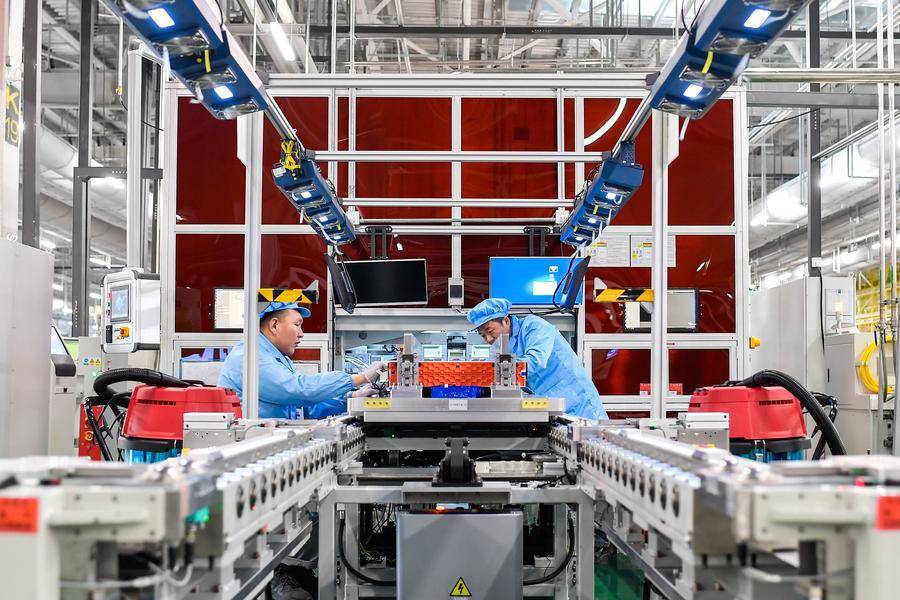
Rather than being a threat, China’s colossal manufacturing capacity has benefited the whole world. The country’s reasonably priced products have helped people across the globe enjoy a good life at a low cost. Meanwhile, China’s manufacturing capacity is helping developing countries to achieve industrialization through such cooperation platforms as the Belt and Road Initiative.
The irony is aptly poked by a?New York Times?article quote “It’s a very tough sell when we’re doing much the same thing.” Scott Lincicome, a trade expert at the free-market oriented Cato Institute, continues to point out in the article, “… the fact is that the rhetorical and political effect is inevitably going to be undermined when your argument is, do as I say, not as I do.” The hegemonic mindset is so obvious that even the U.S. media can’t find a persuasive ground to support the claim. The hidden agenda to contain China’s development has thus become evident, as the “threat” the West sees in China’s manufacturing capacity, which involves high technology and renewable energy, is only for preserving its global dominance.
Spurred by the “China threat” narrative and gripped by the Cold War mentality, Washington has installed a range of barriers, including trade tariffs and technology bans. The tariffs have contributed to a rise in the inflation in the U.S. The U.S. Department of Agriculture data show that the U.S. grocery prices have soared by 25 percent during the past four years. Meanwhile, China’s high-quality development is gathering steam with its focus on new quality productive forces, showing no dent from the U.S. high-tech restrictions. Former U.S. Commerce Secretary Carlos Gutierrez recently pointed out in an interview with CNBC that innovation, not sanction, should be the right way for the U.S. to out-compete China.
Seeking more common ground
More and more people have begun to realize that cooperation, instead of confrontation or decoupling, is the only right way for the two largest economies to deal with each other, thus benefiting the two peoples and the rest of the world.
“What happened over the years is I began to understand that U.S.-China relations would fundamentally affect the American people. If it was good, it would mean a better life for the American people. If it was bad, it would mean a worse life for the American people,” Stephen Orlins, president of the National Committee on U.S.–China Relations, said in a recent interview with Xinhua. Orlins believes that a constructive relationship between the U.S. and China will not only benefit the two countries but also make the world better, according to Xinhua.
While meeting his American guests in late March, President Xi noted, “The two countries’ respective success is an opportunity for each other. As long as both sides see each other as partners and show mutual respect, coexist in peace and cooperate for win-win results, China-U.S. relations will get better.”
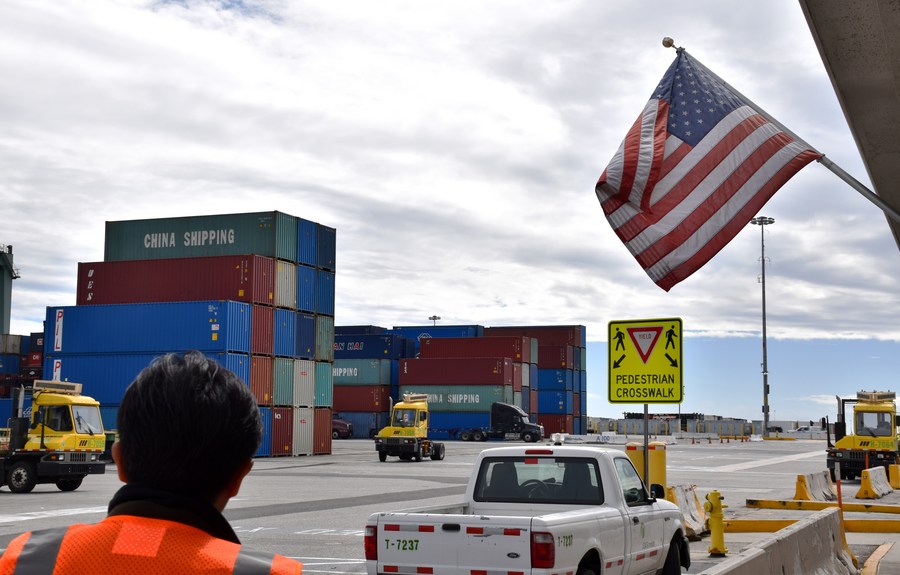
Since the establishment of the diplomatic relations in 1979, China and the U.S. have witnessed a 200-fold surge in bilateral trade. The largest export destination for four states of the U.S., China is also one of the top three export markets for 38 U.S. states. China-bound exports have created more than 1 million jobs for Americans. Meanwhile, over 70,000 American companies run businesses in China with their yearly profits surpassing US $50 billion. Trade and economic cooperation has become the ballast of bilateral ties.
Data released by the National Bureau of Statistics show that foreign-invested firms in China posted a profit growth of 31.2 percent year on year in the first two months of 2024. A recent survey by the American Chamber of Commerce in China also indicated improved profitability in 2023 for most of the U.S. companies in China.
“The opportunities are huge and the opportunity to continue to partner with different institutions in this market is very good.?So, we’re very confident about the Chinese economy over the coming years,” Timothy Creber, general manager at the China Operation of American Express, said in a recent interview with the?Global Times.
The history of China-U.S. relations is one of friendly exchanges between the two peoples. Its existing chapters are written by the people, and the future will of course be created by the people, Xi said. Following a host of U.S. business leaders, who attended the Boao Forum for Asia Annual Conference and China Development Forum in late March,?San Francisco Mayor London Breed is expected to visit China?from April 13 to 21. All this shows the rising intent of the U.S. business community and local governments to bond with China for more win-win cooperation.
In his phone talk with Biden, President Xi underlined three overarching principles that should guide China-U.S. relations in 2024. First, peace must be valued. Second, stability must be prioritized. Third, credibility must be upheld. The two sides are expected to honor their commitments to each other with action, and turn the San Francisco vision into reality, as “under the new circumstances, China and the United States have more, not fewer, common interests.”